Species · Flowering plants
White Mallee Eucalyptus dumosa
The scientific name of the White Mallee is Eucalyptus dumosa. It is a species of flowering plant in the family Myrtaceae (myrtle family), order Myrtales.
- Scientific name
- Eucalyptus dumosa A.Cunn. ex Oxley
- Common name
- White Mallee
- Genus
- Eucalyptus
- Family
- Myrtaceae (Myrtle Family)
- Order
- Myrtales
- Class
- Magnoliopsida
- Red List category
- VU Vulnerable
- Recorded in
- 1 country
- Name status
- accepted in the Catalogue of Life

Overview
Eucalyptus dumosa occurs in relatively dry country, from the northern Flinders Ranges and Murray Mallee in South Australia eastwards to Dubbo in central western New South Wales and Swan Hill in north western Victoria. It has rough greyish bark at the base of its trunk, smooth whitish bark above and white flowers.
Written 26 November 2026 from the sources listed below. Each statement was checked against the passage it cites; statements that could not be supported were removed.
Appearance
White Mallee has rough, flaky or fibrous greyish bark at the base of its trunk and smooth, whitish or yellow-white bark above. The upper bark sheds in long, thin ribbons.[1][2]
Young plants and coppice regrowth have egg-shaped to broadly lance-shaped leaves measuring 55–140 mm long and 22–70 mm wide. Adult leaves are dull bluish green to greyish green on both surfaces, with lance-shaped to curved outlines, and measure 48–120 mm long and 8–25 mm wide.[3][4][5][6]
Flower buds occur in groups of seven in the leaf axils. Mature buds are cylindrical, green or red, and measure 6–11 mm long and 3–5 mm wide, with a conical to turban-shaped striated operculum.[7][8][9]
The flowers are white. The fruit is a woody capsule that can be cup-shaped, cylindrical or barrel-shaped, measuring 4–9 mm long and 5–7 mm wide.[10][11][12]
White Mallee has an open, bushy and spreading growth habit. It typically grows 4–10 m tall, occasionally reaching 12 m, and typically reaches a width of 4–5 m.[13][14][15]
Habitat
White Mallee occurs in relatively dry country. It is endemic to south eastern Australia and occurs in South Australia from the northern Flinders Ranges and Murray Mallee eastwards to Dubbo in central western New South Wales and Swan Hill in north western Victoria.[16][17][18]
White Mallee is described as one of the most widespread mallee species.[19]
Behaviour
White Mallee attracts nectar-eating birds and insects by providing food and habitat.[20]
Reproduction and life cycle
White Mallee flowers from late summer to mid autumn.[21]
Uses
The leaves are steam-distilled commercially to produce cineole-based eucalyptus oil. The species is also used in mass roadside plantings as a screen, windbreak, erosion-control plant and shade tree.[22][23]
Indigenous Australians use White Mallee as a source of food, drink and medicines and to make containers and implements. A sweet manna-like substance produced on the leaves is made into a drink, while the bark of young roots is baked and eaten for its sweet, malt-like flavour.[24][25][26]
White Mallee can produce 10–20 metric tons of biomass per hectare annually. In wheatbelt regions, it can help reduce salinity and erosion while providing shade for livestock and acting as a windbreak.[27][28]
Similar species
Intergrades have been recorded between White Mallee and Eucalyptus gypsophila.[29]
Classification of the White Mallee
| Kingdom | Plantae |
|---|---|
| Subkingdom | Pteridobiotina |
| Phylum | Tracheophyta |
| Class | Magnoliopsida |
| Order | Myrtales |
| Family | Myrtaceae (Myrtle Family) |
| Subfamily | Myrtoideae |
| Tribe | Eucalypteae |
| Genus | Eucalyptus (Gum) |
| Species | Eucalyptus dumosa A.Cunn. ex Oxley |
Where the White Mallee is found
Checklists and occurrence records place Eucalyptus dumosa in 1 country across Oceania. GBIF holds 9,409 georeferenced records of it.
Countries
Regions and cities with the most records
- South Australia, Australia 3,487
- New South Wales, Australia 3,181
- Victoria, Australia 2,608
- Gawler, Australia 145
- Mildura, Australia 137
- Adelaide, Australia 22
- Adelaide Hills, Australia 22
- Griffith, Australia 19
- Tasmania, Australia 3
Range as the checklists state it
Australia (E-Eyre Peninsula through SE-South Australia, W-New South Wales and in NW-Victoria)
A number beside a place is its count of GBIF occurrence records. A place without a number comes from a checklist alone. Records show where a species has been observed or collected, which can include escapes and vagrants.
Common names
English
- White Mallee
- Congoo Mallee
- Dumosa Mallee
Names in 2 other languages
- Chinese
- 欉桉, 灌木丛桉, 白麻利桉
- Slovak
- eukalyptus kroviskový
Synonyms
6 other scientific names have been used for this species and are now treated as synonyms of Eucalyptus dumosa.
- Eucalyptus dumosa var. dumosa
- Eucalyptus dumosa var. rhodophloia Benth.
- Eucalyptus incrassata var. dumosa (A.Cunn. ex Oxley) Maiden
- Eucalyptus rhodophloia (Benth.) Blakely
- Eucalyptus lamprocarpa F.Muell. ex Miq. ambiguous synonym
- Eucalyptus muelleri Miq. ambiguous synonym
Related species
-
 Rainbow EucalyptusEucalyptus deglupta
-
 Southern Blue GumEucalyptus globulus
-
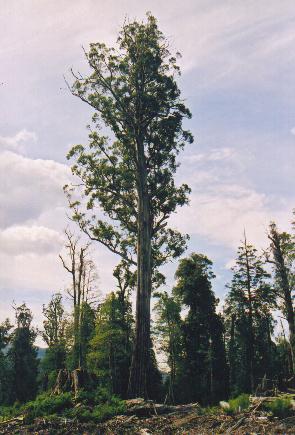 Mountain AshEucalyptus regnans
- River Red GumEucalyptus camaldulensis
-
 Argyle AppleEucalyptus cinerea
-
 Snow GumEucalyptus pauciflora
-
 JarrahEucalyptus marginata
-
 Cider GumEucalyptus gunnii
Compare
Questions and answers
What is the scientific name of the White Mallee?
The scientific name of the White Mallee is Eucalyptus dumosa. Written with its author, the full name is Eucalyptus dumosa A.Cunn. ex Oxley.
Which family does the White Mallee belong to?
Eucalyptus dumosa belongs to the family Myrtaceae, in the order Myrtales and the class Magnoliopsida.
Where is the White Mallee found?
Checklists and occurrence records place Eucalyptus dumosa in 1 country: Australia.
What is the conservation status of the White Mallee?
The IUCN Red List category recorded for Eucalyptus dumosa is Vulnerable (VU).
What other names does the White Mallee have?
Eucalyptus dumosa is also known in English as Congoo Mallee and Dumosa Mallee.
Sources
Passages the profile rests on
- Eucalyptus dumosa typically has rough, flaky or fibrous greyish bark at the base of its trunk and smooth, whitish or yellow-white bark above. Source passage: “It usually has rough, flaky or fibrous greyish bark on the base of the trunk, smooth, whitish or yellow-white, weathering to grey or pinkish-grey bark above.” — English Wikipedia
- The upper bark sheds in long, thin ribbons. Source passage: “The bark sheds in long thin ribbons.” — English Wikipedia
- Young plants and coppice regrowth have egg-shaped to broadly lance-shaped leaves. Source passage: “Young plants and coppice regrowth have petiolate, egg-shaped to broadly lance-shaped leaves” — English Wikipedia
- The leaves of young plants and coppice regrowth measure 55–140 mm long and 22–70 mm wide. Source passage: “leaves that are 55–140 mm (2.2–5.5 in) long and 22–70 mm (0.87–2.76 in) wide.” — English Wikipedia
- Adult leaves are dull bluish green to greyish green on both surfaces and have lance-shaped to curved outlines. Source passage: “Adult leaves are the same dull bluish green to greyish green on both sides, lance-shaped to curved” — English Wikipedia
- Adult leaves measure 48–120 mm long and 8–25 mm wide. Source passage: “48–120 mm (1.9–4.7 in) long and 8–25 mm (0.31–0.98 in) wide” — English Wikipedia
- Flower buds occur in groups of seven in the leaf axils. Source passage: “The flower buds are arranged in leaf axils in groups of seven” — English Wikipedia
- Mature flower buds are cylindrical and green or red, with a conical to turban-shaped striated operculum. Source passage: “Mature buds are cylindrical, green or red, 6–11 mm (0.24–0.43 in) long and 3–5 mm (0.12–0.20 in) wide with a conical to turban-shaped, striated operculum.” — English Wikipedia
- Mature flower buds measure 6–11 mm long and 3–5 mm wide. Source passage: “Mature buds are cylindrical, green or red, 6–11 mm (0.24–0.43 in) long and 3–5 mm (0.12–0.20 in) wide” — English Wikipedia
- The flowers of Eucalyptus dumosa are white. Source passage: “Flowering occurs from late summer to mid autumn and the flowers are white.” — English Wikipedia
- Its fruit is a woody capsule that can be cup-shaped, cylindrical or barrel-shaped. Source passage: “The fruit is a woody, cup-shaped to cylindrical or barrel-shaped capsule” — English Wikipedia
- The fruit capsules measure 4–9 mm long and 5–7 mm wide. Source passage: “4–9 mm (0.16–0.35 in) long and 5–7 mm (0.20–0.28 in) wide.” — English Wikipedia
- Eucalyptus dumosa typically grows 4–10 m tall, occasionally reaching 12 m. Source passage: “typically grows to a height of 4–10 m (13–33 ft), occasionally 12 m (39 ft)” — English Wikipedia
- The species typically reaches a width of 4–5 m. Source passage: “and a width of 4–5 m (13–16 ft)” — English Wikipedia
- Eucalyptus dumosa has an open, bushy and spreading growth habit. Source passage: “with an open, bushy, spreading habit.” — English Wikipedia
- The species occurs in relatively dry country. Source passage: “White mallee is found in the relatively dry country of South Australia” — English Wikipedia
- Eucalyptus dumosa occurs in South Australia from the northern Flinders Ranges and Murray Mallee eastwards to Dubbo in central western New South Wales and Swan Hill in north western Victoria. Source passage: “from the northern Flinders Ranges and Murray Mallee eastwards to Dubbo in central western New South Wales and Swan Hill in north western Victoria.” — English Wikipedia
- Eucalyptus dumosa is endemic to south eastern Australia. Source passage: “is a species of mallee that is endemic to south eastern Australia.” — English Wikipedia
- Eucalyptus dumosa is described as one of the most widespread mallee species. Source passage: “It is one of the most wide-spread mallee species.” — English Wikipedia
- The species attracts nectar-eating birds and insects by providing food and habitat. Source passage: “Attracts nectar eating birds and insects for food and habitat.” — plantselector.botanicgardens.sa.gov.au
- Flowering occurs from late summer to mid autumn. Source passage: “Flowering occurs from late summer to mid autumn” — English Wikipedia
- The leaves are steam-distilled commercially to produce cineole-based eucalyptus oil. Source passage: “The leaves are steam distilled as a commercial source of cineole based eucalyptus oil.” — English Wikipedia
- Eucalyptus dumosa is used in mass roadside plantings as a screen, windbreak, erosion-control plant and shade tree. Source passage: “It is used as a component of mass plantings along with other mallee species on wide roadside verges as a screen, wind-break, erosion control or a shade tree.” — English Wikipedia
- Indigenous Australians use the tree as a source of food, drink and medicines and to make containers and implements. Source passage: “Indigenous Australians use the tree as a source of food, drink, medicines and to make containers and implements.” — English Wikipedia
- A sweet manna-like substance produced on the leaves is made into a drink. Source passage: “A sweet manna-like substance is produced upon the leaves of the tree, it is made into a drink.” — English Wikipedia
- The bark of young roots is baked and eaten for its sweet, malt-like flavour. Source passage: “The bark of young roots is baked and eaten, it is sweet, resembling malt in flavour.” — English Wikipedia
- The species can produce 10–20 metric tons of biomass per hectare annually. Source passage: “able to make 10 to 20 metric tons (11 to 22 short tons) per hectare per year.” — English Wikipedia
- In wheatbelt regions, the species can help reduce salinity and erosion while providing shade for livestock and acting as a windbreak. Source passage: “In wheatbelt regions it is also beneficial as the tree will reduce salinity, give shade to stock, act as a windbreak and reduce erosion.” — English Wikipedia
- Intergrades have been recorded between Eucalyptus dumosa and Eucalyptus gypsophila. Source passage: “Intergrades are recorded between E. gypsophila and E. dumosa (Nicolle 1997).” — bie.ala.org.au
Data
- Catalogue of Life, 2026-10-16 XR cc by
- Global Biodiversity Information Facility CC BY 4.0
- Wikidata CC0
- GeoNames CC BY 4.0
- Wikimedia Commons per image; credit shown with each image
- Within the Catalogue of Life, this name comes from Synonymic Checklists of the Vascular Plants of the World cc by
References
- A.Cunn. ex Oxley. J. Exped. N. S. Wales 63 (1820). where the name was published
This species in other databases
- Catalogue of Life 3BPVX
- Wikidata Q2715195
- iNaturalist 526859
- World Flora Online wfo-0000954846
- GRIN 15899
Page built on 28 November 2026. See how the catalog is made and all sources and licences.
Cite this page
ScientificNames.org. (2026). Eucalyptus dumosa (White Mallee). Retrieved November 28, 2026, from https://scientificnames.org/species/eucalyptus-dumosa
“Eucalyptus dumosa (White Mallee).” ScientificNames.org, 2026, scientificnames.org/species/eucalyptus-dumosa. Accessed 28 Nov. 2026.
ScientificNames.org. “Eucalyptus dumosa (White Mallee).” Accessed November 28, 2026. https://scientificnames.org/species/eucalyptus-dumosa.
@misc{scientificnames_eucalyptus_dumosa_white_mallee,
  author = {{ScientificNames.org}},
  title = {Eucalyptus dumosa (White Mallee)},
  year = {2026},
  url = {https://scientificnames.org/species/eucalyptus-dumosa},
  note = {Accessed 2026-11-28}
}