Species · Flowering plants
Yarri Eucalyptus patens
The scientific name of the Yarri is Eucalyptus patens. It is a species of flowering plant in the family Myrtaceae (myrtle family), order Myrtales.
- Scientific name
- Eucalyptus patens Benth.
- Common name
- Yarri
- Genus
- Eucalyptus
- Family
- Myrtaceae (Myrtle Family)
- Order
- Myrtales
- Class
- Magnoliopsida
- Red List category
- NT Near Threatened
- Recorded in
- 2 countries
- Name status
- accepted in the Catalogue of Life
Overview
Eucalyptus patens is endemic to south-western Western Australia, occurring in the Peel, South West and Great Southern regions and extending north to the Avon River. It is distinguished by its deeply furrowed bark, creamy-white flowers and timber suitable for construction, railway sleepers and flooring.
Written 26 November 2026 from the sources listed below. Each statement was checked against the passage it cites; statements that could not be supported were removed.
Appearance
Yarri has rough, deeply furrowed bark that is grey externally and yellowish on its inner surface. Its adult leaves are dull bluish-green, arranged alternately along the branches, and have lance-shaped blades that are sometimes curved and taper to a fine point.[1][2][3]
Its flowers are creamy-white. The fruit is a woody capsule that is approximately spherical or oval.[4][5]
The tree can reach 45 metres in height, with a trunk diameter at breast height of up to 1.8 metres. Adult leaf blades are typically 10–16 mm long and 12–30 mm wide, while fruit capsules measure 9–14 mm long and 9–12 mm wide.[6][7][8][9]
Habitat
Yarri grows well in gravelly soils containing sandy clay or loam. It commonly occurs in depressions, beside stream banks and in valleys.[10][11]
On the Darling Plateau, it occurs in deeper valleys alongside jarrah or marri. It also grows on slopes above swamp plant communities along minor tributaries.[12][13]
Yarri occurs in the Darling Range near Canning Dam, Mundaring Weir and Serpentine Dam, and at Mount Cooke in the Darling Range.[14][15]
Yarri is a widespread component of the woodland and forest vegetation addressed by the management plan.[16]
Diet
Rosellas, honeyeaters and ringneck parrots are frequently observed feeding around yarri. Sitellas search for insects living in its rough bark, while the grey honeyeater searches for insects in the bark's furrows.[17][18][19]
Behaviour
Young yarri plants have broad, upward-facing leaves that help them compete for light beneath other trees and tall shrubs. As the tree matures, its leaves develop the elongated, downward-facing orientation typical of eucalypts.[20][21]
Yarri sometimes grows in stands of several closely spaced individuals.[22]
Reproduction and life cycle
Flower buds occur in leaf axils in clusters of seven to eleven. Flowers appear during July–August or November–February.[23][24]
Yarri produces capsules containing seeds that can germinate without special treatment. Its flowers attract insects and birds that feed on nectar or prey on other organisms.[25][26]
The tree produces abundant pollen and flowers before marri, which is identified as a major nectar source.[27][28]
Uses
Yarri timber is suitable for construction, railway sleepers and flooring. Its air-dried density is 690–915 kilograms per cubic metre, and its heartwood ranges in colour from light brown to dark brown.[29][30][31]
The timber is hard and durable, with coarse to intermediate texture and interlocked to straight grain. It is among the least flammable woods in the world.[32][33]
Similar species
The timber of Eucalyptus patens has properties similar to those of jarrah, although it is paler and less readily available.[34]
Conservation
Yarri has limited availability as harvestable timber because significant parts of its distribution are covered by conservation reserves. Informal streamside reserves also exclude the species from timber harvesting in some forests.[35][36]
Classification of the Yarri
| Kingdom | Plantae |
|---|---|
| Subkingdom | Pteridobiotina |
| Phylum | Tracheophyta |
| Class | Magnoliopsida |
| Order | Myrtales |
| Family | Myrtaceae (Myrtle Family) |
| Subfamily | Myrtoideae |
| Tribe | Eucalypteae |
| Genus | Eucalyptus (Gum) |
| Species | Eucalyptus patens Benth. |
Where the Yarri is found
Checklists and occurrence records place Eucalyptus patens in 2 countries across Oceania. GBIF holds 484 georeferenced records of it.
Countries
Regions and cities with the most records
- Western Australia, Australia 408
- Perth, Australia 14
- Busselton, Australia 7
- Albany, Australia 3
- Australian Capital Territory, Australia 3
- Mandurah, Australia 3
- Waikato Region, New Zealand 3
Range as the checklists state it
Australia (Western Australia: near Perth to Albany)
A number beside a place is its count of GBIF occurrence records. A place without a number comes from a checklist alone. Records show where a species has been observed or collected, which can include escapes and vagrants.
Common names
English
- Yarri
- Swan River Blackbutt
- West Australian Blackbutt
- Blackbutt
Names in 2 other languages
- Chinese
- 展桉
- Slovak
- eukalyptus odstávajúci
Related species
-
 Rainbow EucalyptusEucalyptus deglupta
-
 Southern Blue GumEucalyptus globulus
-
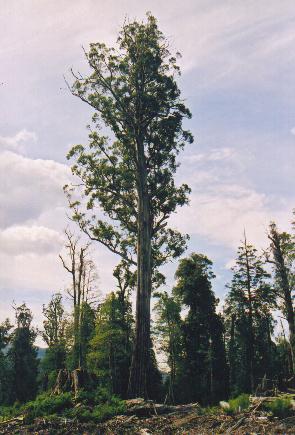 Mountain AshEucalyptus regnans
- River Red GumEucalyptus camaldulensis
-
 Argyle AppleEucalyptus cinerea
-
 Snow GumEucalyptus pauciflora
-
 JarrahEucalyptus marginata
-
 Cider GumEucalyptus gunnii
Compare
Questions and answers
What is the scientific name of the Yarri?
The scientific name of the Yarri is Eucalyptus patens. Written with its author, the full name is Eucalyptus patens Benth..
Which family does the Yarri belong to?
Eucalyptus patens belongs to the family Myrtaceae, in the order Myrtales and the class Magnoliopsida.
Where is the Yarri found?
Checklists and occurrence records place Eucalyptus patens in 2 countries: Australia and New Zealand.
What is the conservation status of the Yarri?
The IUCN Red List category recorded for Eucalyptus patens is Near Threatened (NT).
What other names does the Yarri have?
Eucalyptus patens is also known in English as Swan River Blackbutt, West Australian Blackbutt and Blackbutt.
What does yarri mean?
The common name yarri is of Aboriginal origin. The specific epithet patens is derived from Latin and means spreading or outspread.[37][38]
What lives in Eucalyptus trees?
Rosellas, honeyeaters and ringneck parrots are frequently observed feeding around yarri. Sitellas and grey honeyeaters search for insects in its rough bark and bark furrows.[17][18][19]
What do Eucalyptus trees produce?
Yarri produces creamy-white flowers, abundant pollen and woody capsules containing seeds. Its flowers attract insects and birds that feed on nectar or prey on other organisms.[4][25][26][27]
What are some key information about Eucalyptus trees?
Yarri is a flowering tree that can reach 45 metres in height and has rough, deeply furrowed bark. It is endemic to south-western Western Australia, produces creamy-white flowers and has hard, durable timber suitable for construction, railway sleepers and flooring.[1][4][6][39][29][32]
Sources
Passages the profile rests on
- The tree has rough, deeply furrowed bark that is grey externally and yellowish on its inner surface. Source passage: “The thick, corky, friable bark has a rough texture and is deeply longitudinally furrowed. It is grey on the outside with a yellow tinge on the inside surface.” — English Wikipedia
- Its adult leaves are dull bluish-green and arranged alternately along the branches. Source passage: “The dull bluish green adult leaves are arranged alternately.” — English Wikipedia
- The adult leaf blades are lance-shaped, sometimes curved, and taper to a fine point. Source passage: “The leaf blade is lance-shaped, sometimes curved, tapers to a fine point” — English Wikipedia
- Its flowers are creamy-white. Source passage: “The flowers are creamy-white” — English Wikipedia
- Its fruit is a woody capsule that is approximately spherical or oval. Source passage: “The fruit is a woody, more or less spherical to oval capsule” — English Wikipedia
- The tree can reach 45 metres in height. Source passage: “Eucalyptus patens is a tree that may grow to a height of 45 m (148 ft)” — English Wikipedia
- The trunk can reach a diameter at breast height of 1.8 metres. Source passage: “with a dbh of 1.8 m (5 ft 11 in)” — English Wikipedia
- Adult leaf blades are typically 10–16 mm long and 12–30 mm wide. Source passage: “typically 10–16 mm (0.39–0.63 in) long and 12–30 mm (0.47–1.18 in) wide” — English Wikipedia
- The fruit capsules measure 9–14 mm long and 9–12 mm wide. Source passage: “9–14 mm (0.35–0.55 in) long and 9–12 mm (0.35–0.47 in) wide” — English Wikipedia
- The species grows well in gravelly soils containing sandy clay or loam. Source passage: “Eucalyptus patens grows well in gravelly soils with sandy clay or loam.” — English Wikipedia
- It commonly grows in depressions, beside stream banks and in valleys. Source passage: “It is often found in depressions, along stream banks or in valleys” — English Wikipedia
- On the Darling Plateau, the species occurs in deeper valleys alongside jarrah or marri. Source passage: “On the Darling Plateau, yarri is found in deeper valleys with jarrah or marri” — English Wikipedia
- It also occurs on slopes above swamp plant communities along minor tributaries. Source passage: “on slopes above swamp plant communities on minor tributaries.” — English Wikipedia
- It occurs in the Darling Range near Canning Dam, Mundaring Weir and Serpentine Dam. Source passage: “near the reservoirs Canning Dam, Mundaring Weir and Serpentine Dam” — English Wikipedia
- The species also occurs at Mount Cooke in the Darling Range. Source passage: “and at Mount Cooke, the range's highest peak.” — English Wikipedia
- Yarri is described as a widespread component of the woodland and forest vegetation addressed by the management plan. Source passage: “while yarri (Eucalyptus patens) is more widespread.” — yoursaysj.sjshire.wa.gov.au
- Rosellas, honeyeaters and ringneck parrots are frequently observed feeding around the tree. Source passage: “Rosellas (Platycercus), honeyeaters (Meliphagidae) and ringneck parrots are often observed feeding around the tree.” — English Wikipedia
- Sitellas search for insects living in the tree's rough bark. Source passage: “The roughly textured bark provides diverse habitat and refuge for insects, which are searched out by sitellas (Neosittidae) moving along the branches.” — English Wikipedia
- The grey honeyeater searches for insects in the bark's furrows. Source passage: “The grey honeyeater (Conopophila whitei) also seeks insects along the furrows” — English Wikipedia
- Young plants have broad, upward-facing leaves that help them compete for light beneath other trees and tall shrubs. Source passage: “The juvenile leaves are broad and face upward, allowing the sapling to compete in the shadows of other trees and tall shrubs” — English Wikipedia
- As the tree matures, its leaves develop the elongated, downward-facing orientation typical of eucalypts. Source passage: “assuming the usual elongate and down facing leaves of eucalypts when mature.” — English Wikipedia
- The species sometimes grows in stands of several closely spaced individuals. Source passage: “The species sometimes occurs in stands of several close growing individuals.” — English Wikipedia
- Flower buds occur in leaf axils in clusters of seven to eleven. Source passage: “the flower buds are arranged in leaf axils in groups of between seven and eleven” — English Wikipedia
- The flowers appear during July–August or November–February. Source passage: “The flowers are creamy-white and appear between July and August or November and February.” — English Wikipedia
- The species produces capsules containing seeds that can germinate without special treatment. Source passage: “The seed is contained in a capsule that can be collected at any time of the year and will germinate without special treatment.” — English Wikipedia
- Its flowers attract insects and birds that feed on nectar or prey on other organisms. Source passage: “The flowers attract many insects and birds, feeding on the nectar or preying on others.” — English Wikipedia
- The tree produces abundant pollen. Source passage: “The tree produces a large amount of pollen” — English Wikipedia
- It flowers before marri, which is identified as a major nectar source. Source passage: “and flowers before marri, a major source of nectar” — English Wikipedia
- The timber is suitable for construction, railway sleepers and flooring. Source passage: “it suitable for construction, railway sleepers and flooring.” — English Wikipedia
- The wood has an air-dried density of 690–915 kilograms per cubic metre. Source passage: “The air dried density of the wood is 690 to 915 kilograms per cubic metre” — English Wikipedia
- Its heartwood ranges in colour from light brown to dark brown. Source passage: “The heartwood is light to dark brown in colour.” — English Wikipedia
- The timber is hard and durable, with coarse to intermediate texture and interlocked to straight grain. Source passage: “It is hard, durable and has a coarse to intermediate texture and interlocked to straight grain.” — English Wikipedia
- The timber is among the least flammable woods in the world. Source passage: “The timber is amongst the world's most non-flammable.” — English Wikipedia
- The timber of Eucalyptus patens has properties similar to those of jarrah, although it is paler and less readily available. Source passage: “The timber has similar properties to jarrah (Eucalyptus marginata), though it is paler and has more limited availability.” — English Wikipedia
- The species has limited availability as harvestable timber because significant parts of its distribution are covered by conservation reserves. Source passage: “It is in short supply as a harvestable timber as significant areas of its distribution are now covered by conservation reserves.” — English Wikipedia
- Informal streamside reserves exclude the species from timber harvesting in some forests. Source passage: “informal reserves placed around streams exclude the tree” — English Wikipedia
- The specific epithet patens is derived from Latin and means spreading or outspread. Source passage: “The epithet patens is Latin, meaning spreading or outspread” — English Wikipedia
- The common name yarri is of Aboriginal origin. Source passage: “The common name, yarri, is Aboriginal in origin.” — English Wikipedia
- The species is endemic to south-western Western Australia. Source passage: “is endemic to the south-west of Western Australia.” — English Wikipedia
Data
- Catalogue of Life, 2026-10-16 XR cc by
- Global Biodiversity Information Facility CC BY 4.0
- Wikidata CC0
- GeoNames CC BY 4.0
- Within the Catalogue of Life, this name comes from Synonymic Checklists of the Vascular Plants of the World cc by
References
- Benth. (1867). Fl. Austral. [Bentham] 3: 247 (1867). where the name was published
This species in other databases
- Catalogue of Life 3BQBM
- Wikidata Q5405668
- iNaturalist 145429
- World Flora Online wfo-0000955574
- GRIN 15983
Page built on 28 November 2026. See how the catalog is made and all sources and licences.
Cite this page
ScientificNames.org. (2026). Eucalyptus patens (Yarri). Retrieved November 28, 2026, from https://scientificnames.org/species/eucalyptus-patens
“Eucalyptus patens (Yarri).” ScientificNames.org, 2026, scientificnames.org/species/eucalyptus-patens. Accessed 28 Nov. 2026.
ScientificNames.org. “Eucalyptus patens (Yarri).” Accessed November 28, 2026. https://scientificnames.org/species/eucalyptus-patens.
@misc{scientificnames_eucalyptus_patens_yarri,
  author = {{ScientificNames.org}},
  title = {Eucalyptus patens (Yarri)},
  year = {2026},
  url = {https://scientificnames.org/species/eucalyptus-patens},
  note = {Accessed 2026-11-28}
}