Species · Flowering plants
Mongarlowe Mallee Eucalyptus recurva
The scientific name of the Mongarlowe Mallee is Eucalyptus recurva. It is a species of flowering plant in the family Myrtaceae (myrtle family), order Myrtales.
- Scientific name
- Eucalyptus recurva Crisp
- Common name
- Mongarlowe Mallee
- Genus
- Eucalyptus
- Family
- Myrtaceae (Myrtle Family)
- Order
- Myrtales
- Class
- Magnoliopsida
- Red List category
- CR Critically Endangered
- Recorded in
- 1 country
- Name status
- accepted in the Catalogue of Life
Overview
Eucalyptus recurva is restricted to four sites near Mongarlowe and Windellama in New South Wales. Only six individual plants are known to remain in the wild, and the species is classified as critically endangered.
Written 26 November 2026 from the sources listed below. Each statement was checked against the passage it cites; statements that could not be supported were removed.
Appearance
The shrub typically grows to between 1.5 and 4.2 metres tall. Its mature crown consists of juvenile leaves with tips that curve downwards.[1][2]
Young plants and coppice regrowth have sessile, elliptical to egg-shaped leaves arranged in opposite pairs. These leaves measure 10–20 mm long and 4–8 mm wide.[3][4]
The juvenile leaves in mature crowns can reach 32 mm in length and measure 4–8 mm in width.[5]
Flower buds occur in groups of three in leaf axils on unbranched peduncles. Mature buds are 4–5 mm long and 3–4 mm wide.[6][7]
The flowers are white. The fruit is a woody, hemispherical capsule with protruding valves, measuring 3–4 mm long and 4–5 mm wide.[8][9][10]
Habitat
Mongarlowe Mallee grows on sloping sites in low heathland and along the margins of heathland and low woodland.[11]
The species is endemic to a small area of New South Wales and is restricted to four sites near Mongarlowe and Windellama.[12][13]
Reproduction and life cycle
Flowering occurs during a short period in January. The age at which the species reaches maturity is not yet known.[14][15]
Natural cross-pollination is extremely unlikely because the surviving wild plants are widely separated and flower infrequently at different times. Hand cross-pollination is currently the only known method of producing viable seed.[16][17]
A hand-pollination project conducted in December 2022 produced seeds on one plant. Nursery staff raised 41 viable seedlings from these hand-cross-pollinated seeds twelve months after the project.[18][19]
None of the plants held at the Australian National Botanic Gardens has yet produced seed. The only known grafted plant took 16 years to reach maturity.[20][21]
Conservation
Visitation pressure, plant-material collection, soil compaction and vehicle damage are identified as threats to the species.[22]
The Australian National Botanic Gardens holds clones of four of the six known wild plants. Efforts are underway to graft the two remaining wild individuals.[23][24]
A conservation seed orchard using grafts from all six known wild individuals is planned for the Australian National Botanic Gardens. The orchard will support pollen collection and targeted hand-pollination.[25][26]
The species is being conserved through collaboration between the NSW Government Saving our Species program and the Australian National Botanic Gardens.[27]
Similar species
The specific epithet recurva refers to the conspicuously backward-curving leaves.[28]
Classification of the Mongarlowe Mallee
| Kingdom | Plantae |
|---|---|
| Subkingdom | Pteridobiotina |
| Phylum | Tracheophyta |
| Class | Magnoliopsida |
| Order | Myrtales |
| Family | Myrtaceae (Myrtle Family) |
| Subfamily | Myrtoideae |
| Tribe | Eucalypteae |
| Genus | Eucalyptus (Gum) |
| Species | Eucalyptus recurva Crisp |
Where the Mongarlowe Mallee is found
Checklists and occurrence records place Eucalyptus recurva in 1 country across Oceania. GBIF holds 60 georeferenced records of it.
Countries
Regions and cities with the most records
Range as the checklists state it
Australia (New South Wales)
A number beside a place is its count of GBIF occurrence records. A place without a number comes from a checklist alone. Records show where a species has been observed or collected, which can include escapes and vagrants.
Common names
English
- Mongarlowe Mallee
Related species
-
 Rainbow EucalyptusEucalyptus deglupta
-
 Southern Blue GumEucalyptus globulus
-
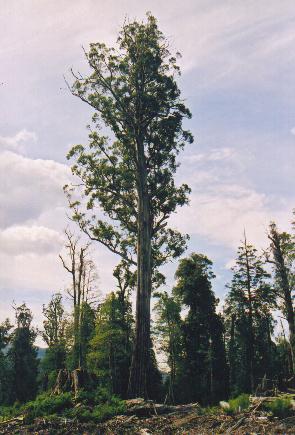 Mountain AshEucalyptus regnans
- River Red GumEucalyptus camaldulensis
-
 Argyle AppleEucalyptus cinerea
-
 Snow GumEucalyptus pauciflora
-
 JarrahEucalyptus marginata
-
 Cider GumEucalyptus gunnii
Compare
Questions and answers
What is the scientific name of the Mongarlowe Mallee?
The scientific name of the Mongarlowe Mallee is Eucalyptus recurva. Written with its author, the full name is Eucalyptus recurva Crisp.
Which family does the Mongarlowe Mallee belong to?
Eucalyptus recurva belongs to the family Myrtaceae, in the order Myrtales and the class Magnoliopsida.
Where is the Mongarlowe Mallee found?
Checklists and occurrence records place Eucalyptus recurva in 1 country: Australia.
What is the conservation status of the Mongarlowe Mallee?
The IUCN Red List category recorded for Eucalyptus recurva is Critically Endangered (CR).
Is mallee a type of Eucalyptus?
Mongarlowe Mallee is a Eucalyptus species described as a dense, multi-stemmed mallee shrub.[29]
What habitat do Eucalyptus grow in?
Mongarlowe Mallee grows on sloping sites in low heathland and along the margins of heathland and low woodland.[11]
Sources
Passages the profile rests on
- The mature crown consists of juvenile leaves with tips that curve downwards. Source passage: “The crown of mature trees is composed of juvenile leaves that are paler on the lower surface, up to 32 mm” — English Wikipedia
- The shrub typically grows to between 1.5 and 4.2 metres tall. Source passage: “typically grows to a height of 1.5–4.2 m (4 ft 11 in – 13 ft 9 in)” — English Wikipedia
- Young plants and coppice regrowth have sessile, elliptical to egg-shaped leaves arranged in opposite pairs. Source passage: “Young plants and coppice regrowth have sessile, elliptical to egg-shaped leaves that are arranged in opposite pairs” — English Wikipedia
- Young plant leaves measure 10–20 mm long and 4–8 mm wide. Source passage: “each leaf 10–20 mm (0.39–0.79 in) long and 4–8 mm (0.16–0.31 in) wide.” — English Wikipedia
- The juvenile leaves in mature crowns can reach 32 mm in length and measure 4–8 mm in width. Source passage: “up to 32 mm (1.3 in) long and 4–8 mm (0.16–0.31 in) wide” — English Wikipedia
- The flower buds occur in groups of three in leaf axils on unbranched peduncles. Source passage: “The flower buds are arranged in leaf axils in groups of three on an unbranched peduncle” — English Wikipedia
- Mature flower buds are 4–5 mm long and 3–4 mm wide. Source passage: “Mature buds are broadly oval and wrinkled, 4–5 mm (0.16–0.20 in) long and 3–4 mm (0.12–0.16 in) wide” — English Wikipedia
- The flowers are white. Source passage: “the flowers are white.” — English Wikipedia
- The fruit is a woody, hemispherical capsule with protruding valves. Source passage: “The fruit is a woody, hemispherical capsule 3–4 mm” — English Wikipedia
- The fruit capsules measure 3–4 mm long and 4–5 mm wide. Source passage: “capsule 3–4 mm (0.12–0.16 in) long and 4–5 mm (0.16–0.20 in) wide” — English Wikipedia
- The species grows on sloping sites in low heathland and along the margins of heathland and low woodland. Source passage: “found on sloping sites in low heathland and at the margins of the heathland and low woodland.” — English Wikipedia
- The species is restricted to four sites near Mongarlowe and Windellama in New South Wales. Source passage: “growing at four sites near Mongarlowe and Windellama.” — English Wikipedia
- The species is endemic to a small area of New South Wales. Source passage: “is endemic to a small area of New South Wales.” — English Wikipedia
- Flowering occurs during a short period in January. Source passage: “Flowering occurs in a short period in January” — English Wikipedia
- The age at which Eucalyptus recurva reaches maturity is not yet known. Source passage: “the exact age at which it reaches maturity is not yet clear” — visit.anbg.gov.au
- Natural cross-pollination is extremely unlikely because the surviving wild plants are widely separated and flower infrequently at different times. Source passage: “Being widely separated from each other and flowering infrequently and at different times, natural cross-pollination is extremely unlikely.” — visit.anbg.gov.au
- Hand cross-pollination is currently the only known method of producing viable seed. Source passage: “Currently, the only known way to produce viable seed is through hand cross-pollination.” — visit.anbg.gov.au
- A hand-pollination project conducted in December 2022 produced seeds on one plant. Source passage: “In December 2022, a hand-pollination project conducted as part of the Saving Our Species program resulted in the production of seeds on a single plant.” — visit.anbg.gov.au
- Nursery staff raised 41 viable seedlings from the hand-cross-pollinated seeds twelve months after the pollination project. Source passage: “Twelve months later, ANBG nursery staff successfully sowed and raised 41 viable seedlings from this cross-pollination effort.” — visit.anbg.gov.au
- None of the plants held at the Australian National Botanic Gardens has yet produced seed. Source passage: “None of the plants at ANBG has yet produced seed.” — visit.anbg.gov.au
- The only known grafted plant took 16 years to reach maturity. Source passage: “it took the only known grafted plant 16 years to reach maturity.” — visit.anbg.gov.au
- Visitation pressure, plant-material collection, soil compaction and vehicle damage are identified as threats to the species. Source passage: “The main threat to the species is visitation pressure, including collection of plant material, soil compaction and damage by vehicles.” — English Wikipedia
- The Australian National Botanic Gardens holds clones of four of the six known wild plants. Source passage: “a number of ‘clones’ of 4 of the 6 wild plants are now held at the Gardens” — visit.anbg.gov.au
- Efforts are underway to graft the two remaining wild individuals. Source passage: “efforts are underway to successfully graft the other two.” — visit.anbg.gov.au
- A conservation seed orchard using grafts from all six known wild individuals is planned for the Australian National Botanic Gardens. Source passage: “A conservation seed orchard will be established in future at the ANBG using grafts from all 6 known wild individuals.” — visit.anbg.gov.au
- The planned seed orchard will support pollen collection and targeted hand-pollination. Source passage: “the collection of pollen from any individuals that flower and targeted hand-pollination work.” — visit.anbg.gov.au
- The species is being conserved through collaboration between the NSW Government Saving our Species program and the Australian National Botanic Gardens. Source passage: “The survival of these 6 trees is a key commitment of the NSW Government Saving our Species program, in partnership with ANBG.” — visit.anbg.gov.au
- The specific epithet recurva refers to the conspicuously backward-curving leaves. Source passage: “The specific epithet (recurva) is a Latin word meaning "curved backwards", referring to the conspicuously recurved leaves of this mallee.” — English Wikipedia
- Eucalyptus recurva is a dense, multi-stemmed mallee shrub with smooth bark. Source passage: “Eucalyptus recurva, commonly known as Mongarlowe mallee, is a species of dense mallee shrub” — English Wikipedia
Data
- Catalogue of Life, 2026-10-16 XR cc by
- Global Biodiversity Information Facility CC BY 4.0
- Wikidata CC0
- GeoNames CC BY 4.0
- Within the Catalogue of Life, this name comes from Synonymic Checklists of the Vascular Plants of the World cc by
References
- Crisp. (1988). Telopea 3(2): 223 (1988). where the name was published
This species in other databases
Page built on 27 November 2026. See how the catalog is made and all sources and licences.
Cite this page
ScientificNames.org. (2026). Eucalyptus recurva (Mongarlowe Mallee). Retrieved November 27, 2026, from https://scientificnames.org/species/eucalyptus-recurva
“Eucalyptus recurva (Mongarlowe Mallee).” ScientificNames.org, 2026, scientificnames.org/species/eucalyptus-recurva. Accessed 27 Nov. 2026.
ScientificNames.org. “Eucalyptus recurva (Mongarlowe Mallee).” Accessed November 27, 2026. https://scientificnames.org/species/eucalyptus-recurva.
@misc{scientificnames_eucalyptus_recurva_mongarlowe_mallee,
  author = {{ScientificNames.org}},
  title = {Eucalyptus recurva (Mongarlowe Mallee)},
  year = {2026},
  url = {https://scientificnames.org/species/eucalyptus-recurva},
  note = {Accessed 2026-11-27}
}