Species · Flowering plants
Timor White Gum Eucalyptus urophylla
The scientific name of the Timor White Gum is Eucalyptus urophylla. It is a species of flowering plant in the family Myrtaceae (myrtle family), order Myrtales.
- Scientific name
- Eucalyptus urophylla S.T.Blake
- Common name
- Timor White Gum
- Genus
- Eucalyptus
- Family
- Myrtaceae (Myrtle Family)
- Order
- Myrtales
- Class
- Magnoliopsida
- Red List category
- EN Endangered
- Recorded in
- 6 countries
- Name status
- accepted in the Catalogue of Life

Overview
Timor White Gum (Eucalyptus urophylla S.T.Blake) is an evergreen flowering tree in the family Myrtaceae, order Myrtales and class Magnoliopsida. It is native to the Lesser Sunda Islands of Indonesia, where it occurs from sea level to approximately 3,000 metres. It typically reaches 25–45 metres in height and produces cup-shaped capsule fruits containing four to six small black semicircular seeds.
Written 26 November 2026 from the sources listed below. Each statement was checked against the passage it cites; statements that could not be supported were removed.
Appearance
Timor White Gum is an evergreen tree that can develop into a gnarled shrub under unfavourable growing conditions. It typically reaches 25–45 metres in height, and its trunk can reach 2 metres in diameter.[1][2][3]
The trunk is typically straight and lacks branches for up to 30 metres. Its bark is generally persistent, subfibrous, smooth to shallowly textured, longitudinally fissured, and red-brown to brown, with a potentially rougher texture near the base.[4][5][6]
Adult leaves are evergreen, discoloured, subopposite to alternate, and broadly lanceolate. They measure 10–15 centimetres long and 5–8 centimetres wide.[7][8]
The flowers measure 8–22 millimetres in length.[9]
Habitat
Timor White Gum occurs in monsoonal environments with two to eight dry months annually. It tolerates nutrient-poor soils that are damp and well aerated.[10][11]
It commonly grows in open, usually secondary montane forests on mountain slopes and in valleys. These habitats commonly have soils derived from basalt, schist, and slate, while limestone soils are uncommon.[12][13]
Reproduction and life cycle
Timor White Gum begins flowering after approximately two or three years. Flowering occurs during the dry season.[14][15]
The species produces simple axillary inflorescences with solitary umbels containing five to eight flowers. After flowering, it produces cup-shaped capsule fruits.[16][17]
Each fruit contains four to six small black semicircular seeds. The seeds mature approximately six months after flowering.[18][19]
Conservation
Timor White Gum is recognised as an invasive weed in Brazil.[20]
Uses
Timor White Gum is cultivated as plantation timber in humid and subhumid tropical countries outside its native range. It is also used for reforestation within its native range.[21][22]
Its wood is used to manufacture charcoal, furniture, building poles, fenceposts, wall panelling, fibreboard pulp, paper, and fuel.[23]
The species has been used to develop hybrid trees, including timber marketed under the name Lyptus.[24]
Classification of the Timor White Gum
| Kingdom | Plantae |
|---|---|
| Subkingdom | Pteridobiotina |
| Phylum | Tracheophyta |
| Class | Magnoliopsida |
| Order | Myrtales |
| Family | Myrtaceae (Myrtle Family) |
| Subfamily | Myrtoideae |
| Tribe | Eucalypteae |
| Genus | Eucalyptus (Gum) |
| Species | Eucalyptus urophylla S.T.Blake |
Where the Timor White Gum is found
Checklists and occurrence records place Eucalyptus urophylla in 6 countries. GBIF holds 495 georeferenced records of it.
Countries
Regions and cities with the most records
- Aileu, Timor Leste 45
- Aileu, Timor Leste 45
- Soe, Indonesia 28
- São Paulo, Brazil 26
- Dili, Timor Leste 22
- Campos do Jordão, Brazil 16
- Cova Lima, Timor Leste 12
- Venilale, Timor Leste 11
- Atsabe, Timor Leste 9
- Ainaro, Timor Leste 8
- Minas Gerais, Brazil 8
- Suai, Timor Leste 8
- Viqueque, Timor Leste 8
- Ermera, Timor Leste 7
- Manatuto, Timor Leste 6
- Rio Grande do Sul, Brazil 6
- Piracicaba, Brazil 5
- Rio das Pedras, Brazil 5
- Baucau, Timor Leste 4
- Itatinga, Brazil 4
- Kefamenanu, Indonesia 4
- Maluku, Indonesia 4
- Riacho Fundo, Brazil 4
- Ruteng, Indonesia 4
- Likisá, Timor Leste 3
2 more countries have a few records outside this range
These countries hold a few records of Eucalyptus urophylla but lie outside the range the checklists give for it. Such records are often zoo or garden specimens, museum material or vagrants, so the species is not counted as occurring there.
Range as the checklists state it
Borneo; Lesser Sunda Isl. (Bali, Lombok, Flores, Alor, Timor, Wetar); Moluccas
A number beside a place is its count of GBIF occurrence records. A place without a number comes from a checklist alone. Records show where a species has been observed or collected, which can include escapes and vagrants.
Common names
English
- Timor White Gum
- Timor Mountain Gum
Names in 4 other languages
- Chinese
- 尾叶桉, 尾葉桉
- Indonesian
- Ampupu
- Japanese
- ユーカリ・ウロフィラ
- Portuguese
- Eucalipto-da-serra-de-Timor
Related species
-
 Rainbow EucalyptusEucalyptus deglupta
-
 Southern Blue GumEucalyptus globulus
-
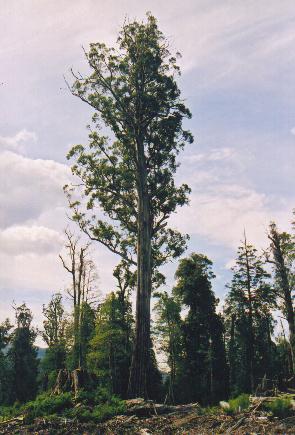 Mountain AshEucalyptus regnans
- River Red GumEucalyptus camaldulensis
-
 Argyle AppleEucalyptus cinerea
-
 Snow GumEucalyptus pauciflora
-
 JarrahEucalyptus marginata
-
 Cider GumEucalyptus gunnii
Compare
Questions and answers
What is the scientific name of the Timor White Gum?
The scientific name of the Timor White Gum is Eucalyptus urophylla. Written with its author, the full name is Eucalyptus urophylla S.T.Blake.
Which family does the Timor White Gum belong to?
Eucalyptus urophylla belongs to the family Myrtaceae, in the order Myrtales and the class Magnoliopsida.
Where is the Timor White Gum found?
Checklists and occurrence records place Eucalyptus urophylla in 6 countries: Indonesia, Brazil, Timor Leste, Malaysia, French Guiana and Suriname.
What is the conservation status of the Timor White Gum?
The IUCN Red List category recorded for Eucalyptus urophylla is Endangered (EN).
What other names does the Timor White Gum have?
Eucalyptus urophylla is also known in English as Timor Mountain Gum.
What is the common name for Eucalyptus urophylla?
The common name used here is Timor White Gum. Timor Mountain Gum is another English name on record.[1]
What are the defining characteristics of an eucalyptus tree?
Timor White Gum is an evergreen tree, typically 25–45 metres tall, with a straight trunk that lacks branches for up to 30 metres. Its adult leaves are broadly lanceolate, and its bark is generally persistent, longitudinally fissured, and red-brown to brown.[1][4][5][7][2]
What are the genera and species of eucalyptus trees?
The genus is Eucalyptus and the species is Eucalyptus urophylla.[1]
What is the scientific name and family of eucalyptus?
The scientific name is Eucalyptus urophylla S.T.Blake, and its family is Myrtaceae.[1]
Sources
Passages the profile rests on
- Eucalyptus urophylla is an evergreen tree that can also develop into a gnarled shrub under unfavourable growing conditions. Source passage: “This Eucalypt is an evergreen tree that typically grows to a height of 25 to 45 metres (82 to 148 ft) but can also be gnarled shrub when growing conditions are unfavourable.” — English Wikipedia
- The tree typically reaches a height of 25–45 metres. Source passage: “This Eucalypt is an evergreen tree that typically grows to a height of 25 to 45 metres (82 to 148 ft)” — English Wikipedia
- The trunk can reach a diameter of 2 metres. Source passage: “The trunk can have a diameter of up to 2 m (7 ft).” — English Wikipedia
- The trunk is typically straight and lacks branches for up to 30 metres. Source passage: “The tree has a straight bole with no branches present on the trunk for up to 30 m (98 ft).” — English Wikipedia
- The bark is generally persistent, subfibrous, smooth to shallowly textured, longitudinally fissured, and red-brown to brown. Source passage: “The appearance of the bark is variable depending on conditions but is typically persistent and subfibrous, smooth to shallow with close longitudinal fissures and red-brown to brown in colour.” — English Wikipedia
- The bark can have a rougher texture near the base of the trunk. Source passage: “It will sometimes have a rougher texture mostly at the base of the trunk.” — English Wikipedia
- Adult leaves are evergreen, discoloured, subopposite to alternate, and broadly lanceolate. Source passage: “The discolourous evergreen adult leaves have a subopposite to alternate, arrangement and are a broadly lanceolate shape” — English Wikipedia
- Adult leaves measure 10–15 centimetres long and 5–8 centimetres wide. Source passage: “with a length of 10 to 15 centimetres (4 to 6 in) and a width of 5 to 8 cm (2 to 3 in).” — English Wikipedia
- The flowers measure 8–22 millimetres in length. Source passage: “containing five to eight flowers that are 8 to 22 millimetres (0.315 to 0.866 in) in length.” — English Wikipedia
- The species occurs in monsoonal environments with two to eight dry months annually. Source passage: “E. urophylla has an elevation range from sea level up to around 3,000 metres (9,843 ft). It is endemic to monsoonal areas with two to eight dry months per year.” — English Wikipedia
- The species tolerates nutrient-poor soils that are damp and well aerated. Source passage: “It can tolerate nutrient poor soils that are damp and well aerated.” — English Wikipedia
- The species commonly grows in open, usually secondary montane forests on mountain slopes and in valleys. Source passage: “It often dominates in open, usually secondary montane forests where it is found on mountain slopes and in valleys.” — English Wikipedia
- Its habitats commonly have soils derived from basalt, schist, and slate, while limestone soils are uncommon. Source passage: “It is often found in soils based on basalt, schist and slate but rarely round limestone.” — English Wikipedia
- The species begins flowering after approximately two or three years. Source passage: “E. urophylla will commence flowering after two or three years during the dry season.” — English Wikipedia
- Flowering occurs during the dry season. Source passage: “E. urophylla will commence flowering after two or three years during the dry season.” — English Wikipedia
- The species produces simple axillary inflorescences with solitary umbels containing five to eight flowers. Source passage: “It produces a simple axillary inflorescence called a conflorescence with a solitary umbels containing five to eight flowers” — English Wikipedia
- After flowering, the species produces cup-shaped capsule fruits. Source passage: “After flowering it produces a gum-nut or fruit. The fruit has the shape of a typical Eucalypt capsule. It is cup-shaped” — English Wikipedia
- Each fruit contains four to six small black semicircular seeds. Source passage: “The fruit contains four to six small black semicircular seeds.” — English Wikipedia
- The seeds mature approximately six months after flowering. Source passage: “The seeds are mature six months after flowering.” — English Wikipedia
- The species is recognised as an invasive weed in Brazil. Source passage: “It is recognised as an invasive weed in Brazil” — English Wikipedia
- The species is cultivated as plantation timber in humid and subhumid tropical countries outside its native range. Source passage: “It is also common in other countries with humid and subhumid tropical climates where it is grown as plantation timber.” — English Wikipedia
- The species is used for reforestation within its native range. Source passage: “It can be used for reforestation purposes in its native range.” — English Wikipedia
- The wood is used to manufacture charcoal, furniture, building poles, fenceposts, wall panelling, fibreboard pulp, paper, and fuel. Source passage: “The tree is used to make a variety of products including charcoal, furniture, building poles, fenceposts, wall paneling, fibreboard pulp and paper and fuel.” — English Wikipedia
- The species has been used to develop hybrid trees, including the timber marketed under the name Lyptus. Source passage: “It has been used to produce hybrid species as it appears to be insect-resistant, including a timber with a trade name of "Lyptus", hybridised with Eucalyptus grandis, commonly known as the rose gum or flooded gum.” — English Wikipedia
Data
- Catalogue of Life, 2026-10-16 XR cc by
- Global Biodiversity Information Facility CC BY 4.0
- Wikidata CC0
- GeoNames CC BY 4.0
- Wikimedia Commons per image; credit shown with each image
- Within the Catalogue of Life, this name comes from Synonymic Checklists of the Vascular Plants of the World cc by
References
- Blake, S. T. (1977). Austrobaileya 1(1): 7 (1977). where the name was published
This species in other databases
- Catalogue of Life 3BQM7
- Wikidata Q5405723
- iNaturalist 478921
- World Flora Online wfo-0000956096
- GRIN 405679
Page built on 27 November 2026. See how the catalog is made and all sources and licences.
Cite this page
ScientificNames.org. (2026). Eucalyptus urophylla (Timor White Gum). Retrieved November 27, 2026, from https://scientificnames.org/species/eucalyptus-urophylla
“Eucalyptus urophylla (Timor White Gum).” ScientificNames.org, 2026, scientificnames.org/species/eucalyptus-urophylla. Accessed 27 Nov. 2026.
ScientificNames.org. “Eucalyptus urophylla (Timor White Gum).” Accessed November 27, 2026. https://scientificnames.org/species/eucalyptus-urophylla.
@misc{scientificnames_eucalyptus_urophylla_timor_white_gum,
  author = {{ScientificNames.org}},
  title = {Eucalyptus urophylla (Timor White Gum)},
  year = {2026},
  url = {https://scientificnames.org/species/eucalyptus-urophylla},
  note = {Accessed 2026-11-27}
}