Species · Flowering plants
Green Mallee Eucalyptus viridis
The scientific name of the Green Mallee is Eucalyptus viridis. It is a species of flowering plant in the family Myrtaceae (myrtle family), order Myrtales.
- Scientific name
- Eucalyptus viridis R.T.Baker
- Common name
- Green Mallee
- Genus
- Eucalyptus
- Family
- Myrtaceae (Myrtle Family)
- Order
- Myrtales
- Class
- Magnoliopsida
- Red List category
- LC Least Concern
- Recorded in
- 2 countries
- Name status
- accepted in the Catalogue of Life

Overview
Eucalyptus viridis occurs in Queensland, New South Wales, Victoria and South Australia. It is a mallee or small tree with one to many trunks arising from a lignotuber.
Written 27 November 2026 from the sources listed below. Each statement was checked against the passage it cites; statements that could not be supported were removed.
Appearance
Green mallee is a mallee or small tree with a lignotuber and one to many trunks. It typically reaches a height of 8–10 metres and can grow as a shrub or small tree approximately 2–9 metres tall.[1][2][3][4]
The lower stems have rough, dark grey, fibrous or flaky bark, while the upper stems usually have smooth greyish-brown bark. The stems measure between 6 and 19 centimetres wide.[5][6]
Adult leaves are glossy green and narrow linear to narrow lance-shaped, curved or narrow elliptical. They measure 50–130 mm long and 3–15 mm wide.[7][8]
Young plants and coppice regrowth have leaves measuring 45–95 mm long and 2–11 mm wide. The lateral leaf veins are faint and the oil glands are prominent.[9][10]
Flower buds occur in groups of seven or nine. Mature buds are oval to diamond-shaped, have conical opercula and measure 4–8 mm long and 2–4 mm wide.[11][12][13]
The flowers are white or creamy-white and can be abundant. The woody, cup-shaped fruit measures 3–7 mm long and 3–5 mm wide, with capsule valves positioned near the rim.[14][15][16][17]
Habitat
Green mallee grows in mallee shrubland on plains and gently undulating country. It occurs in semi-arid regions of south-eastern Australia.[18][19]
It grows in areas with low rainfall, high summer temperatures and few winter frosts. Its soils range from poorly drained clays to well-drained sand.[20][21]
Dense thickets can develop on stony ridges and loamy-clayey soils.[22]
Green mallee occurs in Queensland, New South Wales, Victoria and South Australia. In Queensland it occurs mainly south of Taroom; in New South Wales it occurs on the western slopes and plains.[23][24][25]
In Victoria it occurs near Bendigo and in Little Desert National Park. In South Australia it occurs in the south-east and Flinders Ranges, and it also occurs near Inglewood in southern Queensland.[26][27][28][29]
Behaviour
Green mallee has high drought resistance once established.[30]
Reproduction and life cycle
Green mallee has been observed flowering in most months of the year. Flowering mainly occurs during spring and summer in the four states where it occurs.[31][32]
Some populations in New South Wales and Victoria flower during August, while some populations in New South Wales and Queensland flower during March.[33][34]
Green mallee can be propagated from seed collected throughout the year. The seeds germinate readily without requiring pretreatment.[35][36]
Uses
Green mallee is important for honey production. Its leaves are harvested for cineole-based eucalyptus oil.[37][38]
It is used as a low windbreak in hot and dry climates. Dense thickets can provide shelter for livestock.[39][40]
Green mallee is suitable for use as a street tree because of its low growth and low water requirements. It is cultivated in some New South Wales gardens.[41][42]
Planting green mallee in gardens can attract insects and nectar-eating birds.[43]
Similar species
Green mallee closely resembles Eucalyptus pulchella in its slender leaves, buds and clusters of small capsules. Eucalyptus pulchella differs by having more rounded opercula and a single trunk.[44][45]
Classification of the Green Mallee
| Kingdom | Plantae |
|---|---|
| Subkingdom | Pteridobiotina |
| Phylum | Tracheophyta |
| Class | Magnoliopsida |
| Order | Myrtales |
| Family | Myrtaceae (Myrtle Family) |
| Subfamily | Myrtoideae |
| Tribe | Eucalypteae |
| Genus | Eucalyptus (Gum) |
| Species | Eucalyptus viridis R.T.Baker |
Where the Green Mallee is found
Checklists and occurrence records place Eucalyptus viridis in 2 countries across Oceania. GBIF holds 2,102 georeferenced records of it.
Countries
Regions and cities with the most records
- New South Wales, Australia 1,147
- Victoria, Australia 590
- Queensland, Australia 155
- Bendigo, Australia 128
- South Australia, Australia 99
- Dubbo, Australia 48
- Auckland, New Zealand 7
- Mangere, New Zealand 7
- Otahuhu, New Zealand 7
- Otara, New Zealand 7
- Papatoetoe, New Zealand 7
- Bacchus Marsh, Australia 5
- Manukau City, New Zealand 5
- Manurewa, New Zealand 4
- Australian Capital Territory, Australia 3
2 more countries have a few records outside this range
These countries hold a few records of Eucalyptus viridis but lie outside the range the checklists give for it. Such records are often zoo or garden specimens, museum material or vagrants, so the species is not counted as occurring there.
Range as the checklists state it
Australia (Flinders Range, South Australia, and from near Inglewood, Queensland, S through the lower western slopes of the Great Dividing Range and nearby plains of New South Wales and in the Bendigo area, Victoria)
A number beside a place is its count of GBIF occurrence records. A place without a number comes from a checklist alone. Records show where a species has been observed or collected, which can include escapes and vagrants.
Common names
English
- Green Mallee
Names in 2 other languages
- Chinese
- 绿桉
- Japanese
- ミドリユーカリ
Synonyms
3 other scientific names have been used for this species and are now treated as synonyms of Eucalyptus viridis.
- Eucalyptus acacioides A.Cunn. ex Maiden
- Eucalyptus aenea K.D.Hill
- Eucalyptus viridis var. ovata Blakely
Related species
-
 Rainbow EucalyptusEucalyptus deglupta
-
 Southern Blue GumEucalyptus globulus
-
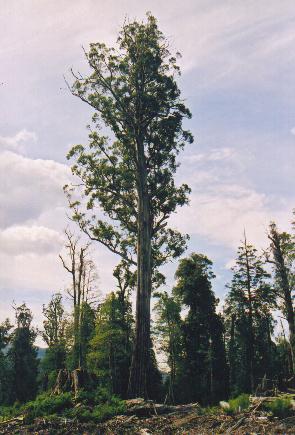 Mountain AshEucalyptus regnans
- River Red GumEucalyptus camaldulensis
-
 Argyle AppleEucalyptus cinerea
-
 Snow GumEucalyptus pauciflora
-
 JarrahEucalyptus marginata
-
 Cider GumEucalyptus gunnii
Compare
Questions and answers
What is the scientific name of the Green Mallee?
The scientific name of the Green Mallee is Eucalyptus viridis. Written with its author, the full name is Eucalyptus viridis R.T.Baker.
Which family does the Green Mallee belong to?
Eucalyptus viridis belongs to the family Myrtaceae, in the order Myrtales and the class Magnoliopsida.
Where is the Green Mallee found?
Checklists and occurrence records place Eucalyptus viridis in 2 countries: Australia and New Zealand.
What is the conservation status of the Green Mallee?
The IUCN Red List category recorded for Eucalyptus viridis is Least Concern (LC).
Sources
Passages the profile rests on
- Eucalyptus viridis is a mallee or small tree with a lignotuber. Source passage: “Eucalyptus viridis is a mallee or small tree that typically grows to a height of 8–10 m (26–33 ft) and forms a lignotuber.” — English Wikipedia
- The species typically reaches a height of 8–10 metres. Source passage: “typically grows to a height of 8–10 m (26–33 ft)” — English Wikipedia
- The species can grow as a shrub or small tree approximately 2–9 metres tall. Source passage: “This plant can either be a shrub or small tree growing between approximately 2 to 9m tall.” — anbg.gov.au
- The species has one to many trunks arising from a lignotuber. Source passage: “It has a lignotuber with one to many trunks.” — anbg.gov.au
- The lower stems have rough, dark grey, fibrous or flaky bark, while the upper stems usually have smooth greyish-brown bark. Source passage: “It has rough, dark grey, fibrous or flaky bark on the lower stems, smooth greyish brown above, or sometimes entirely smooth bark.” — English Wikipedia
- The stems measure between 6 and 19 centimetres wide. Source passage: “The stem width varies between 6 and 19cm.” — anbg.gov.au
- Adult leaves are glossy green and narrow linear to narrow lance-shaped, curved or narrow elliptical. Source passage: “Adult leaves are glossy green, narrow linear to narrow lance-shaped, curved or narrow elliptical leaves” — English Wikipedia
- Adult leaves measure 50–130 mm long and 3–15 mm wide. Source passage: “leaves that are 50–130 mm (2.0–5.1 in) long and 3–15 mm (0.12–0.59 in) wide” — English Wikipedia
- Young plants and coppice regrowth have leaves measuring 45–95 mm long and 2–11 mm wide. Source passage: “leaves that are 45–95 mm (1.8–3.7 in) long and 2–11 mm (0.079–0.433 in) wide.” — English Wikipedia
- The lateral leaf veins are faint and the oil glands are prominent. Source passage: “The lateral veins are faint and the oil glands are prominent.” — anbg.gov.au
- The flower buds occur in groups of seven or nine. Source passage: “flower buds are arranged on the ends of branchlets in groups of seven or nine” — English Wikipedia
- Mature flower buds measure 4–8 mm long and 2–4 mm wide. Source passage: “Mature buds are oval to diamond-shaped, 4–8 mm (0.16–0.31 in) long and 2–4 mm (0.079–0.157 in) wide” — English Wikipedia
- The mature flower buds are oval to diamond-shaped and have conical opercula. Source passage: “Mature buds are oval to diamond-shaped, 4–8 mm (0.16–0.31 in) long and 2–4 mm (0.079–0.157 in) wide with a conical operculum.” — English Wikipedia
- The flowers are white. Source passage: “Flowering has been observed in most months and the flowers are white.” — English Wikipedia
- The flowers are described as creamy-white and can be abundant. Source passage: “The flowers are creamy-white and can be abundant.” — anbg.gov.au
- The woody, cup-shaped fruit measures 3–7 mm long and 3–5 mm wide. Source passage: “The fruit is a woody, cup-shaped capsule 3–7 mm (0.12–0.28 in) long and 3–5 mm (0.12–0.20 in) wide” — English Wikipedia
- The fruit capsules have valves positioned near the rim. Source passage: “with the valves near rim level.” — English Wikipedia
- The species grows in mallee shrubland on plains and gently undulating country. Source passage: “The green mallee grows in mallee shrubland on plains and gently undulating country.” — English Wikipedia
- The species occurs in semi-arid regions of south-eastern Australia. Source passage: “This species of eucalypt has a disjunct distribution in semi-arid regions of south-eastern Australia.” — anbg.gov.au
- The species grows in areas with low rainfall, high summer temperatures and few winter frosts. Source passage: “Green Mallee generally grows in areas with low rainfall, high summer temperatures and few winter frosts” — anbg.gov.au
- The species grows in soils ranging from poorly drained clays to well-drained sand. Source passage: “It can be found in a wide range of soils, from poorly drained clays to well drained sand.” — anbg.gov.au
- Dense thickets can develop on stony ridges and loamy-clayey soils. Source passage: “Dense thickets can form on stony ridges and loamy-clayey soils.” — anbg.gov.au
- The species occurs in Queensland, New South Wales, Victoria and South Australia. Source passage: “It naturally occurs in Queensland, New South Wales, Victoria and South Australia.” — inaturalist.org
- In Queensland, the species occurs mainly south of Taroom. Source passage: “It occurs in Queensland, mainly south from Taroom” — English Wikipedia
- In New South Wales, the species occurs on the western slopes and plains. Source passage: “through the western slopes and plains of New South Wales” — English Wikipedia
- In Victoria, the species occurs near Bendigo and in Little Desert National Park. Source passage: “near Bendigo and in the Little Desert National Park in Victoria” — English Wikipedia
- In South Australia, the species occurs in the south-east. Source passage: “to the south east of South Australia.” — English Wikipedia
- The species occurs in the Flinders Ranges of South Australia. Source passage: “South Australia eg. in the Flinders Ranges;” — anbg.gov.au
- The species occurs near Inglewood in southern Queensland. Source passage: “in southern Queensland e.g. near Inglewood.” — anbg.gov.au
- The species has high drought resistance once established. Source passage: “This tree is very hardy once established and has a high drought resistance.” — anbg.gov.au
- The species has been observed flowering in most months of the year. Source passage: “Flowering has been observed in most months” — English Wikipedia
- Flowering mainly occurs during spring and summer in the four states where the species occurs. Source passage: “The main time in the four states is spring to summer” — anbg.gov.au
- Some populations in New South Wales and Victoria flower during August. Source passage: “Some New South Wales and Victorian plants flower during August” — anbg.gov.au
- Some populations in New South Wales and Queensland flower during March. Source passage: “while some others in New South Wales and Queensland flower during March.” — anbg.gov.au
- The species can be propagated from seed collected throughout the year. Source passage: “Propagation is from seed which can be collected throughout the year.” — anbg.gov.au
- The seeds germinate readily without requiring pretreatment. Source passage: “It does not need to be pre-treated and should be kept in an air tight container at room temperature. This species germinates readily.” — anbg.gov.au
- The species is important for honey production. Source passage: “This eucalypt is important in the production of honey” — English Wikipedia
- The leaves are harvested for cineole-based eucalyptus oil. Source passage: “the leaves are harvested for cineole based eucalyptus oil.” — English Wikipedia
- The species is used as a low windbreak in hot and dry climates. Source passage: “Where the climate is hot and dry it can be used as a low windbreak.” — anbg.gov.au
- Dense thickets of the species can provide shelter for livestock. Source passage: “These thickets can be useful as stock shelter.” — anbg.gov.au
- The species is suitable for use as a street tree because of its low growth and low water requirements. Source passage: “The low growth and low water requirements make it suitable to be used as a street tree.” — anbg.gov.au
- The species is cultivated in some New South Wales gardens. Source passage: “This species is used in some New South Wales gardens.” — anbg.gov.au
- Planting the species in gardens can attract insects and nectar-eating birds. Source passage: “Planting it in a garden may increase the wildlife as the flowers attract insects and nectar eating birds.” — anbg.gov.au
- Eucalyptus viridis closely resembles Eucalyptus pulchella in its slender leaves, buds and clusters of small capsules. Source passage: “Remarkably similar to E. pulchella, which you can see elsewhere on campus, in its very slender leaves (which may also smell pepperminty), buds, and clusters of small capsules in bunches of 7–11.” — trees.stanford.edu
- Eucalyptus pulchella differs from Eucalyptus viridis by having more rounded opercula and a single trunk. Source passage: “E. pulchella has much more rounded opercula, however, and is clearly a single-trunked tree, not a mallee.” — trees.stanford.edu
Data
- Catalogue of Life, 2026-10-16 XR cc by
- Global Biodiversity Information Facility CC BY 4.0
- Wikidata CC0
- GeoNames CC BY 4.0
- Wikimedia Commons per image; credit shown with each image
- Within the Catalogue of Life, this name comes from Synonymic Checklists of the Vascular Plants of the World cc by
References
- Baker, R. T. (1900). Proc. Linn. Soc. New South Wales 25: 316 (1900). where the name was published
This species in other databases
- Catalogue of Life 3BQMT
- Wikidata Q4529689
- iNaturalist 552575
- World Flora Online wfo-0000956136
- GRIN 16106
Page built on 27 November 2026. See how the catalog is made and all sources and licences.
Cite this page
ScientificNames.org. (2026). Eucalyptus viridis (Green Mallee). Retrieved November 27, 2026, from https://scientificnames.org/species/eucalyptus-viridis
“Eucalyptus viridis (Green Mallee).” ScientificNames.org, 2026, scientificnames.org/species/eucalyptus-viridis. Accessed 27 Nov. 2026.
ScientificNames.org. “Eucalyptus viridis (Green Mallee).” Accessed November 27, 2026. https://scientificnames.org/species/eucalyptus-viridis.
@misc{scientificnames_eucalyptus_viridis_green_mallee,
  author = {{ScientificNames.org}},
  title = {Eucalyptus viridis (Green Mallee)},
  year = {2026},
  url = {https://scientificnames.org/species/eucalyptus-viridis},
  note = {Accessed 2026-11-27}
}