Species · Birds
Peregrine Falcon Falco peregrinus
The scientific name of the Peregrine Falcon is Falco peregrinus. It is a species of bird in the family Falconidae (falcons), order Falconiformes. The name dates from 1771.
- Scientific name
- Falco peregrinus Tunstall, 1771
- Common name
- Peregrine Falcon
- Genus
- Falco
- Family
- Falconidae (Falcons)
- Order
- Falconiformes
- Class
- Aves
- Red List category
- LC Least Concern
- Environment
- terrestrial
- Recorded in
- 219 countries
- Name status
- accepted in the Catalogue of Life

Overview
Falco peregrinus occurs on nearly every part of Earth except extreme polar regions, very high mountains, and most tropical rainforests. It is distinguished by its blue-grey back, barred white underparts, black head, and long, pointed wings.
Written 24 November 2026 from the sources listed below. Each statement was checked against the passage it cites; statements that could not be supported were removed.
Appearance
Adult Peregrine Falcons typically have bluish-black to slate-grey backs and long, pointed wings. Their white to rusty underparts have thin dark brown or black bands.[1][2]
The black head and cheek moustache contrast with the pale neck sides and white throat. The black feather patch below the eyes is called the malar stripe.[3][4]
The cere and feet are yellow, while the beak and claws are black. Immature Peregrine Falcons are browner than adults and have streaked rather than barred underparts.[5][6]
The body length ranges from 34–58 cm, and the wingspan ranges from 74 to 120 cm. Females can be up to 30% larger than males.[7][8][9]
Males weigh between 330 and 1,000 g, while females weigh between 700 and 1,500 g.[10][11]
Habitat
The species occupies a variety of habitats, particularly those with cliffs for nesting and open areas for foraging. It occurs in tundra and coastal habitats, where greater densities may be found.[12][13]
Peregrine Falcons normally nest on cliff edges and also use tall human-made structures as nesting sites.[14][15]
Diet
The Peregrine Falcon's diet consists almost exclusively of medium-sized birds. It sometimes hunts small mammals, small reptiles, and insects.[16][17]
Feral pigeons are a major prey species for Peregrine Falcon populations and provide a staple food source for many urban populations.[18][19]
Behaviour
The Peregrine Falcon is known for its speed. Many northern populations migrate.[20][21]
Reproduction and life cycle
Peregrine Falcons reach sexual maturity at one year of age. They nest in a scrape, usually on cliff edges or tall artificial structures.[22][23]
The Indian Peregrine Falcon subspecies typically lays three to four eggs per clutch. Its chicks fledge after approximately 48 days.[24][25]
Conservation
Peregrine Falcon populations declined in many areas because of widespread pesticide use, particularly DDT. Populations recovered following the DDT ban in the early 1970s, nesting-site protection, and releases into the wild.[26][27]
Uses
The Peregrine Falcon is used in falconry because of its hunting ability, trainability, versatility, and availability through captive breeding.[28]
The species has been used as a religious, royal, or national symbol across different civilizations and historical periods.[29]
Classification of the Peregrine Falcon
| Kingdom | Animalia |
|---|---|
| Phylum | Chordata |
| Subphylum | Vertebrata |
| Infraphylum | Gnathostomata |
| Parvphylum | Osteichthyes |
| Megaclass | Tetrapoda |
| Class | Aves (Bird) |
| Order | Falconiformes (Falcons) |
| Family | Falconidae (Falcons) |
| Subfamily | Falconinae |
| Genus | Falco (Falcons) |
| Species | Falco peregrinus Tunstall, 1771 |
Where the Peregrine Falcon is found
Checklists and occurrence records place Falco peregrinus in 219 countries across Africa, Asia, North America, Oceania and South America. GBIF holds 2,688,195 georeferenced records of it.
Countries
- Afghanistan 14
- Aland Islands 34
- Albania 98
- Algeria 509
- Andorra 94
- Angola 88
- Anguilla 126
- Antigua and Barbuda 128
- Argentina 10,533
- Armenia 342
- Aruba 1,344
- Australia 81,647
- Austria 4,321
- Azerbaijan 344
- Bahamas 664
- Bahrain 7
- Bangladesh 761
- Barbados 481
- Belarus 62
- Belgium 73,954
- Belize 3,462
- Benin 17
- Bermuda 610
- Bhutan 312
- Bolivia 336
- Bonaire, Saint Eustatius and Saba 543
- Bosnia and Herzegovina 11
- Botswana 104
- Brazil 4,996
- British Indian Ocean Territory 3
- British Virgin Islands 53
- Brunei 19
- Bulgaria 1,813
- Burkina Faso 17
- Burundi 3
- Cabo Verde 59
- Cambodia 489
- Cameroon 75
- Canada 176,674
- Cayman Islands 864
- Chad 10
- Chile 7,638
- China 9,781
- Christmas Island 27
- Colombia 4,117
- Comoros 13
- Costa Rica 9,188
- Croatia 231
- Cuba 2,288
- Curacao 627
- Cyprus 1,606
- Czechia 2,984
- Democratic Republic of the Congo 75
- Denmark 129,873
- Djibouti 33
- Dominica 27
- Dominican Republic 549
- Ecuador 3,105
- Egypt 255
- El Salvador 2,697
- Equatorial Guinea 12
- Eritrea 10
- Estonia 2,830
- Eswatini 44
- Ethiopia 562
- Falkland Islands 1,006
- Faroe Islands 4
- Fiji 49
- Finland 15,832
- France 117,758
- French Guiana 296
- Gabon 20
- Gambia 53
- Georgia 1,527
- Germany 32,772
- Ghana 118
- Gibraltar 628
- Greece 4,586
- Greenland 605
- Grenada 112
- Guadeloupe 698
- Guatemala 1,573
- Guernsey 173
- Guinea 19
- Guinea-Bissau 26
- Guyana 469
- Haiti 54
- Honduras 1,799
- Hong Kong 2,664
- Hungary 1,171
- Iceland 19
- India 25,743
- Indonesia 939
- Iran 345
- Iraq 42
- Ireland 8,181
- Isle of Man 6,334
- Israel 7,139
- Italy 18,353
- Ivory Coast 25
- Jamaica 316
- Japan 665
- Jersey 283
- Jordan 73
- Kazakhstan 254
- Kenya 1,149
- Kosovo 3
- Kuwait 130
- Kyrgyzstan 112
- Laos 73
- Latvia 83
- Lebanon 48
- Lesotho 46
- Liberia 20
- Libya 16
- Liechtenstein 23
- Lithuania 230
- Luxembourg 468
- Macao 70
- Madagascar 615
- Malawi 78
- Malaysia 2,221
- Mali 7
- Malta 80
- Martinique 43
- Mauritania 65
- Mayotte 61
- Mexico 28,792
- Moldova 34
- Monaco 36
- Mongolia 213
- Montenegro 5
- Montserrat 90
- Morocco 2,531
- Mozambique 179
- Myanmar 307
- Namibia 560
- Nepal 2,137
- New Caledonia 151
- Nicaragua 1,085
- Niger 9
- Nigeria 105
- North Korea 18
- North Macedonia 18
- Northern Mariana Islands 10
- Norway 82,670
- Oman 576
- Pakistan 144
- Palau 14
- Palestinian Territory 315
- Panama 4,832
- Papua New Guinea 143
- Paraguay 406
- Peru 5,719
- Philippines 1,661
- Poland 4,383
- Portugal 20,795
- Puerto Rico 2,522
- Qatar 53
- Republic of the Congo 10
- Romania 814
- Russia 6,749
- Rwanda 34
- Saint Barthelemy 26
- Saint Kitts and Nevis 38
- Saint Lucia 116
- Saint Martin 106
- Saint Pierre and Miquelon 179
- Saint Vincent and the Grenadines 69
- San Marino 22
- Saudi Arabia 131
- Senegal 638
- Serbia 43
- Sierra Leone 14
- Singapore 1,697
- Sint Maarten 104
- Slovakia 600
- Slovenia 42
- Solomon Islands 12
- Somalia 23
- South Africa 16,621
- South Korea 4,904
- Spain 86,657
- Sri Lanka 1,234
- Sudan 46
- Suriname 406
- Svalbard and Jan Mayen 5
- Sweden 224,717
- Switzerland 9,063
- Syria 19
- Taiwan 26,754
- Tajikistan 42
- Tanzania 563
- Thailand 4,156
- The Netherlands 208,598
- Timor Leste 66
- Togo 15
- Trinidad and Tobago 1,597
- Tunisia 222
- Turkey 5,960
- Turkmenistan 8
- Turks and Caicos Islands 86
- U.S. Virgin Islands 260
- Uganda 249
- Ukraine 1,208
- United Arab Emirates 1,249
- United Kingdom 115,141
- United States 999,507
- United States Minor Outlying Islands 137
- Uruguay 577
- Uzbekistan 81
- Vanuatu 101
- Vatican 31
- Venezuela 1,626
- Vietnam 434
- Western Sahara 74
- Yemen 73
- Zambia 172
- Zimbabwe 599
Regions and cities with the most records
- California, United States 172,670
- England, United Kingdom 87,957
- New York, United States 82,248
- New Jersey, United States 64,154
- Ontario, Canada 51,611
- Quebec, Canada 50,982
- Massachusetts, United States 47,133
- Washington, United States 40,584
- Texas, United States 39,908
- Västra Götaland, Sweden 36,480
- British Columbia, Canada 36,265
- Arizona, United States 36,038
- Queens, United States 35,351
- Florida, United States 34,845
- Skåne, Sweden 34,670
- Oregon, United States 34,569
- Pennsylvania, United States 32,836
- New York City, United States 32,507
- Halland, Sweden 30,243
- Brooklyn, United States 28,960
- Illinois, United States 26,996
- Hoboken, United States 26,749
- West New York, United States 25,864
- Union City, United States 25,797
- North Bergen, United States 25,700
- South Denmark, Denmark 25,633
- Hoofddorp, The Netherlands 25,502
- Gelderland, The Netherlands 25,435
- Manhattan, United States 25,312
- New South Wales, Australia 24,644
- Victoria, Australia 24,590
- Jersey City, United States 24,416
- Zaandam, The Netherlands 24,121
- Amsterdam, The Netherlands 24,053
- Zaanstad, The Netherlands 23,876
- Amstelveen, The Netherlands 23,590
Range as the checklists state it
Europe & Northern Asia (excluding China)
Middle America
North America
South America
A number beside a place is its count of GBIF occurrence records. A place without a number comes from a checklist alone. Records show where a species has been observed or collected, which can include escapes and vagrants.
Common names
English
- Peregrine Falcon
- Duck Hawk
- Dutch Hawk
- Great-footed Hawk
- Rock Falcon
- Wandering Falcon
- Peregrine
Names in 102 other languages
- Afrikaans
- Slegvalk, Swerfvalk
- Albanian
- Petriti, krahathadra, krahathata, krahëthati
- Arabic
- الشاهين, الشاهين الشاهين, باز البط, شاهين, شيهانه, صقر جوّال
- Armenian
- Սապսան
- Asturian
- falcón, ferre moru, ferre palomberu, palomberu
- Azerbaijani
- Şahin
- Basque
- Belatz handi, Belatz handia
- Belarusian
- Сокал-падарожнiк, Сокал-падарожнік
- Breton
- Falc'hun pirc'hirin, Falc'hun pirc’hirin
- Bulgarian
- Сокол скитник
- Catalan
- falcó pelegrí
- Chinese
- 游隼, 遊隼
- Croatian
- sivi sokol
- Czech
- sokol stěhovavý
- Dutch
- slechtvalk
- Esperanto
- migra falko
- Estonian
- rabapistrik
- Faroese
- Ferðafalkur
- Finnish
- muuttohaukka
- French
- Faucon pèlerin
- Galician
- Falcón peregrino
- Georgian
- შავარდენი
- German
- Wanderfalke
- Greek
- Πετρίτης
- Hebrew
- בז נודד
- Hungarian
- vándorsólyom
- Icelandic
- Förufálki
- Indonesian
- Alap-alap kawah
- Italian
- Pellegrino, falco pellegrino
- Japanese
- ハヤブサ
- Kazakh
- Лашын
- Korean
- 매
- Latvian
- lielais piekūns
- Lithuanian
- sakalas keleivis
- Luxembourgish
- Spuervull, Wanderfallek
- Macedonian
- сив сокол
- Malagasy
- Voromahery
- Malay
- Falko Beialang
- Malayalam
- Kaayalpullu കായൽ പുള്ള്, കായൽപ്പുള്ള്
- Maltese
- Bies
- Marathi
- बहिरी ससाणा
- Mongolian
- Эгэл шонхор
- Northern Sami
- Bárbmofálli
- Norwegian
- vandrefalk
- Occitan
- Moisset pelegrin
- Papiamento
- Falki Peregrino
- Persian
- بحری, شاهین بحری
- Polish
- sokół wędrowny
- Portuguese
- falcão-peregrino
- Romanian
- şoim călător, şoimul călător, Șoim călător
- Russian
- Сапса́н (настоя́щий со́кол), настоящий сокол, сапсан
- Scottish Gaelic
- Seabhag, Seabhag-ghorm, danar, fabhcún gorm, lannair, seabhag ghorm, seabhag-sealgair, seabhagan gorma
- Serbian
- Sivi soko, Sivi soko - сиви соко, Сиви соко
- Slovak
- sokol sťahovavý
- Slovenian
- sokol selec
- Sotho
- Leubane
- Spanish
- Halcón de Patos, Halcón peregrino
- Swahili
- Kozi Tembere
- Swedish
- pilgrimsfalk
- Tamil
- பொரி வல்லூறு, வல்லூறு
- Telugu
- పెరెగ్రైన్ ఫాల్కన్
- Thai
- เหยี่ยวเพเรกริน
- Tswana
- Phakwê
- Turkish
- Bayağı doğan, gok dogan, gök doğan
- Ukrainian
- cапсан
- Vietnamese
- Cắt lớn
- Welsh
- Hebogiaid Tramor, hebog tramor
- Xhosa
- Ukhetshe
- Zulu
- uHeshe
- als
- Tubehabch
- arg
- Falcón peregrín
- che
- Leça
- chv
- Чӑн кӑйкӑр
- cor
- Falghun pryeryn, Falhun prierin
- cos
- Falcu columbaghju
- frr
- Waanerfalk
- fry
- Noardske falk
- gcf
- Malfini
- glv
- Shirragh y ree
- grn
- Taguato ro'y
- hat
- Grigri pelren
- iku
- Kigaviarsuk
- kal
- kiinaaleeraq
- kbd
- Къэргъей
- kir
- Ылаачын
- kjh
- Ылачын
- kwn
- Kakodi
- lbe
- Лачин
- lez
- Гьакӏан кард
- lim
- Doevestoater
- mwl
- Gabilan de las palombas
- nrm
- Êcouffl'ye
- oji
- Miskonaniisi
- pms
- Farcon
- pnb
- پیریگرائن فالکن
- roh
- Falcun pelegrin
- sna
- Rukodzi
- srd
- Astori perdighinu
- tso
- Rigamani
- tyv
- Аът баштыг шаңгыр
- vls
- Slechtvoolke
- wln
- Fåcon perlin
Synonyms
3 other scientific names have been used for this species and are now treated as synonyms of Falco peregrinus.
- Falco japinensis Gmeiln.1789
- Falco leucogenys Brehm
- Falco peregrinus gobicus Stegmann
Subspecies and varieties
- Falco peregrinus anatum (American Peregrine Falcon) subspecies
- Falco peregrinus babylonicus (Red-capped Peregrine) subspecies
- Falco peregrinus brookei (Maltese Falcon) subspecies
- Falco peregrinus calidus (Siberian Peregrine Falcon) subspecies
- Falco peregrinus cassini (Pallid Falcon) subspecies
- Falco peregrinus ernesti (Ernest's Peregrine Falcon) subspecies
- Falco peregrinus furuitii (Iwo Peregrine Falcon) subspecies
- Falco peregrinus japonensis (Eastern Peregrine Falcon) subspecies
- Falco peregrinus macropus (Australian Peregrine Falcon) subspecies
- Falco peregrinus madens (Cape Verde Peregrine Falcon) subspecies
- Falco peregrinus minor (African Peregrine Falcon) subspecies
- Falco peregrinus nesiotes (Peregrine Falcon) subspecies
- Falco peregrinus pealei (Peale's Peregrine Falcon) subspecies
- Falco peregrinus pelegrinoides (Barbary Falcon) subspecies
- Falco peregrinus peregrinator (Shaheen Falcon) subspecies
- Falco peregrinus peregrinus (Eurasian Peregrine Falcon) subspecies
- Falco peregrinus radama (Malagasy Peregrine Falcon) subspecies
- Falco peregrinus tundrius (Arctic Peregrine Falcon) subspecies
Related species
-
 Common KestrelFalco tinnunculus
-
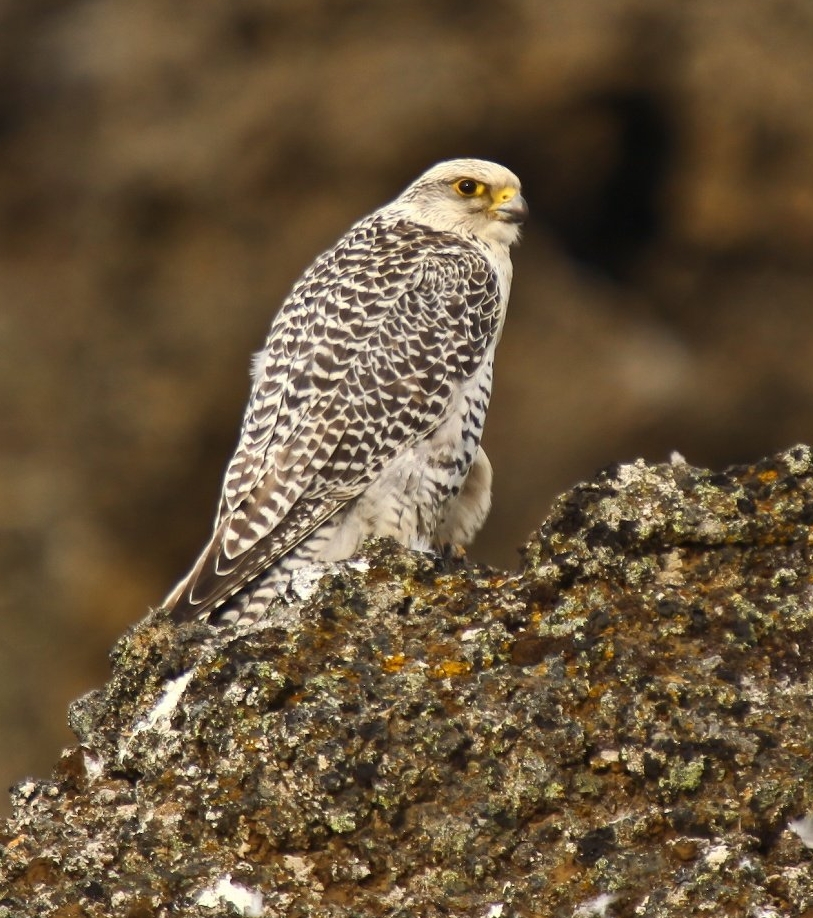 GyrfalconFalco rusticolus
-
 MerlinFalco columbarius
-
 American KestrelFalco sparverius
-
 Saker FalconFalco cherrug
-
 Eurasian HobbyFalco subbuteo
-
 Amur FalconFalco amurensis
-
 Lanner FalconFalco biarmicus
Compare
Questions and answers
What is the scientific name of the Peregrine Falcon?
The scientific name of the Peregrine Falcon is Falco peregrinus. Written with its author, the full name is Falco peregrinus Tunstall, 1771.
Which family does the Peregrine Falcon belong to?
Falco peregrinus belongs to the family Falconidae, in the order Falconiformes and the class Aves.
Where is the Peregrine Falcon found?
Checklists and occurrence records place Falco peregrinus in 219 countries, including United States, Sweden, The Netherlands, Canada, Denmark and France.
What is the conservation status of the Peregrine Falcon?
The IUCN Red List category recorded for Falco peregrinus is Least Concern (LC).
What other names does the Peregrine Falcon have?
Falco peregrinus is also known in English as Duck Hawk, Dutch Hawk, Great-footed Hawk, Rock Falcon, Wandering Falcon and Peregrine.
Sources
Passages the profile rests on
- Adult Peregrine Falcons typically have bluish-black to slate-grey backs and long, pointed wings. Source passage: “The back and the long pointed wings of the adult are usually bluish black to slate grey” — English Wikipedia
- The adult's white to rusty underparts have thin dark brown or black bands. Source passage: “The white to rusty underparts are barred with thin clean bands of dark brown or black.” — English Wikipedia
- The Peregrine Falcon has a black head and cheek moustache contrasting with its pale neck sides and white throat. Source passage: “The top of the head and a "moustache" along the cheeks are black, contrasting sharply with the pale sides of the neck and white throat.” — English Wikipedia
- The black feather patch below the eyes is called the malar stripe. Source passage: “The patch of black feathers below the falcon's eyes is called the malar stripe.” — English Wikipedia
- Its cere and feet are yellow, while its beak and claws are black. Source passage: “The cere is yellow, as are the feet, and the beak and claws are black.” — English Wikipedia
- Immature Peregrine Falcons are browner than adults and have streaked rather than barred underparts. Source passage: “An immature bird is much browner, with streaked, rather than barred, underparts” — English Wikipedia
- The Peregrine Falcon has a body length of 34–58 cm. Source passage: “The peregrine falcon has a body length of 34 to 58 cm (13–23 in)” — English Wikipedia
- Its wingspan ranges from 74 to 120 cm. Source passage: “a wingspan from 74 to 120 cm (29–47 in).” — English Wikipedia
- Female Peregrine Falcons can be up to 30% larger than males. Source passage: “the female measuring up to 30% larger than the male.” — English Wikipedia
- Male Peregrine Falcons weigh between 330 and 1,000 g. Source passage: “Males weigh 330 to 1,000 g (12–35 oz)” — English Wikipedia
- Female Peregrine Falcons weigh between 700 and 1,500 g. Source passage: “the noticeably larger females weigh 700 to 1,500 g (25–53 oz).” — English Wikipedia
- The species occupies a variety of habitats, particularly those with cliffs for nesting and open areas for foraging. Source passage: “Found in a variety of habitats, most with cliffs for nesting and open areas for foraging.” — wildlife.nh.gov
- The species occurs in tundra and coastal habitats, where greater densities may be found. Source passage: “While greater densities may occur in tundra and coastal habitats” — ecos.fws.gov
- Peregrine Falcons use tall human-made structures as nesting sites. Source passage: “taking advantage of tall buildings as nest sites” — English Wikipedia
- Peregrine Falcons normally nest on cliff edges. Source passage: “nests in a scrape, normally on cliff edges” — English Wikipedia
- The Peregrine Falcon's diet consists almost exclusively of medium-sized birds. Source passage: “Although its diet consists almost exclusively of medium-sized birds” — English Wikipedia
- The species sometimes hunts small mammals, small reptiles, and insects. Source passage: “the peregrine will sometimes hunt small mammals, small reptiles, or even insects.” — English Wikipedia
- Feral pigeons are a major prey species for Peregrine Falcon populations. Source passage: “Both are domesticated forms of the rock dove, and are a major prey species for peregrine populations.” — English Wikipedia
- Feral pigeons provide a staple food source for many urban Peregrine Falcon populations. Source passage: “feral pigeons support many peregrine populations as a staple food source, especially in urban settings.” — English Wikipedia
- The Peregrine Falcon is known for its speed. Source passage: “in the family Falconidae known for its speed.” — English Wikipedia
- Many northern Peregrine Falcon populations migrate. Source passage: “referring to the migratory habits of many northern populations.” — English Wikipedia
- Peregrine Falcons reach sexual maturity at one year of age. Source passage: “Reaching sexual maturity at one year” — English Wikipedia
- The species nests in a scrape, usually on cliff edges or tall artificial structures. Source passage: “nests in a scrape, normally on cliff edges or, in recent times, on tall human-made structures.” — English Wikipedia
- The Indian Peregrine Falcon subspecies typically lays three to four eggs per clutch. Source passage: “It has a clutch size of 3 to 4 eggs” — English Wikipedia
- Chicks of the Indian Peregrine Falcon subspecies fledge after approximately 48 days. Source passage: “with the chicks fledging time of 48 days” — English Wikipedia
- Peregrine Falcon populations declined in many areas because of widespread pesticide use, particularly DDT. Source passage: “The peregrine falcon became an endangered species in many areas because of the widespread use of various pesticides, especially DDT.” — English Wikipedia
- Peregrine Falcon populations recovered following the DDT ban in the early 1970s, nesting-site protection, and releases into the wild. Source passage: “Since the ban on DDT from the early 1970s, populations have recovered, supported by large-scale protection of nesting places and releases to the wild.” — English Wikipedia
- The Peregrine Falcon is used in falconry because of its hunting ability, trainability, versatility, and availability through captive breeding. Source passage: “The peregrine falcon is a well-respected falconry bird due to its strong hunting ability, high trainability, versatility, and availability via captive breeding.” — English Wikipedia
- The species has been used as a religious, royal, or national symbol across different civilizations and historical periods. Source passage: “It has also been used as a religious, royal, or national symbol across many eras and civilizations.” — English Wikipedia
Data
- Catalogue of Life, 2026-10-16 XR cc by
- Global Biodiversity Information Facility CC BY 4.0
- Wikidata CC0
- GeoNames CC BY 4.0
- Wikimedia Commons per image; credit shown with each image
- Within the Catalogue of Life, this name comes from The Integrated Taxonomic Information System cc0
References
- Ornithol. Brit.: 1. 1771 where the name was published
- Mayr, Ernst, and G. William Cottrell, eds. (1979). Check-List of Birds of the World, Vol. 1, Second Edition.
- Banks, R. C., R. W. McDiarmid, and A. L. Gardner. (1987). Checklist of Vertebrates of the United States, the U.S. Territories, and Canada. Resource Publication, No. 166.
- Dickinson, Edward C., ed. (2003). The Howard and Moore Complete Checklist of the Birds of the World, 3rd Edition.
- Gill, Frank, & and Minturn Wright. (2006). Birds of the World: Recommended English Names.
- Dickinson, E. C., and J. V. Remsen Jr., eds. (2013). The Howard and Moore Complete Checklist of the Birds of the World, 4th Edition, Vol. 1 Non-Passerines.
This species in other databases
- Catalogue of Life 3DTGL
- Wikidata Q30535
- iNaturalist 4647
- WoRMS urn:lsid:marinespecies.org:taxname:159153
- Avibase perfal
Page built on 24 November 2026. See how the catalog is made and all sources and licences.
Cite this page
ScientificNames.org. (2026). Falco peregrinus (Peregrine Falcon). Retrieved November 24, 2026, from https://scientificnames.org/species/falco-peregrinus
“Falco peregrinus (Peregrine Falcon).” ScientificNames.org, 2026, scientificnames.org/species/falco-peregrinus. Accessed 24 Nov. 2026.
ScientificNames.org. “Falco peregrinus (Peregrine Falcon).” Accessed November 24, 2026. https://scientificnames.org/species/falco-peregrinus.
@misc{scientificnames_falco_peregrinus_peregrine_falcon,
  author = {{ScientificNames.org}},
  title = {Falco peregrinus (Peregrine Falcon)},
  year = {2026},
  url = {https://scientificnames.org/species/falco-peregrinus},
  note = {Accessed 2026-11-24}
}