Species · Birds
Ground Woodpecker Geocolaptes olivaceus
The scientific name of the Ground Woodpecker is Geocolaptes olivaceus. It is a species of bird in the family Picidae (woodpecker), order Piciformes. The name dates from 1788.
- Scientific name
- Geocolaptes olivaceus (J. F. Gmelin, 1788)
- Common name
- Ground Woodpecker
- Genus
- Geocolaptes
- Family
- Picidae (Woodpecker)
- Order
- Piciformes
- Class
- Aves
- Red List category
- NT Near Threatened
- Recorded in
- 3 countries
- Name status
- accepted in the Catalogue of Life

Overview
The Ground Woodpecker is one of three ground-dwelling woodpecker species worldwide. It occurs in South Africa, Lesotho and Eswatini, with a distribution extending from the Cape Peninsula and Namaqualand northeastward to Mpumalanga. It has a red rump that becomes more conspicuous when it flies.
Written 26 November 2026 from the sources listed below. Each statement was checked against the passage it cites; statements that could not be supported were removed.
Similar species
The Ground Woodpecker is one of three ground-dwelling woodpecker species worldwide, alongside the Andean Flicker and Campo Flicker. It is closely related to woodpeckers in the genus Campethera.[1][2]
Appearance
The upperparts are greyish-brown with pale spots. The rump is red and becomes more conspicuous when the bird is flying.[3][4]
The upper surfaces of the wings and tail are brown with white barring. The underside of the tail is pale brown with lighter-coloured bars.[5][6]
The underparts are buff-coloured with a pink or red flush. The species has a long, slender black beak, pink or yellow irises and grey legs.[7][8][9]
Females have slightly less red and pink colouring than males. Juveniles resemble adult females.[10][11]
Habitat
The Ground Woodpecker inhabits barren, steep slopes covered with boulders in relatively cool hilly and mountainous regions. It occurs in mountainous areas of South Africa, Lesotho and Swaziland.[12][13]
Its distribution extends from the Cape Peninsula and Namaqualand northeastward to Mpumalanga. The species has not been recorded outside Southern Africa.[14][15]
Diet
Ants and their eggs, larvae and pupae make up most of the Ground Woodpecker's diet.[16]
Behaviour
The species usually lives in pairs or small groups. Its loud, raucous two-note call can be used to locate it.[17][18]
The Ground Woodpecker extracts ants and their developmental stages from dead wood or spaces between rocks using its long, sticky tongue. It also forages on the ground by flicking away dead leaves.[19][20]
The Ground Woodpecker often peers over or around rocks when intruders approach. Groups use a sentry system in which one bird watches for aerial predators from an elevated position.[21][22]
Another group member typically replaces the sentry approximately every ten minutes.[23]
Reproduction and life cycle
The Ground Woodpecker breeds during spring and early summer, from August to November. It nests in tunnels excavated in vertical banks beside streams or watercourses.[24][25]
A typical clutch consists of three glossy white eggs. The eggs are laid in a chamber at the end of the nesting tunnel.[26][27]
Classification of the Ground Woodpecker
| Kingdom | Animalia |
|---|---|
| Phylum | Chordata |
| Subphylum | Vertebrata |
| Infraphylum | Gnathostomata |
| Parvphylum | Osteichthyes |
| Megaclass | Tetrapoda |
| Class | Aves (Bird) |
| Order | Piciformes (Woodpeckers) |
| Family | Picidae (Woodpecker) |
| Subfamily | Picinae |
| Genus | Geocolaptes |
| Species | Geocolaptes olivaceus (J. F. Gmelin, 1788) |
Where the Ground Woodpecker is found
Checklists and occurrence records place Geocolaptes olivaceus in 3 countries across Africa. GBIF holds 14,963 georeferenced records of it.
Countries
Regions and cities with the most records
- Western Cape, South Africa 4,785
- KwaZulu-Natal, South Africa 3,056
- Free State, South Africa 2,836
- Eastern Cape, South Africa 1,157
- Phuthaditjhaba, South Africa 654
- Mpumalanga, South Africa 596
- Retreat, South Africa 585
- Muizenberg, South Africa 584
- Bethlehem, South Africa 527
- Rondebosch, South Africa 473
- Northern Cape, South Africa 450
- Mokhotlong District, Lesotho 419
- Thaba-Tseka, Lesotho 377
- Beaufort West, South Africa 367
- Cape Town, South Africa 362
- Grabouw, South Africa 315
- Somerset West, South Africa 265
- Harrismith, South Africa 246
- Tshiame, South Africa 203
- Fouriesburg, South Africa 170
- Paarl, South Africa 149
- Butha-Buthe, Lesotho 146
- Hermanus, South Africa 144
- Wellington, South Africa 117
- Butha-Buthe, Lesotho 109
- Maseru District, Lesotho 102
- Volksrust, South Africa 101
- Hlohlolwane, South Africa 88
- Hhohho Region, Eswatini 87
- Stellenbosch, South Africa 87
- Franschhoek, South Africa 80
- Mooi River, South Africa 80
- Le Roux, South Africa 79
- Wembesi, South Africa 68
- Daggakraal, South Africa 67
- Ashton, South Africa 60
Range as the checklists state it
Africa
A number beside a place is its count of GBIF occurrence records. A place without a number comes from a checklist alone. Records show where a species has been observed or collected, which can include escapes and vagrants.
Common names
English
- Ground Woodpecker
- Cape Ground Woodpecker
- Lesotho Ground Woodpecker
- Pale Ground Woodpecker
Names in 28 other languages
- Afrikaans
- Grondspeg
- Arabic
- نقار الخشب الأرضي
- Catalan
- picot terrestre
- Chinese
- 地啄木鸟, 非洲地啄木
- Croatian
- pozemni djetlić
- Czech
- datel zemní
- Danish
- Jordspætte
- Dutch
- Kaapse Grondspecht
- Esperanto
- grunda pego
- Estonian
- maarähn
- Finnish
- maatikka
- French
- Pic laboureur
- German
- Erdspecht
- Hungarian
- földi harkály
- Italian
- Picchio terragnolo
- Japanese
- イワキツツキ
- Lithuanian
- dirvinis genys
- Norwegian
- jordspett
- Polish
- dzięciolik ziemny, dzięcioł ziemny
- Portuguese
- pica-pau-das-rochas, pica-pau-terrestre
- Russian
- Земляной дятел
- Slovak
- žlna zemná
- Spanish
- Pito terrestre
- Swedish
- markspett
- Turkish
- Yer Ağaçkakanı
- Ukrainian
- дятел сіроголовий
- Welsh
- cnocell y ddaear
- Zulu
- umNqangqandolo
Synonyms
3 other scientific names have been used for this species and are now treated as synonyms of Geocolaptes olivaceus.
- Geocolaptes olivaceus olivaceus Gmelin, JF, 1788
- Picus olivaceus Gmelin, JF, 1788
- Picus terrestris Burchell, WJ, 1822
Related species
- Northern FlickerColaptes auratus
-
 Pileated WoodpeckerDryocopus pileatus
-
 Ivory-billed WoodpeckerCampephilus principalis
-
 Downy WoodpeckerDryobates pubescens
-
 Red-bellied WoodpeckerMelanerpes carolinus
-
 Great Spotted WoodpeckerDendrocopos major
-
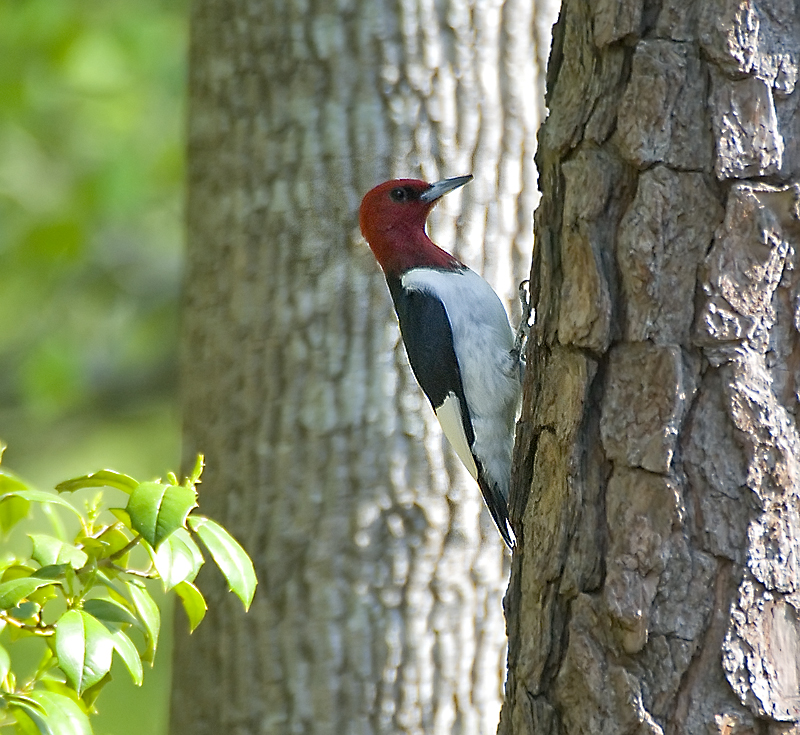 Red-headed WoodpeckerMelanerpes erythrocephalus
-
 Hairy WoodpeckerLeuconotopicus villosus
Compare
Questions and answers
What is the scientific name of the Ground Woodpecker?
The scientific name of the Ground Woodpecker is Geocolaptes olivaceus. Written with its author, the full name is Geocolaptes olivaceus (J. F. Gmelin, 1788).
Which family does the Ground Woodpecker belong to?
Geocolaptes olivaceus belongs to the family Picidae, in the order Piciformes and the class Aves.
Where is the Ground Woodpecker found?
Checklists and occurrence records place Geocolaptes olivaceus in 3 countries: South Africa, Lesotho and Eswatini.
What is the conservation status of the Ground Woodpecker?
The IUCN Red List category recorded for Geocolaptes olivaceus is Near Threatened (NT).
What other names does the Ground Woodpecker have?
Geocolaptes olivaceus is also known in English as Cape Ground Woodpecker, Lesotho Ground Woodpecker and Pale Ground Woodpecker.
What is the diet of woodpeckers?
Ants and their eggs, larvae and pupae make up most of the Ground Woodpecker's diet.[16]
What type of habitat do woodpeckers live in?
The Ground Woodpecker inhabits barren, steep slopes covered with boulders in relatively cool hilly and mountainous regions.[12]
Do woodpeckers eat from the ground?
The Ground Woodpecker forages on the ground by flicking away dead leaves.[20]
Sources
Passages the profile rests on
- The Ground Woodpecker is one of three ground-dwelling woodpecker species worldwide, alongside the Andean Flicker and Campo Flicker. Source passage: “one of only three ground-dwelling woodpeckers in the world (the others are the Andean and campo flickers).” — English Wikipedia
- The Ground Woodpecker is closely related to woodpeckers in the genus Campethera. Source passage: “It is closely related to the woodpeckers of the genus Campethera” — English Wikipedia
- The upperparts are greyish-brown and have pale spots. Source passage: “The upper parts are greyish-brown with pale spotting” — English Wikipedia
- The rump is red and becomes more conspicuous when the bird is flying. Source passage: “the rump is red and more visible in flight.” — English Wikipedia
- The upper surfaces of the wings and tail are brown with white barring. Source passage: “The upper sides of wings and tail are brown barred with white.” — English Wikipedia
- The underside of the tail is pale brown with lighter-coloured bars. Source passage: “The underside of the tail is pale brown, barred with paler colour.” — English Wikipedia
- The underparts are buff-coloured with a pink or red flush. Source passage: “The underparts are buff, flushed with pink or red.” — English Wikipedia
- The species has a long, slender black beak. Source passage: “The beak is black, long and slender” — English Wikipedia
- Its irises are pink or yellow, and its legs are grey. Source passage: “the irises pink or yellow and the legs grey.” — English Wikipedia
- Females have slightly less red and pink colouring than males. Source passage: “the female has slightly less red and pink than the male.” — English Wikipedia
- Juveniles resemble adult females. Source passage: “The juvenile is similar to the female.” — English Wikipedia
- The species inhabits barren, steep slopes covered with boulders in relatively cool hilly and mountainous regions. Source passage: “rather barren, steep, boulder-strewn slopes in relatively cool hilly and mountainous areas” — English Wikipedia
- The species is found in mountainous areas of South Africa, Lesotho and Swaziland. Source passage: “Geocolaptes olivaceus is found in mountainous areas of South Africa, Lesotho and Swaziland.” — datazone.birdlife.org
- Its distribution extends from the Cape Peninsula and Namaqualand northeastward to Mpumalanga. Source passage: “from the Cape Peninsula and Namaqualand to Mpumalanga.” — English Wikipedia
- The species has not been recorded outside Southern Africa. Source passage: “has yet to be recorded outside of Southern Africa.” — English Wikipedia
- Ants and their eggs, larvae and pupae make up most of the Ground Woodpecker's diet. Source passage: “The diet of the ground woodpecker consists mainly of ants with their eggs, larvae and pupae.” — English Wikipedia
- The species usually lives in pairs or small groups. Source passage: “It usually lives in pairs or small parties” — English Wikipedia
- Its loud, raucous two-note call can be used to locate it. Source passage: “is best located by its loud, raucous two-note call” — English Wikipedia
- The species extracts ants and their developmental stages from dead wood or spaces between rocks using its long, sticky tongue. Source passage: “These are extracted from dead wood or between rocks, using its long, sticky tongue.” — English Wikipedia
- The Ground Woodpecker also forages on the ground by flicking away dead leaves. Source passage: “It also feeds on the ground, flicking away dead leaves” — English Wikipedia
- The Ground Woodpecker often peers over or around rocks when intruders approach. Source passage: “It often peers over or around rocks at intruders.” — English Wikipedia
- Groups use a sentry system in which one bird watches for aerial predators from an elevated position. Source passage: “one bird does sentry duty from a high point, looking for aerial predators” — English Wikipedia
- Another group member typically replaces the sentry approximately every ten minutes. Source passage: “this bird is relieved every 10 minutes or so by another member of the group.” — English Wikipedia
- The Ground Woodpecker breeds during spring and early summer, from August to November. Source passage: “It breeds in spring and early summer (August to November)” — English Wikipedia
- The species nests in tunnels excavated in vertical banks beside streams or watercourses. Source passage: “nesting is in a tunnel excavated in the vertical bank of a stream or watercourse.” — English Wikipedia
- A typical clutch consists of three glossy white eggs. Source passage: “Usually three glossy white eggs are laid” — English Wikipedia
- The eggs are laid in a chamber at the end of the nesting tunnel. Source passage: “in a chamber at the end of the tunnel.” — English Wikipedia
Data
- Catalogue of Life, 2026-10-16 XR cc by
- Global Biodiversity Information Facility CC BY 4.0
- Wikidata CC0
- GeoNames CC BY 4.0
- Wikimedia Commons per image; credit shown with each image
- Within the Catalogue of Life, this name comes from The Integrated Taxonomic Information System cc0
References
- Gill, Frank, & and Minturn Wright. (2006). Birds of the World: Recommended English Names.
This species in other databases
Page built on 28 November 2026. See how the catalog is made and all sources and licences.
Cite this page
ScientificNames.org. (2026). Geocolaptes olivaceus (Ground Woodpecker). Retrieved November 28, 2026, from https://scientificnames.org/species/geocolaptes-olivaceus
“Geocolaptes olivaceus (Ground Woodpecker).” ScientificNames.org, 2026, scientificnames.org/species/geocolaptes-olivaceus. Accessed 28 Nov. 2026.
ScientificNames.org. “Geocolaptes olivaceus (Ground Woodpecker).” Accessed November 28, 2026. https://scientificnames.org/species/geocolaptes-olivaceus.
@misc{scientificnames_geocolaptes_olivaceus_ground_woodpecker,
  author = {{ScientificNames.org}},
  title = {Geocolaptes olivaceus (Ground Woodpecker)},
  year = {2026},
  url = {https://scientificnames.org/species/geocolaptes-olivaceus},
  note = {Accessed 2026-11-28}
}