Species · Birds
Madagascar Pratincole Glareola ocularis
The scientific name of the Madagascar Pratincole is Glareola ocularis. It is a species of bird in the family Glareolidae (coursers), order Charadriiformes. The name dates from 1833.
- Scientific name
- Glareola ocularis J. Verreaux, 1833
- Common name
- Madagascar Pratincole
- Genus
- Glareola
- Family
- Glareolidae (Coursers)
- Order
- Charadriiformes
- Class
- Aves
- Red List category
- NT Near Threatened
- Environment
- marine, terrestrial
- Recorded in
- 7 countries
- Name status
- accepted in the Catalogue of Life

Overview
Glareola ocularis breeds across Madagascar, excluding the country's extreme south-western region, and migrates to East Africa from May to August. It is described as the rarest species in the genus Glareola.
Written 26 November 2026 from the sources listed below. Each statement was checked against the passage it cites; statements that could not be supported were removed.
Habitat
The Madagascar Pratincole inhabits subtropical or tropical seasonally wet or flooded lowland grasslands. Its natural habitats include rivers and freshwater lakes.[1][2]
It also occupies rocky shores and intertidal marshes.[3]
Diet
The Madagascar Pratincole feeds on insects captured in flight.[4]
Reproduction and life cycle
The breeding season extends from October through December.[5]
Conservation
The Madagascar Pratincole is threatened by habitat loss.[6]
The species was assessed for the IUCN Red List in 2020.[7]
Classification of the Madagascar Pratincole
| Kingdom | Animalia |
|---|---|
| Phylum | Chordata |
| Subphylum | Vertebrata |
| Infraphylum | Gnathostomata |
| Parvphylum | Osteichthyes |
| Megaclass | Tetrapoda |
| Class | Aves (Bird) |
| Order | Charadriiformes (Auks) |
| Family | Glareolidae (Coursers) |
| Genus | Glareola (Pratincole) |
| Species | Glareola ocularis J. Verreaux, 1833 |
Where the Madagascar Pratincole is found
Checklists and occurrence records place Glareola ocularis in 7 countries across Africa. GBIF holds 1,563 georeferenced records of it.
Countries
Regions and cities with the most records
- Kilifi County, Kenya 221
- Malindi, Kenya 220
- Maevatanana, Madagascar 194
- Moramanga, Madagascar 188
- Maroantsetra, Madagascar 75
- Watamu, Kenya 60
- Ampasimanolotra, Madagascar 33
- Hell-Ville, Madagascar 24
- Tana River County, Kenya 17
- Toliara, Madagascar 9
- Manjakandriana, Madagascar 8
- Ambodifotatra, Madagascar 7
- Antsiranana, Madagascar 6
- Timbuktu, Mali 6
- Tombouctou, Mali 6
- Tôlanaro, Madagascar 6
- Ambohidratrimo, Madagascar 5
- Antananarivo, Madagascar 5
- Ivato, Madagascar 5
- Le Tampon, Reunion 5
- Mahajanga, Madagascar 5
- Toamasina, Madagascar 5
- Dzaoudzi, Mayotte 4
- Kaouéni, Mayotte 4
- Koungou, Mayotte 4
- Labattoir, Mayotte 4
- Lamu, Kenya 4
- Mamoudzou, Mayotte 4
- Morondava, Madagascar 4
- Alarobia, Madagascar 3
- Anjozorobe, Madagascar 3
- Kilifi, Kenya 3
- Ouangani, Mayotte 3
Range as the checklists state it
Africa
A number beside a place is its count of GBIF occurrence records. A place without a number comes from a checklist alone. Records show where a species has been observed or collected, which can include escapes and vagrants.
Common names
English
- Madagascar Pratincole
- MAPR
- Madagascan Pratincole
Names in 29 other languages
- Arabic
- أبو اليسر المدغشقري
- Bulgarian
- Мадагаскарски огърличник
- Catalan
- perdiu de mar de Madagascar
- Chinese
- 馬達加斯加燕鴴, 马岛燕鸻
- Croatian
- madagaskarska pješčarka
- Czech
- ouhorlík madagaskarský
- Danish
- Madagascar Braksvale, Madagaskarbraksvale
- Dutch
- Madagaskarvorkstaartplevier
- Esperanto
- madagaskara glareolo
- Estonian
- madagaskari pääsujooksur
- Finnish
- madagaskarinpääskykahlaaja
- French
- Glaréole malgache
- German
- Madagaskar-Brachschwalbe, Madagaskarbrachschwalbe
- Hungarian
- madagaszkári székicsér
- Italian
- Pernice di mare del Madagascar
- Japanese
- チャバラツバメチドリ
- Lithuanian
- madagaskarinė kregždūnė
- Malagasy
- Vikoviko, Vorombato
- Norwegian
- madagaskarbrakksvale
- Polish
- żwirowiec madagaskarski
- Portuguese
- perdiz-do-mar-de-madagascar, perdiz-do-mar-de-madagáscar, perdiz-do-mar-malgaxe
- Russian
- Мадагаскарская тиркушка
- Serbian
- Madagaskarski zijavac
- Slovak
- prieložník krátkochvostý
- Spanish
- Canastera malgache
- Swedish
- madagaskarvadarsvala
- Turkish
- Kara Bataklıkkırlangıcı
- Ukrainian
- дерихвіст мадагаскарський
- Welsh
- cwtiad-wennol Madagasgar
Related species
-
 Collared PratincoleGlareola pratincola
-
 Oriental PratincoleGlareola maldivarum
-
 Black-winged PratincoleGlareola nordmanni
-
 Small PratincoleGlareola lactea
-
 Rock PratincoleGlareola nuchalis
-
 Grey PratincoleGlareola cinerea
-
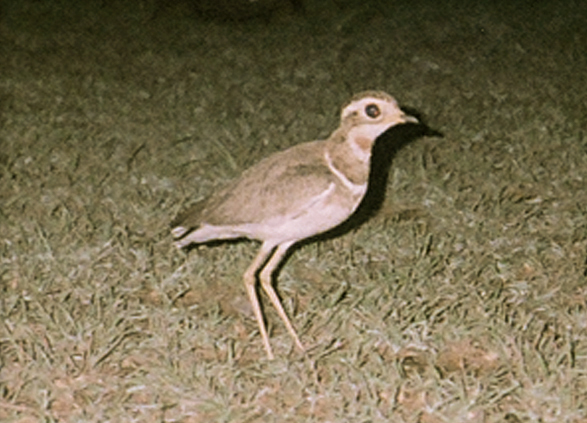 Jerdon's CourserRhinoptilus bitorquatus
-
 Cream-coloured CourserCursorius cursor
Compare
Questions and answers
What is the scientific name of the Madagascar Pratincole?
The scientific name of the Madagascar Pratincole is Glareola ocularis. Written with its author, the full name is Glareola ocularis J. Verreaux, 1833.
Which family does the Madagascar Pratincole belong to?
Glareola ocularis belongs to the family Glareolidae, in the order Charadriiformes and the class Aves.
Where is the Madagascar Pratincole found?
Checklists and occurrence records place Glareola ocularis in 7 countries, including Madagascar, Kenya, Tanzania, Mali, Reunion and Mayotte.
What is the conservation status of the Madagascar Pratincole?
The IUCN Red List category recorded for Glareola ocularis is Near Threatened (NT).
What other names does the Madagascar Pratincole have?
Glareola ocularis is also known in English as MAPR and Madagascan Pratincole.
Where does the Madagascar Pratincole breed?
It breeds across Madagascar, excluding the country's extreme south-western region.[8]
Where does the Madagascar Pratincole migrate?
During the austral winter, from May to August, it migrates to East Africa, where it is mainly found near the coast between Somalia and Mozambique.[9][10]
In which countries is the Madagascar Pratincole recorded?
It is recorded in the Comoros, Ethiopia, Kenya, and Madagascar.[11]
What threatens the Madagascar Pratincole?
It is threatened by habitat loss.[6]
When does the Madagascar Pratincole breed?
Its breeding season extends from October through December.[5]
Sources
Passages the profile rests on
- The species inhabits subtropical or tropical seasonally wet or flooded lowland grasslands. Source passage: “subtropical or tropical seasonally wet or flooded lowland grassland” — English Wikipedia
- The species uses rivers and freshwater lakes as natural habitats. Source passage: “rivers, freshwater lakes” — English Wikipedia
- The species also occupies rocky shores and intertidal marshes. Source passage: “rocky shores, and intertidal marshes” — English Wikipedia
- The species feeds on insects captured in flight. Source passage: “feeding on aerial insects on the” — ebird.org
- The species' breeding season extends from October through December. Source passage: “Its breeding season lasts from October to December” — English Wikipedia
- The species is threatened by habitat loss. Source passage: “threatened by habitat loss” — English Wikipedia
- The species was assessed for the IUCN Red List in 2020. Source passage: “has most recently been assessed for The IUCN Red List of Threatened Species in 2020.” — iucnredlist.org
- The species breeds across Madagascar, excluding the country's extreme south-western region. Source passage: “breeding across Madagascar (except in the country’s extreme south-west)” — English Wikipedia
- The species migrates to East Africa during the austral winter, from May to August. Source passage: “migrating to East Africa during the austral winter (May-August)” — English Wikipedia
- During its East African migration, the species is mainly found near the coast between Somalia and Mozambique. Source passage: “mainly found near the coast between Somalia and Mozambique” — English Wikipedia
- The species is recorded in the Comoros, Ethiopia, Kenya, and Madagascar. Source passage: “It is found in Comoros, Ethiopia, Kenya, Madagascar,” — inaturalist.org
Data
- Catalogue of Life, 2026-10-16 XR cc by
- Global Biodiversity Information Facility CC BY 4.0
- Wikidata CC0
- GeoNames CC BY 4.0
- Wikimedia Commons per image; credit shown with each image
- Within the Catalogue of Life, this name comes from The Integrated Taxonomic Information System cc0
References
- Peters, & James Lee. (1934). Check-List of Birds of the World, Vol. 2.
- Gill, Frank, & and Minturn Wright. (2006). Birds of the World: Recommended English Names.
- Dickinson, E. C., and J. V. Remsen Jr., eds. (2013). The Howard and Moore Complete Checklist of the Birds of the World, 4th Edition, Vol. 1 Non-Passerines.
This species in other databases
- Catalogue of Life 3G5XF
- Wikidata Q1275482
- iNaturalist 4607
- WoRMS urn:lsid:marinespecies.org:taxname:212722
- Avibase madpra1
Page built on 29 November 2026. See how the catalog is made and all sources and licences.
Cite this page
ScientificNames.org. (2026). Glareola ocularis (Madagascar Pratincole). Retrieved November 29, 2026, from https://scientificnames.org/species/glareola-ocularis
“Glareola ocularis (Madagascar Pratincole).” ScientificNames.org, 2026, scientificnames.org/species/glareola-ocularis. Accessed 29 Nov. 2026.
ScientificNames.org. “Glareola ocularis (Madagascar Pratincole).” Accessed November 29, 2026. https://scientificnames.org/species/glareola-ocularis.
@misc{scientificnames_glareola_ocularis_madagascar_pratincole,
  author = {{ScientificNames.org}},
  title = {Glareola ocularis (Madagascar Pratincole)},
  year = {2026},
  url = {https://scientificnames.org/species/glareola-ocularis},
  note = {Accessed 2026-11-29}
}