Species · Birds
Golden Parakeet Guaruba guarouba
The scientific name of the Golden Parakeet is Guaruba guarouba. It is a species of bird in the family Psittacidae (macaws), order Psittaciformes. The name dates from 1788.
- Scientific name
- Guaruba guarouba (J. F. Gmelin, 1788)
- Common name
- Golden Parakeet
- Genus
- Guaruba
- Family
- Psittacidae (Macaws)
- Order
- Psittaciformes
- Class
- Aves
- Red List category
- VU Vulnerable
- Recorded in
- 1 country
- Name status
- accepted in the Catalogue of Life

Overview
Guaruba guarouba inhabits drier upland rainforests in the Brazilian Amazon. It has predominantly bright yellow plumage, green flight feathers and an entirely yellow tail.
Written 26 November 2026 from the sources listed below. Each statement was checked against the passage it cites; statements that could not be supported were removed.
Appearance
The Golden Parakeet has predominantly bright yellow plumage with green flight feathers and an entirely yellow tail. It has a large horn-colored grey beak, pale-pink bare eye rings, brown irises and pink legs.[1][2][3][4]
Adults measure 34–36 cm in length.[5]
Juveniles have duller plumage, with less yellow and more green than adults. Their heads and necks are predominantly green, their backs are green and yellow, their upper tail surfaces are mostly green and their breasts are greenish.[6][7]
Juveniles have pale-grey eye rings and brown legs.[8]
Habitat
The Golden Parakeet inhabits drier upland rainforests in the Brazilian Amazon. It is also recorded in humid forest and old second-growth forest.[9][10]
During the nonbreeding dry season, it occupies tall forest. During breeding, it moves into open areas along forest edges, including agricultural fields.[11][12]
Diet
The Golden Parakeet feeds on mango, muruci and açai fruits. Its diet also includes seeds of Croton matouensis.[13][14]
It also feeds on agricultural crops, particularly maize.[15]
Behaviour
The Golden Parakeet is social and performs feeding, sleeping and breeding activities together. Group members cooperate in raising young through a breeding system involving helpers.[16][17]
Juveniles are playful but may become aggressive toward their peers. Several group members vigorously defend nests against toucans.[18][19]
Reproduction and life cycle
The Golden Parakeet reaches sexual maturity at approximately three years of age. Its breeding season extends from November through February.[20][21]
It nests in high trees inside relatively deep nesting cavities and lays an average clutch of four white eggs. The eggs average 37.1 by 29.9 mm in dimensions.[22][23][24]
Breeding adults aggressively guard their eggs. The incubation period lasts approximately 30 days, with male and female birds taking turns incubating.[25][26][27]
Young birds are initially covered in white down that darkens within approximately one week. Wing feathers begin developing by the end of the third week after hatching.[28][29]
Young adults tend to produce infertile clutches during their early reproductive years until approximately six to eight years of age.[30]
Conservation
The Golden Parakeet is classified as Vulnerable on the IUCN Red List. Its estimated population is between 10,000 and 20,000 individuals.[31][32]
Deforestation and capture of wild individuals for aviculture are major threats to the species. It is listed in Appendix I of CITES.[33][34]
An international conservation initiative involving the Brazilian government and several partner organizations is raising captive-bred young for reintroduction into natural habitats.[35]
Uses
Wild Golden Parakeets have been illegally trapped for the pet trade. The species is also hunted locally for food and sport.[36][37]
Similar species
Molecular studies identify Guaruba and Diopsittaca as sister genera. The Golden Parakeet is closely related to the golden-plumed parakeet (Leptosittaca branicki).[38][39]
Classification of the Golden Parakeet
| Kingdom | Animalia |
|---|---|
| Phylum | Chordata |
| Subphylum | Vertebrata |
| Infraphylum | Gnathostomata |
| Parvphylum | Osteichthyes |
| Megaclass | Tetrapoda |
| Class | Aves (Bird) |
| Order | Psittaciformes (Parrot) |
| Family | Psittacidae (Macaws) |
| Genus | Guaruba (Golden Parakeets) |
| Species | Guaruba guarouba (J. F. Gmelin, 1788) |
Where the Golden Parakeet is found
Checklists and occurrence records place Guaruba guarouba in 1 country across South America. GBIF holds 731 georeferenced records of it.
Countries
Regions and cities with the most records
- Pará, Brazil 559
- Belém, Brazil 160
- Ananindeua, Brazil 145
- Marituba, Brazil 137
- Maranhão, Brazil 49
- Santa Catarina, Brazil 26
- Joinville, Brazil 23
- Barcarena, Brazil 22
- Schroeder, Brazil 21
- Amazonas, Brazil 19
- Guaramirim, Brazil 8
- Paragominas, Brazil 7
- Açailândia, Brazil 5
- Benevides, Brazil 5
- Itaituba, Brazil 4
- Dom Eliseu, Brazil 3
- Pacajá, Brazil 3
- Ulianópolis, Brazil 3
3 more countries have a few records outside this range
These countries hold a few records of Guaruba guarouba but lie outside the range the checklists give for it. Such records are often zoo or garden specimens, museum material or vagrants, so the species is not counted as occurring there.
Range as the checklists state it
South America
A number beside a place is its count of GBIF occurrence records. A place without a number comes from a checklist alone. Records show where a species has been observed or collected, which can include escapes and vagrants.
Common names
English
- Golden Parakeet
- Golden Conure
Names in 32 other languages
- Arabic
- ببغاء ذهبي, كنيور ذهبي
- Armenian
- Ոսկե արատինգա
- Bulgarian
- Златна аратинга
- Catalan
- Cotorra guaruba, cotorra guarouba
- Chinese
- 金太陽鸚鵡, 金色鸚哥, 金鹦哥
- Czech
- aratinga žlutý
- Danish
- Guldparakit
- Dutch
- Goudparkiet
- Esperanto
- ora papago
- Estonian
- kuldaratinga
- Finnish
- kulta-aratti
- French
- Conure dorée
- German
- Goldsittich
- Hebrew
- קוניור זהוב
- Hungarian
- aranyaratinga
- Italian
- Parrocchetto dorato
- Japanese
- ニョオウインコ
- Lithuanian
- auksinė aratinga
- Malayalam
- ഗോൾഡൻ പരക്കീറ്റ്
- Norwegian
- gullparakitt
- Polish
- Złotniczka (ptak), złotniczka
- Portuguese
- Periquito-dourado, Quiiubatui, ararajuba, periquitão-dourado
- Russian
- Гуаруба, Золотая аратинга
- Serbian
- Zlatna jandaja
- Slovak
- klinochvost žltý
- Spanish
- Aratinga guaruba
- Turkish
- Altın Papağan
- Welsh
- Conwra euraid
- avk
- Zertekos (Guaruba)
- mrj
- Гваруба
- nav
- Shádiʼááhdę́ę́ʼ tsídii yáłtiʼí łitsooígíí
- pnb
- بسنتی میکاع
Synonyms
9 other scientific names have been used for this species and are now treated as synonyms of Guaruba guarouba.
- Aratinga guarouba (J. F. Gmelin, 1788)
- Aratinga guarouba guarouba (Gmelin, 1788) Sibley & Monroe, 1990 [1993]
- Aratinga guarouba guarouba (Gmelin, 1788) Stotz et al., 1996
- Guarouba guarouba Gmelin, JF, 1788
- Guarouba guarouba (Gmelin, 1788) — BirdLife International (2000)
- Guarouba guarouba (Gmelin, 1788) — SACC (2005)
- Guaruba guaruba Gmelin, JF, 1788
- Psittacus guarouba J. F. Gmelin, 1788
- Psittacus luteus Latham, J, 1790
Related species
-
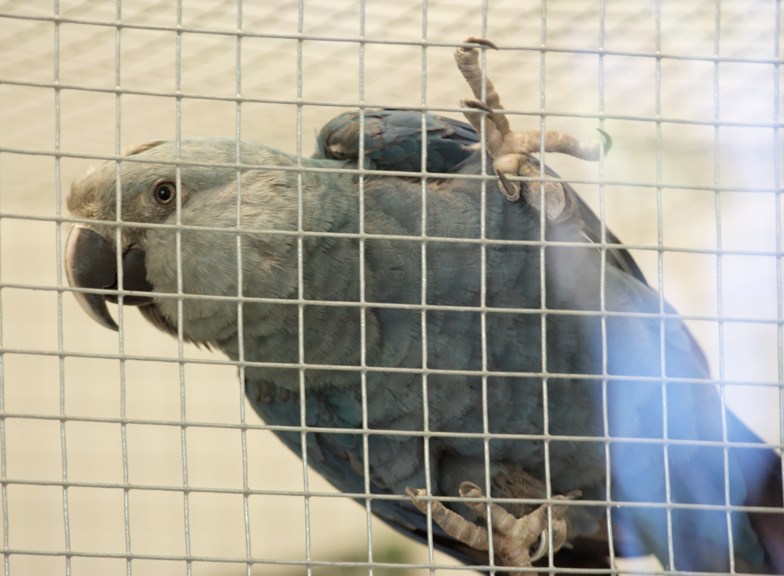 Spix's MacawCyanopsitta spixii
-
 Grey ParrotPsittacus erithacus
-
 Scarlet MacawAra macao
-
 Hyacinth MacawAnodorhynchus hyacinthinus
-
 Blue-and-yellow MacawAra ararauna
-
 Sun ConureAratinga solstitialis
-
 Green ParakeetPsittacara holochlorus
-
 Green-cheeked ParakeetPyrrhura molinae
Compare
Questions and answers
What is the scientific name of the Golden Parakeet?
The scientific name of the Golden Parakeet is Guaruba guarouba. Written with its author, the full name is Guaruba guarouba (J. F. Gmelin, 1788).
Which family does the Golden Parakeet belong to?
Guaruba guarouba belongs to the family Psittacidae, in the order Psittaciformes and the class Aves.
Where is the Golden Parakeet found?
Checklists and occurrence records place Guaruba guarouba in 1 country: Brazil.
What is the conservation status of the Golden Parakeet?
The IUCN Red List category recorded for Guaruba guarouba is Vulnerable (VU).
What other names does the Golden Parakeet have?
Guaruba guarouba is also known in English as Golden Conure.
Sources
Passages the profile rests on
- The species has predominantly bright yellow plumage with green flight feathers. Source passage: “Its plumage is mostly bright yellow, hence its common name, but it also possesses green remiges.” — English Wikipedia
- Its tail is entirely yellow. Source passage: “mainly yellow with green in the outer wings and with an all-yellow tail.” — English Wikipedia
- It has a large horn-colored grey beak. Source passage: “It has a large horn-colored (gray) beak” — English Wikipedia
- It has pale-pink bare eye rings, brown irises and pink legs. Source passage: “pale-pink bare eye rings, brown irises, and pink legs.” — English Wikipedia
- Adults measure 34–36 cm in length. Source passage: “The golden parakeet is 34–36 cm (13–14 in) long” — English Wikipedia
- Juveniles have duller plumage with less yellow and more green than adults. Source passage: “Juveniles are duller and have less yellow and more green plumage than the adults.” — English Wikipedia
- Juveniles have predominantly green heads and necks, green and yellow backs, mostly green upper tail surfaces and greenish breasts. Source passage: “the juvenile's head and neck are mostly green, the back is green and yellow, the upper side of tail is mostly green, the breast is greenish” — English Wikipedia
- Juveniles have pale-grey eye rings and brown legs. Source passage: “the eye rings are pale-gray, and the legs are brown.” — English Wikipedia
- The species inhabits drier upland rainforests in the Brazilian Amazon. Source passage: “It lives in the drier, upland rainforests in Amazonian Brazil” — English Wikipedia
- The species is recorded in humid forest and old second-growth forest. Source passage: “Found in humid forest, old second growth, ...” — ebird.org
- During the nonbreeding dry season, the species occupies tall forest. Source passage: “during the nonbreeding season, which coincided with the dry season, they occupied the tall forest.” — English Wikipedia
- During breeding, the species moves into open areas along forest edges, including agricultural fields. Source passage: “during the breeding season, they left the tall forest and entered open areas on the edge of the forest such as fields used in agriculture.” — English Wikipedia
- The species feeds on mango, muruci and açai fruits. Source passage: “feeding on fruits such as mango, muruci and açai” — English Wikipedia
- Its diet includes seeds of Croton matouensis. Source passage: “seeds (including Croton matouensis” — English Wikipedia
- The species also feeds on agricultural crops, particularly maize. Source passage: “and crop plants, particularly maize.” — English Wikipedia
- The species is social and performs feeding, sleeping and breeding activities together. Source passage: “Golden parakeets are a social species, living, feeding, sleeping, and even breeding together.” — English Wikipedia
- Group members cooperate in raising young through a breeding system involving helpers. Source passage: “pairs are aided by a number of helpers which aid in the raising of the young.” — English Wikipedia
- Juveniles are playful but may become aggressive toward their peers. Source passage: “Juveniles are playful, but may turn abusive against their peers.” — English Wikipedia
- Several group members vigorously defend nests against toucans. Source passage: “Nests are vigorously defended from toucans by several members of the group.” — English Wikipedia
- The species reaches sexual maturity at approximately three years of age. Source passage: “After the golden parakeet reaches sexual maturity at the age of three years” — English Wikipedia
- Its breeding season extends from November through February. Source passage: “the breeding season starts in November and runs through February.” — English Wikipedia
- The species nests in high trees inside relatively deep nesting cavities. Source passage: “They nest in a high tree, in deeper than average nesting cavities” — English Wikipedia
- The species lays an average clutch of four white eggs. Source passage: “lay an average of four 37.1 by 29.9 mm (1.46 by 1.18 in) white eggs” — English Wikipedia
- Its eggs average 37.1 by 29.9 mm in dimensions. Source passage: “four 37.1 by 29.9 mm (1.46 by 1.18 in) white eggs” — English Wikipedia
- Breeding adults aggressively guard their eggs. Source passage: “white eggs, which they aggressively guard.” — English Wikipedia
- The incubation period lasts approximately 30 days. Source passage: “The incubation period is about 30 days” — English Wikipedia
- Male and female birds take turns incubating the eggs. Source passage: “in which the male and female take turns incubating.” — English Wikipedia
- Young birds are initially covered in white down that darkens within approximately one week. Source passage: “At birth, golden parakeets are covered in white down that eventually turns darker within a week.” — English Wikipedia
- Wing feathers begin developing by the end of the third week after hatching. Source passage: “By the end of the third week, wing feathers start to develop.” — English Wikipedia
- Young adults tend to produce infertile clutches during their early reproductive years until approximately six to eight years of age. Source passage: “In the first few years of sexual maturity, golden parakeets tend to lay infertile clutches until the age of six to eight.” — English Wikipedia
- The species is classified as Vulnerable on the IUCN Red List. Source passage: “The golden parakeet is listed on the IUCN Red List as vulnerable.” — English Wikipedia
- The estimated population is between 10,000 and 20,000 individuals. Source passage: “The current population is estimated to be in the range of 10,000 to 20,000.” — English Wikipedia
- Deforestation and capture of wild individuals for aviculture are major threats to the species. Source passage: “This is largely due to deforestation and the capture of wild birds for aviculture” — English Wikipedia
- The species is listed in Appendix I of CITES. Source passage: “It is listed on CITES appendix I.” — English Wikipedia
- An international conservation initiative involving the Brazilian government and several partner organizations is raising captive-bred young for reintroduction into natural habitats. Source passage: “An international effort led by the Brazilian government in partnership with Parrots International, Lymington Foundation, the University of São Paulo and others is underway to raise young birds in captivity reintegrate them to their natural habitat” — English Wikipedia
- Wild individuals have been illegally trapped for the pet trade. Source passage: “the now-illegal trapping of wild individuals for the pet trade.” — English Wikipedia
- The species is hunted locally for food and sport. Source passage: “are hunted for food or sport.” — English Wikipedia
- Molecular studies identify Guaruba and Diopsittaca as sister genera. Source passage: “Molecular studies show that Guaruba and Diopsittaca (red-shouldered macaw) are sister genera.” — English Wikipedia
- The species is closely related to the golden-plumed parakeet (Leptosittaca branicki). Source passage: “It is also closely related to Leptosittaca branicki, (golden-plumed parakeet).” — English Wikipedia
Data
- Catalogue of Life, 2026-10-16 XR cc by
- Global Biodiversity Information Facility CC BY 4.0
- Wikidata CC0
- GeoNames CC BY 4.0
- Wikimedia Commons per image; credit shown with each image
- Within the Catalogue of Life, this name comes from The Integrated Taxonomic Information System cc0
References
- Gill, Frank, & and Minturn Wright. (2006). Birds of the World: Recommended English Names.
- Dickinson, E. C., and L. Christidis, eds. (2014). The Howard and Moore Complete Checklist of the Birds of the World, 4th Edition, Vol. 2 Passerines.
This species in other databases
Page built on 28 November 2026. See how the catalog is made and all sources and licences.
Cite this page
ScientificNames.org. (2026). Guaruba guarouba (Golden Parakeet). Retrieved November 28, 2026, from https://scientificnames.org/species/guaruba-guarouba
“Guaruba guarouba (Golden Parakeet).” ScientificNames.org, 2026, scientificnames.org/species/guaruba-guarouba. Accessed 28 Nov. 2026.
ScientificNames.org. “Guaruba guarouba (Golden Parakeet).” Accessed November 28, 2026. https://scientificnames.org/species/guaruba-guarouba.
@misc{scientificnames_guaruba_guarouba_golden_parakeet,
  author = {{ScientificNames.org}},
  title = {Guaruba guarouba (Golden Parakeet)},
  year = {2026},
  url = {https://scientificnames.org/species/guaruba-guarouba},
  note = {Accessed 2026-11-28}
}