Species · Flowering plants
Bog Orchid Hammarbya paludosa
The scientific name of the Bog Orchid is Hammarbya paludosa. It is a species of flowering plant in the family Orchidaceae (orchid), order Asparagales.
- Scientific name
- Hammarbya paludosa (L.) Kuntze
- Common name
- Bog Orchid
- Genus
- Hammarbya
- Family
- Orchidaceae (Orchid)
- Order
- Asparagales
- Class
- Liliopsida
- Red List category
- LC Least Concern
- Recorded in
- 31 countries
- Name status
- accepted in the Catalogue of Life

Overview
Bog Orchid is a small herbaceous perennial flowering plant in the family Orchidaceae, order Asparagales and class Liliopsida. It has a circumboreal distribution across northern Europe, Asia and North America, growing primarily in bogs and conifer swamps. It produces gemmae along its leaf margins, which detach and develop into new plants.
Written 26 November 2026 from the sources listed below. Each statement was checked against the passage it cites; statements that could not be supported were removed.
Appearance
Bog Orchid is a small herbaceous perennial measuring 3–23 cm in height. Most plants have very fine, hair-like roots attached to a short rhizome.[1][2]
The plant typically has two or three elliptic basal leaves, although some individuals have four. The leaves are pale green or yellow-green, hairless and have inward-curving edges.[3][4]
The basal leaves measure 1–3 cm long and 0.5–1 cm wide. The pseudobulb measures 4–8 mm in diameter.[5][6]
The flower's lip points upward because its pedicel undergoes a complete 360-degree twist. Each inflorescence bears between 2 and 55 flowers, with most bearing 5–20.[7][8]
The flowering stem is usually 3–10 cm long but can occasionally reach 25 cm. Its fruit is a capsule measuring 3–4 mm in length.[9][10]
The seeds measure approximately 232–236 μm long and 173–206 μm wide.[11]
Habitat
Bog Orchid grows primarily in bogs and conifer swamps and only rarely occurs on dry ground. Plants frequently grow on sphagnum or feather mosses, including on floating moss mats and raised hummocks.[12][13]
The species has a circumboreal distribution across northern Europe, Asia and North America. The largest European populations occur in Scandinavia, the Netherlands, Belgium, the Baltic states and northwestern Russia.[14][15]
In Russia, the species occurs as far east as Siberia, the Russian Far East, Sakhalin and the Kuril Islands. Ten populations are known in Japan, and its central Asian distribution extends southward to Kazakhstan.[16][17][18]
In Canada, the species occurs in Yukon, the Northwest Territories, British Columbia, Alberta, Saskatchewan, Manitoba and Ontario. The southernmost North American populations occur in Minnesota and contain no more than 20 plants each.[19][20]
Across most of its North American range, the species occurs at elevations of 10–300 m, with one recorded population at 766 m.[21]
Diet
Bog Orchid obtains some nutrients from fungal partners throughout at least part of its life cycle. Mature plants retain mycorrhizal associations in their roots, rhizomes, leaf bases and hairs.[22][23]
Behaviour
The plant can spread vegetatively, with as many as five renewal buds producing new pseudobulbs. The pseudobulb generally survives for one to two years, occasionally lasting up to five years.[24][25]
Plants remain vegetative during their first three years in the western Russian population studied in 2014. They flower intermittently during the three to five years following their initial vegetative period.[26][27]
Reproduction and life cycle
Bog Orchid reproduces sexually through pollination and asexually through the production of gemmae along its leaf margins. The gemmae detach from the leaves and develop into new plants.[28][29]
Each leaf can bear between 2 and 40 gemmae during summer, although some leaves produce none. The species is the only known orchid that produces gemmae on its leaves.[30][31]
Flowering takes place from July to late August throughout the species' range. Fruiting generally takes place between August and September.[32][33]
The flowers are pollinated by small flies, including fungus gnats. The fungus gnat Phronia digitata has been documented carrying two pollen sacs from the species on its thorax.[34][35]
The flowers at the base of the inflorescence remain open for approximately four to five weeks. Seeds require infection by soil fungi to germinate.[36][37]
Similar species
Some taxonomic authorities classify Bog Orchid in the closely related genus Malaxis under the name Malaxis paludosa.[38]
Conservation
The IUCN classifies Bog Orchid as Least Concern. NatureServe considers the species globally threatened.[39][40]
Habitat loss caused by mining and hydrological changes is a major threat to European populations. The species has declined in Britain and Ireland since 1500, with population losses of 61% and 66%, respectively.[41][42]
In Minnesota, the species was listed as endangered in 1984. Known threats to Minnesota populations include hydrological changes and habitat damage caused by construction and ditching.[43][44]
Classification of the Bog Orchid
| Kingdom | Plantae |
|---|---|
| Subkingdom | Pteridobiotina |
| Phylum | Tracheophyta |
| Class | Liliopsida |
| Order | Asparagales |
| Family | Orchidaceae (Orchid) |
| Genus | Hammarbya |
| Species | Hammarbya paludosa (L.) Kuntze |
Where the Bog Orchid is found
Checklists and occurrence records place Hammarbya paludosa in 31 countries across Asia, Europe and North America. GBIF holds 21,816 georeferenced records of it.
Countries
- Aland Islands 59
- Austria 134
- Belarus 26
- Belgium 328
- Bulgaria
- Canada 167
- Czechia 30
- Denmark 472
- Estonia 660
- Faroe Islands 3
- Finland 3,531
- France 541
- Germany 1,285
- Hungary 3
- Ireland 21
- Italy 4
- Japan 22
- Kazakhstan 2
- Latvia 31
- Lithuania 21
- Norway 1,514
- Poland 85
- Romania
- Russia 511
- Slovenia 4
- Sweden 5,780
- Switzerland 227
- The Netherlands 1,447
- Ukraine 17
- United Kingdom 4,712
- United States 179
Regions and cities with the most records
- Scotland, United Kingdom 2,621
- England, United Kingdom 1,338
- Lapland, Finland 771
- Gävleborg, Sweden 693
- Norrbotten, Sweden 668
- Bavaria, Germany 610
- Uithoorn, The Netherlands 569
- Amstelveen, The Netherlands 444
- Maarssen, The Netherlands 435
- Mijdrecht, The Netherlands 419
- De Meern, The Netherlands 417
- Uppsala, Sweden 411
- Västernorrland, Sweden 399
- Woerden, The Netherlands 398
- Östergötland, Sweden 394
- Alphen aan den Rijn, The Netherlands 341
- Bodegraven, The Netherlands 341
- Boskoop, The Netherlands 341
- Gouda, The Netherlands 341
- Waddinxveen, The Netherlands 341
- Weesp, The Netherlands 322
- Diemen, The Netherlands 315
- Amsterdam, The Netherlands 311
- Västra Götaland, Sweden 290
- Purmerend, The Netherlands 282
- Zaandam, The Netherlands 282
- Zaanstad, The Netherlands 282
- Krommenie, The Netherlands 278
- Volendam, The Netherlands 278
- Assendelft, The Netherlands 277
- Badhoevedorp, The Netherlands 266
- Stockholm, Sweden 257
- Velserbroek, The Netherlands 257
- Naarden, The Netherlands 254
- Benthuizen, The Netherlands 253
- Wales, United Kingdom 249
A number beside a place is its count of GBIF occurrence records. A place without a number comes from a checklist alone. Records show where a species has been observed or collected, which can include escapes and vagrants.
Common names
English
- Bog Orchid
- Bog Adder's-mouth Orchid
Names in 19 other languages
- Czech
- měkkyně bahenní
- Danish
- Hjertelæbe
- Dutch
- Veenmosorchis
- Estonian
- harilik sookäpp
- Faroese
- vátlendismýggjagras
- Finnish
- suovalkku
- French
- Hammarbya des marais, Malaxide des marais, Malaxis des marais, Malaxis des tourbières, Malaxis à deux feuilles
- German
- Sumpf-Weichorchis, Sumpf-Weichwurz
- Hungarian
- Tőzegorchidea, lápi tőzegorchidea
- Japanese
- ヤチラン
- Lithuanian
- Pelkinė laksva
- Northern Sami
- divrelieđđi
- Norwegian Bokmål
- myggblom, myggblomst
- Polish
- Wątlik błotny
- Russian
- Хаммарбия болотная
- Slovak
- mäkkuša močiarna
- Swedish
- myggblomster
- Ukrainian
- М'якух болотний
- Welsh
- Gefell-Lys y Gors, Tegeirian Bach y Gors
Synonyms
9 other scientific names have been used for this species and are now treated as synonyms of Hammarbya paludosa.
- Epipactis paludosa (L.) F.W.Schmidt
- Hammarbya paludosa var. robusta Verm.
- Hammerbya paludosa (L.) Kuntze
- Malaxis paludosa (L.) Sw.
- Ophrys paludosa L.
- Ophrys palustris Huds.
- Orchis paludosa (L.) Pall.
- Sturmia paludosa (L.) Rchb.
- Malaxis palustris (Huds.) Rich. ambiguous synonym
Related species
-
 VanillaVanilla planifolia
-
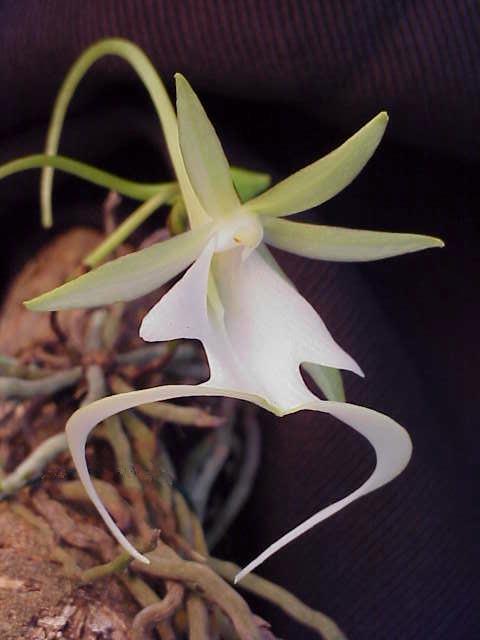 Ghost OrchidDendrophylax lindenii
-
 Noble DendrobiumDendrobium nobile
-
 Bee OrchidOphrys apifera
-
 Monkey-Face OrchidDracula simia
-
 Christmas OrchidCattleya trianae
-
 Chinese Crown OrchidEulophia graminea
-
 Pink Lady's SlipperCypripedium acaule
Compare
Questions and answers
What is the scientific name of the Bog Orchid?
The scientific name of the Bog Orchid is Hammarbya paludosa. Written with its author, the full name is Hammarbya paludosa (L.) Kuntze.
Which family does the Bog Orchid belong to?
Hammarbya paludosa belongs to the family Orchidaceae, in the order Asparagales and the class Liliopsida.
Where is the Bog Orchid found?
Checklists and occurrence records place Hammarbya paludosa in 31 countries, including Sweden, United Kingdom, Finland, Norway, The Netherlands and Germany.
What is the conservation status of the Bog Orchid?
The IUCN Red List category recorded for Hammarbya paludosa is Least Concern (LC).
What other names does the Bog Orchid have?
Hammarbya paludosa is also known in English as Bog Adder's-mouth Orchid.
Sources
Passages the profile rests on
- Hammarbya paludosa is a small herbaceous perennial with a height of 3–23 cm. Source passage: “Hammarbya paludosa is a small herbaceous perennial growing 3–23 cm (1.2–9.1 in) tall.” — English Wikipedia
- Most plants have very fine, hair-like roots attached to a short rhizome. Source passage: “Most plants have very fine, hair-like roots attached to a short rhizome” — English Wikipedia
- The plant typically has two or three elliptic basal leaves, although some individuals have four. Source passage: “Plants have two to three elliptic basal leaves, or occasionally four.” — English Wikipedia
- Its leaves are pale green or yellow-green, hairless, and have inward-curving edges. Source passage: “The leaves are 1–3 cm (0.4–1 in) long and 0.5–1 cm (0.2–0.4 in) wide, hairless, pale green or yellow-green, and have edges that curl inward.” — English Wikipedia
- The pseudobulb measures 4–8 mm in diameter. Source passage: “At the base of the stem, there is a pseudobulb, 4–8 mm (0.2–0.3 in) in diameter” — English Wikipedia
- The basal leaves measure 1–3 cm long and 0.5–1 cm wide. Source passage: “The leaves are 1–3 cm (0.4–1 in) long and 0.5–1 cm (0.2–0.4 in) wide” — English Wikipedia
- The flower's lip points upward because its pedicel undergoes a complete 360-degree twist. Source passage: “Unlike most orchids, the pedicel that attaches the flower to the stem has a 360° twist so that the lip points upward.” — English Wikipedia
- Each inflorescence bears between 2 and 55 flowers, with most bearing 5–20. Source passage: “Each inflorescence bears 2–55 flowers, with most having 5–20 flowers.” — English Wikipedia
- Its fruit is a capsule measuring 3–4 mm in length. Source passage: “The fruit is a capsule, 3–4 mm (0.1–0.2 in) long” — English Wikipedia
- The flowering stem is usually 3–10 cm long but can occasionally reach 25 cm. Source passage: “flowering stem that is 3–10 cm (1.2–3.9 in) (or less commonly up to 25 cm (9.8 in)) long” — English Wikipedia
- The seeds measure approximately 232–236 μm long and 173–206 μm wide. Source passage: “seeds nearly microscopic in size, 232–236 μm (9.13–9.29 thou) long and 173–206 μm (6.81–8.11 thou) wide.” — English Wikipedia
- The species grows primarily in bogs and conifer swamps and only rarely occurs on dry ground. Source passage: “Hammarbya paludosa grows in bogs and conifer swamps and very rarely on dry ground.” — English Wikipedia
- Plants frequently grow on sphagnum or feather mosses, including on floating moss mats and raised hummocks. Source passage: “The plants often grow on sphagnum or feather mosses (in the order Hypnales), both on floating sphagnum mats and perched on hummocks.” — English Wikipedia
- The species has a circumboreal distribution across northern Europe, Asia, and North America. Source passage: “Hammarbya paludosa has a circumboreal distribution, occurring through the northern parts of Europe, Asia, and North America.” — English Wikipedia
- The largest European populations occur in Scandinavia, the Netherlands, Belgium, the Baltic states, and northwestern Russia. Source passage: “In Europe, the largest numbers of this plant occur in Scandinavia, the Netherlands, Belgium, the Baltic states, and northwestern Russia.” — English Wikipedia
- The species occurs in Russia as far east as Siberia, the Russian Far East, Sakhalin, and the Kuril Islands. Source passage: “the distribution of H. paludosa spreads eastward to Siberia and the Russian Far East, including the Sakhalin and Kuril Islands.” — English Wikipedia
- Ten populations of the species are known in Japan. Source passage: “There are also ten known populations in Japan.” — English Wikipedia
- Its central Asian distribution extends southward to Kazakhstan. Source passage: “Its range in central Asia extends southward to Kazakhstan.” — English Wikipedia
- In Canada, the species occurs in Yukon, the Northwest Territories, British Columbia, Alberta, Saskatchewan, Manitoba, and Ontario. Source passage: “its distribution stretches across the Yukon, the Northwest Territories, British Columbia, Alberta, Saskatchewan, Manitoba, and Ontario.” — English Wikipedia
- The southernmost North American populations occur in Minnesota and contain no more than 20 plants each. Source passage: “The southernmost populations in North America occur in Minnesota, in scattered populations of no more than 20 plants.” — English Wikipedia
- The species occurs at elevations of 10–300 m across most of its North American range, with one recorded population at 766 m. Source passage: “The elevational range in North America is 10–300 m (30–1,000 ft), though one population at Buckskin Glacier was recorded at 766 m (2,510 ft).” — English Wikipedia
- The species obtains some nutrients from fungal partners throughout at least part of its life cycle. Source passage: “H. paludosa relies on fungal partners to obtain nutrients during at least part of its life cycle.” — English Wikipedia
- Mature plants retain mycorrhizal associations in their roots, rhizomes, leaf bases, and hairs. Source passage: “they retain their mycorrhizal associations, hosting fungi in their roots, rhizomes, leaf bases, and hairs” — English Wikipedia
- The pseudobulb generally survives for one to two years, occasionally lasting up to five years. Source passage: “The pseudobulb lives only one to two years (rarely up to five years).” — English Wikipedia
- The plant can spread vegetatively, with as many as five renewal buds producing new pseudobulbs. Source passage: “Occasionally, plants spread vegetatively, with up to five renewal buds producing multiple new pseudobulbs.” — English Wikipedia
- Plants remain vegetative during their first three years in the western Russian population studied in 2014. Source passage: “plants remain vegetative for their first three years” — English Wikipedia
- Plants flower intermittently during the three to five years following their initial vegetative period. Source passage: “flower intermittently during the following three to five years, with gaps of one or two years between flowering events.” — English Wikipedia
- The species reproduces sexually through pollination and asexually through the production of gemmae along its leaf margins. Source passage: “Hammarbya paludosa reproduces sexually, through pollination, and asexually, by producing small buds called gemmae along its leaf margins” — English Wikipedia
- The gemmae detach from the leaves and develop into new plants. Source passage: “that drop off and develop into new plants.” — English Wikipedia
- Each leaf can bear between 2 and 40 gemmae during summer, although some leaves produce none. Source passage: “In the summer, the leaves bear 2–40 (or sometimes 0) small bud-like vegetative offspring called gemmae” — English Wikipedia
- Hammarbya paludosa is the only known orchid species that produces gemmae on its leaves. Source passage: “It is the only species of orchid known to reproduce in this way.” — English Wikipedia
- Flowering takes place from July to late August throughout the species' range. Source passage: “Flowering occurs from July to late August across the plant's entire range” — English Wikipedia
- Fruiting generally takes place between August and September. Source passage: “and fruiting occurs from August to September.” — English Wikipedia
- The flowers are pollinated by small flies, including fungus gnats. Source passage: “It is expected that the flowers are pollinated by small flies, including fungus gnats.” — English Wikipedia
- The fungus gnat Phronia digitata has been documented carrying two pollen sacs from the species on its thorax. Source passage: “identified a male fungus gnat of the species Phronia digitata with two H. paludosa pollen sacs attached to its thorax” — English Wikipedia
- Seeds require infection by soil fungi to germinate. Source passage: “Seeds require infection by soil fungi to germinate.” — English Wikipedia
- The flowers at the base of the inflorescence remain open for approximately four to five weeks. Source passage: “The flowers at the base of the inflorescence open first and remain open for the entire blooming period, approximately 4–5 weeks.” — English Wikipedia
- Some taxonomic authorities classify the species in the closely related genus Malaxis under the name Malaxis paludosa. Source passage: “It is also called Malaxis paludosa by some authorities who included it within the closely related genus Malaxis.” — English Wikipedia
- The IUCN classifies the species as Least Concern. Source passage: “Although the IUCN Red List classifies H. paludosa as being of least concern” — English Wikipedia
- NatureServe considers the species globally threatened. Source passage: “NatureServe considers the species globally threatened.” — English Wikipedia
- Habitat loss caused by mining and hydrological changes is a major threat to European populations. Source passage: “Major threats in Europe include habitat loss due to mining and changes to hydrology, leading to habitat fragmentation.” — English Wikipedia
- The species has declined in Britain and Ireland since 1500, with population losses of 61% and 66%, respectively. Source passage: “leading to losses of 61% of populations in Britain and 66% of populations in Ireland since 1500.” — English Wikipedia
- In Minnesota, the species was listed as endangered in 1984. Source passage: “In Minnesota, the plant was listed as endangered in 1984” — English Wikipedia
- Known threats to Minnesota populations include hydrological changes and habitat damage caused by construction and ditching. Source passage: “Known threats there include changes in hydrology and damage to the habitat from construction and ditching.” — English Wikipedia
Data
- Catalogue of Life, 2026-10-16 XR cc by
- Global Biodiversity Information Facility CC BY 4.0
- Wikidata CC0
- GeoNames CC BY 4.0
- Wikimedia Commons per image; credit shown with each image
- Within the Catalogue of Life, this name comes from The World Checklist of Vascular Plants (WCVP) cc by
References
- Revis. Gen. Pl. 2: 665 (1891) where the name was published
This species in other databases
- Catalogue of Life 6LC3Q
- Wikidata Q161839
- iNaturalist 366367
- World Flora Online wfo-0000979153
- GRIN 481223
Page built on 29 November 2026. See how the catalog is made and all sources and licences.
Cite this page
ScientificNames.org. (2026). Hammarbya paludosa (Bog Orchid). Retrieved November 29, 2026, from https://scientificnames.org/species/hammarbya-paludosa
“Hammarbya paludosa (Bog Orchid).” ScientificNames.org, 2026, scientificnames.org/species/hammarbya-paludosa. Accessed 29 Nov. 2026.
ScientificNames.org. “Hammarbya paludosa (Bog Orchid).” Accessed November 29, 2026. https://scientificnames.org/species/hammarbya-paludosa.
@misc{scientificnames_hammarbya_paludosa_bog_orchid,
  author = {{ScientificNames.org}},
  title = {Hammarbya paludosa (Bog Orchid)},
  year = {2026},
  url = {https://scientificnames.org/species/hammarbya-paludosa},
  note = {Accessed 2026-11-29}
}