Species · Flowering plants
Pygmy Chain Sword Helanthium tenellum
The scientific name of the Pygmy Chain Sword is Helanthium tenellum. It is a species of flowering plant in the family Alismataceae (arrowhead family), order Alismatales.
- Scientific name
- Helanthium tenellum (Mart. ex Schult.f.) J.G.Sm.
- Common name
- Pygmy Chain Sword
- Genus
- Helanthium
- Family
- Alismataceae (Arrowhead Family)
- Order
- Alismatales
- Class
- Liliopsida
- Recorded in
- 22 countries
- Name status
- accepted in the Catalogue of Life

Overview
Helanthium tenellum is native to the eastern United States, southern Mexico, the West Indies and South America. It has narrowly elliptical or lanceolate leaves, thin upright stems and propagates by producing runners.
Written 26 November 2026 from the sources listed below. Each statement was checked against the passage it cites; statements that could not be supported were removed.
Appearance
The leaves are narrowly elliptical or lanceolate. The leaf blades measure 1–4 cm in length and 0.2–1 cm in width. Their bases extend down along the petiole and have one to three veins.[1][2][3]
The stems are thin, upright and frequently curved. Small plants produce a single inflorescence at the end of the stem, while larger plants produce racemose inflorescences consisting of two vertically arranged whorls.[4][5][6]
The bracts in the first whorl measure 2–6 mm in length, and the flower pedicels measure 1–3.5 cm in length. The sepals are membranous and usually possess five fine ribs.[7][8][9]
During fruit ripening, the sepals can reach 6 mm in length and completely cover the aggregate fruit.[10][11]
Individual specimens may possess six to nine stamens, each measuring approximately 1 mm in length. The anthers measure 0.25 mm in width and 2.25 mm in length and are approximately three times shorter than the filaments.[12][13][14][15]
Individual specimens may possess sixteen to eighteen pistils. The achenes are compressed and curved in their upper portions, measure approximately 0.9–1.3 mm in length, and are black with three lateral ribs.[16][17][18][19]
The stylar beak base measures 0.1–0.3 mm in length.[20]
Habitat
The species is native to the eastern United States, with a recorded range extending from Texas and Florida northward to Michigan and Massachusetts.[21]
It is native to Chiapas and Veracruz in southern Mexico.[22]
It occurs natively in the West Indies, including Cuba, Jamaica and Hispaniola.[23]
In South America, its recorded native range extends from Guyana to Argentina.[24]
Reproduction and life cycle
The species propagates by producing runners. It can flower when cultivated in an emersed state.[25][26]
Conservation
The species is classified as endangered in Connecticut, Illinois, Indiana, Kentucky and Michigan.[27]
Uses
The pygmy chain sword is commonly cultivated as an aquarium plant for its aesthetic appeal. It has undemanding care requirements and can adapt to a wide range of aquarium conditions.[28][29][30]
Classification of the Pygmy Chain Sword
| Kingdom | Plantae |
|---|---|
| Subkingdom | Pteridobiotina |
| Phylum | Tracheophyta |
| Class | Liliopsida |
| Order | Alismatales |
| Family | Alismataceae (Arrowhead Family) |
| Genus | Helanthium |
| Species | Helanthium tenellum (Mart. ex Schult.f.) J.G.Sm. |
Where the Pygmy Chain Sword is found
Checklists and occurrence records place Helanthium tenellum in 22 countries across North America and South America. GBIF holds 1,920 georeferenced records of it.
Countries
- Argentina 27
- Bolivia 38
- Brazil 1,068
- Colombia 23
- Costa Rica
- Cuba
- Dominican Republic 3
- Ecuador
- El Salvador 6
- Guatemala
- Guyana 11
- Haiti
- Honduras 3
- Jamaica 1
- Mexico 10
- Nicaragua
- Panama 5
- Paraguay 25
- Peru 3
- Suriname 3
- United States 663
- Venezuela 31
Regions and cities with the most records
- Mato Grosso do Sul, Brazil 147
- Florida, United States 47
- Pará, Brazil 41
- Mato Grosso, Brazil 38
- Bahia, Brazil 35
- Missouri, United States 29
- Texas, United States 29
- Goiás, Brazil 26
- Minas Gerais, Brazil 24
- Santa Cruz Department, Bolivia 22
- Rio Grande do Sul, Brazil 20
- Rio Grande do Norte, Brazil 19
- Georgia, United States 18
- Santa Catarina, Brazil 18
- São Paulo, Brazil 18
- Allston, United States 16
- Arlington, United States 16
- Back Bay, United States 16
- Belmont, United States 16
- Boston, United States 16
- Brighton, United States 16
- Brookline, United States 16
- Burlington, United States 16
- Cambridge, United States 16
- Charlestown, United States 16
- Chelsea, United States 16
- Chestnut Hill, United States 16
- Dorchester, United States 16
- East Boston, United States 16
- Everett, United States 16
- Lexington, United States 16
- Lynn, United States 16
- Malden, United States 16
- Massachusetts, United States 16
- Medford, United States 16
- Melrose, United States 16
A number beside a place is its count of GBIF occurrence records. A place without a number comes from a checklist alone. Records show where a species has been observed or collected, which can include escapes and vagrants.
Common names
English
- Pygmy Chain Sword
- Junior Amazon Sword Plant
- Dwarf Burhead
- Mudbabies
Names in 6 other languages
- Chinese
- 匍茎慈姑, 针叶皇冠
- Finnish
- pikkusuokki
- German
- Grasartige Schwertpflanze
- Lithuanian
- Gležnasis šustenis
- Spanish
- Cucharero
- Swedish
- dvärgsvalting
Synonyms
11 other scientific names have been used for this species and are now treated as synonyms of Helanthium tenellum.
- Alisma ranunculoides var. brasiliense A.St.-Hil.
- Alisma tenellum Mart. ex Schult.f.
- Echinodorus parvulus Engelm.
- Echinodorus parvulus f. randii Fassett
- Echinodorus subulatus Engelm.
- Echinodorus tenellus (Mart. ex Schult.f.) Buchenau
- Echinodorus tenellus f. randii Fassett
- Echinodorus tenellus var. ecostatus Fassett
- Echinodorus tenellus var. parvulus (Engelm.) Fassett
- Helanthium parvulum (Engelm.) Small
- Sagittaria tenella (Mart. ex Schult.f.) Kuntze
Related species
-
 Bolivian Chain SwordHelanthium bolivianum
- Helanthium zombiense
-
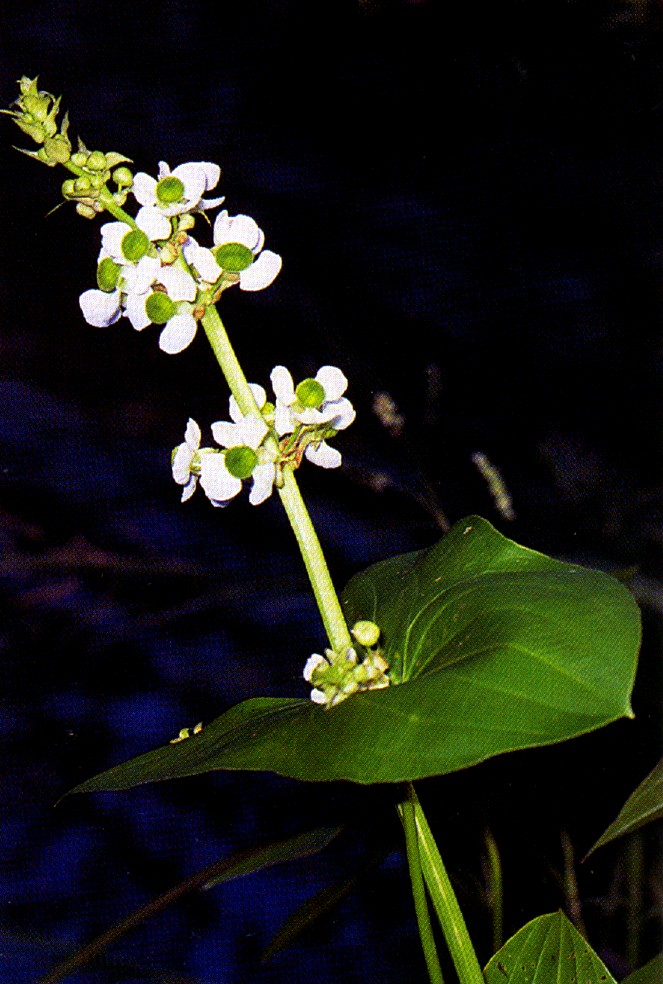 Broadleaf ArrowheadSagittaria latifolia
-
 ArrowheadSagittaria sagittifolia
-
 European Water-plantainAlisma plantago-aquatica
-
 Yellow VelvetleafLimnocharis flava
-
 Narrow-leaved ArrowheadSagittaria subulata
-
 Chinese ArrowheadSagittaria trifolia
Compare
Questions and answers
What is the scientific name of the Pygmy Chain Sword?
The scientific name of the Pygmy Chain Sword is Helanthium tenellum. Written with its author, the full name is Helanthium tenellum (Mart. ex Schult.f.) J.G.Sm..
Which family does the Pygmy Chain Sword belong to?
Helanthium tenellum belongs to the family Alismataceae, in the order Alismatales and the class Liliopsida.
Where is the Pygmy Chain Sword found?
Checklists and occurrence records place Helanthium tenellum in 22 countries, including Brazil, United States, Bolivia, Venezuela, Argentina and Paraguay.
What other names does the Pygmy Chain Sword have?
Helanthium tenellum is also known in English as Junior Amazon Sword Plant, Dwarf Burhead and Mudbabies.
Sources
Passages the profile rests on
- The leaves are narrowly elliptical or lanceolate in shape. Source passage: “The leaves of H. tenellum are narrowly elliptical or lanceolate.” — English Wikipedia
- The leaf blades measure 1–4 cm in length and 0.2–1 cm in width. Source passage: “which may be 1–4 cm long and 0.2–1 cm wide” — English Wikipedia
- The leaf bases extend down along the petiole and have one to three veins. Source passage: “The base is decurrent to the petiole and has between one and three veins.” — English Wikipedia
- The stems are thin, upright and frequently curved. Source passage: “The stem is thin, erect, often curved” — English Wikipedia
- Small plants produce a single inflorescence at the end of the stem. Source passage: “In small plants, the stem ends in a single inflorescence (umbel or coil)” — English Wikipedia
- Larger plants produce racemose inflorescences consisting of two vertically arranged whorls. Source passage: “in larger plants the inflorescence is racemose, composed of two whorls placed one above the other.” — English Wikipedia
- The bracts in the first whorl measure 2–6 mm in length. Source passage: “Bracts are free and 2–6 mm long in the first whorl.” — English Wikipedia
- The flower pedicels measure 1–3.5 cm in length. Source passage: “Pedicels are 1–3.5 cm long.” — English Wikipedia
- The sepals are membranous and usually possess five fine ribs. Source passage: “Sepals are 3 mm long, membraneous, and usually have five fine ribs.” — English Wikipedia
- The sepals can reach 6 mm in length during fruit ripening. Source passage: “During ripening, the sepals enlarge and reach a length of up to 6 mm” — English Wikipedia
- The enlarged sepals completely cover the aggregate fruit during ripening. Source passage: “and fully cover the aggregate fruit.” — English Wikipedia
- Individual specimens may possess six to nine stamens. Source passage: “A specimen may have six to nine stamens” — English Wikipedia
- Each stamen measures approximately 1 mm in length. Source passage: “each about 1 mm long.” — English Wikipedia
- The anthers measure 0.25 mm in width and 2.25 mm in length. Source passage: “Anthers are 0.25 mm wide by 2.25 mm long” — English Wikipedia
- The anthers are approximately three times shorter than the filaments. Source passage: “which is three times shorter than the filaments.” — English Wikipedia
- Individual specimens may possess sixteen to eighteen pistils. Source passage: “It may have sixteen to eighteen pistils.” — English Wikipedia
- The achenes are compressed and curved in their upper portions. Source passage: “The achenes are compressed, and arched in the apical part” — English Wikipedia
- The achenes measure approximately 0.9–1.3 mm in length. Source passage: “they are (0.9) – 1.1 – (1.3) mm long” — English Wikipedia
- The achenes are black and have three lateral ribs. Source passage: “and black, with three lateral ribs.” — English Wikipedia
- The stylar beak base measures 0.1–0.3 mm in length. Source passage: “may be 0.1–0.3 mm long.” — English Wikipedia
- The species is native to the eastern United States, with a recorded range extending from Texas and Florida northward to Michigan and Massachusetts. Source passage: “the eastern United States (from Texas to Florida, north to Michigan and Massachusetts)” — English Wikipedia
- The species is native to Chiapas and Veracruz in southern Mexico. Source passage: “southern Mexico (Chiapas, Veracruz)” — English Wikipedia
- The species occurs natively in the West Indies, including Cuba, Jamaica and Hispaniola. Source passage: “West Indies (Cuba, Jamaica, Hispaniola)” — English Wikipedia
- The species is native to South America, with a recorded range extending from Guyana to Argentina. Source passage: “South America (from Guyana to Argentina)” — English Wikipedia
- The species propagates by producing runners. Source passage: “It propagates by sending out runners” — English Wikipedia
- The species can flower when cultivated in an emersed state. Source passage: “will also flower when grown emersed.” — English Wikipedia
- The species is classified as endangered in Connecticut, Illinois, Indiana, Kentucky and Michigan. Source passage: “It is endangered in Connecticut, Illinois, Indiana, Kentucky, and Michigan.” — English Wikipedia
- The species is commonly cultivated as an aquarium plant for its aesthetic appeal. Source passage: “Helanthium tenellum is a common aquarium plant with a large variation in shapes and sizes kept by people for their aesthetic appeal.” — English Wikipedia
- The species has undemanding care requirements in aquarium cultivation. Source passage: “Its care is undemanding” — English Wikipedia
- The species can adapt to a wide range of aquarium conditions. Source passage: “it can adapt to a large range of conditions.” — English Wikipedia
Data
- Catalogue of Life, 2026-10-16 XR cc by
- Global Biodiversity Information Facility CC BY 4.0
- Wikidata CC0
- GeoNames CC BY 4.0
- Wikimedia Commons per image; credit shown with each image
- Within the Catalogue of Life, this name comes from The World Checklist of Vascular Plants (WCVP) cc by
References
- N.L.Britton, Man. Fl. N. States, ed. 2: 54 (1905) where the name was published
This species in other databases
Page built on 29 November 2026. See how the catalog is made and all sources and licences.
Cite this page
ScientificNames.org. (2026). Helanthium tenellum (Pygmy Chain Sword). Retrieved November 29, 2026, from https://scientificnames.org/species/helanthium-tenellum
“Helanthium tenellum (Pygmy Chain Sword).” ScientificNames.org, 2026, scientificnames.org/species/helanthium-tenellum. Accessed 29 Nov. 2026.
ScientificNames.org. “Helanthium tenellum (Pygmy Chain Sword).” Accessed November 29, 2026. https://scientificnames.org/species/helanthium-tenellum.
@misc{scientificnames_helanthium_tenellum_pygmy_chain_sword,
  author = {{ScientificNames.org}},
  title = {Helanthium tenellum (Pygmy Chain Sword)},
  year = {2026},
  url = {https://scientificnames.org/species/helanthium-tenellum},
  note = {Accessed 2026-11-29}
}