Species · Flowering plants
Rayless Sunflower Helianthus radula
The scientific name of the Rayless Sunflower is Helianthus radula. It is a species of flowering plant in the family Asteraceae (composite), order Asterales.
- Scientific name
- Helianthus radula (Pursh) Torr. & A.Gray
- Common name
- Rayless Sunflower
- Genus
- Helianthus
- Family
- Asteraceae (Composite)
- Order
- Asterales
- Class
- Magnoliopsida
- Recorded in
- 1 country
- Name status
- accepted in the Catalogue of Life

Overview
Helianthus radula grows in sandy, open woodlands, savannas, pine barrens, and wet, sunny locations. It is distinguished by flower heads without showy outer ray flowers and by large, rounded, hairy basal leaves.
Written 27 November 2026 from the sources listed below. Each statement was checked against the passage it cites; statements that could not be supported were removed.
Appearance
The rayless sunflower generally produces a single flower head containing a compact cluster of purple to brown disk flowers. Its flower heads have red-purple to brown flowers and lack ray flowers.[1][2][3]
Its basal leaves are large, rounded, hairy, and positioned close to the ground. The perennial herb can reach a height of 100 cm (40 inches).[4][5]
Habitat
The rayless sunflower grows in sandy, open woodlands, including pine barrens. It also occurs in savannas and thrives in wet, sunny locations.[6][7][8]
Uses
The rayless sunflower is recommended for native plantings and pollinator gardens.[9]
Classification of the Rayless Sunflower
| Kingdom | Plantae |
|---|---|
| Subkingdom | Pteridobiotina |
| Phylum | Tracheophyta |
| Class | Magnoliopsida |
| Order | Asterales |
| Family | Asteraceae (Composite) |
| Subfamily | Asteroideae |
| Tribe | Heliantheae |
| Subtribe | Helianthinae |
| Genus | Helianthus (Sunflower) |
| Species | Helianthus radula (Pursh) Torr. & A.Gray |
Where the Rayless Sunflower is found
Checklists and occurrence records place Helianthus radula in 1 country across North America. GBIF holds 1,708 georeferenced records of it.
Countries
Regions and cities with the most records
- Florida, United States 714
- Mississippi, United States 192
- Gautier, United States 93
- Ocean Springs, United States 93
- Pascagoula, United States 87
- Georgia, United States 68
- Alabama, United States 63
- Spring Hill, United States 57
- Alafaya, United States 55
- Gainesville, United States 37
- South Carolina, United States 35
- Louisiana, United States 26
- Oviedo, United States 26
- Biloxi, United States 23
- Midway, United States 21
- Bayonet Point, United States 18
- Fleming Island, United States 18
- Jasmine Estates, United States 18
- Altamonte Springs, United States 17
- Casselberry, United States 17
- East Pensacola Heights, United States 17
- Ensley, United States 17
- Orlando, United States 17
- Brent, United States 16
- Ferry Pass, United States 16
- Pace, United States 16
- Pensacola, United States 16
- Winter Park, United States 16
- Citrus Park, United States 15
- Greater Northdale, United States 15
- Northdale, United States 15
- Winter Springs, United States 15
- Lakeside, United States 14
- Maitland, United States 14
- Santa Rosa Beach, United States 14
- West Pensacola, United States 14
Range as the checklists state it
USA (Alabama, Florida, Georgia, Louisiana, Mississippi, South Carolina)
A number beside a place is its count of GBIF occurrence records. A place without a number comes from a checklist alone. Records show where a species has been observed or collected, which can include escapes and vagrants.
Common names
English
- Rayless Sunflower
- Pineland Sunflower
- Stiff Sunflower
Synonyms
7 other scientific names have been used for this species and are now treated as synonyms of Helianthus radula.
- Centrocarpha radula (Pursh) D.Don
- Echinomeria apetala Leconte ex Nutt.
- Helianthus apetalus Leconte ex Nutt.
- Helianthus atrorubens subsp. radula (Pursh) Anashch.
- Neactelis strigosa Raf.
- Rudbeckia apetala Torr. ex Nutt.
- Rudbeckia radula Pursh
Related species
-
 Jerusalem ArtichokeHelianthus tuberosus
-
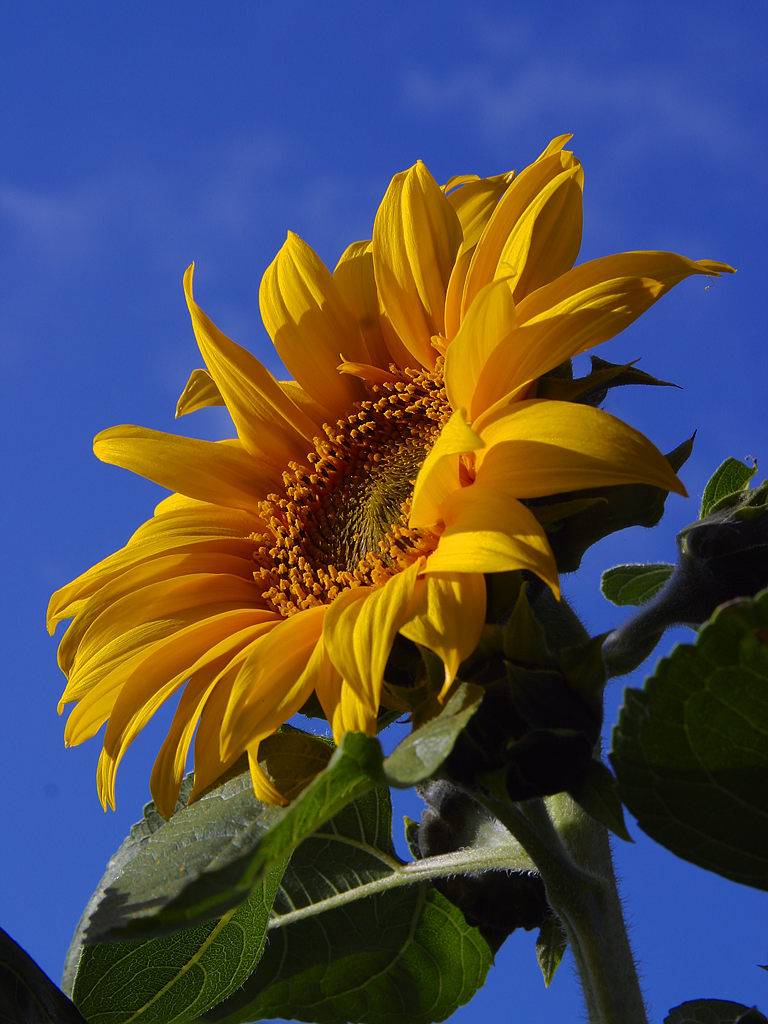 Common SunflowerHelianthus annuus
-
 Maximilian SunflowerHelianthus maximiliani
-
 Narrow-leaf SunflowerHelianthus angustifolius
-
 Beach SunflowerHelianthus debilis
-
 Giant Or Tall SunflowerHelianthus giganteus
-
 Prairie SunflowerHelianthus petiolaris
-
 Rough SunflowerHelianthus divaricatus
Compare
Questions and answers
What is the scientific name of the Rayless Sunflower?
The scientific name of the Rayless Sunflower is Helianthus radula. Written with its author, the full name is Helianthus radula (Pursh) Torr. & A.Gray.
Which family does the Rayless Sunflower belong to?
Helianthus radula belongs to the family Asteraceae, in the order Asterales and the class Magnoliopsida.
Where is the Rayless Sunflower found?
Checklists and occurrence records place Helianthus radula in 1 country: United States.
What other names does the Rayless Sunflower have?
Helianthus radula is also known in English as Pineland Sunflower and Stiff Sunflower.
What are ray florets of sunflowers?
Ray florets are the showy outer flowers characteristic of many members of the Asteraceae. The rayless sunflower lacks these showy outer flowers.[10]
Sources
Passages the profile rests on
- The flower head contains a compact cluster of purple to brown disk flowers. Source passage: “produces a tight cluster of purple to brown, tighly packed disk flowers atop a long stalk.” — virtual.arboretum.ucf.edu
- Its flower head has red-purple to brown flowers and no ray flowers. Source passage: “flowers red-purple, brown. Ray flowers absent.” — warcapps.usgs.gov
- A plant generally produces a single flower head. Source passage: “One plant usually produces only one flower head” — English Wikipedia
- Its basal leaves are large, rounded, hairy, and positioned close to the ground. Source passage: “It has large, rounded, hairy basal leaves growing close to the ground.” — virtual.arboretum.ucf.edu
- The perennial herb can reach a height of 100 cm (40 inches). Source passage: “It is a perennial herb up to 100 cm (40 inches) tall.” — English Wikipedia
- The species grows in sandy, open woodlands, including pine barrens. Source passage: “grows in sandy, open woodlands such as pine barrens.” — English Wikipedia
- The species occurs in savannas and pine barrens. Source passage: “Habitat Savannas and pine barrens.” — warcapps.usgs.gov
- The species thrives in wet, sunny locations. Source passage: “It thrives in wet, sunny locations” — virtual.arboretum.ucf.edu
- The species is recommended for native plantings and pollinator gardens. Source passage: “is a great wildflower to use in native plantings and pollinator gardens.” — virtual.arboretum.ucf.edu
- The species lacks the showy outer ray flowers characteristic of many other members of the Asteraceae. Source passage: “This sunflower lacks the showy, outer ray flowers of the inflorescence typical of other members of the Asteraceae, like daisies.” — virtual.arboretum.ucf.edu
Data
- Catalogue of Life, 2026-10-16 XR cc by
- Global Biodiversity Information Facility CC BY 4.0
- Wikidata CC0
- GeoNames CC BY 4.0
- Wikimedia Commons per image; credit shown with each image
- Within the Catalogue of Life, this name comes from Synonymic Checklists of the Vascular Plants of the World cc by
References
- Torr. & A.Gray. (1842). Fl. N. Amer. [Torrey & A.Gray] 2: 321 (1842). where the name was published
This species in other databases
- Catalogue of Life 3K5ZW
- Wikidata Q15485976
- iNaturalist 163629
- World Flora Online wfo-0000045849
- GRIN 104322
Page built on 29 November 2026. See how the catalog is made and all sources and licences.
Cite this page
ScientificNames.org. (2026). Helianthus radula (Rayless Sunflower). Retrieved November 29, 2026, from https://scientificnames.org/species/helianthus-radula
“Helianthus radula (Rayless Sunflower).” ScientificNames.org, 2026, scientificnames.org/species/helianthus-radula. Accessed 29 Nov. 2026.
ScientificNames.org. “Helianthus radula (Rayless Sunflower).” Accessed November 29, 2026. https://scientificnames.org/species/helianthus-radula.
@misc{scientificnames_helianthus_radula_rayless_sunflower,
  author = {{ScientificNames.org}},
  title = {Helianthus radula (Rayless Sunflower)},
  year = {2026},
  url = {https://scientificnames.org/species/helianthus-radula},
  note = {Accessed 2026-11-29}
}