Species · Flowering plants
Seven Sons Tree Heptacodium miconioides
The scientific name of the Seven Sons Tree is Heptacodium miconioides. It is a species of flowering plant in the family Caprifoliaceae (honeysuckle family), order Dipsacales.
- Scientific name
- Heptacodium miconioides Rehder
- Common name
- Seven Sons Tree
- Genus
- Heptacodium
- Family
- Caprifoliaceae (Honeysuckle Family)
- Order
- Dipsacales
- Class
- Magnoliopsida
- Red List category
- VU Vulnerable
- Recorded in
- 2 countries
- Name status
- accepted in the Catalogue of Life

Overview
Seven Sons Tree is a deciduous shrub or small tree in the family Caprifoliaceae, order Dipsacales and class Magnoliopsida. The species is native to central and eastern China.
Written 26 November 2026 from the sources listed below. Each statement was checked against the passage it cites; statements that could not be supported were removed.
Appearance
Its trunk has thin, papery, light-tan bark that exfoliates in strips or sheets. Its upright, spreading, four-angled branches produce a rounded and often irregular crown.[1][2]
The leaves are opposite, dark green and heart-shaped, with entire margins and deeply impressed veins. Three prominent main veins run along their length.[3][4]
The white flowers are fragrant, five-petalled and less than 13 mm across. They grow in terminal clusters approximately 15 cm long, with small blooms arranged in panicles above the foliage.[5][6][7]
Habitat
In the wild, Seven Sons Tree occurs in scrub, woodlands and along the margins of broadleaved evergreen forests. Wild populations have been recorded at elevations of 600–1000 metres.[8][9]
The species grows in full sun or light shade and can grow in a wide range of soil types when cultivated.[10][11]
Conservation
Seven Sons Tree was considered rare when it was first discovered for Western horticulture. Only nine wild populations are reported to remain, and these populations are threatened by habitat loss.[12][13][14]
The species is classified under second-class national protection in China.[15]
Behaviour
Seven Sons Tree is highly tolerant of shade. Its leaves emerge early and remain on the plant late into the growing season.[16][17]
Cultivated plants are considered easy to grow and have a moderate growth rate. The species can tolerate temperatures as low as −35 °C.[18][19]
The species is winter hardy in USDA zones 5–8 according to the Arkansas Extension account.[20]
Reproduction and life cycle
The flower clusters produce successive rings of six flowers around a central continuation of the inflorescence axis. This successive flowering pattern has been observed to occur for three iterations.[21][22]
The central bud in a flower cluster may remain unopened while the six surrounding buds open successively. The flowers are followed by seed capsules surrounded by reddish-purple calyces.[23][24]
Seven Sons Tree can be propagated using seeds or softwood cuttings.[25]
Uses
Seven Sons Tree is cultivated as an ornamental plant worldwide. Its shrub form can be used in larger landscape plantings as an alternative to masses of viburnums, or cultivated as a small specimen tree near an entryway or patio.[26][27][28]
Its late flowering period makes it an important food source for insects. Its flowers attract honey bees, solitary bees, bumblebees, butterflies and hummingbirds in North America.[29][30]
Classification of the Seven Sons Tree
| Kingdom | Plantae |
|---|---|
| Subkingdom | Pteridobiotina |
| Phylum | Tracheophyta |
| Class | Magnoliopsida |
| Order | Dipsacales |
| Family | Caprifoliaceae (Honeysuckle Family) |
| Subfamily | Caprifolioideae |
| Genus | Heptacodium |
| Species | Heptacodium miconioides Rehder |
Where the Seven Sons Tree is found
Checklists and occurrence records place Heptacodium miconioides in 2 countries across Asia. GBIF holds 64 georeferenced records of it.
Countries
Regions and cities with the most records
- Zhejiang, China 24
- Fenghua, China 7
- Anhui, China 4
- Goyang-si, South Korea 4
- Gwangmyeong, South Korea 4
- Hubei, China 4
- Wuhan, China 4
- Bucheon-si, South Korea 3
- Gimpo-si, South Korea 3
- Seoul, South Korea 3
- Seoul, South Korea 3
8 more countries have a few records outside this range
These countries hold a few records of Heptacodium miconioides but lie outside the range the checklists give for it. Such records are often zoo or garden specimens, museum material or vagrants, so the species is not counted as occurring there.
A number beside a place is its count of GBIF occurrence records. A place without a number comes from a checklist alone. Records show where a species has been observed or collected, which can include escapes and vagrants.
Common names
English
- Seven Sons Tree
- Seven-son Flower
Names in 6 other languages
- Chinese
- Qizihua, 七子花, 七子花属
- Korean
- 칠자화
- Polish
- Heptakodium chińskie
- Russian
- Гептакодиум микониевидный
- Slovak
- sedemhlavec mikóniovitý
- Swedish
- jasmintry
Subspecies and varieties
- Heptacodium miconioides subsp. jasminoides subspecies
- Heptacodium miconioides subsp. miconioides subspecies
Related species
-
 ValerianValeriana officinalis
-
 Blue HoneysuckleLonicera caerulea
-
 Amur HoneysuckleLonicera maackii
-
 Lamb's LettuceValerianella locusta
- Japanese HoneysuckleLonicera japonica
-
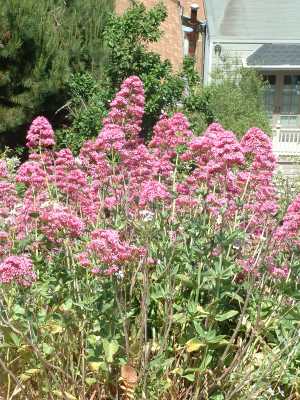 Red ValerianCentranthus ruber
-
 Himalayan HoneysuckleLeycesteria formosa
-
 Common TeaselDipsacus fullonum
Compare
Questions and answers
What is the scientific name of the Seven Sons Tree?
The scientific name of the Seven Sons Tree is Heptacodium miconioides. Written with its author, the full name is Heptacodium miconioides Rehder.
Which family does the Seven Sons Tree belong to?
Heptacodium miconioides belongs to the family Caprifoliaceae, in the order Dipsacales and the class Magnoliopsida.
Where is the Seven Sons Tree found?
Checklists and occurrence records place Heptacodium miconioides in 2 countries: China and South Korea.
What is the conservation status of the Seven Sons Tree?
The IUCN Red List category recorded for Heptacodium miconioides is Vulnerable (VU).
What other names does the Seven Sons Tree have?
Heptacodium miconioides is also known in English as Seven-son Flower.
Why is it called the Seven Sons Tree?
The Chinese common name 七子花 means seven-son flower. The genus name Heptacodium combines Greek elements meaning seven and structures resembling poppy heads.[31][32]
How tall does heptacodium grow?
Seven Sons Tree typically reaches 4–9 m in height. Its reported cultivated height is 4.5–7.5 m, with a width somewhat greater than half its height.[33][34]
Does Heptacodium prefer sun or shade?
Seven Sons Tree grows in full sun or light shade and is highly tolerant of shade.[10][16]
Sources
Passages the profile rests on
- The trunk has thin, papery, light-tan bark that exfoliates in strips or sheets. Source passage: “The bark of the trunk is papery and thin, light tan in colour, and exfoliates in strips or sheets.” — English Wikipedia
- Its upright, spreading, four-angled branches produce a rounded and often irregular crown. Source passage: “The upright, spreading, quadrangular branches give the plant a rounded, often irregular shape.” — English Wikipedia
- Its leaves are opposite, dark green, heart-shaped, and have entire margins and deeply impressed veins. Source passage: “The dark-green cordate leaves are opposite, 8–10 cm long by 5–6 cm wide, with entire margins and deeply impressed venation running parallel to the margin.” — English Wikipedia
- Its leaves have three prominent main veins running along their length. Source passage: “deep green, opposite, 3- to 4-inch long leaves that have three prominent veins running the length of the leaf.” — uaex.uada.edu
- Its white flowers are fragrant, five-petalled, and less than 13 mm across. Source passage: “the flowers five-petalled, < 13 mm across.” — English Wikipedia
- The flowers are arranged in terminal clusters approximately 15 cm long. Source passage: “flowers are white, fragrant, and borne in 15 cm long terminal clusters.” — landscapeplants.oregonstate.edu
- Its flower clusters consist of small white blooms arranged in panicles above the foliage. Source passage: “The individual flowers are small (one-quarter inch), five-lobed, but borne in 6-inch long panicles above the foliage, and form an effective display.” — uaex.uada.edu
- In the wild, the species occurs in scrub, woodlands, and along the margins of broadleaved evergreen forests. Source passage: “The plant may be found in scrub, woodlands, and on the margins of broadleaved evergreen forests” — English Wikipedia
- Wild populations have been recorded at elevations of 600–1000 metres. Source passage: “at altitudes of 600–1000 metres.” — English Wikipedia
- The species grows in full sun or light shade. Source passage: “Heptacodium grows in full sun or light shade in a wide range of soil types.” — uaex.uada.edu
- Cultivated plants can grow in a wide range of soil types. Source passage: “Heptacodium grows in full sun or light shade in a wide range of soil types.” — uaex.uada.edu
- The species was considered rare when it was first discovered for Western horticulture. Source passage: “Considered rare even at that time” — English Wikipedia
- Only nine wild populations are reported to remain. Source passage: “only nine populations are known to remain in the wild” — English Wikipedia
- The remaining wild populations are threatened by habitat loss. Source passage: “all of them in Anhui and Zhejiang provinces and threatened by habitat loss.” — English Wikipedia
- The species is classified under second-class national protection in China. Source passage: “The species is now under second-class national protection in China.” — English Wikipedia
- The species is highly tolerant of shade. Source passage: “it is also very shade tolerant.” — English Wikipedia
- Its leaves emerge early and remain on the plant late into the growing season. Source passage: “Heptacodium leafs out early and holds its foliage late.” — uaex.uada.edu
- Cultivated plants are considered easy to grow and have a moderate growth rate. Source passage: “It has a moderate growth rate and is considered easy to grow.” — uaex.uada.edu
- The species can tolerate temperatures as low as −35 °C. Source passage: “tolerant of temperatures as low as −35 °C (−31 °F).” — English Wikipedia
- The species is winter hardy in USDA zones 5–8 according to the Arkansas Extension account. Source passage: “It's considered winter hardy from zones 5 to 8.” — uaex.uada.edu
- The flower clusters produce successive rings of six flowers around a central continuation of the inflorescence axis. Source passage: “which will push up as the flowers fade and develop a new ring of six flowers” — English Wikipedia
- The successive flowering pattern has been observed to occur for three iterations. Source passage: “Three such iterations have been observed.” — English Wikipedia
- The central bud in a flower cluster may remain unopened while the six surrounding buds open successively. Source passage: “the central flower bud doesn’t open; instead, the six outer buds open in succession” — uaex.uada.edu
- The flowers are followed by seed capsules surrounded by reddish-purple calyces. Source passage: “each seed capsule is surrounded by a cluster of five reddish-purple to rose-colored calyces” — uaex.uada.edu
- The species can be propagated using seeds or softwood cuttings. Source passage: “Readily propagated from either seed or by softwood cuttings” — English Wikipedia
- The species is cultivated as an ornamental plant worldwide. Source passage: “The plant is now grown as an ornamental around the world” — English Wikipedia
- Its shrub form can be used in larger landscape plantings as an alternative to masses of viburnums. Source passage: “The shrub form of Heptacodium has potential in larger landscapes where masses of viburnums might be grown.” — uaex.uada.edu
- The species can be cultivated as a small specimen tree near an entryway or patio. Source passage: “used as a small specimen near an entryway or patio.” — uaex.uada.edu
- Its late flowering period makes it an important food source for insects. Source passage: “considered an important source of food for insects due to its late flowering period.” — English Wikipedia
- Its flowers attract honey bees, solitary bees, bumblebees, butterflies, and hummingbirds in North America. Source passage: “blooms attractive to honey bees, solitary bees, bumblebees, butterflies and (in North America) hummingbirds.” — English Wikipedia
- The genus name Heptacodium combines Greek elements meaning seven and structures resembling poppy heads. Source passage: “giving the meaning 'having seven structures resembling poppy heads'.” — English Wikipedia
- The Chinese common name 七子花 means seven-son flower. Source passage: “The common name "seven-son flower" is a direct translation of the Standard Chinese name 七子花 qī zi huā.” — English Wikipedia
- The species typically reaches 4–9 m in height. Source passage: “typically growing to a height of 4–9 m (13–30 ft).” — English Wikipedia
- Its reported cultivated height is 4.5–7.5 m, with a width somewhat greater than half its height. Source passage: “15-25 ft (4.5-7.5 m) high, width is somewhat over half its height.” — landscapeplants.oregonstate.edu
- Under long growing-season conditions, five-year-old cultivated plants can reach 10–12 feet in height. Source passage: “Five-year-old plants will be 10 to 12 feet tall in an area with a long growing season.” — uaex.uada.edu
Data
- Catalogue of Life, 2026-10-16 XR cc by
- Global Biodiversity Information Facility CC BY 4.0
- Wikidata CC0
- GeoNames CC BY 4.0
- Wikimedia Commons per image; credit shown with each image
- Within the Catalogue of Life, this name comes from Synonymic Checklists of the Vascular Plants of the World cc by
References
- Rehder. where the name was published
This species in other databases
- Catalogue of Life 3KWNC
- Wikidata Q140334
- iNaturalist 186498
- World Flora Online wfo-0001290905
- GRIN 401775
Page built on 29 November 2026. See how the catalog is made and all sources and licences.
Cite this page
ScientificNames.org. (2026). Heptacodium miconioides (Seven Sons Tree). Retrieved November 29, 2026, from https://scientificnames.org/species/heptacodium-miconioides
“Heptacodium miconioides (Seven Sons Tree).” ScientificNames.org, 2026, scientificnames.org/species/heptacodium-miconioides. Accessed 29 Nov. 2026.
ScientificNames.org. “Heptacodium miconioides (Seven Sons Tree).” Accessed November 29, 2026. https://scientificnames.org/species/heptacodium-miconioides.
@misc{scientificnames_heptacodium_miconioides_seven_sons_tree,
  author = {{ScientificNames.org}},
  title = {Heptacodium miconioides (Seven Sons Tree)},
  year = {2026},
  url = {https://scientificnames.org/species/heptacodium-miconioides},
  note = {Accessed 2026-11-29}
}