Species · Fishes
Mooneye Hiodon tergisus
The scientific name of the Mooneye is Hiodon tergisus. It is a species of fish in the family Hiodontidae (mooneye), order Hiodontiformes. The name dates from 1818.
- Scientific name
- Hiodon tergisus Lesueur, 1818
- Common name
- Mooneye
- Genus
- Hiodon
- Family
- Hiodontidae (Mooneye)
- Order
- Hiodontiformes
- Class
- Teleostei
- Red List category
- LC Least Concern
- Environment
- freshwater
- Recorded in
- 2 countries
- Name status
- accepted in the Catalogue of Life
Overview
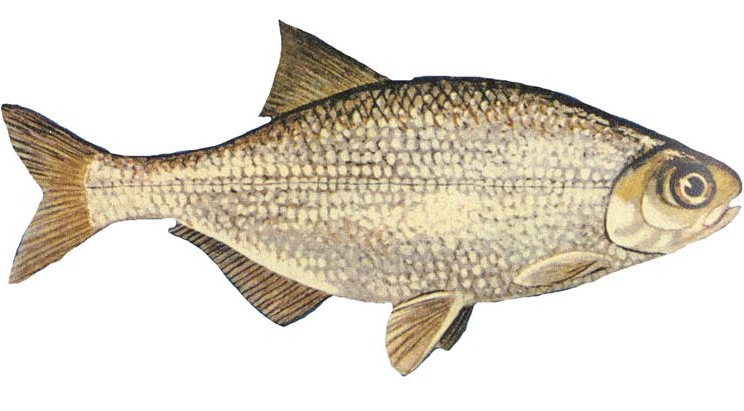
Hiodon tergisus inhabits clear rivers and lakes. It has a silvery appearance, a strongly compressed, deep body, and a keel extending from its anal fin to its pelvic fin.
Written 26 November 2026 from the sources listed below. Each statement was checked against the passage it cites; statements that could not be supported were removed.
Appearance
The mooneye has a silvery appearance and a strongly compressed, deep body. A keel extends from its anal fin to its pelvic fin.[1][2]
Adult mooneyes average 29.8 cm in length and 226 g in weight. They can reach a maximum length of 45 cm.[3][4][5]
Habitat
The mooneye inhabits clear rivers and lakes and is generally intolerant of turbid water. Spawning individuals prefer clear-running water and solid substrates.[6][7][8]
Diet
Adult mooneyes primarily consume aquatic and terrestrial insects. Their diet also includes crustaceans, mollusks, and small fish.[9][10]
Young mooneyes feed in benthic regions on immature caddisflies, mayflies, midges, corixids, and plecopterans. During their first few months, newly hatched mooneyes consume larval mayflies, caddisflies, and midges.[11][12]
Behaviour
Mooneyes are usually active during daylight hours. Adults migrate upstream each spring to spawn in clearer waters.[13][14]
Reproduction and life cycle
Mooneyes reproduce by spawning in spring. Southern populations spawn in March and April, whereas northern populations spawn in June and July.[15][16]
Females can produce between 10,000 and 20,000 semibuoyant eggs annually. Newly hatched mooneyes measure 8–9 mm in length, and their larvae mostly inhabit the limnetic portion of the water column.[17][18][19]
Mooneyes can grow to 20 cm during their first year. Females reach sexual maturity at four to five years of age, while males reach sexual maturity at three years.[20][21][22]
Mature mooneyes continue spawning annually.[23]
Conservation
Mooneye populations in Lake Michigan and Lake Erie have been declining. The species is listed as threatened in New York, North Carolina, and Michigan.[24][25]
Agricultural and industrial development has contributed to reduced water quality in the mooneye's habitat. Dams can obstruct migration routes, and invasive species compete with mooneye for food and other resources.[26][27][28]
No direct management efforts for mooneye are currently active.[29]
Classification of the Mooneye
| Kingdom | Animalia |
|---|---|
| Phylum | Chordata |
| Subphylum | Vertebrata |
| Infraphylum | Gnathostomata |
| Parvphylum | Osteichthyes |
| Gigaclass | Actinopterygii |
| Superclass | Actinopteri |
| Class | Teleostei (Teleost) |
| Order | Hiodontiformes |
| Family | Hiodontidae (Mooneye) |
| Genus | Hiodon (Mooneye) |
| Species | Hiodon tergisus Lesueur, 1818 |
Where the Mooneye is found
Checklists and occurrence records place Hiodon tergisus in 2 countries. GBIF holds 1,707 georeferenced records of it.
Countries
Regions and cities with the most records
- Ohio, United States 168
- Minnesota, United States 147
- Ontario, Canada 142
- Alberta, Canada 120
- Illinois, United States 116
- Quebec, Canada 81
- Alabama, United States 70
- Missouri, United States 65
- Wisconsin, United States 62
- Kentucky, United States 58
- Mississippi, United States 45
- Edmonton, Canada 42
- Gatineau, Canada 40
- Ottawa, Canada 40
- Ottawa South, Canada 39
- Sherwood Park, Canada 39
- Vanier, Canada 39
- Aylmer, Canada 37
- Nepean, Canada 37
- St. Albert, Canada 37
- Cottage Grove, United States 32
- Gloucester, Canada 32
- Woodbury, United States 31
- Deux-Montagnes, Canada 29
- Dollard-Des Ormeaux, Canada 29
- Hastings, United States 29
- L'Île-Bizard–Sainte-Geneviève, Canada 29
- Pierrefonds, Canada 29
- Pierrefonds-Roxboro, Canada 29
- Dorval, Canada 28
- Kirkland, Canada 28
- Maplewood, United States 28
- Saint-Eustache, Canada 28
- Pointe-Claire, Canada 27
- Saint-Lazare, Canada 27
- Inver Grove Heights, United States 26
A number beside a place is its count of GBIF occurrence records. A place without a number comes from a checklist alone. Records show where a species has been observed or collected, which can include escapes and vagrants.
Common names
English
- Mooneye
- River Whitefish
- Slicker
- White Shad
Names in 6 other languages
- Czech
- hiodon stříbrooký
- Danish
- Måneøje
- French
- laquaiche argentée
- Italian
- Occhi di luna
- Japanese
- ムーンアイ
- Russian
- Луноглазка
Synonyms
2 other scientific names have been used for this species and are now treated as synonyms of Hiodon tergisus.
- Hiodon selenops Jordan & Bean in Jordan, 1877
- Hyodon tergisus Lesueur, 1818
Related species

Compare
Questions and answers
What is the scientific name of the Mooneye?
The scientific name of the Mooneye is Hiodon tergisus. Written with its author, the full name is Hiodon tergisus Lesueur, 1818.
Which family does the Mooneye belong to?
Hiodon tergisus belongs to the family Hiodontidae, in the order Hiodontiformes and the class Teleostei.
Where is the Mooneye found?
Checklists and occurrence records place Hiodon tergisus in 2 countries: United States and Canada.
What is the conservation status of the Mooneye?
The IUCN Red List category recorded for Hiodon tergisus is Least Concern (LC).
What other names does the Mooneye have?
Hiodon tergisus is also known in English as River Whitefish, Slicker and White Shad.
Sources
Passages the profile rests on
- The mooneye has a silvery appearance and a strongly compressed, deep body. Source passage: “H. tergisus is characterized by its silvery appearance, strongly compressed deep body” — English Wikipedia
- The species has a keel extending from its anal fin to its pelvic fin. Source passage: “keel that extends from its anal to pelvic fin.” — English Wikipedia
- Adult mooneyes average 29.8 cm in length. Source passage: “Adult mooneyes reach an average length of 29.8 centimeters (11.7 in)” — English Wikipedia
- Adult mooneyes can reach a maximum length of 45 cm. Source passage: “may reach up to 45 centimeters (18 in).” — English Wikipedia
- Adult mooneyes weigh an average of 226 g. Source passage: “They weigh an average of 226 grams (8.0 oz).” — English Wikipedia
- The species inhabits clear rivers and lakes. Source passage: “Mooneyes inhabit clear river and lake environments.” — English Wikipedia
- Mooneyes are generally intolerant of turbid water. Source passage: “They are mostly intolerant of turbid waters” — English Wikipedia
- Spawning mooneyes prefer clear-running water and solid substrates. Source passage: “They prefer clear-running water and solid substrates when spawning.” — English Wikipedia
- Adult mooneyes primarily consume aquatic and terrestrial insects. Source passage: “they eat primarily aquatic and terrestrial insects” — English Wikipedia
- Mooneyes also consume crustaceans, mollusks, and small fish. Source passage: “but they are also known to eat crustaceans, mollusks, and small fish.” — English Wikipedia
- Young mooneyes feed in benthic regions on immature caddisflies, mayflies, midges, corixids, and plecopterans. Source passage: “Young mooneyes tend to feed in more benthic regions, eating immature caddisflies, mayflies, midges, corixids, and plecopterans.” — English Wikipedia
- Newly hatched mooneyes consume larval mayflies, caddisflies, and midges during their first few months. Source passage: “Mooneyes eat larval forms of mayflies, caddisflies, and midges during the first few months after hatching.” — English Wikipedia
- Mooneyes are usually active during daylight hours. Source passage: “are usually active during the day.” — English Wikipedia
- Adult mooneyes migrate upstream each spring to spawn in clearer waters. Source passage: “Each spring, adult mooneyes migrate upstream to clearer waters to spawn.” — English Wikipedia
- Mooneyes reproduce by spawning in spring. Source passage: “Mooneyes are spring spawners.” — English Wikipedia
- Southern populations spawn in March and April, whereas northern populations spawn in June and July. Source passage: “southern populations spawn much sooner than northern populations, in March and April compared to June and July, respectively.” — English Wikipedia
- Female mooneyes can produce between 10,000 and 20,000 semibuoyant eggs annually. Source passage: “Females are capable of producing 10,000-20,000 semibuoyant eggs each year.” — English Wikipedia
- Newly hatched mooneyes measure 8–9 mm in length. Source passage: “Newly hatched larvae are 8–9 millimeters (0.31–0.35 in) in length” — English Wikipedia
- Newly hatched larvae mostly inhabit the limnetic portion of the water column. Source passage: “and mostly inhabit the limnetic portion of the water column.” — English Wikipedia
- Mooneyes can grow to 20 cm during their first year. Source passage: “Mooneyes exhibit rapid growth within their first year, reaching up to 20 centimeters (7.9 in).” — English Wikipedia
- Female mooneyes reach sexual maturity at four to five years of age. Source passage: “Females reach sexual maturity at four to five years” — English Wikipedia
- Male mooneyes reach sexual maturity at three years of age. Source passage: “and males reach sexual maturity at three” — English Wikipedia
- Mature mooneyes continue spawning annually. Source passage: “and will continue to spawn every year after.” — English Wikipedia
- Mooneye populations in Lake Michigan and Lake Erie have been declining. Source passage: “Their populations in Lake Michigan and Lake Erie have been declining.” — English Wikipedia
- Mooneye is listed as threatened in New York, North Carolina, and Michigan. Source passage: “Currently, H. tergisus is listed as threatened in New York, North Carolina, and Michigan.” — English Wikipedia
- Agricultural and industrial development has contributed to reduced water quality in the species' habitat. Source passage: “the development of agricultural and industrial practices has led to low water quality.” — English Wikipedia
- Dams can obstruct mooneye migration routes. Source passage: “Dams are particularly bad due to their ability to block migration routes of mooneyes and other species.” — English Wikipedia
- Invasive species that compete with mooneye for food and other resources are another cause of its decline. Source passage: “Invasive species that outcompete mooneye for food and other resources are another cause for decline.” — mdc.mo.gov
- No direct management efforts for mooneye are currently active. Source passage: “Currently, no direct management efforts for H. tergisus are active.” — English Wikipedia
Data
- Catalogue of Life, 2026-10-16 XR cc by
- Global Biodiversity Information Facility CC BY 4.0
- Wikidata CC0
- GeoNames CC BY 4.0
- Wikimedia Commons per image; credit shown with each image
- Within the Catalogue of Life, this name comes from World Register of Marine Species cc by
References
- Lesueur, C. A. (1818). Descriptions of several new species of North American fishes. Journal of the Academy of Natural Sciences, Philadelphia, v. 1 (pt 2): 222–235; 359–368, Pls. 8–11, 14. where the name was published
This species in other databases
- Catalogue of Life 3LYQM
- Wikidata Q931237
- iNaturalist 102785
- WoRMS urn:lsid:marinespecies.org:taxname:590492
- ITIS 161906
Page built on 29 November 2026. See how the catalog is made and all sources and licences.
Cite this page
ScientificNames.org. (2026). Hiodon tergisus (Mooneye). Retrieved November 29, 2026, from https://scientificnames.org/species/hiodon-tergisus
“Hiodon tergisus (Mooneye).” ScientificNames.org, 2026, scientificnames.org/species/hiodon-tergisus. Accessed 29 Nov. 2026.
ScientificNames.org. “Hiodon tergisus (Mooneye).” Accessed November 29, 2026. https://scientificnames.org/species/hiodon-tergisus.
@misc{scientificnames_hiodon_tergisus_mooneye,
  author = {{ScientificNames.org}},
  title = {Hiodon tergisus (Mooneye)},
  year = {2026},
  url = {https://scientificnames.org/species/hiodon-tergisus},
  note = {Accessed 2026-11-29}
}