Species · Flowering plants
Small Whorled Pogonia Isotria medeoloides
The scientific name of the Small Whorled Pogonia is Isotria medeoloides. It is a species of flowering plant in the family Orchidaceae (orchid), order Asparagales.
- Scientific name
- Isotria medeoloides (Pursh) Raf.
- Common name
- Small Whorled Pogonia
- Genus
- Isotria
- Family
- Orchidaceae (Orchid)
- Order
- Asparagales
- Class
- Liliopsida
- Red List category
- VU Vulnerable
- Recorded in
- 2 countries
- Name status
- accepted in the Catalogue of Life

Overview
Isotria medeoloides occurs in hardwood and conifer-hardwood forests, growing in leaf litter beside small intermittent braided streams. It has a waxy gray-green stem and gray-green leaves arranged in a characteristic whorl, with green and green-streaked yellowish flowers.
Written 26 November 2026 from the sources listed below. Each statement was checked against the passage it cites; statements that could not be supported were removed.
Appearance
The small whorled pogonia has a waxy gray-green stem that can reach approximately 25 centimeters in height. Its gray-green leaves grow in a characteristic whorl and can measure up to 8.5 centimeters long and 4 centimeters wide.[1][2][3][4]
Its flowers have green and green-streaked yellowish petals measuring between 1 and 2 centimeters in length.[5][6]
Habitat
The small whorled pogonia occurs in hardwood and conifer-hardwood forests. It grows in leaf litter beside small intermittent braided streams.[7][8]
Similar species
The small whorled pogonia is sometimes confused with common Indian cucumber (Medeola virginiana) because both have similar whorled leaves and occur in similar habitat types. The specific epithet medeoloides refers to the species' similarity to common Indian cucumber.[9][10]
Behaviour
The small whorled pogonia can remain dormant for periods of up to three years.[11]
Conservation
The small whorled pogonia is classified as threatened by the U.S. Fish and Wildlife Service. It was downgraded from endangered to threatened status in 1994 following the discovery of additional populations.[12][13]
Approximately 104 populations are known to exist, and most known populations contain fewer than 25 plants. Most states or provinces within its range list the species as endangered.[14][15][16]
Habitat destruction is identified as the principal threat to the species. Additional threats include wild pigs, off-road vehicles, deer, slugs, vandalism, and collection.[17][18]
A population was recorded in Missouri in 1897, but the species is no longer believed to survive there. No critical habitat rules have been published for the species.[19][20]
Classification of the Small Whorled Pogonia
| Kingdom | Plantae |
|---|---|
| Subkingdom | Pteridobiotina |
| Phylum | Tracheophyta |
| Class | Liliopsida |
| Order | Asparagales |
| Family | Orchidaceae (Orchid) |
| Genus | Isotria (Whorled Pogonia) |
| Species | Isotria medeoloides (Pursh) Raf. |
Where the Small Whorled Pogonia is found
Checklists and occurrence records place Isotria medeoloides in 2 countries across North America. GBIF holds 738 georeferenced records of it.
Countries
Regions and cities with the most records
- New York, United States 117
- New Hampshire, United States 43
- Virginia, United States 35
- Manchester, United States 18
- Concord, United States 17
- Maine, United States 16
- Rochester, United States 16
- Bedford, United States 14
- East Concord, United States 12
- North Carolina, United States 11
- Connecticut, United States 9
- Dover, United States 9
- Buckhall, United States 8
- Cherry Hill, United States 8
- Dale City, United States 8
- Lake Ridge, United States 8
- Massachusetts, United States 8
- Montclair, United States 8
- Lorton, United States 7
- Georgia, United States 5
- Manassas, United States 5
- West Virginia, United States 5
- Blacksburg, United States 4
- Cave Spring, United States 4
- Centreville, United States 4
- Fitchburg, United States 4
- Leominster, United States 4
- Manassas Park, United States 4
- Merrimack, United States 4
- Monsey, United States 4
- Nanuet, United States 4
- New City, United States 4
- Ontario, Canada 4
- Pearl River, United States 4
- Ramsey, United States 4
- Salem, United States 4
A number beside a place is its count of GBIF occurrence records. A place without a number comes from a checklist alone. Records show where a species has been observed or collected, which can include escapes and vagrants.
Common names
English
- Small Whorled Pogonia
- Green Five-leaved Orchid
- Small Whorl Pogonia
- Small Whorled Pogonia Orchid
Names in 1 other language
- French
- isotrie fausse-médéole, petite pogonie verticillée
Synonyms
4 other scientific names have been used for this species and are now treated as synonyms of Isotria medeoloides.
- Arethusa medeoloides Pursh
- Isotria affinis (Austin ex A.Gray) Rydb.
- Odonectis affinis (Austin ex A.Gray) Schltr.
- Pogonia affinis Austin ex A.Gray
Related species
-
 Large Whorled PogoniaIsotria verticillata
-
 VanillaVanilla planifolia
-
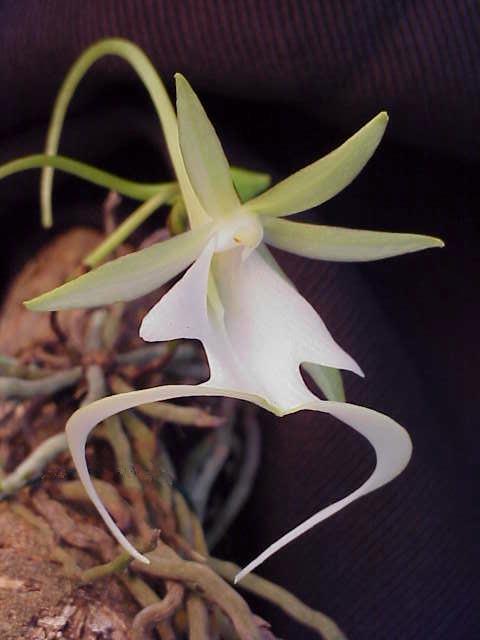 Ghost OrchidDendrophylax lindenii
-
 Noble DendrobiumDendrobium nobile
-
 Bee OrchidOphrys apifera
-
 Monkey-Face OrchidDracula simia
-
 Christmas OrchidCattleya trianae
-
 Chinese Crown OrchidEulophia graminea
Compare
Questions and answers
What is the scientific name of the Small Whorled Pogonia?
The scientific name of the Small Whorled Pogonia is Isotria medeoloides. Written with its author, the full name is Isotria medeoloides (Pursh) Raf..
Which family does the Small Whorled Pogonia belong to?
Isotria medeoloides belongs to the family Orchidaceae, in the order Asparagales and the class Liliopsida.
Where is the Small Whorled Pogonia found?
Checklists and occurrence records place Isotria medeoloides in 2 countries: United States and Canada.
What is the conservation status of the Small Whorled Pogonia?
The IUCN Red List category recorded for Isotria medeoloides is Vulnerable (VU).
What other names does the Small Whorled Pogonia have?
Isotria medeoloides is also known in English as Green Five-leaved Orchid, Small Whorl Pogonia and Small Whorled Pogonia Orchid.
Sources
Passages the profile rests on
- The species is a terrestrial orchid with a waxy gray-green stem. Source passage: “Isotria medeoloides is a rhizomatous herb producing a waxy gray-green stem up to about 25 centimeters tall.” — English Wikipedia
- The stem can reach approximately 25 centimeters in height. Source passage: “a waxy gray-green stem up to about 25 centimeters tall.” — English Wikipedia
- Its gray-green leaves grow in a characteristic whorl. Source passage: “The gray-green leaves are up to 8.5 centimeters long by 4 wide and are borne in a characteristic whorl.” — English Wikipedia
- Its leaves can measure up to 8.5 centimeters long and 4 centimeters wide. Source passage: “The gray-green leaves are up to 8.5 centimeters long by 4 wide” — English Wikipedia
- Its flowers have green and green-streaked yellowish petals. Source passage: “The flower has green and green-streaked yellowish petals measuring between 1 and 2 centimeters long.” — English Wikipedia
- Its petals measure between 1 and 2 centimeters in length. Source passage: “petals measuring between 1 and 2 centimeters long.” — English Wikipedia
- The species occurs in hardwood and conifer-hardwood forests. Source passage: “The plant's habitat includes hardwood and conifer-hardwood forests” — English Wikipedia
- It grows in leaf litter beside small intermittent braided streams. Source passage: “where it is found in leaf litter along small "braided" intermittent streams.” — English Wikipedia
- The species is sometimes confused with common Indian cucumber (Medeola virginiana) because both have similar whorled leaves and occur in similar habitat types. Source passage: “This orchid is sometimes confused with the common Indian cucumber (Medeola virginiana), which has similar whorled leaves and grows in similar habitat types.” — English Wikipedia
- The specific epithet medeoloides refers to the species' similarity to common Indian cucumber. Source passage: “The species name medeoloides is a reference to this similarity.” — English Wikipedia
- The species can remain dormant for periods of up to three years. Source passage: “The plant can usually remain dormant for up to three years.” — English Wikipedia
- The species is classified as threatened by the U.S. Fish and Wildlife Service. Source passage: “The plant is listed as a threatened species by the U.S. Fish and Wildlife Service” — English Wikipedia
- It was downgraded from endangered to threatened status in 1994 following the discovery of additional populations. Source passage: “having been downlisted from endangered status in 1994 as more populations were discovered” — English Wikipedia
- Most states or provinces within its range list the species as endangered. Source passage: “It is listed as an endangered species by most states or provinces within its range.” — English Wikipedia
- Approximately 104 populations of the species are known to exist. Source passage: “There are about 104 populations known to exist” — English Wikipedia
- Most known populations contain fewer than 25 plants. Source passage: “but most of these are small, containing fewer than 25 plants.” — English Wikipedia
- Habitat destruction is identified as the principal threat to the species. Source passage: “The main threat to the species' existence is the destruction of its habitat.” — English Wikipedia
- Wild pigs, off-road vehicles, deer, slugs, vandalism, and collection are additional threats to the species. Source passage: “Other threats include wild pigs, off-road vehicles, predation by deer and slugs, vandalism, and collection.” — English Wikipedia
- A population was recorded in Missouri in 1897, but the species is no longer believed to survive there. Source passage: “A population was found in Missouri in 1897, but the plant is no longer believed extant there.” — English Wikipedia
- No critical habitat rules have been published for the species. Source passage: “No critical habitat rules have been published for the Small Whorled pogonia.” — portal.ct.gov
Data
- Catalogue of Life, 2026-10-16 XR cc by
- Global Biodiversity Information Facility CC BY 4.0
- Wikidata CC0
- GeoNames CC BY 4.0
- Wikimedia Commons per image; credit shown with each image
- Within the Catalogue of Life, this name comes from The World Checklist of Vascular Plants (WCVP) cc by
References
- Fl. Tellur. 4: 47 (1838) where the name was published
This species in other databases
- Catalogue of Life 3QCV2
- Wikidata Q6086561
- iNaturalist 62257
- World Flora Online wfo-0000218106
- GRIN 320121
Page built on 28 November 2026. See how the catalog is made and all sources and licences.
Cite this page
ScientificNames.org. (2026). Isotria medeoloides (Small Whorled Pogonia). Retrieved November 28, 2026, from https://scientificnames.org/species/isotria-medeoloides
“Isotria medeoloides (Small Whorled Pogonia).” ScientificNames.org, 2026, scientificnames.org/species/isotria-medeoloides. Accessed 28 Nov. 2026.
ScientificNames.org. “Isotria medeoloides (Small Whorled Pogonia).” Accessed November 28, 2026. https://scientificnames.org/species/isotria-medeoloides.
@misc{scientificnames_isotria_medeoloides_small_whorled_pogonia,
  author = {{ScientificNames.org}},
  title = {Isotria medeoloides (Small Whorled Pogonia)},
  year = {2026},
  url = {https://scientificnames.org/species/isotria-medeoloides},
  note = {Accessed 2026-11-28}
}