Species · Birds
Eurasian Wryneck Jynx torquilla
The scientific name of the Eurasian Wryneck is Jynx torquilla. It is a species of bird in the family Picidae (woodpecker), order Piciformes. The name dates from 1758.
- Scientific name
- Jynx torquilla Linnaeus, 1758
- Common name
- Eurasian Wryneck
- Genus
- Jynx
- Family
- Picidae (Woodpecker)
- Order
- Piciformes
- Class
- Aves
- Red List category
- LC Least Concern
- Environment
- terrestrial
- Recorded in
- 117 countries
- Name status
- accepted in the Catalogue of Life

Overview
Jynx torquilla breeds mainly in temperate regions of Europe and Asia, and most populations migrate to tropical Africa and southern Asia for winter. It has a slim, elongated body, mottled and barred plumage, and can rotate its head through almost 180 degrees.
Written 26 November 2026 from the sources listed below. Each statement was checked against the passage it cites; statements that could not be supported were removed.
Appearance
Adults measure approximately 16–18 cm in length. The nominate subspecies weighs between 23 and 52 g, while Jynx torquilla tschusii weighs between 26 and 50 g.[1][2][3]
The species has a slim, elongated body shape resembling that of a thrush more than a typical woodpecker. Its upperparts have pale-brown mottling, rufous and blackish bars, and broader black streaks.[4][5]
Its underparts are creamy white with brown arrowhead-shaped markings that become spots on the lower breast and belly. Its cheeks and throat are buff with brown barring.[6][7]
Its beak is brown, long, slender, broad at the base, and sharply pointed. Its irises are hazel, while its slender legs and feet are pale brown.[8][9]
Juveniles resemble adults in plumage but have duller and less contrasting patterns.[10]
Its call consists of repeated harsh, shrill notes lasting several seconds.[11]
The species is also described as a small grey woodpecker with cryptic plumage and a broad black stripe along the crown and back.[12]
Habitat
The Eurasian Wryneck inhabits open countryside, woodland, and orchards. Its summer habitats include parkland, gardens, heaths, and hedgerows, particularly where old trees are present.[13][14]
The species prefers relatively dry habitats and avoids wet ground. It inhabits deciduous woodland and also occurs in coniferous forests in Scandinavia and Russia.[15][16]
Diet
Ants constitute the species' principal food source. Its diet also includes beetles, beetle larvae, moths, spiders, and woodlice.[17][18]
The species finds ants and other insects in decaying wood and on the ground.[19]
Behaviour
The species can rotate its head through almost 180 degrees. When threatened at the nest, it twists its head and hisses as a defensive display.[20][21]
It sometimes forms small groups during migration and winter but generally occurs in pairs during summer. When foraging on the ground, it moves using short hops while keeping its tail raised.[22][23]
It captures prey using rapid extensions and retractions of its tongue rather than drilling holes in bark. Its flight is relatively slow and undulating.[24][25]
When disturbed, the bird sometimes feigns death by hanging limply with its eyes closed. The species is described as sluggish.[26][27]
Reproduction and life cycle
The species nests in existing cavities in tree trunks, wall crevices, bank holes, sand martin burrows, and nesting boxes. It does not use nesting material.[28][29]
A typical clutch contains seven to ten eggs. The eggs measure an average of 20.8 by 15.4 mm, weigh approximately 0.2 g, and are dull white and partially opaque.[30][31][32][33]
Both sexes participate in incubation, which lasts approximately twelve days. Both parents feed the chicks for approximately twenty days before fledging.[34][35]
The species usually produces a single brood.[36]
Conservation
The species is classified as Least Concern on the IUCN Red List. Its estimated global population is as high as fifteen million individual birds.[37][38]
Its estimated population comprises between 1,590,000 and 3,040,000 mature individuals. The population may be declining, but not sufficiently rapidly to meet the threshold for a more threatened category.[39][40]
The species has responded positively to the installation of nest boxes in suitable Swiss habitats.[41]
Uses
The bird was historically used as a charm intended to bring back an unfaithful lover.[42]
Classification of the Eurasian Wryneck
| Kingdom | Animalia |
|---|---|
| Phylum | Chordata |
| Subphylum | Vertebrata |
| Infraphylum | Gnathostomata |
| Parvphylum | Osteichthyes |
| Megaclass | Tetrapoda |
| Class | Aves (Bird) |
| Order | Piciformes (Woodpeckers) |
| Family | Picidae (Woodpecker) |
| Subfamily | Jynginae |
| Genus | Jynx (Wryneck) |
| Species | Jynx torquilla Linnaeus, 1758 |
Where the Eurasian Wryneck is found
Checklists and occurrence records place Jynx torquilla in 117 countries across Africa, Asia and North America. GBIF holds 592,103 georeferenced records of it.
Countries
- Afghanistan 71
- Aland Islands 1,403
- Albania 131
- Algeria 148
- Andorra 14
- Armenia 143
- Austria 2,225
- Azerbaijan 123
- Bahrain 32
- Bangladesh 522
- Belarus 1,038
- Belgium 4,402
- Benin 89
- Bhutan 81
- Bosnia and Herzegovina 193
- Bulgaria 1,623
- Burkina Faso 8
- Cambodia 54
- Cameroon 15
- Central African Republic 11
- Chad 10
- China 3,001
- Croatia 1,686
- Cyprus 922
- Czechia 5,210
- Denmark 14,324
- Djibouti 6
- Egypt 387
- Eritrea 6
- Estonia 8,126
- Ethiopia 277
- Finland 51,371
- France 57,193
- Gambia 158
- Georgia 725
- Germany 17,059
- Ghana 33
- Gibraltar 41
- Greece 1,309
- Guernsey 10
- Guinea 8
- Hong Kong 902
- Hungary 1,645
- Iceland 5
- India 16,986
- Iran 251
- Iraq 34
- Ireland 75
- Isle of Man 73
- Israel 8,446
- Italy 3,988
- Ivory Coast 3
- Japan 1,518
- Jersey 6
- Jordan 200
- Kazakhstan 207
- Kenya 52
- Kosovo 16
- Kuwait 508
- Kyrgyzstan 47
- Laos 281
- Latvia 387
- Lebanon 164
- Liberia 6
- Libya 44
- Liechtenstein 21
- Lithuania 704
- Luxembourg 1,347
- Macao 69
- Malaysia 11
- Malta 146
- Mauritania 37
- Moldova 294
- Mongolia 672
- Montenegro 188
- Morocco 730
- Myanmar 361
- Nepal 752
- Niger 3
- Nigeria 202
- North Macedonia 66
- Norway 34,969
- Oman 313
- Pakistan 197
- Palestinian Territory 522
- Philippines 12
- Poland 8,541
- Portugal 7,654
- Qatar 87
- Romania 507
- Russia 9,203
- Saudi Arabia 318
- Senegal 121
- Serbia 289
- Slovakia 1,343
- Slovenia 1,269
- South Korea 307
- Spain 52,337
- Sri Lanka 21
- Sudan 10
- Sweden 185,532
- Switzerland 33,774
- Syria 20
- Taiwan 1,958
- Tajikistan 16
- Thailand 2,565
- The Netherlands 20,432
- Tunisia 76
- Turkey 2,109
- Uganda 20
- Ukraine 4,262
- United Arab Emirates 1,299
- United Kingdom 6,171
- United States 28
- Uzbekistan 58
- Vietnam 102
- Western Sahara 26
Regions and cities with the most records
- Kalmar, Sweden 29,467
- Västra Götaland, Sweden 21,266
- Stockholm, Sweden 19,881
- Södermanland, Sweden 18,460
- Uppsala, Sweden 13,704
- Bourgogne-Franche-Comté, France 12,053
- Provence-Alpes-Côte d'Azur, France 10,563
- Västmanland, Sweden 9,434
- Skåne, Sweden 8,499
- Örebro, Sweden 8,134
- Catalonia, Spain 7,839
- Valais, Switzerland 7,825
- Sollentuna, Sweden 7,249
- Occitanie, France 6,694
- Uppsala, Sweden 6,652
- Upplands Väsby, Sweden 6,647
- Ticino, Switzerland 6,620
- Auvergne-Rhône-Alpes, France 6,559
- Vaud, Switzerland 6,555
- Jönköping, Sweden 6,503
- Aragon, Spain 6,305
- Grand Est, France 6,175
- Danderyd, Sweden 6,011
- Östergötland, Sweden 5,925
- Jakobsberg, Sweden 5,907
- Locarno, Switzerland 5,853
- Täby, Sweden 5,849
- Bellinzona, Switzerland 5,824
- Kalmar, Sweden 5,592
- Sundbyberg, Sweden 5,540
- Rinkeby, Sweden 5,463
- Märsta, Sweden 5,376
- Solna, Sweden 5,306
- Vallentuna, Sweden 5,246
- Gotland, Sweden 5,059
- England, United Kingdom 4,917
Range as the checklists state it
Europe & Northern Asia (excluding China)
North America
Southern Asia
Africa
A number beside a place is its count of GBIF occurrence records. A place without a number comes from a checklist alone. Records show where a species has been observed or collected, which can include escapes and vagrants.
Common names
English
- Eurasian Wryneck
- European Wryneck
- Northern Wryneck
- Wryneck
Names in 71 other languages
- Arabic
- لواء أوراسي, لَّوَّاء أوراسي
- Armenian
- Վիզգցուկ
- Azerbaijani
- Adi buruqboyun
- Basque
- Lepitzuli
- Belarusian
- Круцiгалоўка, Круцігалоўка
- Bengali
- মেঠো কাঠঠোকরা
- Breton
- Penngamm, Penngamm Eurazia
- Bulgarian
- Въртошийка
- Burmese
- သစ်တောက် လည်လိမ်
- Catalan
- Colltort, colltort comú
- Chinese
- 地啄木, 地啄木〔蟻鴷〕, 蚁䴕, 蚁鴷, 蟻鴷
- Croatian
- vijoglav
- Czech
- krutihlav obecný
- Danish
- Vendehals
- Dutch
- Draaihals
- Esperanto
- eŭrazia koltordulo
- Estonian
- väänkael
- Faroese
- Snú?urkriki, snúðurkriki
- Finnish
- käenpiika
- French
- Torcol, Torcol fourmilier
- Galician
- Peto formigueiro
- Georgian
- ჩვეულებრივი მაქცია
- German
- Wendehals
- Greek
- Στραβολαίμης
- Hebrew
- סבראש
- Hungarian
- nyaktekercs
- Icelandic
- Gauktíta
- Irish
- Cam-mhuin
- Italian
- Torcicollo
- Japanese
- アリスイ
- Kazakh
- Дүпілдек
- Korean
- 개미잡이
- Latvian
- Grozgalvītis, tītiņš
- Lithuanian
- Grąžiagalvė, eurazinė grąžiagalvė
- Luxembourgish
- Dréihälschen
- Macedonian
- вртивратка
- Malayalam
- കഴുത്തുപിരിയൻകിളി
- Nepali
- खरलाहाँचे
- Northern Sami
- Giegabiigá, giegabahtasihkku, giegacizáš
- Persian
- دارکوب قهوه ای
- Polish
- Krętogłów, krętogłów (zwyczajny)
- Portuguese
- Torcicolo, Torcicolo-comum, torcicolo-eurasiático
- Romanian
- Capîntortură
- Russian
- Вертиголовка, Вертишейка, Обыкновенная вертишейка
- Scottish Gaelic
- Geòcair
- Serbian
- Vijoglava, Вијоглава
- Slovak
- krutihlav hnedý, krutohlav hnedý
- Slovenian
- vijeglavka
- Spanish
- Carpintero torcecuello, Torcecuello euroasiático
- Swedish
- göktyta
- Thai
- นกคอพัน
- Turkish
- Bayağı boyunburan, Boyunçeviren
- Ukrainian
- крутиголовка звичайна
- Vietnamese
- Vẹo cổ
- Welsh
- Pengam, Pengeimion
- arg
- Retuerto
- arz
- لواء اوراسى
- bak
- Борғандаҡ
- chm
- Шокшыгек
- chv
- Мăйпăран, Мӑйпӑран
- cor
- Pynnyk
- frr
- Dreierfögel
- fry
- Draainekke
- glv
- Mwannal cam
- mhr
- аҥагайык
- nds
- Dreihhals
- olo
- Käinpiigu
- oss
- Къубалтил
- pcd
- Tord-co
- sah
- Абааһы чыычааҕа
- vec
- Storzicòl
Synonyms
6 other scientific names have been used for this species and are now treated as synonyms of Jynx torquilla.
- Jynx torquila Sharpe, RB, 1891
- Jynx torquilla incognita Stachanow
- Jynx torquilla intermedia Stegmann
- Jynx torquilla pallidior Rensch
- Torquilla striata Palmer, S, 1836
- Yunx torquilla Linnaeus, C, 1758
Subspecies and varieties
- Jynx torquilla chinensis subspecies
- Jynx torquilla himalayana (Himalayan Wryneck) subspecies
- Jynx torquilla mauretanica subspecies
- Jynx torquilla sarudnyi subspecies
- Jynx torquilla torquilla subspecies
- Jynx torquilla tschusii subspecies
Related species
-
 Red-throated WryneckJynx ruficollis
- Northern FlickerColaptes auratus
-
 Pileated WoodpeckerDryocopus pileatus
-
 Ivory-billed WoodpeckerCampephilus principalis
-
 Downy WoodpeckerDryobates pubescens
-
 Red-bellied WoodpeckerMelanerpes carolinus
-
 Great Spotted WoodpeckerDendrocopos major
-
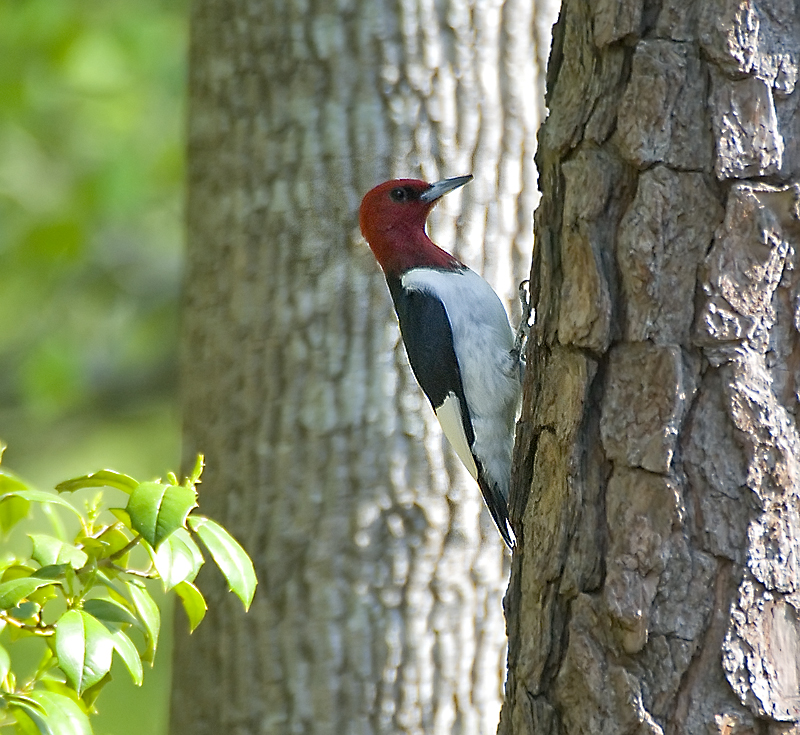 Red-headed WoodpeckerMelanerpes erythrocephalus
Compare
Questions and answers
What is the scientific name of the Eurasian Wryneck?
The scientific name of the Eurasian Wryneck is Jynx torquilla. Written with its author, the full name is Jynx torquilla Linnaeus, 1758.
Which family does the Eurasian Wryneck belong to?
Jynx torquilla belongs to the family Picidae, in the order Piciformes and the class Aves.
Where is the Eurasian Wryneck found?
Checklists and occurrence records place Jynx torquilla in 117 countries, including Sweden, France, Spain, Finland, Norway and Switzerland.
What is the conservation status of the Eurasian Wryneck?
The IUCN Red List category recorded for Jynx torquilla is Least Concern (LC).
What other names does the Eurasian Wryneck have?
Jynx torquilla is also known in English as European Wryneck, Northern Wryneck and Wryneck.
What is the Eurasian wryneck?
The Eurasian Wryneck (Jynx torquilla Linnaeus, 1758) is a bird in the family Picidae, order Piciformes, and class Aves. It has a slim, elongated body resembling that of a thrush more than a typical woodpecker.[4]
Sources
Passages the profile rests on
- Adults measure approximately 16–18 cm in length. Source passage: “The Eurasian wryneck is 16–18 cm (6.3–7.1 in) in length.” — English Wikipedia
- The nominate subspecies weighs between 23 and 52 g. Source passage: “The nominate subspecies weighs 23 to 52 g (0.81 to 1.83 oz)” — English Wikipedia
- The subspecies Jynx torquilla tschusii weighs between 26 and 50 g. Source passage: “subspecies Jynx torquilla tschusii weighs 26 to 50 g (0.92 to 1.76 oz).” — English Wikipedia
- The species has a slim, elongated body shape resembling that of a thrush more than a typical woodpecker. Source passage: “It is a slim, elongated-looking bird with a body shape more like a thrush than a woodpecker.” — English Wikipedia
- Its upperparts have pale-brown mottling, rufous and blackish bars, and broader black streaks. Source passage: “The upperparts are barred and mottled in shades of pale brown with rufous and blackish bars and wider black streaks.” — English Wikipedia
- Its underparts are creamy white with brown arrowhead-shaped markings that become spots on the lower breast and belly. Source passage: “The underparts are creamy white with brown markings shaped like arrow-heads which are reduced to spots on the lower breast and belly.” — English Wikipedia
- Its cheeks and throat are buff with brown barring. Source passage: “The cheeks and throat are buff barred with brown.” — English Wikipedia
- Its beak is brown, long, slender, broad at the base, and sharply pointed. Source passage: “The beak is brown, long and slender with a broad base and sharp tip.” — English Wikipedia
- Its irises are hazel, while its slender legs and feet are pale brown. Source passage: “The irises are hazel and the slender legs and feet are pale brown.” — English Wikipedia
- Juveniles resemble adults in plumage but have duller and less contrasting patterns. Source passage: “The juvenile has plumage similar to the adults, but with the patterning slightly duller and less contrasting.” — English Wikipedia
- Its call consists of repeated harsh, shrill notes lasting several seconds. Source passage: “The call of the Eurasian wryneck is a series of repeated harsh, shrill notes quee-quee-quee-quee lasting for several seconds” — English Wikipedia
- The species is described as a small grey woodpecker with cryptic plumage and a broad black stripe along the crown and back. Source passage: “Bizarre and unmistakable small gray woodpecker. Note broad black stripe down middle of crown and back. Cryptic plumage” — ebird.org
- The species inhabits open countryside, woodland, and orchards. Source passage: “It is a bird of open countryside, woodland and orchards.” — English Wikipedia
- Its summer habitats include parkland, gardens, heaths, and hedgerows, particularly where old trees are present. Source passage: “During the summer the bird is found in open countryside, parkland, gardens, orchards, heaths and hedgerows, especially where there are some old trees;” — English Wikipedia
- The species prefers relatively dry habitats and avoids wet ground. Source passage: “it prefers drier habitats, and avoids wet ground.” — English Wikipedia
- It inhabits deciduous woodland and also occurs in coniferous forests in Scandinavia and Russia. Source passage: “It also inhabits deciduous woodland, and in Scandinavia and Russia it also occurs in coniferous forests.” — English Wikipedia
- Ants constitute the species' principal food source. Source passage: “The diet consists chiefly of ants” — English Wikipedia
- Its diet also includes beetles, beetle larvae, moths, spiders, and woodlice. Source passage: “but beetles and their larvae, moths, spiders and woodlice are also eaten.” — English Wikipedia
- The species finds ants and other insects in decaying wood and on the ground. Source passage: “which they find in decaying wood or on the ground.” — English Wikipedia
- The species can rotate its head through almost 180 degrees. Source passage: “their ability to turn their heads through almost 180 degrees.” — English Wikipedia
- When threatened at the nest, it twists its head and hisses as a defensive display. Source passage: “When disturbed at the nest, they use this snake-like head twisting and hissing as a threat display.” — English Wikipedia
- The species sometimes forms small groups during migration and winter but generally occurs in pairs during summer. Source passage: “The Eurasian wryneck sometimes forms small groups during migration and in its winter quarters but in the summer is usually found in pairs.” — English Wikipedia
- When foraging on the ground, the bird moves using short hops while keeping its tail raised. Source passage: “mostly forages on the ground, moving around with short hops with its tail held in a raised position.” — English Wikipedia
- It captures prey using rapid extensions and retractions of its tongue rather than drilling holes in bark. Source passage: “It does not make holes in bark with its beak but picks up prey with a rapid extension and retraction of its tongue” — English Wikipedia
- Its flight is relatively slow and undulating. Source passage: “Its flight is rather slow and undulating.” — English Wikipedia
- When disturbed, the bird sometimes feigns death by hanging limply with its eyes closed. Source passage: “The bird sometimes feigns death and hangs limply with eyes closed.” — English Wikipedia
- The species is described as sluggish. Source passage: “Cryptic plumage and sluggish” — ebird.org
- The species nests in existing cavities in tree trunks, wall crevices, bank holes, sand martin burrows, and nesting boxes. Source passage: “The nesting site is variable and may be in a pre-existing hole in a tree trunk, a crevice in a wall, a hole in a bank, a sand martin's burrow or a nesting box.” — English Wikipedia
- The species does not use nesting material. Source passage: “It uses no nesting material” — English Wikipedia
- A typical clutch contains seven to ten eggs. Source passage: “a clutch of normally seven to ten eggs is laid” — English Wikipedia
- Eggs measure an average of 20.8 by 15.4 mm. Source passage: “The eggs average 20.8 by 15.4 millimetres (0.82 in × 0.61 in)” — English Wikipedia
- Eggs weigh approximately 0.2 g. Source passage: “and weigh about 0.2 g (0.007 oz).” — English Wikipedia
- The eggs are dull white and partially opaque. Source passage: “They are a dull white colour and partially opaque.” — English Wikipedia
- Both sexes participate in incubation, which lasts approximately twelve days. Source passage: “Both sexes are involved in incubation, which takes twelve days” — English Wikipedia
- Both parents feed the chicks for approximately twenty days before fledging. Source passage: “Both parents feed the chicks for about twenty days before they fledge.” — English Wikipedia
- The species usually produces a single brood. Source passage: “There is usually a single brood.” — English Wikipedia
- The species is classified as Least Concern on the IUCN Red List. Source passage: “The International Union for Conservation of Nature lists the Eurasian wryneck as being of "least concern" in its Red List of Threatened Species.” — English Wikipedia
- Its estimated global population is as high as fifteen million individual birds. Source passage: “it has a world population estimated at up to fifteen million individual birds” — English Wikipedia
- Its estimated population comprises between 1,590,000 and 3,040,000 mature individuals. Source passage: “This species has an extremely large range, estimated at 1,590,000-3,040,000 mature individuals,” — datazone.birdlife.org
- The population may be declining, but not sufficiently rapidly to meet the threshold for a more threatened category. Source passage: “The population may be decreasing to a certain extent but not at such a rate as to make the bird reach the threshold for a more threatened category.” — English Wikipedia
- The species has responded positively to the installation of nest boxes in suitable Swiss habitats. Source passage: “the species has reacted positively to conservation measures such as the addition of nestboxes in suitable habitats.” — English Wikipedia
- The bird was historically used as a charm intended to bring back an unfaithful lover. Source passage: “The bird was used as a charm to bring back an errant lover” — English Wikipedia
Data
- Catalogue of Life, 2026-10-16 XR cc by
- Global Biodiversity Information Facility CC BY 4.0
- Wikidata CC0
- GeoNames CC BY 4.0
- Wikimedia Commons per image; credit shown with each image
- Within the Catalogue of Life, this name comes from The Integrated Taxonomic Information System cc0
References
- Syst. Nat. ed. 10 p. 112 where the name was published
- Banks, R. C., R. W. McDiarmid, and A. L. Gardner. (1987). Checklist of Vertebrates of the United States, the U.S. Territories, and Canada. Resource Publication, No. 166.
- Gill, Frank, & and Minturn Wright. (2006). Birds of the World: Recommended English Names.
- Howell, Steve N. G., Ian Lewington, and Will Russell. (2014). Rare Birds of North America.
This species in other databases
- Catalogue of Life 3QXQR
- Wikidata Q25678
- iNaturalist 18448
- WoRMS urn:lsid:marinespecies.org:taxname:1534814
- Avibase eurwry
Page built on 27 November 2026. See how the catalog is made and all sources and licences.
Cite this page
ScientificNames.org. (2026). Jynx torquilla (Eurasian Wryneck). Retrieved November 27, 2026, from https://scientificnames.org/species/jynx-torquilla
“Jynx torquilla (Eurasian Wryneck).” ScientificNames.org, 2026, scientificnames.org/species/jynx-torquilla. Accessed 27 Nov. 2026.
ScientificNames.org. “Jynx torquilla (Eurasian Wryneck).” Accessed November 27, 2026. https://scientificnames.org/species/jynx-torquilla.
@misc{scientificnames_jynx_torquilla_eurasian_wryneck,
  author = {{ScientificNames.org}},
  title = {Jynx torquilla (Eurasian Wryneck)},
  year = {2026},
  url = {https://scientificnames.org/species/jynx-torquilla},
  note = {Accessed 2026-11-27}
}