Species · Insects
Eggplant Fruit and Shoot Borer Leucinodes orbonalis
The scientific name of the Eggplant Fruit and Shoot Borer is Leucinodes orbonalis. It is a species of insect in the family Crambidae (grass moth), order Lepidoptera. The name dates from 1854.
- Scientific name
- Leucinodes orbonalis Guenée, 1854
- Common name
- Eggplant Fruit and Shoot Borer
- Genus
- Leucinodes
- Family
- Crambidae (Grass Moth)
- Order
- Lepidoptera
- Class
- Insecta
- Recorded in
- 9 countries
- Name status
- accepted in the Catalogue of Life

Overview
The Eggplant Fruit and Shoot Borer is an insect in the family Crambidae, order Lepidoptera and class Insecta. The species is native to tropical and subtropical regions of Australia and Asia.
Written 26 November 2026 from the sources listed below. Each statement was checked against the passage it cites; statements that could not be supported were removed.
Appearance
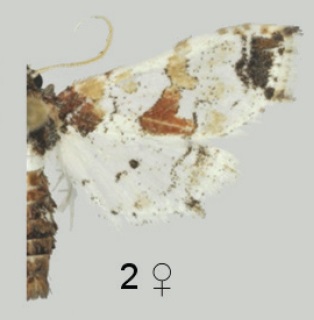
Male adults have forewings measuring 8.5–10.5 mm in length. Female adults have forewings measuring 9.5–12 mm in length.[1][2]
Habitat
The species is native to tropical and subtropical regions of Australia and Asia. Its recorded Asian distribution includes Pakistan, Nepal, India, Sri Lanka, Bangladesh, Myanmar, Laos, Cambodia, Vietnam, Thailand, China, Taiwan, Japan, Malaysia, Singapore, Brunei, the Philippines and Java in Indonesia.[3][4]
The species has been intercepted in fruit imports in the United States, the Netherlands, Denmark and Great Britain. It has also been reported from the wild in Great Britain.[5][6]
A taxonomic revision concluded that the species is currently absent from Africa. The species has been recorded among Lepidoptera collected from Uganda.[7][8]
Diet
Eggplant (Solanum melongena) is the primary host plant for the larvae. Secondary larval host plants include tomato and potato.[9][10]
Other secondary host plants include Sodom apple, Ethiopian nightshade, potatotree, nipplefruit and black nightshade. Additional secondary host plants include turkey berry, tropical soda apple, Solanum anguivi and Solanum xanthocarpum.[11][12]
Cape gooseberry and Physalis minima are also secondary host plants.[13]
Reproduction and life cycle
Females lay eggs at night on the undersides of young leaves, green stems, flower buds and fruit calyces.[14]
Behaviour
Newly hatched larvae bore into the nearest tender shoot, flower or fruit within an hour of hatching. Larvae plug the holes they make when entering shoots or fruits with their excreta.[15][16]
Larvae can bore into the petioles and midribs of large leaves on young plants. Larval feeding inside shoots causes young shoots to wilt.[17][18]
Damaged shoots eventually fall off, disrupting plant growth and reducing fruit number and size. Larval feeding inside fruits destroys fruit tissue and makes even slightly damaged fruits unsuitable for marketing.[19][20]
Adult moths can be attracted to light traps in fields at night.[21]
Uses
A genetically modified eggplant called Bt brinjal has been developed to combat this species.[22]
Conservation
Suggested management approaches include sex pheromones, physical and mechanical barriers, cultural practices, biological agents and pesticides.[23]
Synchronous planting with neighbouring fields is recommended to help reduce infestation spread. Growing seedlings under netting is recommended to prevent moths from laying eggs on them.[24][25]
Removing infected plant material before harvest is recommended to prevent infestation spread. Removing previous-season crop stubble is recommended to reduce infestation carryover.[26][27]
Crop rotation with root crops or pulses after planting solanaceous crops is recommended to reduce infestation. Maize is recommended as a barrier crop for reducing infestation.[28][29]
Cowpea, coriander, black gram and green gram are recommended as non-host intercrops. In small plantings, infected shoots and fruits can be hand-picked, while eggs and larvae can be physically removed.[30][31]
Classification of the Eggplant Fruit and Shoot Borer
| Kingdom | Animalia |
|---|---|
| Phylum | Arthropoda |
| Subphylum | Hexapoda |
| Class | Insecta (Insect) |
| Order | Lepidoptera |
| Superfamily | Pyraloidea |
| Family | Crambidae (Grass Moth) |
| Subfamily | Spilomelinae |
| Genus | Leucinodes |
| Species | Leucinodes orbonalis Guenée, 1854 |
Where the Eggplant Fruit and Shoot Borer is found
Checklists and occurrence records place Leucinodes orbonalis in 9 countries. GBIF holds 768 georeferenced records of it.
Countries
- Australia 57
- Bangladesh 15
- India 484
- Laos 4
- Pakistan 21
- Philippines 115
- Sri Lanka 60
- Taiwan 4
- Thailand 8
Regions and cities with the most records
- Madhya Pradesh, India 96
- Tamil Nadu, India 70
- Karnataka, India 53
- Queensland, Australia 49
- Bihar, India 29
- West Bengal, India 28
- Haryana, India 24
- Nūh, India 24
- Andhra Pradesh, India 22
- Bengaluru, India 15
- Kerala, India 13
- Electronic City Phase I, India 10
- Yelahanka, India 10
- koppana Agrahara, India 10
- Hebbagodi, India 9
- Maharashtra, India 9
- Assam, India 8
- Balochistan, Pakistan 8
- Impasugong, Philippines 8
- Kaikalapettai, India 8
- Laitumkhrah, India 8
- Maduraivayal, India 8
- Mawlai-Mawïong, India 8
- Meghalaya, India 8
- Mugalivakkam, India 8
- Nerkunram, India 8
- Nongthymmai, India 8
- Porur, India 8
- Ramapuram, India 8
- Shillong, India 8
- Azimpur, Bangladesh 7
- Bhatara, Bangladesh 7
- Bommasandra Industrial Area, India 7
- Chettipālaiyam, India 7
- Chinnavādampatti, India 7
- Coimbatore, India 7
1 more country has a few records outside this range
These countries hold a few records of Leucinodes orbonalis but lie outside the range the checklists give for it. Such records are often zoo or garden specimens, museum material or vagrants, so the species is not counted as occurring there.
A number beside a place is its count of GBIF occurrence records. A place without a number comes from a checklist alone. Records show where a species has been observed or collected, which can include escapes and vagrants.
Common names
English
- Eggplant Fruit and Shoot Borer
- Aubergine Pearl
- Brinjal Fruit and Shoot Borer
Names in 1 other language
- Japanese
- ナスノメイガ
Related species


Questions and answers
What is the scientific name of the Eggplant Fruit and Shoot Borer?
The scientific name of the Eggplant Fruit and Shoot Borer is Leucinodes orbonalis. Written with its author, the full name is Leucinodes orbonalis Guenée, 1854.
Which family does the Eggplant Fruit and Shoot Borer belong to?
Leucinodes orbonalis belongs to the family Crambidae, in the order Lepidoptera and the class Insecta.
Where is the Eggplant Fruit and Shoot Borer found?
Checklists and occurrence records place Leucinodes orbonalis in 9 countries, including India, Philippines, Sri Lanka, Australia, Pakistan and Bangladesh.
What other names does the Eggplant Fruit and Shoot Borer have?
Leucinodes orbonalis is also known in English as Aubergine Pearl and Brinjal Fruit and Shoot Borer.
How to prevent shoot borer in eggplant?
Recommended approaches include growing seedlings under netting, synchronous planting with neighbouring fields, removing infected plant material before harvest and removing previous-season crop stubble. Crop rotation with root crops or pulses, maize barrier crops and non-host intercrops such as cowpea, coriander, black gram and green gram are also recommended.[24][25][26][27][28][29][30]
Sources
Passages the profile rests on
- Male adults have forewings measuring 8.5–10.5 mm in length. Source passage: “Imagines have a forewing length of 8.5–10.5 mm in males” — English Wikipedia
- Female adults have forewings measuring 9.5–12 mm in length. Source passage: “and 9.5–12 mm in females.” — English Wikipedia
- The species is native to tropical and subtropical regions of Australia and Asia. Source passage: “Its native distribution is in the tropical and subtropical parts of Australia and Asia” — English Wikipedia
- Its recorded Asian distribution includes Pakistan, Nepal, India, Sri Lanka, Bangladesh, Myanmar, Laos, Cambodia, Vietnam, Thailand, China, Taiwan, Japan, Malaysia, Singapore, Brunei, the Philippines and Java in Indonesia. Source passage: “recorded from Pakistan, Nepal, India, including the Andaman Islands, Sri Lanka, Bangladesh, Myanmar, Laos, Cambodia, Vietnam, Thailand, China, Taiwan, Japan, Malaysia, Singapore, Brunei, the Philippines, and Indonesia (Java).” — English Wikipedia
- The species has been intercepted in fruit imports in the United States, the Netherlands, Denmark and Great Britain. Source passage: “It has also been intercepted from fruit imports in the U.S.A., the Netherlands, Denmark and Great Britain” — English Wikipedia
- The species has also been reported from the wild in Great Britain. Source passage: “where it was also reported from the wild.” — English Wikipedia
- A taxonomic revision concluded that the species is currently absent from Africa. Source passage: “L. orbonalis is currently not present in Africa” — English Wikipedia
- The species has been recorded among Lepidoptera collected from Uganda. Source passage: “All Lepidoptera from Uganda were Leucinodes orbonalis.” — pmc.ncbi.nlm.nih.gov
- Eggplant (Solanum melongena) is the primary host plant for the larvae. Source passage: “The primary larval hostplant is eggplant or brinjal, Solanum melongena” — English Wikipedia
- Secondary larval host plants include tomato and potato. Source passage: “Secondary hostplants comprise tomato, potato, nightshade” — English Wikipedia
- Other secondary host plants include Sodom apple, Ethiopian nightshade, potatotree, nipplefruit and black nightshade. Source passage: “Sodom apple, Ethiopian nightshade, potatotree, nipplefruit, black nightshade” — English Wikipedia
- Additional secondary host plants include turkey berry, tropical soda apple, Solanum anguivi and Solanum xanthocarpum. Source passage: “turkey berry, tropical soda apple, Solanum anguivi, Solanum xanthocarpum” — English Wikipedia
- Cape gooseberry and Physalis minima are also secondary host plants. Source passage: “cape gooseberry, and Physalis minima.” — English Wikipedia
- Females lay eggs at night on the undersides of young leaves, green stems, flower buds and fruit calyces. Source passage: “Eggs are laid during the night on the lower surface of the young leaves, green stems, flower buds, or calyces of the fruits.” — English Wikipedia
- Newly hatched larvae bore into the nearest tender shoot, flower or fruit within an hour of hatching. Source passage: “Within an hour of hatching, the caterpillar (larva) bores into the nearest tender shoot, flower, or fruit.” — English Wikipedia
- Larvae plug the holes they make when entering shoots or fruits with their excreta. Source passage: “Soon after boring into shoots or fruits, they plug the entrance hole with excreta.” — English Wikipedia
- Larvae can bore into the petioles and midribs of large leaves on young plants. Source passage: “In young plants, caterpillars are reported to bore inside petioles and midribs of large leaves.” — English Wikipedia
- Larval feeding inside shoots causes young shoots to wilt. Source passage: “Larval feeding inside shoots results in wilting of the young shoot.” — English Wikipedia
- Damaged shoots eventually fall off, disrupting plant growth and reducing fruit number and size. Source passage: “The damaged shoots ultimately drop off, disturbing plant growth and reducing fruit number and size.” — English Wikipedia
- Larval feeding inside fruits destroys fruit tissue and makes even slightly damaged fruits unsuitable for marketing. Source passage: “Larval feeding inside the fruit results in the destruction of fruit tissue, making even slightly damaged fruit unfit for marketing.” — English Wikipedia
- Adult moths can be attracted to light traps in fields at night. Source passage: “introducing light traps into fields to attract moths at night.” — English Wikipedia
- A genetically modified eggplant called Bt brinjal has been developed to combat this species. Source passage: “A genetically modified brinjal, called Bt brinjal, has been developed to fight against L. orbonalis.” — English Wikipedia
- Suggested management approaches include sex pheromones, physical and mechanical barriers, cultural practices, biological agents and pesticides. Source passage: “sex pheromones, physical and mechanical barriers, cultural practices, use of bio-pesticides and biological agents, botanical pesticides and safer chemical pesticides” — English Wikipedia
- Synchronous planting with neighbouring fields is recommended as a way to help reduce infestation spread. Source passage: “suggest synchronous planting with neighbouring fields to help reduce the spread of infestation.” — English Wikipedia
- Growing seedlings under netting is recommended to prevent moths from laying eggs on them. Source passage: “growing them under netting to prevent moths laying eggs.” — English Wikipedia
- Removing infected plant material before harvest is recommended to prevent infestation spread. Source passage: “Removal of any infected material up until harvest can also be conducted to prevent spread.” — English Wikipedia
- Removing previous-season crop stubble is recommended to reduce infestation carryover. Source passage: “removal of stubble from the previous season can help reduce carryover.” — English Wikipedia
- Crop rotation with root crops or pulses after planting solanaceous crops is recommended to reduce infestation. Source passage: “crop rotation with root crops or pulses after Solanaceous planting can also be used as a method to reduce infestation.” — English Wikipedia
- Maize is recommended as a barrier crop for reducing infestation. Source passage: “using maize as a barrier crop” — English Wikipedia
- Cowpea, coriander, black gram and green gram are recommended as non-host intercrops. Source passage: “intercropping with non-host crops including cowpea, coriander, black gram and green gram.” — English Wikipedia
- In small plantings, infected shoots and fruits can be hand-picked, while eggs and larvae can be physically removed. Source passage: “infected shoots and fruits can be hand picked and eggs and larvae can be physically removed.” — English Wikipedia
Data
- Catalogue of Life, 2026-10-16 XR cc by
- Global Biodiversity Information Facility CC BY 4.0
- Wikidata CC0
- GeoNames CC BY 4.0
- Wikimedia Commons per image; credit shown with each image
- Within the Catalogue of Life, this name comes from Global Lepidoptera Index cc by
References
- Guenée. (1854). Histoire naturelle des insectes. 8. http://www.biodiversitylibrary.org/item/37754#page/134/mode/2up Link where the name was published
This species in other databases
Page built on 28 November 2026. See how the catalog is made and all sources and licences.
Cite this page
ScientificNames.org. (2026). Leucinodes orbonalis (Eggplant Fruit and Shoot Borer). Retrieved November 28, 2026, from https://scientificnames.org/species/leucinodes-orbonalis
“Leucinodes orbonalis (Eggplant Fruit and Shoot Borer).” ScientificNames.org, 2026, scientificnames.org/species/leucinodes-orbonalis. Accessed 28 Nov. 2026.
ScientificNames.org. “Leucinodes orbonalis (Eggplant Fruit and Shoot Borer).” Accessed November 28, 2026. https://scientificnames.org/species/leucinodes-orbonalis.
@misc{scientificnames_leucinodes_orbonalis_eggplant_fruit_and_shoot_borer,
  author = {{ScientificNames.org}},
  title = {Leucinodes orbonalis (Eggplant Fruit and Shoot Borer)},
  year = {2026},
  url = {https://scientificnames.org/species/leucinodes-orbonalis},
  note = {Accessed 2026-11-28}
}