Species · Insects
Moth Butterfly Liphyra brassolis
The scientific name of the Moth Butterfly is Liphyra brassolis. It is a species of insect in the family Lycaenidae (blues), order Lepidoptera. The name dates from 1864.
- Scientific name
- Liphyra brassolis Westwood, 1864
- Common name
- Moth Butterfly
- Genus
- Liphyra
- Family
- Lycaenidae (Blues)
- Order
- Lepidoptera
- Class
- Insecta
- Recorded in
- 5 countries
- Name status
- accepted in the Catalogue of Life

Overview
The species develops inside ant nests, particularly those of tree ants, and occurs across South Asia, Southeast Asia, and Australia. It is one of the largest lycaenid butterflies, and its predatory larvae feed on ant larvae.
Written 26 November 2026 from the sources listed below. Each statement was checked against the passage it cites; statements that could not be supported were removed.
Appearance
The adult butterfly has a heavy, robust body. Its forewing has an arched costa, a subacute apex, and a convex termen, while the hindwing is irregularly pear-shaped with a strongly rounded termen.[1][2][3]
The antennae are approximately half as long as the forewings and gradually widen toward their tips. The adult is covered with grey powdery scales when it emerges.[4][5]
The caterpillar has an oval, flattened, slug-like body with a hard, smooth covering and a protective orange carapace.[6][7]
The eggs are pale green and cylindrical, and are approximately 1 mm high.[8][9]
The species is described as one of the largest lycaenid butterflies.[10]
Habitat
The species develops inside ant nests, particularly those of tree ants. Its documented host ant species include Oecophylla smaragdina.[11][12]
The species occurs across South Asia, Southeast Asia, and Australia. Its recorded range extends from India to the Philippines.[13][14]
Australian records include the tropical coast of Western Australia, the Northern Territory, and Queensland. Several geographically separated populations within its range are treated as subspecies.[15][16]
Diet
The caterpillars can consume entire broods from green ant nests.[17]
Behaviour
The adult emerges from the pupal stage inside the ant nest and moves quickly toward an exit.[18][19]
The caterpillar's orange carapace prevents soldier ants from readily biting it.[20]
Reproduction and life cycle
Females lay eggs individually or in groups of approximately six. The eggs are deposited on the undersides of branches bearing ant nests.[21][22]
Conservation
The species is described as never being common.[23]
Uses
Specimens of this species are highly prized by collectors.[24]
Classification of the Moth Butterfly
| Kingdom | Animalia |
|---|---|
| Phylum | Arthropoda |
| Subphylum | Hexapoda |
| Class | Insecta (Insect) |
| Order | Lepidoptera |
| Superfamily | Papilionoidea |
| Family | Lycaenidae (Blues) |
| Subfamily | Miletinae |
| Tribe | Liphyrini |
| Genus | Liphyra |
| Species | Liphyra brassolis Westwood, 1864 |
Where the Moth Butterfly is found
Checklists and occurrence records place Liphyra brassolis in 5 countries. GBIF holds 188 georeferenced records of it.
Countries
Regions and cities with the most records
- Queensland, Australia 96
- Townsville, Australia 29
- Northern Territory, Australia 24
- Palmerston, Australia 17
- Darwin, Australia 12
- Cairns, Australia 11
- Assam, India 8
- Digboi, India 7
- Margherita, India 7
- Mākum, India 7
- Dum Duma, India 6
- Trang, Thailand 5
- Trang, Thailand 5
A number beside a place is its count of GBIF occurrence records. A place without a number comes from a checklist alone. Records show where a species has been observed or collected, which can include escapes and vagrants.
Common names
English
- Moth Butterfly
Names in 3 other languages
- Japanese
- アリノスシジミ
- Spanish
- Mariposa Polilla
- Thai
- ผีเสื้อมอธ
Synonyms
3 other scientific names have been used for this species and are now treated as synonyms of Liphyra brassolis.
- Liphyra major Rothschild, 1898
- Liphyra melania Waterhouse & Lyell, 1914
- Sterosis robusta Felder, 1865
Subspecies and varieties
- Liphyra brassolis extensa subspecies
- Liphyra brassolis lugens subspecies
- Liphyra brassolis niepelti subspecies
Related species
- Liphyra grandis
- Liphyra abbreviata
-
 Common BluePolyommatus icarus
-
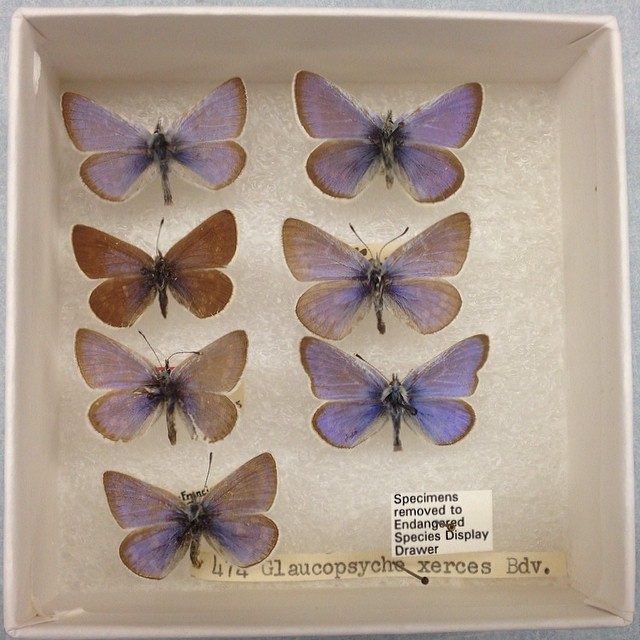 Xerces BlueGlaucopsyche xerces
-
 Adonis BlueLysandra bellargus
-
 Western Pygmy BlueBrephidium exilis
-
 AtalaEumaeus atala
-
 Holly BlueCelastrina argiolus
Compare
Questions and answers
What is the scientific name of the Moth Butterfly?
The scientific name of the Moth Butterfly is Liphyra brassolis. Written with its author, the full name is Liphyra brassolis Westwood, 1864.
Which family does the Moth Butterfly belong to?
Liphyra brassolis belongs to the family Lycaenidae, in the order Lepidoptera and the class Insecta.
Where is the Moth Butterfly found?
Checklists and occurrence records place Liphyra brassolis in 5 countries: Australia, India, Malaysia, Thailand and Laos.
Sources
Passages the profile rests on
- The adult butterfly has a heavy, robust body. Source passage: “body heavy and robust” — English Wikipedia
- The forewing has an arched costa, a subacute apex, and a convex termen. Source passage: “Forewing: costa arched; apex subacute; termen convex” — English Wikipedia
- The hindwing is irregularly pear-shaped with a strongly rounded termen. Source passage: “Hindwing: irregularly pear shaped; costa slightly but widely angulated near base, then straight to apex; termen strongly rounded” — English Wikipedia
- The antennae are approximately half as long as the forewings and gradually widen toward their tips. Source passage: “Antennae about half length of forewing, no distinct club but gradually increasing to apex” — English Wikipedia
- Grey powdery scales cover the adult butterfly when it emerges. Source passage: “The adult butterfly at emergence is covered in grey powdery scales” — English Wikipedia
- The caterpillar has an oval, flattened, slug-like body with a hard, smooth covering. Source passage: “Oval flattened and slug like with a hard and smooth covering.” — English Wikipedia
- The caterpillar has a protective orange carapace. Source passage: “The protective orange carapace is virtually impervious to the bites of soldier ants” — English Wikipedia
- The eggs are approximately 1 mm high. Source passage: “The eggs are tiny pale green cylinders of 1 mm height.” — English Wikipedia
- The eggs are pale green and cylindrical. Source passage: “The eggs are tiny pale green cylinders” — English Wikipedia
- The species is described as one of the largest lycaenid butterflies. Source passage: “This is one of the largest species of lycaenid butterflies.” — English Wikipedia
- The species develops inside ant nests, particularly those of tree ants. Source passage: “Liphyra brassolis grows in the nests of ants, especially of tree ants” — English Wikipedia
- Its documented host ant species include Oecophylla smaragdina. Source passage: “especially of tree ants (Oecophylla smaragdina and other species).” — English Wikipedia
- The species occurs across South Asia, Southeast Asia, and Australia. Source passage: “Liphyra brassolis, also known as the moth butterfly, is a butterfly found in South Asia, Southeast Asia and Australia” — English Wikipedia
- Its recorded range extends from India to the Philippines. Source passage: “The species occurs from India to the Philippines” — English Wikipedia
- Australian records include the tropical coast of Western Australia, the Northern Territory, and Queensland. Source passage: “including the tropical coast of Western Australia, the Northern Territory and Queensland.” — English Wikipedia
- Several geographically separated populations within its range are treated as subspecies. Source passage: “Several disjunct populations across its wide distribution range are considered as subspecies.” — English Wikipedia
- The caterpillars can consume entire broods from green ant nests. Source passage: “The caterpillars can devour the entire broods of green ant nests.” — English Wikipedia
- The adult emerges from the pupal stage inside the ant nest. Source passage: “Once the caterpillar transforms into a butterfly inside the nest” — English Wikipedia
- The newly emerged adult moves quickly toward an exit from the ant nest. Source passage: “as the butterfly quickly moves toward an exit” — English Wikipedia
- The caterpillar's orange carapace prevents soldier ants from readily biting it. Source passage: “The protective orange carapace is virtually impervious to the bites of soldier ants” — English Wikipedia
- Females lay eggs individually or in groups of approximately six. Source passage: “Eggs are laid singly or in groups of about six” — English Wikipedia
- Eggs are deposited on the undersides of branches bearing ant nests. Source passage: “on the underside of branches of a tree with ants' nest.” — English Wikipedia
- The species is described as never being common. Source passage: “Never a common butterfly” — English Wikipedia
- Specimens of this species are highly prized by collectors. Source passage: “specimens of this species are highly prized by collectors.” — English Wikipedia
Data
- Catalogue of Life, 2026-10-16 XR cc by
- Global Biodiversity Information Facility CC BY 4.0
- Wikidata CC0
- GeoNames CC BY 4.0
- Wikimedia Commons per image; credit shown with each image
- Within the Catalogue of Life, this name comes from Global Lepidoptera Index cc by
References
- Westwood. (1864). Transactions of the Royal Entomological Society of London. (2). http://www.biodiversitylibrary.org/item/51195#page/560/mode/2up Link where the name was published
This species in other databases
Page built on 28 November 2026. See how the catalog is made and all sources and licences.
Cite this page
ScientificNames.org. (2026). Liphyra brassolis (Moth Butterfly). Retrieved November 28, 2026, from https://scientificnames.org/species/liphyra-brassolis
“Liphyra brassolis (Moth Butterfly).” ScientificNames.org, 2026, scientificnames.org/species/liphyra-brassolis. Accessed 28 Nov. 2026.
ScientificNames.org. “Liphyra brassolis (Moth Butterfly).” Accessed November 28, 2026. https://scientificnames.org/species/liphyra-brassolis.
@misc{scientificnames_liphyra_brassolis_moth_butterfly,
  author = {{ScientificNames.org}},
  title = {Liphyra brassolis (Moth Butterfly)},
  year = {2026},
  url = {https://scientificnames.org/species/liphyra-brassolis},
  note = {Accessed 2026-11-28}
}