Species · Flowering plants
Common Apple Malus domestica
The scientific name of the Common Apple is Malus domestica. It is a species of flowering plant in the family Rosaceae (rose family), order Rosales.
- Scientific name
- Malus domestica (Suckow) Borkh.
- Common name
- Common Apple
- Genus
- Malus
- Family
- Rosaceae (Rose Family)
- Order
- Rosales
- Class
- Magnoliopsida
- Recorded in
- 103 countries
- Name status
- accepted in the Catalogue of Life
Overview
Cultivated apple trees are grown worldwide, while the wild ancestor grows in the mountains of Central Asia.
Written 27 November 2026 from the sources listed below. Each statement was checked against the passage it cites; statements that could not be supported were removed.
Appearance
Common Apple is a deciduous tree with a naturally rounded to erect crown and a dense canopy of leaves. Its trunk bark is dark gray or gray-brown, while young branches are reddish or dark brown and smooth.[1][2]
The flowers initially have rose-pink petals that fade to white or light pink when fully open. Each flower has five petals, measures approximately 3–4 cm in diameter, and occurs in cymes containing three to seven flowers.[3][4][5]
Apple fruit varies from nearly round to elongated, conical, or short and wide. Ripe fruit can have yellow, green, yellow-green, or whitish-yellow ground colors, with overcolors ranging from orange-red and pink-red to red, purple-red, or brown-red.[6][7][8]
The fruit skin may be partly or completely covered with brown, rough russeting. The flesh is generally pale yellowish-white, although other colors occur.[9][10]
Cultivated trees generally reach heights of 2–4.5 metres. Wild apple trees can reach 15 metres, although their more typical height is 2–10 metres, and fruit generally measures between 2.5 and 12 cm in diameter depending on the cultivar.[11][12][13]
Habitat
The wild ancestor of Common Apple grows in the mountains of Central Asia. Malus sieversii occurs in southern Kazakhstan, Kyrgyzstan, Tajikistan, and northwestern China.[14][15][16]
Cultivated apple trees are grown worldwide. Apple cultivation spread to North America following its introduction by European colonists in the seventeenth century.[17][18]
Reproduction and life cycle
Apple trees produce blossoms in spring as their leaves begin to emerge. Flowers develop on spurs and some long shoots, and the central flower in an inflorescence opens first and can develop into a larger fruit.[19][20][21]
Apple trees are diploid and have 17 chromosomes per cell, although triploid cultivars also occur. Triploid cultivars experience a reproductive barrier because their three chromosome sets cannot divide evenly during meiosis.[22][23]
Apple trees grown from seeds generally produce offspring that differ from their parents. Apple seedlings are genetically variable and do not reliably reproduce their parents' characteristics, so commercial cultivars are propagated through clonal grafting onto rootstocks.[24][25][26]
Apple flowers can be damaged by brief exposure to temperatures of −2 °C or lower. Overwintering apple wood and buds can tolerate temperatures down to −40 °C.[27][28]
Uses
Apple cultivars are developed for cooking, raw consumption, and producing cider or apple juice. Apple fruit is edible.[29][30]
Apple rootstocks can be selected to control tree growth and size, making harvesting easier. Dwarf rootstocks produce small trees that bear fruit earlier and are easier to harvest.[31][32]
Apple fruit is stored commercially in controlled-atmosphere facilities to maintain freshness throughout the year.[33]
Classification of the Common Apple
| Kingdom | Plantae |
|---|---|
| Subkingdom | Pteridobiotina |
| Phylum | Tracheophyta |
| Class | Magnoliopsida |
| Order | Rosales |
| Family | Rosaceae (Rose Family) |
| Subfamily | Amygdaloideae |
| Tribe | Maleae |
| Subtribe | Malinae |
| Genus | Malus (Apple) |
| Species | Malus domestica (Suckow) Borkh. |
Where the Common Apple is found
Checklists and occurrence records place Malus domestica in 103 countries across Africa, Asia, Europe, North America, Oceania and South America. GBIF holds 203,269 georeferenced records of it.
Countries
- Afghanistan 12,378
- Aland Islands 341
- Albania 30
- Algeria 15
- Andorra 7
- Argentina 15
- Armenia 40
- Australia 2,383
- Austria 2,569
- Azerbaijan 539
- Belarus 328
- Belgium 3,215
- Bhutan 4
- Bolivia
- Bosnia and Herzegovina 10
- Brazil 82
- Bulgaria 96
- Canada 3,138
- Chile 63
- China 881
- Colombia 24
- Costa Rica 2
- Croatia 31
- Cyprus
- Czechia 765
- Denmark 3,567
- Dominican Republic 1
- Ecuador 17
- Egypt 7
- El Salvador 10
- Estonia 2,036
- Finland 5,514
- France 9,497
- French Polynesia 4
- Georgia 130
- Germany 24,046
- Greece 32
- Guatemala 2
- Haiti
- Honduras
- Hungary 108
- India 479
- Iran 26
- Iraq 9
- Ireland 309
- Isle of Man 82
- Israel 19
- Italy 1,563
- Jamaica
- Japan 235
- Kazakhstan 8,764
- Kosovo
- Kyrgyzstan 297
- Latvia 296
- Lebanon 3
- Libya
- Liechtenstein 12
- Lithuania 167
- Luxembourg 337
- Mexico 124
- Moldova 68
- Mongolia 3
- Montenegro 69
- Morocco 37
- Myanmar
- Nepal 5
- New Zealand 766
- Niue
- North Korea 3
- North Macedonia 27
- Norway 2,430
- Pakistan 107
- Peru 15
- Philippines 4
- Poland 4,448
- Portugal 122
- Reunion 45
- Romania 163
- Russia 11,750
- Saint Helena 4
- Saint Pierre and Miquelon 4
- San Marino
- Serbia 21
- Slovakia 826
- Slovenia 71
- South Africa 145
- South Korea 53
- Spain 4,256
- Svalbard and Jan Mayen 4
- Sweden 23,137
- Switzerland 10,016
- Syria 29
- Tajikistan 181
- The Netherlands 3,199
- Tunisia 12
- Turkey 56
- Turkmenistan 20
- Ukraine 2,045
- United Kingdom 44,249
- United States 9,756
- Uruguay 4
- Uzbekistan 470
- Vietnam
Regions and cities with the most records
- England, United Kingdom 37,342
- Bavaria, Germany 14,096
- Västra Götaland, Sweden 3,989
- Almaty Region, Kazakhstan 3,134
- Auvergne-Rhône-Alpes, France 2,861
- Scotland, United Kingdom 2,843
- Skåne, Sweden 2,833
- East Kazakhstan, Kazakhstan 2,802
- Hesse, Germany 2,080
- Gotland, Sweden 1,977
- Södermanland, Sweden 1,911
- Uppsala, Sweden 1,824
- Östergötland, Sweden 1,796
- Bad Kissingen, Germany 1,735
- Gdańsk, Poland 1,715
- Sopot, Poland 1,714
- Ujeścisko-Łostowice, Poland 1,714
- Przymorze Wielkie, Poland 1,711
- Pruszcz Gdański, Poland 1,708
- Bromsgrove, United Kingdom 1,677
- Bad Neustadt an der Saale, Germany 1,648
- Baden-Wurttemberg, Germany 1,625
- Osowa, Poland 1,604
- Droitwich, United Kingdom 1,569
- Jönköping, Sweden 1,564
- Stockholm, Sweden 1,556
- Redditch, United Kingdom 1,482
- Halesowen, United Kingdom 1,446
- Redruth, United Kingdom 1,413
- Eastwood, United Kingdom 1,406
- Hucknall, United Kingdom 1,404
- Bartley Green, United Kingdom 1,381
- Stourport-on-Severn, United Kingdom 1,378
- Heanor, United Kingdom 1,376
- Worcester, United Kingdom 1,367
- Cricklewood, United Kingdom 1,360
Range as the checklists state it
origin in cultivation from C-Asian parents; England [c]; Ireland [c]; Denmark [c]; Norway [c]; Sweden [c]; Finland [c]; Netherlands [c]; Belgium [c]; Germany [c]; Switzerland [c]; Liechtenstein [c]; Austria [c]; Poland [c]; Czech Republic [c]; Slovakia [c]; Hungary [c]; Portugal [c]; Spain [c]; Andorra [c]; Baleares [c]; France [c]; Channel Isl. [c]; Corsica [c]; Sardinia [c]; Italy [c]; Sicily [c]; San Marino [c]; Slovenia [c]; Croatia [c]; Bosnia & Hercegovina [c]; Montenegro [c]; Montenegro [c]; Serbia [c]; Kosovo [c]; North Macedonia [c]; Albania [c]; Romania [c]; Bulgaria [c]; Greece [c]; Crete [c]; Estonia [c]; Latvia [c]; Lithuania [c]; Belarus [c]; European Russia [c]; Moldova [c]; Ukraine [c]; Crimea [c]; Morocco [c]; Algeria [c]; Tunisia [c]; Libya [c]; Azores [c] (Santa Maria Isl. [c]); Madeira [c] (Madeira Isl. [c], Porto Santo Isl. [c]); São Tomé [c]; Siberia [c]; Russian Far East [c]; Kazakhstan [c]; Turkmenistan [c]; Uzbekistan [c]; Kyrgyzstan [c]; Tajikistan [c]; Northern Caucasus; East Aegaean Isl. [c]; Turkey (Anatolia) [c]; Afghanistan [c]; Cyprus [c]; Lebanon [c]; Syria [c]; China [c]; South Korea [c]; Pakistan [c]; Nepal [c]; Bhutan [c]; India [c]; Myanmar [c]; Vietnam [c]; Jawa [c]; Australia [c] (New South Wales [c], Victoria [c]); New Zealand [c]; Niue [c]; Canada [c] (British Columbia [c], Manitoba [c], New Brunswick [c], Newfoundland [c], Nova Scotia [c], Ontario [c], Prince Edward Isl. [c], Québec [c]); St. Pierre et Miquelon [c]; USA [c] (Alabama [c], Arkansas [c], California [c], Colorado [c], Connecticut [c], District of Columbia [c], Delaware [c], Georgia [c], Iowa [c], Illinois [c], Indiana [c], Kansas [c], Kentucky [c], Louisiana [c], Massachusetts [c], Maryland [c], Maine [c], Michigan [c], Minnesota [c], Missouri [c], Mississippi [c], Montana [c], North Carolina [c], New Hampshire [c], New Jersey [c], New Mexico [c], Nevada [c], New York [c], Ohio [c], Oregon [c], Pennsylvania [c], Rhode Island [c], South Carolina [c], Tennessee [c], Utah [c], Virginia [c], Vermont [c], Washington State [c], Wisconsin [c], West Virginia [c], Wyoming [c]); Mexico [c]; Guatemala [c]; Honduras [c]; Costa Rica [c]; Jamaica [c]; Dominican Republic [c]; Haiti [c]; Colombia [c]; Ecuador [c]; Bolivia [c]; Brazil [c]; Argentina [c]
A number beside a place is its count of GBIF occurrence records. A place without a number comes from a checklist alone. Records show where a species has been observed or collected, which can include escapes and vagrants.
Common names
English
- Common Apple
- Domesticated Apple
- Apple
- Apple Tree
- Cultivated Apple
- Domestic Apple
- Orchard Apple
- Paradise Apple
Names in 89 other languages
- Albanian
- Mollë
- Arabic
- تفاح قزم
- Armenian
- Խնձորենի կուլտուրական, խնձոր
- Azerbaijani
- alma
- Belarusian
- Яблыня дамашняя
- Bengali
- আপেল
- Bulgarian
- Ябълка
- Burmese
- ပန်းသီး
- Catalan
- Poma, Pomera
- Chinese
- ping guo, 蘋果
- Croatian
- jabuka
- Czech
- jablko, jabloň domácí, jabloň zakrslá
- Danish
- Almindelig æble, Sød Æble, Sød-æble, æble
- Dutch
- Appel, Eetappel
- Esperanto
- pomo
- Estonian
- aed-õunapuu, madal õunapuu, õun
- Finnish
- omena, tarhaomenapuu
- French
- Pomme, pommier commun, pommier cultivé, pommier nain, pommier sauvage
- Galician
- mazá
- Georgian
- ვაშლის
- German
- Apfel, Apfelbaum, Garten-Apfel, Kultur-Apfel, Kulturapfel
- Greek
- Μηλιά, μήλο
- Gujarati
- સફરજન
- Hawaiian
- ʻāpala, ‘Āpala
- Hebrew
- תפוח תרבותי
- Hindi
- सेब
- Hungarian
- nemes alma
- Icelandic
- epli
- Irish
- úll
- Italian
- Mela, Melo
- Japanese
- ringo, りんご, セイヨウリンゴ, リンゴ
- Kannada
- ಸೇಬು
- Khmer
- ផ្លែប៉ោម
- Korean
- sagwanamu, 사과, 사과나무
- Latin
- malum
- Latvian
- Mājas ābele, ābele, ābols, ābolu
- Lithuanian
- Naminė obelis, obelis, obuolys, Žemoji obelis
- Macedonian
- јаболко
- Malagasy
- paoma
- Malay
- epal
- Malayalam
- ആപ്പിൾ
- Maltese
- tuffieħ, tuffieħa
- Marathi
- सफरचंद
- Mongolian
- алим
- Māori
- aporo, āporo
- Nepali
- स्याऊ
- Norwegian Bokmål
- eple, hageeple, paradiseple
- Pashto
- مڼه
- Persian
- سیب
- Polish
- Jabłoń domowa, jabłko
- Portuguese
- macieira, maçã
- Punjabi
- ਸੇਬ
- Romanian
- măr
- Russian
- jabloko, jablonja, Яблоня домашняя, Яблоня карликовая
- Samoan
- apu
- Scottish Gaelic
- ubhal
- Serbian
- Јабука домаћа, јабука
- Sinhala
- ඇපල්
- Slovak
- jabloň domáca, jabloň nízka
- Slovenian
- jablana
- Spanish
- manzana, manzana agria, manzano
- Swedish
- Ananasäpple, Anderstorpsäpple, Anneroäpple, Arvidsäpple, ananaskanel, anisäpple, apel, augustiäpple
- Tagalog
- Mansanas
- Thai
- แอปเปิล
- Turkish
- elma
- Ukrainian
- Яблуня домашня
- Welsh
- Afal
- Xhosa
- apile
- amh
- ፖም
- bnn
- pingku
- cho
- Takkon Chito Ʋpi
- frr
- Aapel
- fur
- Melâr
- hat
- pòm
- ibo
- apụl, udara
- kin
- pome
- kir
- алма
- kur
- sêv, سێو
- lao
- ໝາກໂປມ
- ldn
- doyu
- mwl
- Maçaneira
- oji
- Mishiiminagaawanzh, mishiimin, mishiiminaatig
- ory
- ଆପଲ୍
- rom
- Phabai
- sna
- apuro
- snd
- انب
- som
- tufaax
- vec
- Pomaro
- yid
- עפּל
Synonyms
318 other scientific names have been used for this species and are now treated as synonyms of Malus domestica.
- Aronia nigra Dippel
- Malus anetica Poit. & Turpin
- Malus anisophylla Sumnev.
- Malus apetala Poit. & Turpin
- Malus astracanica Dum.Cours.
- Malus batavica Poit. & Turpin
- Malus calvilla Poit. & Turpin
- Malus caspiriensis Langenf.
- Malus chitralensis Vassilcz.
- Malus columbella Poit. & Turpin
- Malus communis f. apetala (Münchh.) Hegi
- Malus communis f. mitis (Wenz.) Gams
- Malus communis subsp. mitis (Wenz.) Dippel
- Malus communis subsp. paradisiaca (L.) Dippel
- Malus communis subsp. pumila (Mill.) Gams
- Malus communis var. api Risso
- Malus communis var. coccinea Risso
- Malus communis var. corallina Risso
- Malus communis var. coronata Risso
- Malus communis var. depressa Risso
- Malus communis var. domestica (Suckow) Gams
- Malus communis var. fasciata Risso
- Malus communis var. gellida Risso
- Malus communis var. joannis Risso
- Malus communis var. mitis Wenz.
- Malus communis var. nigra Dippel
- Malus communis var. oblonga Risso
- Malus communis var. paradisiaca (L.) Wenz.
- Malus communis var. ponderosa Risso
- Malus communis var. provincialis Risso
- Malus communis var. pumila (Mill.) Risso
- Malus communis var. reneta Risso
- Malus communis var. rosea Risso
- Malus communis var. sabulosa Risso
- Malus communis var. sativa DC.
- Malus communis var. siccifolia Risso
- Malus communis var. sieversii (Ledeb.) Dippel
- Malus communis var. tomentosa Coss. & Germ.
- Malus communis var. tomentosa W.D.J.Koch ex Gams
- Malus communis var. typica Beck
Showing 40 of 318.
Related species
-
 European Crab AppleMalus sylvestris
-
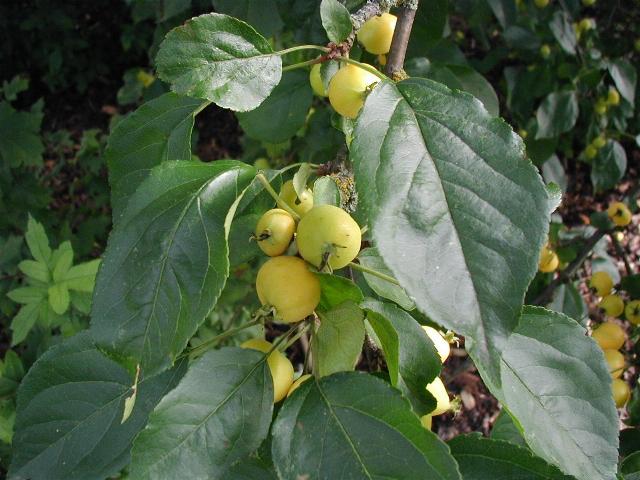 Chinese Crab AppleMalus baccata
-
 Japanese Flowering Crab AppleMalus × floribunda
-
 Chinese AppleMalus prunifolia
-
 Chinese CrabMalus spectabilis
-
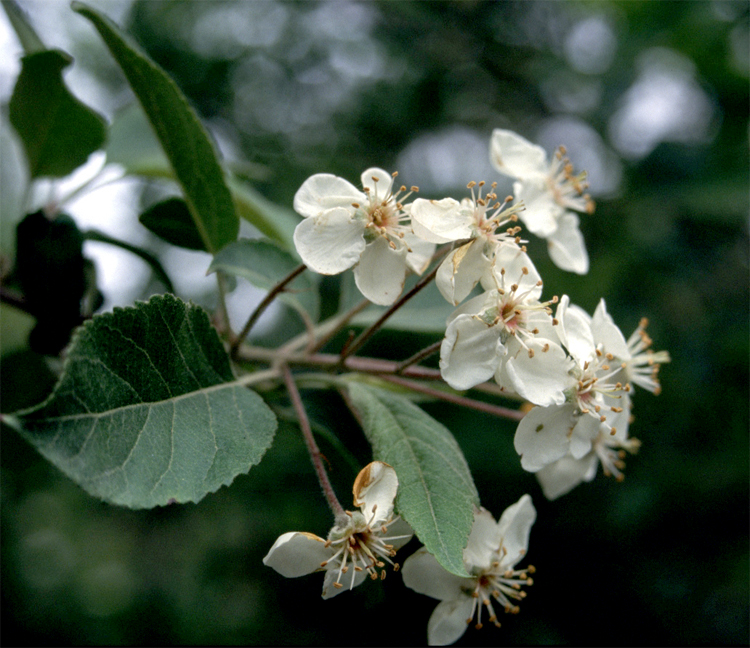 Pacific CrabappleMalus fusca
-
 Chinese Crab AppleMalus hupehensis
-
 Chinese Pearleaf CrabappleMalus asiatica
Compare
Questions and answers
What is the scientific name of the Common Apple?
The scientific name of the Common Apple is Malus domestica. Written with its author, the full name is Malus domestica (Suckow) Borkh..
Which family does the Common Apple belong to?
Malus domestica belongs to the family Rosaceae, in the order Rosales and the class Magnoliopsida.
Where is the Common Apple found?
Checklists and occurrence records place Malus domestica in 103 countries, including United Kingdom, Germany, Sweden, Afghanistan, Russia and Switzerland.
What other names does the Common Apple have?
Malus domestica is also known in English as Domesticated Apple, Apple, Apple Tree, Cultivated Apple, Domestic Apple and Orchard Apple.
Sources
Passages the profile rests on
- Malus domestica is a deciduous tree with a naturally rounded to erect crown and a dense canopy of leaves. Source passage: “Apple trees may naturally have a rounded to erect crown with a dense canopy of leaves.” — English Wikipedia
- The trunk bark is dark gray or gray-brown, while young branches are reddish or dark brown and smooth. Source passage: “The bark of the trunk is dark gray or gray-brown, but young branches are reddish or dark-brown with a smooth texture.” — English Wikipedia
- The flowers initially have rose-pink petals that fade to white or light pink when fully open. Source passage: “When the flower buds first begin to open the petals are rose-pink and fade to white or light pink when fully open” — English Wikipedia
- Each flower has five petals and measures approximately 3–4 cm in diameter. Source passage: “with each flower 3 to 4 centimeters (1 to 1+1⁄2 inches) in diameter. The five-petaled flowers” — English Wikipedia
- The flowers are arranged in cymes containing three to seven flowers. Source passage: “an inflorescence consisting of a cyme with 3–7 flowers.” — English Wikipedia
- The fruit shape varies from nearly round to elongated, conical, or short and wide. Source passage: “The shape is quite variable and may be nearly round, elongated, conical, or short and wide.” — English Wikipedia
- Ripe fruit can have yellow, green, yellow-green, or whitish-yellow ground colors. Source passage: “The groundcolor of ripe apples is yellow, green, yellow-green or whitish yellow.” — English Wikipedia
- The ripe fruit's overcolor can range from orange-red and pink-red to red, purple-red, or brown-red. Source passage: “The overcolor of ripe apples can be orange-red, pink-red, red, purple-red or brown-red.” — English Wikipedia
- The fruit skin may be partly or completely covered with brown, rough russeting. Source passage: “The skin may be wholly or partly russeted, making it rough and brown.” — English Wikipedia
- The fruit flesh is generally pale yellowish-white, although other colors occur. Source passage: “The flesh is generally pale yellowish-white, though it can be pink, yellow or green, and rarely black, purple or pearl.” — English Wikipedia
- Cultivated trees generally reach heights of 2–4.5 metres. Source passage: “The apple tree is deciduous, generally standing from 2 to 4.5 metres (6 to 15 feet) tall in cultivation” — English Wikipedia
- Wild apple trees can reach 15 metres in height, although their more typical height is 2–10 metres. Source passage: “and up to 15 m (49 ft) in the wild, though more typically 2 to 10 m (6.5 to 33 ft).” — English Wikipedia
- Apple fruit generally measures between 2.5 and 12 cm in diameter, depending on the cultivar. Source passage: “The size of the fruit varies widely between cultivars, but generally has a diameter between 2.5 and 12 cm (1 and 5 in).” — English Wikipedia
- The wild ancestor of the cultivated apple grows in the mountains of Central Asia. Source passage: “The wild ancestor of Malus domestica was Malus sieversii, found growing wild in the mountains of Central Asia” — English Wikipedia
- The wild ancestor Malus sieversii occurs in southern Kazakhstan, Kyrgyzstan, Tajikistan, and northwestern China. Source passage: “in southern Kazakhstan, Kyrgyzstan, Tajikistan, and northwestern China.” — English Wikipedia
- The cultivated apple's wild ancestor is identified as Malus sieversii. Source passage: “The availability of whole genome sequences has provided evidence that the wild ancestor of the cultivated apple most likely is Malus sieversii.” — English Wikipedia
- Cultivated apple trees are grown worldwide. Source passage: “Fruit trees of the orchard or domestic apple (Malus domestica), the most widely grown in the genus, are cultivated worldwide.” — English Wikipedia
- Apple cultivation spread to North America following its introduction by European colonists in the seventeenth century. Source passage: “Apples were introduced to North America by colonists in the 17th century” — English Wikipedia
- Apple trees produce blossoms in spring at the same time as their leaves begin to emerge. Source passage: “Blossoms are produced in spring simultaneously with the budding of the leaves” — English Wikipedia
- Apple flowers develop on spurs and some long shoots. Source passage: “and are produced on spurs and some long shoots.” — English Wikipedia
- The central flower in an apple inflorescence opens first and can develop into a larger fruit. Source passage: “The central flower of the inflorescence is called the "king bloom"; it opens first and can develop a larger fruit.” — English Wikipedia
- Triploid apple cultivars experience a reproductive barrier because their three chromosome sets cannot divide evenly during meiosis. Source passage: “Triploid cultivars have an additional reproductive barrier in that three sets of chromosomes cannot be divided evenly during meiosis” — English Wikipedia
- Apple trees are diploid and have 17 chromosomes per cell, although triploid cultivars also occur. Source passage: “Apples are diploid, with two sets of chromosomes per cell (though triploid cultivars, with three sets, are not uncommon), have 17 chromosomes” — English Wikipedia
- Apple trees grown from seeds generally produce offspring that differ from their parents. Source passage: “Apples grown from seeds tend to be very different from those of their parents” — English Wikipedia
- Commercial apple cultivars are propagated through clonal grafting onto rootstocks. Source passage: “For commercial purposes, including botanical evaluation, apple cultivars are propagated by clonal grafting onto rootstocks.” — English Wikipedia
- Apple seedlings are genetically variable and do not reliably reproduce their parents' characteristics. Source passage: “This is because seedling apples do not "breed true", instead they are "extreme heterozygotes"” — English Wikipedia
- Apple flowers can be damaged by brief exposure to temperatures of −2 °C or lower. Source passage: “Open apple blossoms are damaged by even brief exposures to temperatures −2 °C (28 °F) or less” — English Wikipedia
- Overwintering apple wood and buds can tolerate temperatures down to −40 °C. Source passage: “although the overwintering wood and buds are hardy down to −40 °C (−40 °F).” — English Wikipedia
- Apple cultivars are developed for cooking, raw consumption, and producing cider or apple juice. Source passage: “Different cultivars are bred for various tastes and uses, including cooking, eating raw, and cider or apple juice production.” — English Wikipedia
- Apple fruit is edible. Source passage: “The common apple is a deciduous tree with edible fruit in the rose family (Rosaceae).” — plants.ces.ncsu.edu
- Apple rootstocks can be selected to control tree growth and size, making harvesting easier. Source passage: “Rootstocks are used to control the speed of growth and the size of the resulting tree, allowing for easier harvesting.” — English Wikipedia
- Dwarf rootstocks produce small apple trees that bear fruit earlier and are easier to harvest. Source passage: “Dwarf rootstocks can be used to produce very small trees (less than 3.0 m or 10 ft high at maturity), which bear fruit many years earlier in their life cycle than full size trees, and are easier to harvest.” — English Wikipedia
- Apple fruit is stored commercially in controlled-atmosphere facilities to maintain freshness throughout the year. Source passage: “Controlled atmosphere facilities are used to keep apples fresh year-round.” — English Wikipedia
Data
- Catalogue of Life, 2026-10-16 XR cc by
- Global Biodiversity Information Facility CC BY 4.0
- Wikidata CC0
- GeoNames CC BY 4.0
- Within the Catalogue of Life, this name comes from Synonymic Checklists of the Vascular Plants of the World cc by
References
- Borkh. (1803). Theor. Prakt. Handb. Forstbot. 2: 1272 (1803), nom. cons. where the name was published
This species in other databases
- Catalogue of Life VK8LK
- Wikidata Q97171111
- iNaturalist 469472
- World Flora Online wfo-0001008355
- GRIN 104681
Page built on 27 November 2026. See how the catalog is made and all sources and licences.
Cite this page
ScientificNames.org. (2026). Malus domestica (Common Apple). Retrieved November 27, 2026, from https://scientificnames.org/species/malus-domestica
“Malus domestica (Common Apple).” ScientificNames.org, 2026, scientificnames.org/species/malus-domestica. Accessed 27 Nov. 2026.
ScientificNames.org. “Malus domestica (Common Apple).” Accessed November 27, 2026. https://scientificnames.org/species/malus-domestica.
@misc{scientificnames_malus_domestica_common_apple,
  author = {{ScientificNames.org}},
  title = {Malus domestica (Common Apple)},
  year = {2026},
  url = {https://scientificnames.org/species/malus-domestica},
  note = {Accessed 2026-11-27}
}