Species · Flowering plants
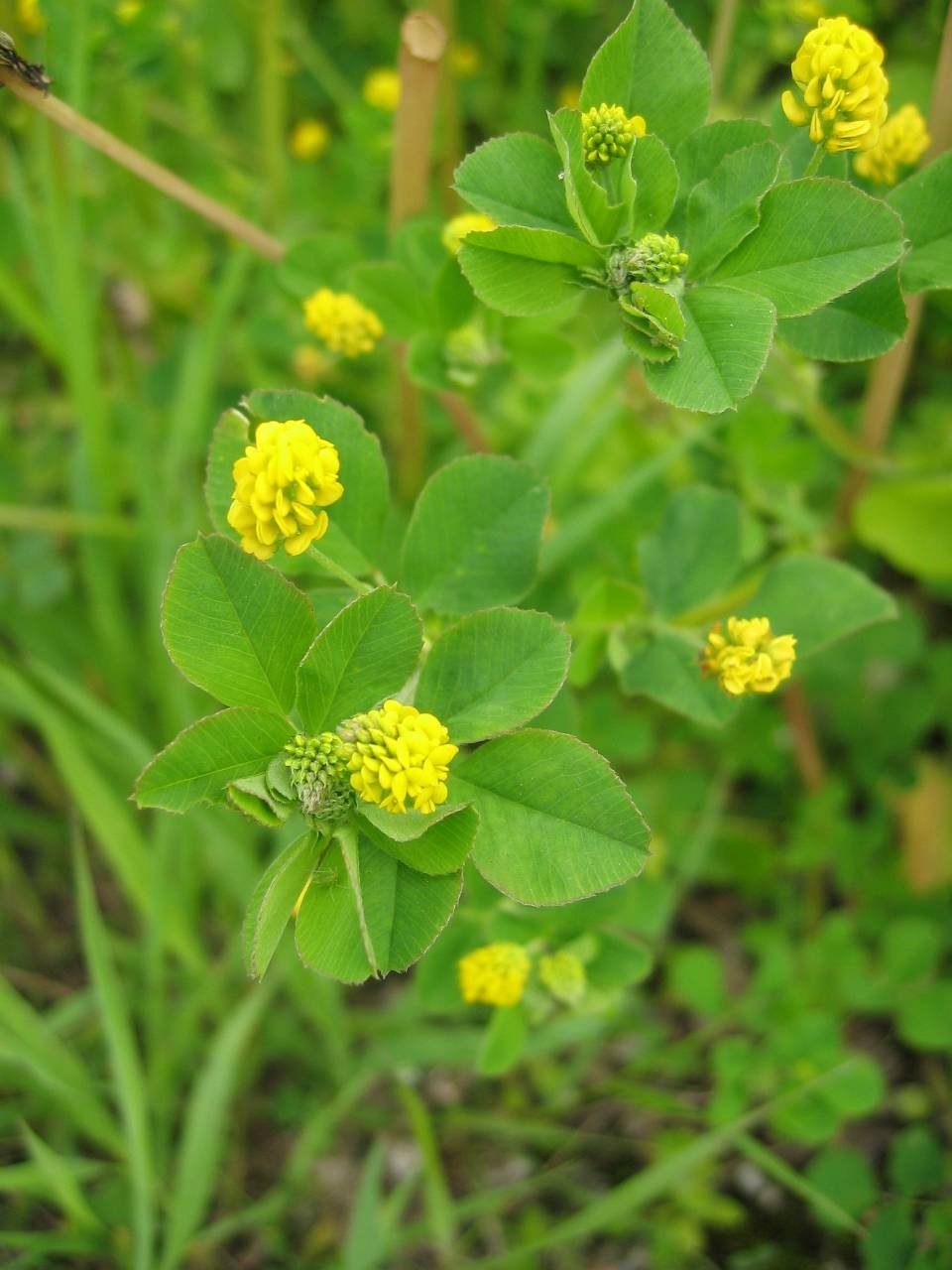
Lunate Medic Medicago biflora
The scientific name of the Lunate Medic is Medicago biflora. It is a species of flowering plant in the family Fabaceae (bean), order Fabales.
- Scientific name
- Medicago biflora (Griseb.) E.Small
- Common name
- Lunate Medic
- Genus
- Medicago
- Family
- Fabaceae (Bean)
- Order
- Fabales
- Class
- Magnoliopsida
- Red List category
- LC Least Concern
- Recorded in
- 4 countries
- Name status
- accepted in the Catalogue of Life
Overview
Wikidata describes Medicago biflora as “species of plant”.
Classification of the Lunate Medic
| Kingdom | Plantae |
|---|---|
| Subkingdom | Pteridobiotina |
| Phylum | Tracheophyta |
| Class | Magnoliopsida |
| Order | Fabales |
| Family | Fabaceae (Bean) |
| Genus | Medicago (Medic) |
| Species | Medicago biflora (Griseb.) E.Small |
Where the Lunate Medic is found
Checklists and occurrence records place Medicago biflora in 4 countries across Asia. GBIF holds 65 georeferenced records of it.
Countries
Regions and cities with the most records
1 more country has a few records outside this range
These countries hold a few records of Medicago biflora but lie outside the range the checklists give for it. Such records are often zoo or garden specimens, museum material or vagrants, so the species is not counted as occurring there.
A number beside a place is its count of GBIF occurrence records. A place without a number comes from a checklist alone. Records show where a species has been observed or collected, which can include escapes and vagrants.
Common names
English
- Lunate Medic
- Lunate Fenugreek
Names in 2 other languages
- Russian
- Пажитник двуцветковый
- Turkish
- İkiz Yonca, İpek Boyotu
Synonyms
9 other scientific names have been used for this species and are now treated as synonyms of Medicago biflora.
- Melilotoides biflora (Griseb.) Czerep.
- Melissitus biflorus (Griseb.) Latsch.
- Pocockia biflora (Griseb.) Walp.
- Pocockia lunata (Boiss.) Boiss.
- Telis lunata (Boiss.) Kuntze
- Trigonella biflora Griseb.
- Trigonella lunata Boiss.
- Trigonella lunata f. coerulans Bornm. ex Širj.
- Trigonella lunata f. flaviflora Bornm. ex Širj.
Related species
-
 AlfalfaMedicago sativa
-
 Black MedickMedicago lupulina
-
 Bur CloverMedicago polymorpha
-
 Barrel MedicMedicago truncatula
-
 Spotted MedicMedicago arabica
-
 Tree MedicMedicago arborea
-
 Sickle MedickMedicago falcata
-
 Button MedicMedicago orbicularis
Compare
Questions and answers
What is the scientific name of the Lunate Medic?
The scientific name of the Lunate Medic is Medicago biflora. Written with its author, the full name is Medicago biflora (Griseb.) E.Small.
Which family does the Lunate Medic belong to?
Medicago biflora belongs to the family Fabaceae, in the order Fabales and the class Magnoliopsida.
Where is the Lunate Medic found?
Checklists and occurrence records place Medicago biflora in 4 countries: Turkey, Afghanistan, Armenia and Iran.
What is the conservation status of the Lunate Medic?
The IUCN Red List category recorded for Medicago biflora is Least Concern (LC).
What other names does the Lunate Medic have?
Medicago biflora is also known in English as Lunate Fenugreek.
Sources
Data
- Catalogue of Life, 2026-10-16 XR cc by
- Global Biodiversity Information Facility CC BY 4.0
- Wikidata CC0
- GeoNames CC BY 4.0
- Within the Catalogue of Life, this name comes from The World Checklist of Vascular Plants (WCVP): Fabaceae cc by
References
- Willdenowia 16: 433 (1987) where the name was published
This species in other databases
- Catalogue of Life 9DBX2
- Wikidata Q15433459
- iNaturalist 1093128
- World Flora Online wfo-0001062219
- GRIN 313441
Page built on 25 November 2026. See how the catalog is made and all sources and licences.
Cite this page
ScientificNames.org. (2026). Medicago biflora (Lunate Medic). Retrieved November 25, 2026, from https://scientificnames.org/species/medicago-biflora
“Medicago biflora (Lunate Medic).” ScientificNames.org, 2026, scientificnames.org/species/medicago-biflora. Accessed 25 Nov. 2026.
ScientificNames.org. “Medicago biflora (Lunate Medic).” Accessed November 25, 2026. https://scientificnames.org/species/medicago-biflora.
@misc{scientificnames_medicago_biflora_lunate_medic,
  author = {{ScientificNames.org}},
  title = {Medicago biflora (Lunate Medic)},
  year = {2026},
  url = {https://scientificnames.org/species/medicago-biflora},
  note = {Accessed 2026-11-25}
}