Species · Birds
Hoffmann's Woodpecker Melanerpes hoffmannii
The scientific name of the Hoffmann's Woodpecker is Melanerpes hoffmannii. It is a species of bird in the family Picidae (woodpecker), order Piciformes. The name dates from 1862.
- Scientific name
- Melanerpes hoffmannii (Cabanis, 1862)
- Common name
- Hoffmann's Woodpecker
- Genus
- Melanerpes
- Family
- Picidae (Woodpecker)
- Order
- Piciformes
- Class
- Aves
- Red List category
- LC Least Concern
- Recorded in
- 5 countries
- Name status
- accepted in the Catalogue of Life

Overview
Melanerpes hoffmannii occurs from southwestern Honduras through Nicaragua along the Pacific slope to central Costa Rica. It has a bright yellow central belly and black-and-white barring on its back and upper rump.
Written 26 November 2026 from the sources listed below. Each statement was checked against the passage it cites; statements that could not be supported were removed.
Appearance
Adult males have a dull white forecrown and supercilium, a bright red crown, and a bright yellow or orange nape. Adult females have a dull white crown and a pale yellow nape.[1][2]
The sexes have similar plumage apart from differences in their head patterns. Both sexes have drab yellowish-gray faces and sides of the throat.[3][4]
The back and upper rump have black-and-white barring, and the central belly is bright yellow. The bill is black, the iris is hazel, and the legs are bluish gray to gray.[5][6][7]
Adults measure 18–21 cm in length and weigh between 62 and 84 g.[8][9]
Habitat
Hoffmann's Woodpecker inhabits dry forests and deciduous forests. Its habitat also includes shade coffee plantations, urban parks, and house gardens.[10][11][12]
In Honduras, it occurs from sea level to elevations of 400 m. In Nicaragua, it occurs up to elevations of 800 m, while in Costa Rica it occurs above 2,100 m elevation.[13][14][15]
The species occurs from southwestern Honduras through Nicaragua along the Pacific slope to central Costa Rica. There is one recorded occurrence in El Salvador.[16][17]
Diet
Arthropods constitute the main component of Hoffmann's Woodpecker's diet. It extracts arthropods from decaying tree trunks and branches.[18][19]
The species also consumes a variety of fruits and obtains nectar from large flowers. It occasionally consumes the eggs of other birds.[20][21][22]
Behaviour
Hoffmann's Woodpecker remains resident throughout its geographical range throughout the year. It typically forages from the forest understory to the canopy, although individuals have also been observed feeding on the ground.[23][24][25]
The species excavates nesting cavities in soft dead wood, living palms, and fence posts. Both sexes aggressively defend their nesting cavities against other individuals of their species and tityras.[26][27]
The species commonly drums on dead wood and has also been observed drumming on metal structures. Its most common call is a sound described as "churrr", produced by both sexes.[28][29]
Reproduction and life cycle
The breeding season extends at least from January through July. Pairs typically raise two broods per breeding season.[30][31]
Nesting cavities are typically located between 1 and 6 m above the ground. Clutches contain two or three eggs.[32][33]
Both parents incubate the eggs and provision the nestlings.[34]
Conservation
The IUCN classifies Hoffmann's Woodpecker as Least Concern. The estimated population comprises at least 50,000 mature individuals.[35][36]
Similar species
Hoffmann's Woodpecker is considered similar to the golden-fronted woodpecker.[37]
Classification of the Hoffmann's Woodpecker
| Kingdom | Animalia |
|---|---|
| Phylum | Chordata |
| Subphylum | Vertebrata |
| Infraphylum | Gnathostomata |
| Parvphylum | Osteichthyes |
| Megaclass | Tetrapoda |
| Class | Aves (Bird) |
| Order | Piciformes (Woodpeckers) |
| Family | Picidae (Woodpecker) |
| Subfamily | Picinae |
| Genus | Melanerpes (Melanerpine Woodpeckers) |
| Species | Melanerpes hoffmannii (Cabanis, 1862) |
Where the Hoffmann's Woodpecker is found
Checklists and occurrence records place Melanerpes hoffmannii in 5 countries across North America. GBIF holds 193,027 georeferenced records of it.
Countries
Regions and cities with the most records
- San Rafael, Costa Rica 47,210
- Heredia, Costa Rica 46,099
- San Felipe, Costa Rica 45,287
- San Pablo, Costa Rica 45,283
- San José, Costa Rica 45,252
- Alajuela, Costa Rica 45,189
- San Juan, Costa Rica 44,748
- San Juan de Dios, Costa Rica 41,585
- Aserrí, Costa Rica 40,916
- Alajuela Province, Costa Rica 40,884
- San Rafael Arriba, Costa Rica 40,764
- Guadalupe, Costa Rica 39,506
- San Vicente, Costa Rica 38,908
- San Vicente de Moravia, Costa Rica 38,883
- San Pedro, Costa Rica 38,729
- Curridabat, Costa Rica 37,966
- Purral, Costa Rica 37,419
- San Miguel, Costa Rica 37,020
- Puntarenas Province, Costa Rica 36,449
- Patarrá, Costa Rica 32,690
- Guanacaste Province, Costa Rica 31,595
- San Diego, Costa Rica 29,146
- San José, Costa Rica 28,492
- San Rafael Abajo, Costa Rica 20,114
- Heredia Province, Costa Rica 16,632
- Cartago, Costa Rica 16,518
- El Crucero, Nicaragua 11,464
- Managua, Nicaragua 10,996
- Cartago Province, Costa Rica 10,830
- Masaya, Nicaragua 10,031
- Managua Department, Nicaragua 9,190
- San Marcos, Nicaragua 9,099
- Masatepe, Nicaragua 8,917
- Paraíso, Costa Rica 8,568
- Tejar, Costa Rica 7,565
- Jinotepe, Nicaragua 7,202
Range as the checklists state it
Middle America
A number beside a place is its count of GBIF occurrence records. A place without a number comes from a checklist alone. Records show where a species has been observed or collected, which can include escapes and vagrants.
Common names
English
- Hoffmann's Woodpecker
Names in 25 other languages
- Catalan
- picot de Hoffmann
- Chinese
- 霍夫曼啄木, 霍氏啄木鸟
- Croatian
- zlatnotrbi djetlić
- Czech
- datel Hoffmannův, datel žlutotýlý
- Danish
- Hoffmanns Spætte, Hoffmann´ Spætte
- Dutch
- Hoffmanns Specht
- Esperanto
- hofmana pego
- Estonian
- nikaraagua leeträhn
- Finnish
- viitaraitatikka
- French
- Pic de Hoffmann
- German
- Hoffmannspecht
- Hungarian
- Hoffmann-küllő
- Italian
- Picchio di Hoffmann
- Japanese
- コスタリカキビタイシマセゲラ
- Lithuanian
- Hofmano tamsianugaris genys
- Norwegian
- hagespett
- Polish
- dzięciur płomiennogłowy
- Portuguese
- pica-pau-de-hoffmann, pica-pau-de-nuca-dourada
- Russian
- Гофманов меланерпес, Никарагуанский дятел
- Serbian
- Hofmanov detlić
- Slovak
- tesárik žltotylový
- Spanish
- Carpintero de Hoffmann
- Swedish
- Hoffmanspett, hoffmannspett, nicaraguaspett
- Turkish
- Hoffmann Ağaçkakanı
- Ukrainian
- гіла нікарагуанська
Synonyms
2 other scientific names have been used for this species and are now treated as synonyms of Melanerpes hoffmannii.
- Centurus hoffmannii Cabanis, JL, 1862
- Melanerpes aurifrons hoffmannii Cabanis, JL, 1862
Related species
-
 Red-bellied WoodpeckerMelanerpes carolinus
-
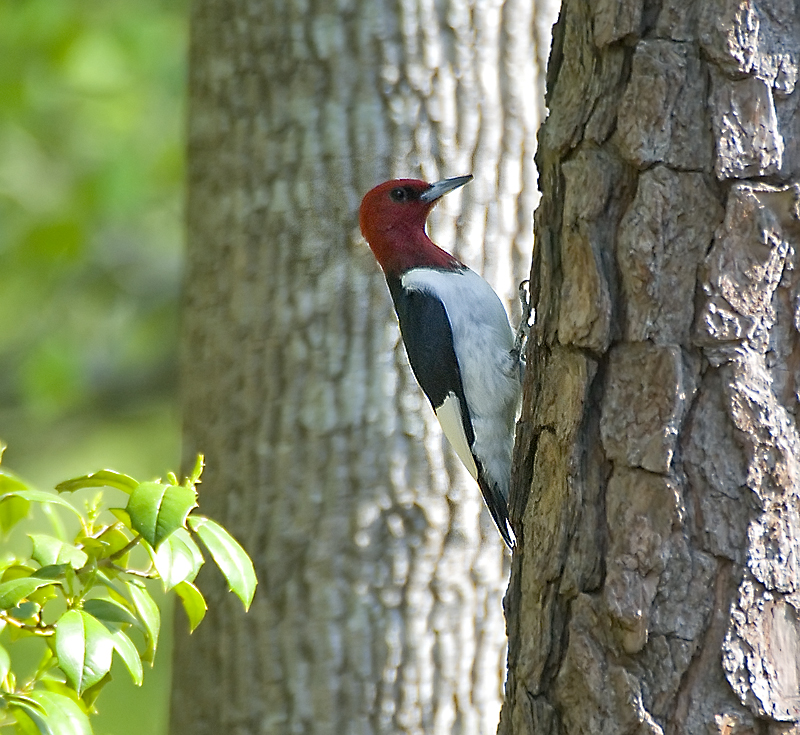 Red-headed WoodpeckerMelanerpes erythrocephalus
-
 Acorn WoodpeckerMelanerpes formicivorus
-
 Gila WoodpeckerMelanerpes uropygialis
-
 Lewis's WoodpeckerMelanerpes lewis
- Golden-fronted WoodpeckerMelanerpes aurifrons
-
 Hispaniolan WoodpeckerMelanerpes striatus
-
 Red-crowned WoodpeckerMelanerpes rubricapillus
Compare
Questions and answers
What is the scientific name of the Hoffmann's Woodpecker?
The scientific name of the Hoffmann's Woodpecker is Melanerpes hoffmannii. Written with its author, the full name is Melanerpes hoffmannii (Cabanis, 1862).
Which family does the Hoffmann's Woodpecker belong to?
Melanerpes hoffmannii belongs to the family Picidae, in the order Piciformes and the class Aves.
Where is the Hoffmann's Woodpecker found?
Checklists and occurrence records place Melanerpes hoffmannii in 5 countries: Costa Rica, Nicaragua, Honduras, El Salvador and Panama.
What is the conservation status of the Hoffmann's Woodpecker?
The IUCN Red List category recorded for Melanerpes hoffmannii is Least Concern (LC).
Sources
Passages the profile rests on
- Adult males have a dull white forecrown and supercilium, a bright red crown, and a bright yellow or orange nape. Source passage: “Adult males have a dull white forecrown and supercilium, a bright red crown, and a bright yellow or orange nape.” — English Wikipedia
- Adult females have a dull white crown and a pale yellow nape. Source passage: “Adult females have a dull white crown and a pale yellow nape.” — English Wikipedia
- The sexes have similar plumage apart from differences in their head patterns. Source passage: “The sexes' plumage is alike except for their head pattern.” — English Wikipedia
- Both sexes have drab yellowish-gray faces and sides of the throat. Source passage: “Both sexes' faces and the sides of their throat are drab yellowish gray.” — English Wikipedia
- The back and upper rump have black-and-white barring. Source passage: “Their back and upper rump are barred black and white” — English Wikipedia
- The central belly is bright yellow. Source passage: “their central belly is bright yellow.” — English Wikipedia
- The bill is black, the iris is hazel, and the legs are bluish gray to gray. Source passage: “Their bill is black, their iris hazel, and their legs bluish gray to gray.” — English Wikipedia
- Adults measure 18–21 cm in length. Source passage: “Hoffmann's woodpecker is 18 to 21 cm (7.1 to 8.3 in) long” — English Wikipedia
- Adults weigh between 62 and 84 g. Source passage: “weighs 62 to 84 g (2.2 to 3.0 oz).” — English Wikipedia
- The species inhabits dry forests and deciduous forests. Source passage: “The species inhabits dry and deciduous forests” — English Wikipedia
- Its habitat includes shade coffee plantations. Source passage: “more open areas such as shade coffee plantations, urban parks, and house gardens.” — English Wikipedia
- The species also occupies urban parks and house gardens. Source passage: “urban parks, and house gardens.” — English Wikipedia
- In Honduras, the species occurs from sea level to elevations of 400 m. Source passage: “from sea level to 400 m (1,300 ft) in Honduras” — English Wikipedia
- In Nicaragua, the species occurs up to elevations of 800 m. Source passage: “to 800 m (2,600 ft) in Nicaragua” — English Wikipedia
- In Costa Rica, the species occurs above 2,100 m elevation. Source passage: “and to more than 2,100 m (6,900 ft) in Costa Rica.” — English Wikipedia
- The species occurs from southwestern Honduras through Nicaragua along the Pacific slope to central Costa Rica. Source passage: “Hoffmann's woodpecker is found from southwestern Honduras' Choluteca Department through Nicaragua on the Pacific slope to central Costa Rica.” — English Wikipedia
- There is one recorded occurrence of the species in El Salvador. Source passage: “There is also one record from El Salvador.” — English Wikipedia
- Arthropods constitute the main component of the species' diet. Source passage: “Its diet is mostly arthropods that it extracts from decaying trunks and branches.” — English Wikipedia
- The species extracts arthropods from decaying tree trunks and branches. Source passage: “arthropods that it extracts from decaying trunks and branches.” — English Wikipedia
- The species also consumes a variety of fruits. Source passage: “It also feeds on a variety of fruits” — English Wikipedia
- The species obtains nectar from large flowers. Source passage: “and takes nectar from large flowers.” — English Wikipedia
- The species occasionally consumes the eggs of other birds. Source passage: “It occasionally eats the eggs of other birds.” — English Wikipedia
- The species remains resident throughout its geographical range throughout the year. Source passage: “Hoffmann's woodpecker is a year-round resident throughout its range.” — English Wikipedia
- The species typically forages from the forest understory to the canopy. Source passage: “Hoffmann's woodpecker typically forages from the forest understory to its canopy” — English Wikipedia
- Individuals have also been observed feeding on the ground. Source passage: “though it has been observed feeding on the ground.” — English Wikipedia
- The species excavates nesting cavities in soft dead wood, living palms, and fence posts. Source passage: “Both sexes excavate the nest cavity in soft dead wood, living palms, or fence posts.” — English Wikipedia
- Both sexes aggressively defend their nesting cavities against other individuals of their species and tityras. Source passage: “both sexes aggressively defend it from other Hoffmann's woodpeckers and tityras.” — English Wikipedia
- The species commonly drums on dead wood but has also been observed drumming on metal structures. Source passage: “The species usually drums on dead wood but has been observed drumming on metal structures.” — English Wikipedia
- The most common call is a sound described as "churrr", produced by both sexes. Source passage: “The most common Hoffmann's woodpecker call is "churrr", made by both sexes.” — English Wikipedia
- The breeding season extends at least from January through July. Source passage: “The breeding season of Hoffmann's woodpecker spans at least from January to July” — English Wikipedia
- Pairs typically raise two broods per breeding season. Source passage: “typically two broods are raised.” — English Wikipedia
- Nesting cavities are typically located between 1 and 6 m above the ground. Source passage: “The cavity is typically between 1 and 6 m (3 and 20 ft) above the ground” — English Wikipedia
- Clutches contain two or three eggs. Source passage: “The clutch size is two or three eggs.” — English Wikipedia
- Both parents incubate the eggs and provision the nestlings. Source passage: “Both parents incubate the clutch and provision nestlings.” — English Wikipedia
- The IUCN classifies the species as Least Concern. Source passage: “The IUCN has assessed Hoffmann's woodpecker as being of Least Concern.” — English Wikipedia
- The estimated population comprises at least 50,000 mature individuals. Source passage: “its estimated population of at least 50,000 mature individuals is believed to be increasing.” — English Wikipedia
- Hoffmann's woodpecker is considered similar to the golden-fronted woodpecker. Source passage: “Red-bellied woodpeckers ( Melanerpes corolinus ), Gila woodpecker ( Melanerpes uropygialis ), and Hoffman's woodpeckers ( Melanerpes hoffmannii ) are similar to golden-fronted woodpeckers.” — animaldiversity.org
Data
- Catalogue of Life, 2026-10-16 XR cc by
- Global Biodiversity Information Facility CC BY 4.0
- Wikidata CC0
- GeoNames CC BY 4.0
- Wikimedia Commons per image; credit shown with each image
- Within the Catalogue of Life, this name comes from The Integrated Taxonomic Information System cc0
References
- Gill, Frank, & and Minturn Wright. (2006). Birds of the World: Recommended English Names.
This species in other databases
Page built on 27 November 2026. See how the catalog is made and all sources and licences.
Cite this page
ScientificNames.org. (2026). Melanerpes hoffmannii (Hoffmann's Woodpecker). Retrieved November 27, 2026, from https://scientificnames.org/species/melanerpes-hoffmannii
“Melanerpes hoffmannii (Hoffmann's Woodpecker).” ScientificNames.org, 2026, scientificnames.org/species/melanerpes-hoffmannii. Accessed 27 Nov. 2026.
ScientificNames.org. “Melanerpes hoffmannii (Hoffmann's Woodpecker).” Accessed November 27, 2026. https://scientificnames.org/species/melanerpes-hoffmannii.
@misc{scientificnames_melanerpes_hoffmannii_hoffmanns_woodpecker,
  author = {{ScientificNames.org}},
  title = {Melanerpes hoffmannii (Hoffmann's Woodpecker)},
  year = {2026},
  url = {https://scientificnames.org/species/melanerpes-hoffmannii},
  note = {Accessed 2026-11-27}
}