Species · Flowering plants
Threeflower Melicgrass Melica nitens
The scientific name of the Threeflower Melicgrass is Melica nitens. It is a species of flowering plant in the family Poaceae (turf), order Poales.
- Scientific name
- Melica nitens (Scribn.) Nutt. ex Piper
- Common name
- Threeflower Melicgrass
- Genus
- Melica
- Family
- Poaceae (Turf)
- Order
- Poales
- Class
- Liliopsida
- Recorded in
- 2 countries
- Name status
- accepted in the Catalogue of Life
Overview
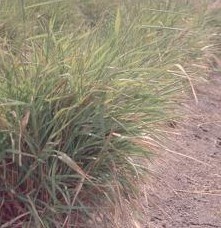
Threeflower Melicgrass (Melica nitens (Scribn.) Nutt. ex Piper) is a perennial grass with short rhizomes. It grows naturally in wooded areas, grasslands, along streambanks, and on roadsides. Its spikelets typically contain three perfect flowers, although individual spikelets can contain two or four flowers.
Written 27 November 2026 from the sources listed below. Each statement was checked against the passage it cites; statements that could not be supported were removed.
Appearance
Threeflower Melicgrass sometimes grows in bunches. Its stems can reach 1.3 meters in height.[1][2]
Its inflorescence consists of a branching panicle bearing spikelets. The spikelets typically contain three perfect flowers arranged in one-sided panicles, but individual spikelets can contain two or four flowers.[3][4][5]
The rachilla extends beyond the fertile florets and ends in a club-shaped structure. The sterile florets consist of two empty lemmas.[6][7]
Habitat
Threeflower Melicgrass grows naturally in wooded areas, grasslands, along streambanks, and on roadsides.[8][9][10][11]
In Minnesota, it has historically occurred in sandy-soiled woodlands and prairie. Minnesota represents the northernmost part of its range in its extreme southeastern region.[12][13]
In Wisconsin, it occurs on steep slopes and rocky embankments. Southern Wisconsin populations occur around floodplains, mesic forests, and dry prairies.[14][15][16]
Conservation
Threeflower Melicgrass is classified as threatened in Minnesota. In Wisconsin, it is recognized as a Special Concern plant under the name Three-flowered Melic Grass.[17][18][19]
Some populations are highly threatened by land-use conversion and habitat fragmentation. Forest management practices pose a lesser conservation threat in some areas.[20][21]
Uses
Threeflower Melicgrass is cultivated and sown as forage grass in some areas.[22]
Classification of the Threeflower Melicgrass
| Kingdom | Plantae |
|---|---|
| Subkingdom | Pteridobiotina |
| Phylum | Tracheophyta |
| Class | Liliopsida |
| Order | Poales |
| Family | Poaceae (Turf) |
| Genus | Melica (Melic) |
| Species | Melica nitens (Scribn.) Nutt. ex Piper |
Where the Threeflower Melicgrass is found
Checklists and occurrence records place Melica nitens in 2 countries across North America. GBIF holds 2,670 georeferenced records of it.
Countries
Regions and cities with the most records
- Texas, United States 1,134
- Live Oak, United States 146
- Missouri, United States 133
- San Antonio, United States 115
- Converse, United States 102
- Kyle, United States 94
- Illinois, United States 84
- San Marcos, United States 81
- Universal City, United States 78
- Austin, United States 75
- Schertz, United States 68
- Arkansas, United States 53
- Iowa, United States 51
- Cibolo, United States 49
- Brushy Creek, United States 46
- Georgetown, United States 45
- New Braunfels, United States 45
- Round Rock, United States 45
- Cedar Park, United States 43
- Oklahoma, United States 38
- Leander, United States 36
- Pflugerville, United States 35
- Hutto, United States 30
- Kansas, United States 24
- Wildwood, United States 23
- Canyon Lake, United States 19
- Bridgeview, United States 17
- Burbank, United States 17
- Goodings Grove, United States 17
- Lemont, United States 17
- Orland Park, United States 17
- Palos Hills, United States 17
- Darien, United States 16
- Kerrville, United States 16
- Oak Lawn, United States 16
- Downers Grove, United States 15
3 more countries have a few records outside this range
These countries hold a few records of Melica nitens but lie outside the range the checklists give for it. Such records are often zoo or garden specimens, museum material or vagrants, so the species is not counted as occurring there.
A number beside a place is its count of GBIF occurrence records. A place without a number comes from a checklist alone. Records show where a species has been observed or collected, which can include escapes and vagrants.
Common names
English
- Threeflower Melicgrass
- Three-flower Melic
- Three-flower Melic Grass
Names in 2 other languages
- French
- Mélique à trois fleurs
- Spanish
- papelillo brillante
Synonyms
2 other scientific names have been used for this species and are now treated as synonyms of Melica nitens.
- Melica diffusa var. nitens Scribn.
- Melica scabra Nutt. ambiguous synonym
Related species
-
 Hairy MelicMelica ciliata
-
 Wood MelickMelica uniflora
-
 Mountain MelickMelica nutans
-
 Eastern MelickMelica transsilvanica
-
 Tall MelicMelica altissima
-
 Little California MelicMelica imperfecta
-
 OniongrassMelica bulbosa
-
 Alaska OniongrassMelica subulata
Compare
Questions and answers
What is the scientific name of the Threeflower Melicgrass?
The scientific name of the Threeflower Melicgrass is Melica nitens. Written with its author, the full name is Melica nitens (Scribn.) Nutt. ex Piper.
Which family does the Threeflower Melicgrass belong to?
Melica nitens belongs to the family Poaceae, in the order Poales and the class Liliopsida.
Where is the Threeflower Melicgrass found?
Checklists and occurrence records place Melica nitens in 2 countries: United States and Mexico.
What other names does the Threeflower Melicgrass have?
Melica nitens is also known in English as Three-flower Melic and Three-flower Melic Grass.
Sources
Passages the profile rests on
- The grass sometimes grows in bunches. Source passage: “This perennial grass has short rhizomes and sometimes forms bunches.” — English Wikipedia
- Its stems can reach 1.3 meters in height. Source passage: “The stems grow up to 1.3 meters tall.” — English Wikipedia
- Its inflorescence consists of a branching panicle bearing spikelets. Source passage: “The inflorescence is a branching panicle of spikelets.” — English Wikipedia
- Its spikelets typically contain three perfect flowers arranged in one-sided panicles. Source passage: “The spikelets normally have three perfect flowers in one sided panicles.” — English Wikipedia
- Individual spikelets can contain two or four flowers instead of the usual three. Source passage: “Despite its name, the grass may also have spikelets with two or four flowers each, often two.” — English Wikipedia
- The rachilla extends beyond the fertile florets and ends in a club-shaped structure. Source passage: “The rachilla is longer than the fertile florets, and terminates in a club.” — English Wikipedia
- The sterile florets consist of two empty lemmas. Source passage: “The sterile florets are two empty lemmas.” — English Wikipedia
- The species grows naturally in wooded areas. Source passage: “In the wild this plant grows in wooded areas, grasslands, streambanks, and roadsides.” — English Wikipedia
- Grasslands are among the natural habitats of this species. Source passage: “In the wild this plant grows in wooded areas, grasslands, streambanks, and roadsides.” — English Wikipedia
- The species occurs naturally along streambanks. Source passage: “In the wild this plant grows in wooded areas, grasslands, streambanks, and roadsides.” — English Wikipedia
- Roadsides are among the environments where this grass grows. Source passage: “In the wild this plant grows in wooded areas, grasslands, streambanks, and roadsides.” — English Wikipedia
- In Minnesota, the species has historically occurred in sandy-soiled woodlands and prairie. Source passage: “it was historically found in sandy soiled woodlands and prairie.” — English Wikipedia
- Minnesota represents the northernmost part of the species' range in its extreme southeastern region. Source passage: “In the US state of Minnesota, where it reaches its most northerly range in the extreme south eastern part of the state” — English Wikipedia
- In Wisconsin, the species occurs on steep slopes and rocky embankments. Source passage: “in Wisconsin it is listed as a Special Concern plant, and is found on steep slopes or rocky embankments around the states southern floodplains, mesic forests, and dry prairies.” — English Wikipedia
- Southern Wisconsin populations occur around floodplains, mesic forests, and dry prairies. Source passage: “around the states southern floodplains, mesic forests, and dry prairies.” — English Wikipedia
- Wisconsin populations are usually found on steep slopes or rocky embankments. Source passage: “is found usually on steep slopes or rocky embankments” — apps.dnr.wi.gov
- The species is classified as threatened in Minnesota. Source passage: “In the US state of Minnesota, where it reaches its most northerly range in the extreme south eastern part of the state, it is listed as a threatened species” — English Wikipedia
- The species is classified as a Special Concern plant in Wisconsin. Source passage: “in Wisconsin it is listed as a Special Concern plant” — English Wikipedia
- Wisconsin recognizes Three-flowered Melic Grass as a Special Concern plant. Source passage: “Three-flowered Melic Grass (Melica nitens), a Wisconsin Special Concern plant” — apps.dnr.wi.gov
- Some populations are highly threatened by land-use conversion and habitat fragmentation. Source passage: “highly threatened by land-use conversion and habitat fragmentation” — English Wikipedia
- Forest management practices pose a lesser conservation threat to the species in some areas. Source passage: “and to a lesser extent by forest management practices.” — English Wikipedia
- The species is cultivated and sown as forage grass in some areas. Source passage: “In other areas it is cultivated and sown as a forage grass.” — English Wikipedia
Data
- Catalogue of Life, 2026-10-16 XR cc by
- Global Biodiversity Information Facility CC BY 4.0
- Wikidata CC0
- GeoNames CC BY 4.0
- Wikimedia Commons per image; credit shown with each image
- Within the Catalogue of Life, this name comes from The World Checklist of Vascular Plants (WCVP) cc by
References
- Bull. Torrey Bot. Club 32: 387 (1905) where the name was published
This species in other databases
- Catalogue of Life 72YRN
- Wikidata Q6812297
- iNaturalist 165237
- World Flora Online wfo-0000879312
- GRIN 70438
Page built on 28 November 2026. See how the catalog is made and all sources and licences.
Cite this page
ScientificNames.org. (2026). Melica nitens (Threeflower Melicgrass). Retrieved November 28, 2026, from https://scientificnames.org/species/melica-nitens
“Melica nitens (Threeflower Melicgrass).” ScientificNames.org, 2026, scientificnames.org/species/melica-nitens. Accessed 28 Nov. 2026.
ScientificNames.org. “Melica nitens (Threeflower Melicgrass).” Accessed November 28, 2026. https://scientificnames.org/species/melica-nitens.
@misc{scientificnames_melica_nitens_threeflower_melicgrass,
  author = {{ScientificNames.org}},
  title = {Melica nitens (Threeflower Melicgrass)},
  year = {2026},
  url = {https://scientificnames.org/species/melica-nitens},
  note = {Accessed 2026-11-28}
}