Species · Flowering plants
Indian Spikenard Nardostachys jatamansi
The scientific name of the Indian Spikenard is Nardostachys jatamansi. It is a species of flowering plant in the family Caprifoliaceae (honeysuckle family), order Dipsacales.
- Scientific name
- Nardostachys jatamansi (D.Don) DC.
- Common name
- Indian Spikenard
- Genus
- Nardostachys
- Family
- Caprifoliaceae (Honeysuckle Family)
- Order
- Dipsacales
- Class
- Magnoliopsida
- Red List category
- CR Critically Endangered
- Recorded in
- 6 countries
- Name status
- accepted in the Catalogue of Life

Overview
The species grows in the Himalayan mountain region at elevations between 3,000 and 5,000 metres. The plant produces pink, bell-shaped flowers and an intensely aromatic, amber-colored essential oil.
Written 26 November 2026 from the sources listed below. Each statement was checked against the passage it cites; statements that could not be supported were removed.
Appearance
Indian Spikenard produces pink, bell-shaped flowers and reaches a height of 10–50 cm.[1][2]
Its underground rhizomes produce an amber-colored, very thick essential oil.[3][4]
Habitat
Indian Spikenard grows in the Himalayan mountain region at elevations between 3,000 and 5,000 metres.[5][6]
Its distribution includes Kumaon, Nepal, Sikkim and Bhutan, as well as northern Myanmar and western and central China.[7][8]
Uses
The underground rhizomes can be crushed and distilled to produce an intensely aromatic, amber-colored essential oil known as spikenard. The oil has historically been used as a perfume, in traditional medicine and in religious ceremonies.[9][10][11][12][3]
Nard oil is used as incense, a sedative and an herbal medicine. It is described as a herbal remedy intended to address insomnia and birth difficulties.[13][14][15][16]
Inhalation of oil-containing preparations is described as helping relieve cold symptoms, coughs and nasal congestion.[17][18]
Indian Spikenard has been suggested as a possible ingredient of the incense historically known as spikenard.[19]
Conservation
Indian Spikenard is considered endangered because of overharvesting for folk medicine, overgrazing, habitat loss and forest degradation.[20]
The species is classified as critically endangered in a document discussing its exploitation and illegal trade. Over-exploitation and illegal trade are identified as threats to its survival.[21][22]
Classification of the Indian Spikenard
| Kingdom | Plantae |
|---|---|
| Subkingdom | Pteridobiotina |
| Phylum | Tracheophyta |
| Class | Magnoliopsida |
| Order | Dipsacales |
| Family | Caprifoliaceae (Honeysuckle Family) |
| Subfamily | Valerianoideae |
| Genus | Nardostachys |
| Species | Nardostachys jatamansi (D.Don) DC. |
Where the Indian Spikenard is found
Checklists and occurrence records place Nardostachys jatamansi in 6 countries across Asia. GBIF holds 967 georeferenced records of it.
Countries
Regions and cities with the most records
- Sichuan, China 202
- Yunnan, China 189
- Tibet, China 62
- Shangri-La, China 50
- Madhya Pradesh, India 34
- Lijiang, China 31
- Huangshan, China 29
- Qinghai, China 22
- Daocheng, China 18
- Kangding, China 15
- Gengqing, China 10
- Maqin County, China 9
- Shangpa, China 7
- Thimphu District, Bhutan 7
- Pokhara, Nepal 6
- Qamdo, China 6
- Dali, China 5
- Dali Old Town, China 5
- Fengyi, China 5
- Haidong Zhen, China 5
- Yongjian, China 5
- Uttarakhand, India 4
- Wāliṅ, Nepal 4
- Chéngguān Qū, China 3
- Doilungdêqên, China 3
- Lhasa, China 3
- Tongsa, Bhutan 3
- Sikkim, India 1
- Uttar Pradesh, India
Range as the checklists state it
China (Qinghai, SW-Sichuan, Yunnan); Tibet; Pakistan (Waziristan, Kurram, Chitral, Swat, Hazara, Murree); Nepal; Bhutan; N-India (Sikkim, Uttar Pradesh, Poonch, Jammu & Kashmir); Myanmar (Shan)
A number beside a place is its count of GBIF occurrence records. A place without a number comes from a checklist alone. Records show where a species has been observed or collected, which can include escapes and vagrants.
Common names
English
- Indian Spikenard
- Indian Nard
- Muskroot
- Nardin
- Nardus Root
- Spikenard
- Nard
Names in 12 other languages
- Chinese
- Gansong, Kan-sung-hsiang, Ku-mi-ch, 匙叶甘松, 甘松, 甘松(匙叶甘松、松根、毛甘松、甘松香)
- German
- Nardenähre, Speichenähre
- Gujarati
- Kalichad
- Hindi
- Balchhar, Jata Jatila, Mamsi, jatamansi
- Japanese
- Kanshoko
- Kannada
- Bhootajata, Ganagilamaste
- Malayalam
- Jatamanchi, Manchi
- Marathi
- Jatamavshi
- Punjabi
- Billilotan, Chharguddi
- Telugu
- Jatamams
- kas
- Bhutijata
- san
- Bhyatajata, Tapaswini, Vilomasa
Synonyms
9 other scientific names have been used for this species and are now treated as synonyms of Nardostachys jatamansi.
- Fedia grandiflora Wall.
- Fedia jatamansi Wall. ex DC.
- Nardostachys chinensis Batalin
- Nardostachys gracilis Kitam.
- Nardostachys grandiflora Wall. ex DC.
- Nardostachys jatamansi C.B.Clarke
- Patrinia jatamansi D.Don
- Valeriana jatamansi (D.Don) Wall. ambiguous synonym
- Valeriana jatamansi D.Don ambiguous synonym
Related species
-
 ValerianValeriana officinalis
-
 Blue HoneysuckleLonicera caerulea
-
 Amur HoneysuckleLonicera maackii
-
 Lamb's LettuceValerianella locusta
- Japanese HoneysuckleLonicera japonica
-
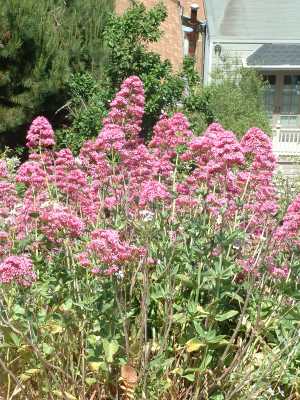 Red ValerianCentranthus ruber
-
 Himalayan HoneysuckleLeycesteria formosa
-
 Common TeaselDipsacus fullonum
Compare
Questions and answers
What is the scientific name of the Indian Spikenard?
The scientific name of the Indian Spikenard is Nardostachys jatamansi. Written with its author, the full name is Nardostachys jatamansi (D.Don) DC..
Which family does the Indian Spikenard belong to?
Nardostachys jatamansi belongs to the family Caprifoliaceae, in the order Dipsacales and the class Magnoliopsida.
Where is the Indian Spikenard found?
Checklists and occurrence records place Nardostachys jatamansi in 6 countries: China, Nepal, India, Bhutan, Myanmar and Pakistan.
What is the conservation status of the Indian Spikenard?
The IUCN Red List category recorded for Nardostachys jatamansi is Critically Endangered (CR).
What other names does the Indian Spikenard have?
Nardostachys jatamansi is also known in English as Indian Nard, Muskroot, Nardin, Nardus Root, Spikenard and Nard.
Sources
Passages the profile rests on
- The plant produces pink, bell-shaped flowers. Source passage: “The plant grows 10–50 cm (4–20 in) in height and has pink, bell-shaped flowers.” — English Wikipedia
- The plant reaches a height of 10–50 cm. Source passage: “The plant grows 10–50 cm (4–20 in) in height” — English Wikipedia
- The underground rhizomes can be crushed and distilled to produce aromatic essential oil. Source passage: “Rhizome (underground stems) can be crushed and distilled into an intensely aromatic amber-colored essential oil” — English Wikipedia
- The essential oil produced from the rhizome is amber-colored and very thick. Source passage: “which is very thick in consistency.” — English Wikipedia
- The species grows in the Himalayan mountain region. Source passage: “It is a perennial that grows in the Himalayas” — English Wikipedia
- The species occurs at elevations between 3,000 and 5,000 metres. Source passage: “at elevations of 3,000–5,000 m (9,800–16,400 ft)” — English Wikipedia
- The species occurs in Kumaon, Nepal, Sikkim and Bhutan. Source passage: “primarily in a belt through Kumaon, Nepal, Sikkim and Bhutan” — English Wikipedia
- The species also occurs in northern Myanmar and western and central China. Source passage: “and in northern Myanmar and western and central China.” — English Wikipedia
- The species produces an intensely aromatic, amber-colored essential oil known as spikenard. Source passage: “It is a source of a type of intensely aromatic amber-colored essential oil, spikenard.” — English Wikipedia
- The essential oil has historically been used as a perfume. Source passage: “The oil has, since ancient times, been used as a perfume” — English Wikipedia
- The essential oil has historically been used in traditional medicine. Source passage: “used as a perfume, as traditional medicine, and in religious ceremonies.” — English Wikipedia
- The essential oil has historically been used in religious ceremonies. Source passage: “used as a perfume, as traditional medicine, and in religious ceremonies.” — English Wikipedia
- Nard oil is used as incense. Source passage: “Nard oil is used as a perfume, an incense, a sedative, and a herbal medicine” — English Wikipedia
- Nard oil is used as a sedative. Source passage: “Nard oil is used as a perfume, an incense, a sedative, and a herbal medicine” — English Wikipedia
- Nard oil is used as an herbal medicine. Source passage: “Nard oil is used as a perfume, an incense, a sedative, and a herbal medicine” — English Wikipedia
- The oil is described as a herbal remedy intended to address insomnia and birth difficulties. Source passage: “a herbal medicine said to fight insomnia, birth difficulties, and other minor ailments.” — English Wikipedia
- Inhalation of oil-containing preparations is described as helping relieve cold symptoms. Source passage: “Inhalations with added oil help relieve symptoms of colds, coughs and nasal congestion.” — English Wikipedia
- Inhalation of oil-containing preparations is described as helping relieve coughs and nasal congestion. Source passage: “Inhalations with added oil help relieve symptoms of colds, coughs and nasal congestion.” — English Wikipedia
- The species has been suggested as a possible ingredient of the incense historically known as spikenard. Source passage: “Nardostachys jatamansi may have been used as an ingredient in the incense known as spikenard” — English Wikipedia
- The species is considered endangered because of overharvesting for folk medicine, overgrazing, habitat loss and forest degradation. Source passage: “It is considered endangered due to overharvesting for folk medicine, overgrazing, loss of habitat, and forest degradation.” — English Wikipedia
- The species is classified as critically endangered in a document discussing its exploitation and illegal trade. Source passage: “Nardostachys jatamansi is critically endangered due to over-exploitation and illegal trade” — academia.edu
- Over-exploitation and illegal trade are identified as threats to the species' survival. Source passage: “due to over-exploitation and illegal trade, threatening its survival.” — academia.edu
Data
- Catalogue of Life, 2026-10-16 XR cc by
- Global Biodiversity Information Facility CC BY 4.0
- Wikidata CC0
- GeoNames CC BY 4.0
- Wikimedia Commons per image; credit shown with each image
- Within the Catalogue of Life, this name comes from Synonymic Checklists of the Vascular Plants of the World cc by
References
- DC. (1830). Prodr. [A.P. de Candolle] 4: 624 (1830). where the name was published
This species in other databases
Page built on 27 November 2026. See how the catalog is made and all sources and licences.
Cite this page
ScientificNames.org. (2026). Nardostachys jatamansi (Indian Spikenard). Retrieved November 27, 2026, from https://scientificnames.org/species/nardostachys-jatamansi
“Nardostachys jatamansi (Indian Spikenard).” ScientificNames.org, 2026, scientificnames.org/species/nardostachys-jatamansi. Accessed 27 Nov. 2026.
ScientificNames.org. “Nardostachys jatamansi (Indian Spikenard).” Accessed November 27, 2026. https://scientificnames.org/species/nardostachys-jatamansi.
@misc{scientificnames_nardostachys_jatamansi_indian_spikenard,
  author = {{ScientificNames.org}},
  title = {Nardostachys jatamansi (Indian Spikenard)},
  year = {2026},
  url = {https://scientificnames.org/species/nardostachys-jatamansi},
  note = {Accessed 2026-11-27}
}