Species · Birds
Malagasy Brush Warbler Nesillas typica
The scientific name of the Malagasy Brush Warbler is Nesillas typica. It is a species of bird in the family Acrocephalidae (reed warblers & allies), order Passeriformes. The name dates from 1860.
- Scientific name
- Nesillas typica (Hartlaub, 1860)
- Common name
- Malagasy Brush Warbler
- Genus
- Nesillas
- Family
- Acrocephalidae (Reed Warblers & Allies)
- Order
- Passeriformes
- Class
- Aves
- Red List category
- LC Least Concern
- Recorded in
- 2 countries
- Name status
- accepted in the Catalogue of Life

Overview
The Malagasy Brush Warbler (Nesillas typica) is a bird in the family Acrocephalidae, order Passeriformes, and class Aves. It occurs in eastern and northern Madagascar and the Comoro Islands. It has brown plumage, contrasting white eyebrows, and a sleek, slim body.
Written 27 November 2026 from the sources listed below. Each statement was checked against the passage it cites; statements that could not be supported were removed.
Appearance
The Malagasy Brush Warbler has brown plumage with contrasting white eyebrows. Its body is sleek and slim, with a low forehead and crown and a slight crest. Its wings are short and rounded, and its bill is long and brown.[1][2][3][4]
Male wing lengths range from 62 to 70 mm, while female wing lengths range from 58 to 67 mm. Male tail lengths range from 72 to 93 mm.[5][6][7]
Habitat
The species inhabits subtropical and tropical dry forests, moist lowland forests, and moist shrubland.[8][9][10]
In Madagascar, it inhabits primary and degraded forests on calcareous substrates and gardens at all elevations. On Mohéli, it occurs exclusively on forested ridges above 400 metres in dense evergreen vegetation.[11][12]
Diet
The Malagasy Brush Warbler feeds on spiders, cockroaches, beetles, tree bugs, and bees.[13][14][15][16][17]
Behaviour
The Malagasy Brush Warbler is typically observed alone or in pairs. It forages close to the ground in bushes and dense shrubs, usually feeding alone or in pairs.[18][19][20]
While searching for food, it walks and hops. It generally flies only short distances, typically moving from bushes to sticks no more than 3 metres above the ground.[21][22][23]
Reproduction and life cycle
In Madagascar, the species builds its nests 0.2 to 0.6 metres above the ground in dense bushes or grass tufts. The nests are constructed from woven dry grasses and lined with soft materials such as flower petals. Small twigs and caterpillar cocoon threads are added to the outside.[24][25][26][27]
Nests in Madagascar measure approximately 110 mm in both width and depth. Nests on Anjouan have an external width of 80 to 90 mm.[28][29]
The species lays two eggs per clutch. In eastern Madagascar, the breeding season extends from July to December, with most breeding occurring between September and November. On Mohéli, the breeding season lasts from September to January.[30][31][32]
Classification of the Malagasy Brush Warbler
| Kingdom | Animalia |
|---|---|
| Phylum | Chordata |
| Subphylum | Vertebrata |
| Infraphylum | Gnathostomata |
| Parvphylum | Osteichthyes |
| Megaclass | Tetrapoda |
| Class | Aves (Bird) |
| Order | Passeriformes (Passerine) |
| Family | Acrocephalidae (Reed Warblers & Allies) |
| Genus | Nesillas (Brush-Warblers) |
| Species | Nesillas typica (Hartlaub, 1860) |
Where the Malagasy Brush Warbler is found
Checklists and occurrence records place Nesillas typica in 2 countries. GBIF holds 6,460 georeferenced records of it.
Countries
Regions and cities with the most records
- Antananarivo, Madagascar 1,257
- Ambohidratrimo, Madagascar 1,253
- Ivato, Madagascar 1,228
- Moramanga, Madagascar 1,097
- Anjozorobe, Madagascar 113
- Antsirabe, Madagascar 66
- Alarobia, Madagascar 58
- Manjakandriana, Madagascar 56
- Toliara, Madagascar 43
- Imerintsiatosika, Madagascar 42
- Ambohitrolomahitsy, Madagascar 29
- Arivonimamo, Madagascar 28
- Anjouan, Comoros 25
- Moutsamoudou, Comoros 25
- Betafo, Madagascar 23
- Ifanadiana, Madagascar 22
- Sakaraha, Madagascar 18
- Andapa, Madagascar 17
- Hell-Ville, Madagascar 17
- Ambatolampy, Madagascar 16
- Ambilobe, Madagascar 15
- Ambato Boeny, Madagascar 14
- Ambositra, Madagascar 14
- Antsiranana, Madagascar 13
- Mahajanga, Madagascar 13
- Soanindrariny, Madagascar 12
- Antsohimbondrona, Madagascar 11
- Fomboni, Comoros 11
- Mohéli, Comoros 11
- Ambalavao, Madagascar 10
- Amboasary, Madagascar 10
- Bealanana, Madagascar 9
- Fianarantsoa, Madagascar 8
- Sadabe, Madagascar 8
- Ankazondandy, Madagascar 7
- Maroantsetra, Madagascar 6
A number beside a place is its count of GBIF occurrence records. A place without a number comes from a checklist alone. Records show where a species has been observed or collected, which can include escapes and vagrants.
Common names
English
- Malagasy Brush Warbler
- Madagascar Brush-warbler
- Malagasy Brush-Warbler
Names in 25 other languages
- Catalan
- matoller de Madagascar
- Chinese
- 馬達加斯加叢鶯, 马岛薮莺
- Croatian
- madagaskarski voljić
- Czech
- rákosník dlouhoocasý
- Danish
- Madagascarsanger
- Dutch
- Tsikirityzanger
- Esperanto
- madagaskara veprokanbirdo
- Finnish
- madagaskarinkerttunen
- French
- Nésille malgache
- German
- Madagaskar-Buschsänger, Madagaskarspötter, Tsikiritybuschsänger
- Hungarian
- Tsikirity-bokorposzáta
- Italian
- Cantore di Tsikirity, Nesilla malgascia
- Japanese
- マダガスカルシマヨシキリ
- Lithuanian
- madagaskarinė krūmyninė devynbalsė
- Macedonian
- мадагаскарско метларче
- Norwegian
- madagaskarsanger
- Polish
- chaszczak madagaskarski
- Portuguese
- felosa-malgaxe
- Russian
- Мадагаскарский беброрнис, Мадагаскарский рогозник
- Slovak
- olivárik lesný
- Spanish
- Zarzalero malgache
- Swedish
- tsikiritysångare
- Turkish
- Madagaskar Çalı Ötleğeni
- Ukrainian
- цикіріті мадагаскарський
- Welsh
- Telor Prysgwydd Madagasgar
Synonyms
One other scientific name has been used for this species and is now treated as a synonym of Nesillas typica.
- Ellisia typica Hartlaub, KJG, 1860
Subspecies and varieties
- Nesillas typica ellisii subspecies
- Nesillas typica moheliensis subspecies
- Nesillas typica obscura subspecies
- Nesillas typica typica subspecies
Related species
-
 Aldabra Brush WarblerNesillas aldabrana
- Anjouan Brush WarblerNesillas longicaudata
- Moheli Brush WarblerNesillas mariae
- Grande Comore Brush WarblerNesillas brevicaudata
-
 Subdesert Brush WarblerNesillas lantzii
-
 Common Reed WarblerAcrocephalus scirpaceus
-
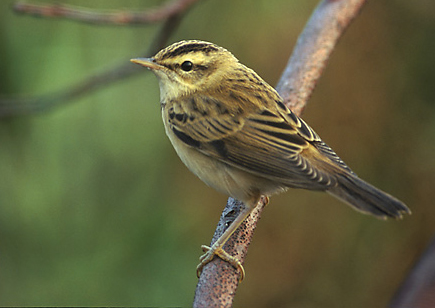 Sedge WarblerAcrocephalus schoenobaenus
-
 Great Reed WarblerAcrocephalus arundinaceus
Compare
Questions and answers
What is the scientific name of the Malagasy Brush Warbler?
The scientific name of the Malagasy Brush Warbler is Nesillas typica. Written with its author, the full name is Nesillas typica (Hartlaub, 1860).
Which family does the Malagasy Brush Warbler belong to?
Nesillas typica belongs to the family Acrocephalidae, in the order Passeriformes and the class Aves.
Where is the Malagasy Brush Warbler found?
Checklists and occurrence records place Nesillas typica in 2 countries: Madagascar and Comoros.
What is the conservation status of the Malagasy Brush Warbler?
The IUCN Red List category recorded for Nesillas typica is Least Concern (LC).
What other names does the Malagasy Brush Warbler have?
Nesillas typica is also known in English as Madagascar Brush-warbler and Malagasy Brush-Warbler.
Sources
Passages the profile rests on
- The Malagasy brush warbler has brown plumage with contrasting white eyebrows. Source passage: “The Malagasy brush warbler is brown with contrastingly white eyebrows.” — English Wikipedia
- The species has a sleek, slim body, a low forehead and crown, and a slight crest. Source passage: “The bird has a sleek and slim body, low forehead and crown (raised to form a slight crest)” — English Wikipedia
- Its wings are short and rounded. Source passage: “The Malagasy brush warbler's wings are short and rounded.” — English Wikipedia
- Its bill is long and brown. Source passage: “its bill is long and brown” — English Wikipedia
- Male wing lengths range from 62 to 70 mm. Source passage: “Males' wing spans range from 62-70mm” — English Wikipedia
- Female wing lengths range from 58 to 67 mm. Source passage: “females range from 58-67mm.” — English Wikipedia
- Male tail lengths range from 72 to 93 mm. Source passage: “males range from 72-93mm” — English Wikipedia
- The species inhabits subtropical and tropical dry forests. Source passage: “subtropical or tropical dry forests” — English Wikipedia
- The species occurs in subtropical and tropical moist lowland forests. Source passage: “subtropical or tropical moist lowland forests” — English Wikipedia
- The species also inhabits subtropical and tropical moist shrubland. Source passage: “subtropical or tropical moist shrubland.” — English Wikipedia
- In Madagascar, the species inhabits primary and degraded forests on calcareous substrates and gardens at all elevations. Source passage: “They inhabit the primary and degraded forests of Madagascar on calcareous substrates and gardens at all elevations.” — English Wikipedia
- On Mohéli, the species occurs exclusively on forested ridges above 400 metres in dense evergreen vegetation. Source passage: “the bird is exclusively found in forested ridges above 400 meters among the dense evergreens of Mohéli.” — English Wikipedia
- The Malagasy brush warbler feeds on spiders. Source passage: “insects such as spiders, cockroaches, beetles, tree bugs, bees” — English Wikipedia
- The species eats cockroaches. Source passage: “spiders, cockroaches, beetles, tree bugs, bees” — English Wikipedia
- The species eats beetles. Source passage: “cockroaches, beetles, tree bugs, bees” — English Wikipedia
- The species feeds on tree bugs. Source passage: “beetles, tree bugs, bees, and other tree/bush insects” — English Wikipedia
- The species feeds on bees. Source passage: “tree bugs, bees, and other tree/bush insects” — English Wikipedia
- The Malagasy brush warbler is typically observed alone or in pairs. Source passage: “The bird is typically found alone or in pairs of 2” — English Wikipedia
- The species forages close to the ground in bushes and dense shrubs. Source passage: “scavenges for food low to the ground in bushes and thick shrubs.” — English Wikipedia
- When foraging, the species usually feeds alone or in pairs. Source passage: “The Malagasy brush warbler eats alone or in pairs of 2 for a vast majority of the time when searching for food.” — English Wikipedia
- The species walks and hops while searching for food. Source passage: “These birds walk and hop to find food.” — English Wikipedia
- The species generally flies only short distances. Source passage: “flies short distances due to a small wingspan.” — English Wikipedia
- The species typically flies from bushes to sticks no more than 3 metres above the ground. Source passage: “They typically fly from bushes to sticks 3m or less to the ground” — English Wikipedia
- The species builds its nests 0.2 to 0.6 metres above the ground in dense bushes or grass tufts in Madagascar. Source passage: “The birds' nests in Madagascar are built 0.2-0.6 meters above the ground in a thick bush or grass tuft.” — English Wikipedia
- The nests are constructed from woven dry grasses. Source passage: “Nests are made of woven dry grasses” — English Wikipedia
- The nests are lined with soft materials such as flower petals. Source passage: “lined with a softer material such as flower petals.” — English Wikipedia
- The species adds small twigs and caterpillar cocoon threads to the outside of its nests. Source passage: “Small twigs and threads from caterpillar cocoons are added to the outside of the nest as well.” — English Wikipedia
- Nests in Madagascar measure approximately 110 mm in both width and depth. Source passage: “Nests found in Madagascar are 110 millimeters wide by 110 millimeters deep” — English Wikipedia
- Nests on Anjouan have an external width of 80 to 90 mm. Source passage: “nests on Anjouan have an external width dimension of 80-90 millimeters.” — English Wikipedia
- The species lays two eggs per clutch. Source passage: “The bird's clutch size is two eggs per nest.” — English Wikipedia
- In eastern Madagascar, the breeding season extends from July to December, with most breeding occurring between September and November. Source passage: “In Eastern Madagascar, the Malagasy brush warbler breeds from the months of July to December, primarily from September to November.” — English Wikipedia
- On Mohéli, the breeding season lasts from September to January. Source passage: “On the island of Mohéli, the breeding season lasts from September to January.” — English Wikipedia
Data
- Catalogue of Life, 2026-10-16 XR cc by
- Global Biodiversity Information Facility CC BY 4.0
- Wikidata CC0
- GeoNames CC BY 4.0
- Wikimedia Commons per image; credit shown with each image
- Within the Catalogue of Life, this name comes from The Integrated Taxonomic Information System cc0
References
- Gill, Frank, & and Minturn Wright. (2006). Birds of the World: Recommended English Names.
This species in other databases
Page built on 27 November 2026. See how the catalog is made and all sources and licences.
Cite this page
ScientificNames.org. (2026). Nesillas typica (Malagasy Brush Warbler). Retrieved November 27, 2026, from https://scientificnames.org/species/nesillas-typica
“Nesillas typica (Malagasy Brush Warbler).” ScientificNames.org, 2026, scientificnames.org/species/nesillas-typica. Accessed 27 Nov. 2026.
ScientificNames.org. “Nesillas typica (Malagasy Brush Warbler).” Accessed November 27, 2026. https://scientificnames.org/species/nesillas-typica.
@misc{scientificnames_nesillas_typica_malagasy_brush_warbler,
  author = {{ScientificNames.org}},
  title = {Nesillas typica (Malagasy Brush Warbler)},
  year = {2026},
  url = {https://scientificnames.org/species/nesillas-typica},
  note = {Accessed 2026-11-27}
}