Species · Birds
Antillean Piculet Nesoctites micromegas
The scientific name of the Antillean Piculet is Nesoctites micromegas. It is a species of bird in the family Picidae (woodpecker), order Piciformes. The name dates from 1866.
- Scientific name
- Nesoctites micromegas (Sundevall, 1866)
- Common name
- Antillean Piculet
- Genus
- Nesoctites
- Family
- Picidae (Woodpecker)
- Order
- Piciformes
- Class
- Aves
- Red List category
- LC Least Concern
- Recorded in
- 2 countries
- Name status
- accepted in the Catalogue of Life

Overview
The Antillean Piculet is a tiny, chubby woodpecker. It is endemic to Hispaniola, an island shared by the Dominican Republic and Haiti. It is the largest species of piculet and the only species in the genus Nesoctites.
Written 26 November 2026 from the sources listed below. Each statement was checked against the passage it cites; statements that could not be supported were removed.
Appearance
Adults measure between 14 and 16 cm in length and weigh between 26 and 33 g. The species is approximately twice the size of Neotropical piculets belonging to the genus Picumnus.[1][2][3]
Adult males of the nominate subspecies have a lemon-yellow crown with an orange-red to red central patch and a yellowish-green hindneck. Their upperparts are dull olive green to yellow-green with a faint rusty-bronze tinge, while the wings are olive green with yellow-green edges on the flight feathers.[4][5][6][7]
The tail is brownish olive with a bronze cast, and the cheeks are dull whitish with olive barring. The chin and throat are white with a faint yellow tinge, while the remaining underparts are pale yellowish white, with a few small dark throat spots and broad dark streaks on the breast and belly.[8][9][10][11][12]
Adult females are larger than adult males and lack the red crown spot found in nominate-subspecies males. Juveniles are duller overall, lack a red crown spot, and have obscure barring instead of underpart streaks.[13][14][15][16]
The subspecies N. m. abbotti is paler than the nominate subspecies. It has less yellow on its crown, grayer upperparts, a plainer white throat, and less prominent underpart streaks.[17][18]
Habitat
The Antillean Piculet inhabits humid and dry broadleaf forests, Hispaniolan pine forests dominated by Pinus occidentalis, semi-arid scrubland, thorn forest, and mangrove forests. It occasionally occurs in orchards and plantations.[19][20][21][22][23]
The species favors dense undergrowth across its habitats. It is most numerous at elevations between approximately 400 and 800 m and occurs at elevations up to 1,770 m in the Sierra de Bahoruco of southwestern Dominican Republic.[24][25][26]
The nominate subspecies occurs throughout the main island of Hispaniola. The subspecies N. m. abbotti is restricted to Gonâve Island off the western coast of Haiti.[27][28]
Diet
The Antillean Piculet's diet consists mainly of insects, particularly ants and beetles. It also eats other arthropods and a relatively large amount of fruit.[29][30]
Behaviour
The Antillean Piculet is resident throughout its range throughout the year. It mostly forages in the forest understory below approximately 8 m but also feeds in tree crowns.[31][32]
The species mainly searches for food on small branches, twigs, and vines rather than tree trunks. It also probes flowers, leaf clusters, and pine needles while foraging, usually alone or in pairs.[33][34][35]
Pairs use a call transcribed as 'kuk-ki-ki-ki-ke-ku-kuk' for contact and territorial communication. The species also produces mechanical-sounding 'pit' and 'pew' alarm notes and a loud burst of rapid, liquid-sounding chatter.[36][37][38]
During fights, the species produces continuous, noisy 'yeh-yeh-yeh-yeh' chatter. It is not known to produce drumming sounds.[39][40]
Breeding pairs are highly territorial and aggressively call and display toward intruders.[41]
Reproduction and life cycle
The breeding season extends from February through July. The species excavates its own nest hole or uses a hole abandoned by another woodpecker.[42][43]
Nest holes are typically located within 5 m of the ground in stumps, trees, palms, or fence posts. The clutch contains between two and four eggs.[44][45]
Classification of the Antillean Piculet
| Kingdom | Animalia |
|---|---|
| Phylum | Chordata |
| Subphylum | Vertebrata |
| Infraphylum | Gnathostomata |
| Parvphylum | Osteichthyes |
| Megaclass | Tetrapoda |
| Class | Aves (Bird) |
| Order | Piciformes (Woodpeckers) |
| Family | Picidae (Woodpecker) |
| Subfamily | Picumninae |
| Genus | Nesoctites |
| Species | Nesoctites micromegas (Sundevall, 1866) |
Where the Antillean Piculet is found
Checklists and occurrence records place Nesoctites micromegas in 2 countries across North America. GBIF holds 3,664 georeferenced records of it.
Countries
Regions and cities with the most records
- Independencia, Dominican Republic 807
- La Vega, Dominican Republic 509
- Jarabacoa, Dominican Republic 481
- Hato Mayor Province, Dominican Republic 478
- La Vega, Dominican Republic 421
- Pedernales Province, Dominican Republic 302
- Duarte Province, Dominican Republic 243
- San Francisco de Macorís, Dominican Republic 232
- La Altagracia Province, Dominican Republic 202
- Barahona Province, Dominican Republic 176
- Bonao, Dominican Republic 161
- Grand Gosier, Haiti 144
- Sud-Est, Haiti 143
- Santa Cruz de Barahona, Dominican Republic 124
- Ouest, Haiti 106
- La Romana, Dominican Republic 75
- Monte Cristi Province, Dominican Republic 58
- San Fernando de Monte Cristi, Dominican Republic 51
- Dajabón, Dominican Republic 46
- Monseñor Nouel, Dominican Republic 44
- Samaná, Dominican Republic 41
- Monte Plata Province, Dominican Republic 38
- Salcedo, Dominican Republic 38
- Sabana Grande de Boyá, Dominican Republic 37
- Puerto Plata, Dominican Republic 35
- Sud, Haiti 34
- Monte Llano, Dominican Republic 30
- San José de Ocoa, Dominican Republic 30
- Nord, Haiti 28
- Santo Domingo Oeste, Dominican Republic 28
- Santo Domingo Este, Dominican Republic 24
- Bajos de Haina, Dominican Republic 23
- Santo Domingo, Dominican Republic 23
- San Cristóbal, Dominican Republic 21
- Cap-Haïtien, Haiti 20
- Grand'Anse, Haiti 20
Range as the checklists state it
Caribbean
A number beside a place is its count of GBIF occurrence records. A place without a number comes from a checklist alone. Records show where a species has been observed or collected, which can include escapes and vagrants.
Common names
English
- Antillean Piculet
Names in 27 other languages
- Catalan
- picotet de la Hispaniola
- Chinese
- 安地列斯姬啄木, 安岛姬啄木鸟
- Croatian
- antilski žunić
- Czech
- datel antilský, datloun antilský
- Danish
- Antildværgspætte
- Dutch
- West-Indische Dwergspecht
- Esperanto
- antila pegeto
- Estonian
- antilli rähnak
- Finnish
- antillientikkanen
- French
- Piculet des Antilles, Picumne des Antilles
- German
- Hüpfspecht
- Hungarian
- karibi törpeharkály
- Italian
- Picchiolo delle Antille
- Japanese
- ヒスパニオラヒメキツツキ
- Lithuanian
- antilinis genelis
- Norwegian
- storpikulett
- Polish
- hispaniolak
- Portuguese
- pica-pau-anão-das-antilhas, picapauzinho-das-antilhas
- Russian
- Антильский дятелок
- Serbian
- Antilska žunica
- Slovak
- poskoček antilský
- Spanish
- Carpinterito antillano, Carpinterito de Sierra, Carpintero Bolo, Flautero, Tutulufeo
- Swedish
- hispanioladvärgspett
- Turkish
- Antil Kakancığı
- Ukrainian
- добаш антильський
- Welsh
- cnocellan y Caribî
- hat
- Sèpantye Bwa
Synonyms
One other scientific name has been used for this species and is now treated as a synonym of Nesoctites micromegas.
- Picumnus micromegas Sundevall, CJ, 1866
Subspecies and varieties
- Nesoctites micromegas abbotti (Gonâve Island Piculet) subspecies
- Nesoctites micromegas micromegas (Mainland Antillean Piculet) subspecies
Related species
- Northern FlickerColaptes auratus
-
 Pileated WoodpeckerDryocopus pileatus
-
 Ivory-billed WoodpeckerCampephilus principalis
-
 Downy WoodpeckerDryobates pubescens
-
 Red-bellied WoodpeckerMelanerpes carolinus
-
 Great Spotted WoodpeckerDendrocopos major
-
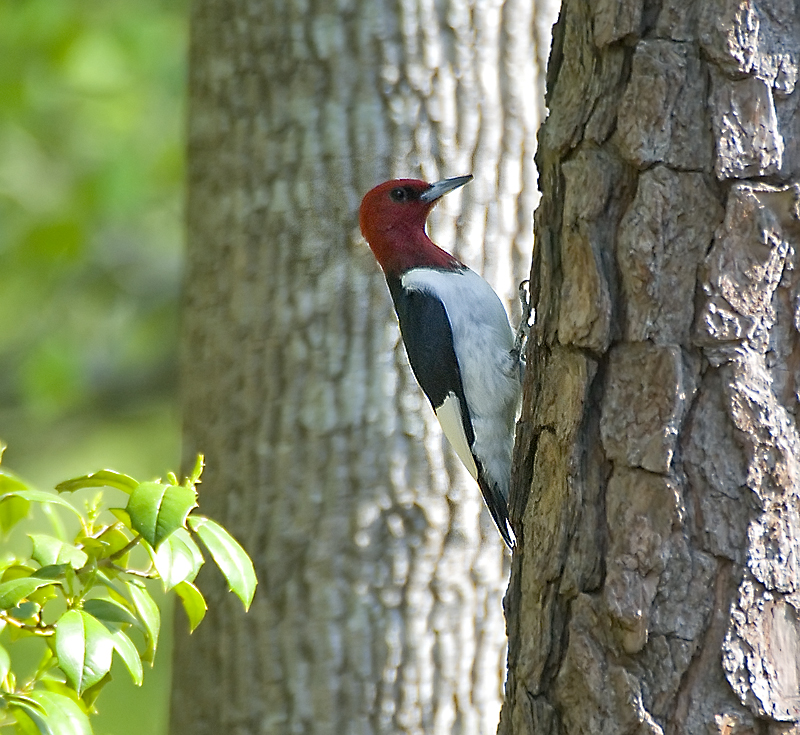 Red-headed WoodpeckerMelanerpes erythrocephalus
-
 Hairy WoodpeckerLeuconotopicus villosus
Compare
Questions and answers
What is the scientific name of the Antillean Piculet?
The scientific name of the Antillean Piculet is Nesoctites micromegas. Written with its author, the full name is Nesoctites micromegas (Sundevall, 1866).
Which family does the Antillean Piculet belong to?
Nesoctites micromegas belongs to the family Picidae, in the order Piciformes and the class Aves.
Where is the Antillean Piculet found?
Checklists and occurrence records place Nesoctites micromegas in 2 countries: Dominican Republic and Haiti.
What is the conservation status of the Antillean Piculet?
The IUCN Red List category recorded for Nesoctites micromegas is Least Concern (LC).
Sources
Passages the profile rests on
- Adults measure between 14 and 16 cm in length. Source passage: “The Antillean piculet is 14 to 16 cm (5.5 to 6.3 in) long” — English Wikipedia
- Adults weigh between 26 and 33 g. Source passage: “weighs 26 to 33 g (0.92 to 1.2 oz).” — English Wikipedia
- The species is approximately twice the size of Neotropical piculets belonging to the genus Picumnus. Source passage: “about double the size of the Neotropical piculets of genus Picumnus.” — English Wikipedia
- Adult males of the nominate subspecies have a lemon-yellow crown with an orange-red to red central patch. Source passage: “Adult males of the nominate subspecies have a lemon yellow crown with an orange-red to red patch in the center.” — English Wikipedia
- Adult males of the nominate subspecies have a yellowish-green hindneck. Source passage: “Their hindneck is yellowish green” — English Wikipedia
- The upperparts of adult males are dull olive green to yellow-green with a faint rusty-bronze tinge. Source passage: “their upperparts dull olive green to yellow-green with a faint rusty-bronze tinge.” — English Wikipedia
- The wings are olive green, with yellow-green edges on the flight feathers. Source passage: “Their wings are olive green and the flight feathers have yellow-green edges.” — English Wikipedia
- The tail is brownish olive with a bronze cast. Source passage: “Their tail is browish olive with a bronze cast.” — English Wikipedia
- The cheeks are dull whitish with olive barring. Source passage: “Their cheeks are dull whitish with olive barring” — English Wikipedia
- The chin and throat are white with a faint yellow tinge. Source passage: “their chin and throat white with a faint yellow tinge” — English Wikipedia
- The remaining underparts are pale yellowish white. Source passage: “the rest of their underparts pale yellowish white.” — English Wikipedia
- The throat has a few small dark spots, while the breast and belly have broad dark streaks. Source passage: “The throat has a few small dark spots and the breast and belly have wide dark streaks.” — English Wikipedia
- Adult females are larger than adult males. Source passage: “Adult females are larger than males” — English Wikipedia
- Adult females lack the red crown spot found in nominate-subspecies males. Source passage: “have the same plumage except without the red crown spot.” — English Wikipedia
- Juveniles are duller overall than adults and lack a red crown spot. Source passage: “Juveniles are overall duller than adults, do not have a red crown spot” — English Wikipedia
- Juveniles have obscure barring instead of streaks on their underparts. Source passage: “have obscure barring rather than streaks on their underparts.” — English Wikipedia
- The subspecies N. m. abbotti is paler than the nominate subspecies. Source passage: “Subspecies N. m. abbotti is paler than the nominate” — English Wikipedia
- N. m. abbotti has less yellow on its crown, grayer upperparts, a plainer white throat, and less prominent underpart streaks. Source passage: “has less yellow on the crown, grayer upperparts, a plainer white throat, and less heavy streaks on the underparts.” — English Wikipedia
- The species inhabits both humid and dry broadleaf forests. Source passage: “humid and dry broadleaf forests” — English Wikipedia
- The species occurs in Hispaniolan pine forests dominated by Pinus occidentalis. Source passage: “Hispaniolan pine forests dominated by Pinus occidentalis” — English Wikipedia
- The species inhabits semi-arid scrubland and thorn forest. Source passage: “semi-arid scrubland, and thorn forest.” — English Wikipedia
- The species also occurs in mangrove forests. Source passage: “It also occurs in mangrove forest” — English Wikipedia
- The species occasionally occurs in orchards and plantations. Source passage: “occasionally in orchards and plantations.” — English Wikipedia
- The species favors dense undergrowth across its habitats. Source passage: “In all habitats it favors dense undergrowth.” — English Wikipedia
- The species is most numerous at elevations between approximately 400 and 800 m. Source passage: “In elevation it is most numerous between about 400 and 800 m (1,310 and 2,620 ft)” — English Wikipedia
- The species occurs at elevations up to 1,770 m in the Sierra de Bahoruco of southwestern Dominican Republic. Source passage: “occurs as high as 1,770 m (5,800 ft) in Sierra de Bahoruco of southwestern Dominican Republic.” — English Wikipedia
- The nominate subspecies occurs throughout the main island of Hispaniola. Source passage: “The nominate subspecies of Antillean piuculet is found throughout the main island of Hispaniola.” — English Wikipedia
- The subspecies N. m. abbotti is restricted to Gonâve Island off the western coast of Haiti. Source passage: “N. m. abbotti is restricted to Gonâve Island off the west coast of Haiti.” — English Wikipedia
- The species' diet consists mainly of insects, particularly ants and beetles. Source passage: “Its diet is mostly insects, especially ants and beetles” — English Wikipedia
- The species also eats other arthropods and a relatively large amount of fruit. Source passage: “includes other arthropods and a relatively large amount of fruit.” — English Wikipedia
- The Antillean Piculet is resident throughout its range throughout the year. Source passage: “The Antillean piculet is a year-round resident throughout its range.” — English Wikipedia
- The species mostly forages in the forest understory below approximately 8 m, but also feeds in tree crowns. Source passage: “The Antillean piculet mostly forages in the forest understorey below about 8 m (26 ft), but will feed in the crown as well.” — English Wikipedia
- The species mainly searches for food on small branches, twigs, and vines rather than tree trunks. Source passage: “It mostly hunts by gleaning small branches, twigs, and vines rather than tree trunks” — English Wikipedia
- The species also probes flowers, leaf clusters, and pine needles while foraging. Source passage: “and also probes flowers and clusters of leaves and pine needles.” — English Wikipedia
- The species forages alone or in pairs. Source passage: “It hunts singly or in pairs.” — English Wikipedia
- Pairs use a call transcribed as 'kuk-ki-ki-ki-ke-ku-kuk' for contact and territorial communication. Source passage: “Members of a pair use "kuk-ki-ki-ki-ke-ku-kuk" as a contact and territorial call.” — English Wikipedia
- The species produces mechanical-sounding 'pit' and 'pew' alarm notes. Source passage: “Its alarm calls are "mechanical 'pit' and 'pew' notes"” — English Wikipedia
- The species produces a loud burst of rapid, liquid-sounding chatter. Source passage: “Its call is a loud burst of rapid liquid chatter.” — ebird.org
- During fights, the species produces continuous, noisy 'yeh-yeh-yeh-yeh' chatter. Source passage: “it makes a "continuous noisy 'yeh-yeh-yeh-yeh' chatter during fights".” — English Wikipedia
- The species is not known to produce drumming sounds. Source passage: “it is not known to drum.” — English Wikipedia
- Breeding pairs are highly territorial and aggressively call and display toward intruders. Source passage: “Pairs are highly territorial and will aggressively call and display towards intruders.” — English Wikipedia
- The breeding season extends from February through July. Source passage: “The Antillean piculet's breeding season is from February to July.” — English Wikipedia
- The species excavates its own nest hole or uses a hole abandoned by another woodpecker. Source passage: “It excavates a nest hole or occupies one abandoned by another woodpecker” — English Wikipedia
- Nest holes are typically located within 5 m of the ground in stumps, trees, palms, or fence posts. Source passage: “typically within 5 m (16 ft) off the ground in a stump, tree, palm, or fence post.” — English Wikipedia
- The clutch contains between two and four eggs. Source passage: “The clutch size is two to four eggs” — English Wikipedia
Data
- Catalogue of Life, 2026-10-16 XR cc by
- Global Biodiversity Information Facility CC BY 4.0
- Wikidata CC0
- GeoNames CC BY 4.0
- Wikimedia Commons per image; credit shown with each image
- Within the Catalogue of Life, this name comes from The Integrated Taxonomic Information System cc0
References
- Gill, Frank, & and Minturn Wright. (2006). Birds of the World: Recommended English Names.
This species in other databases
Page built on 27 November 2026. See how the catalog is made and all sources and licences.
Cite this page
ScientificNames.org. (2026). Nesoctites micromegas (Antillean Piculet). Retrieved November 27, 2026, from https://scientificnames.org/species/nesoctites-micromegas
“Nesoctites micromegas (Antillean Piculet).” ScientificNames.org, 2026, scientificnames.org/species/nesoctites-micromegas. Accessed 27 Nov. 2026.
ScientificNames.org. “Nesoctites micromegas (Antillean Piculet).” Accessed November 27, 2026. https://scientificnames.org/species/nesoctites-micromegas.
@misc{scientificnames_nesoctites_micromegas_antillean_piculet,
  author = {{ScientificNames.org}},
  title = {Nesoctites micromegas (Antillean Piculet)},
  year = {2026},
  url = {https://scientificnames.org/species/nesoctites-micromegas},
  note = {Accessed 2026-11-27}
}