Species · Mammals
Killer Whale Orcinus orca
The scientific name of the Killer Whale is Orcinus orca. It is a species of mammal in the family Delphinidae (oceanic dolphin), order Cetacea. The name dates from 1758.
- Scientific name
- Orcinus orca (Linnaeus, 1758)
- Common name
- Killer Whale
- Genus
- Orcinus
- Family
- Delphinidae (Oceanic Dolphin)
- Order
- Cetacea
- Class
- Mammalia
- Red List category
- DD Data Deficient
- Environment
- marine
- Recorded in
- 57 countries
- Name status
- accepted in the Catalogue of Life

Overview
Killer Whales occur in all oceans and most seas worldwide, inhabiting marine environments from Arctic and Antarctic waters to tropical seas.
Written 24 November 2026 from the sources listed below. Each statement was checked against the passage it cites; statements that could not be supported were removed.
Appearance
They have large, rounded pectoral fins resembling paddles and a blunt snout without the beak characteristic of other dolphin species. Newborn individuals have yellowish or orange-colored white markings.[1][2][3]
Male Killer Whales have dorsal fins approximately 1.8 metres high, more than twice the height of female dorsal fins. Individuals can be identified by distinctive markings and damage patterns on their dorsal fins and saddle patches.[4][5]
Adult males typically measure 6–8 metres in length and weigh more than 6 tonnes. Adult females generally measure 5–7 metres long and weigh approximately 3–4 tonnes.[6][7]
Newborn Killer Whales measure approximately 2.4 metres and weigh around 180 kilograms. Adult males in the North Pacific can reach approximately 8.2 metres in length, and males can weigh up to approximately 6,000 kilograms.[8][9][10]
Habitat
Killer Whales inhabit marine environments ranging from Arctic and Antarctic waters to tropical seas. They generally favor higher-latitude coastal waters over open-ocean environments.[11][12]
They occur in all oceans and most seas worldwide. Important study areas include Iceland, Norway, Argentina's Valdés Peninsula, the Crozet Islands, New Zealand, and the western coast of North America.[13][14]
Killer Whales occasionally occur in freshwater rivers, including the Columbia River, where individuals have been recorded 160 kilometres upstream.[15]
Diet
Killer Whales prey on fish, cephalopods, marine mammals, seabirds, and sea turtles. Their average daily food consumption is approximately 227 kilograms.[16][17]
Some North Pacific resident populations obtain approximately 96 percent of their diet from salmon. Chinook salmon constitutes approximately 65 percent of the salmon consumed by northeast Pacific resident populations.[18][19]
Chinook salmon contributed approximately half of the Southern Resident Killer Whales' diet during autumn in the studied period. It contributed approximately 70–80 percent during mid-winter and early spring, and nearly all of their diet during spring.[20][21][22]
Behaviour
Killer Whales are highly social animals, with some populations forming stable family groups organized along maternal lines. Alaskan pods generally contain fewer than 40 individuals.[23][24]
They use sophisticated hunting techniques and vocalizations that can be specific to individual social groups. They can also use echolocation to detect prey and other objects by emitting clicks and interpreting returning echoes.[25][26]
Killer Whales sometimes hunt cooperatively by forcing schooling herring into tight groups using bubbles or flashes of their white undersides. They may briefly beach themselves to capture seals and sea lions near shorelines.[27][28]
Resident populations generally have smaller home ranges and return annually to predictable locations. Transient populations have larger home ranges and move through local areas less predictably than resident populations.[29][30]
Reproduction and life cycle
Female Killer Whales are believed to become sexually active at an average age of approximately 15 years. They generally give birth at intervals of three to eight years.[31][32]
The gestation period is estimated to last between 16 and 18 months. Most births in the North Pacific appear to occur between autumn and spring.[33][34]
Male Killer Whales may live for at least 50 years, while females may reach at least 80 years.[35]
Conservation
The IUCN classifies the Killer Whale's conservation status as data deficient because its different population types may represent separate species.[36]
Some local populations face threats from prey depletion, habitat destruction, pollution, capture for marine parks, and conflicts with fisheries.[37]
Southern Resident Killer Whales were added to the United States Endangered Species list in late 2005. Insufficient prey availability has been identified as a significant risk factor limiting their recovery.[38][39]
Low Chinook salmon abundance has been associated with reduced fecundity and survival in Southern Resident Killer Whales.[40]
Classification of the Killer Whale
| Kingdom | Animalia |
|---|---|
| Phylum | Chordata |
| Subphylum | Vertebrata |
| Infraphylum | Gnathostomata |
| Parvphylum | Osteichthyes |
| Megaclass | Tetrapoda |
| Class | Mammalia (Mammal) |
| Subclass | Theria |
| Infraclass | Eutheria |
| Order | Cetacea (Cetacean) |
| Suborder | Odontoceti (Toothed Whales) |
| Family | Delphinidae (Oceanic Dolphin) |
| Genus | Orcinus (Killer Whales) |
| Species | Orcinus orca (Linnaeus, 1758) |
Where the Killer Whale is found
Checklists and occurrence records place Orcinus orca in 57 countries. GBIF holds 38,568 georeferenced records of it.
Countries
- Antarctica 3,135
- Argentina 268
- Aruba 10
- Australia 1,293
- Bahamas 16
- Belgium 22
- Bonaire, Saint Eustatius and Saba 6
- Brazil 60
- British Virgin Islands 3
- Canada 4,963
- Cayman Islands 10
- Chile 1,361
- Colombia 10
- Costa Rica 29
- Cuba 10
- Curacao 3
- Denmark 422
- Dominican Republic 3
- Ecuador 114
- Falkland Islands 76
- Faroe Islands 108
- France 95
- French Guiana 14
- French Southern Territories 1,742
- Germany 5
- Greenland 105
- Grenada 5
- Guadeloupe 67
- Honduras 8
- Iceland 992
- Ireland 81
- Isle of Man 6
- Italy 8
- Martinique 7
- Mexico 654
- New Zealand 488
- Norway 2,530
- Panama 9
- Peru 27
- Portugal 1,068
- Puerto Rico 16
- Russia 435
- Saint Barthelemy 10
- Saint Lucia 6
- Saint Martin 3
- Saint Pierre and Miquelon 63
- Saint Vincent and the Grenadines 27
- South Georgia and the South Sandwich Islands 181
- Spain 91
- Svalbard and Jan Mayen 75
- Sweden 182
- The Netherlands 182
- U.S. Virgin Islands 8
- United Kingdom 1,479
- United States 15,917
- Uruguay 7
- Venezuela 53
Regions and cities with the most records
- Alaska, United States 1,260
- Watsonville, United States 790
- Victoria, Canada 738
- Santa Cruz, United States 631
- Saanich, Canada 612
- Washington, United States 561
- Langford, Canada 521
- Nanaimo, Canada 384
- British Columbia, Canada 377
- West Vancouver, Canada 336
- Vancouver, Canada 289
- North Vancouver, Canada 268
- Richmond, Canada 232
- Salinas, United States 195
- Scotland, United Kingdom 190
- Cabo San Lucas, Mexico 183
- Colonia del Sol, Mexico 183
- Tacoma, United States 183
- Shoreline, United States 163
- Burien, United States 146
- Burnaby, Canada 142
- Seattle, United States 140
- Federal Way, United States 136
- Nordland, Norway 125
- Lakewood, United States 122
- Aliso Viejo, United States 121
- Newport Beach, United States 121
- Laguna Niguel, United States 116
- Costa Mesa, United States 106
- Kent, United States 90
- Huntington Beach, United States 87
- Irvine, United States 83
- New Westminster, Canada 82
- Auburn, United States 81
- Renton, United States 76
- Chubut, Argentina 71
21 more countries have a few records outside this range
These countries hold a few records of Orcinus orca but lie outside the range the checklists give for it. Such records are often zoo or garden specimens, museum material or vagrants, so the species is not counted as occurring there.
Range as the checklists state it
Antarctica/Southern Ocean
Eastern Atlantic Ocean
Western Atlantic Ocean
Indo-West Pacific
A number beside a place is its count of GBIF occurrence records. A place without a number comes from a checklist alone. Records show where a species has been observed or collected, which can include escapes and vagrants.
Common names
English
- Killer Whale
- Blackfish
- Orca (Killer Whale)
- Orca Whale
- Grampus
- Killer-trasher
- Orca
- Sword Grampus
- Swordfish
Names in 68 other languages
- Afrikaans
- Roofwalvis, moordvis
- Albanian
- Balena vrasëse
- Arabic
- أوركا, حوت سفاح, حوت قاتل
- Armenian
- Խոյադելֆին
- Asturian
- Sperlon
- Basque
- ezpalarta, marzupla
- Belarusian
- Касатка
- Breton
- Skoazog
- Bulgarian
- kosаtkа, Косатка
- Chinese
- 虎鯨
- Czech
- kosatka dravá
- Danish
- ornswin, spækhugger, svaerdval, svarthval, tandthoye
- Dutch
- botskop, zwaardwalvis
- Esperanto
- Granda orcino
- Faroese
- Bóghvítuhvalur, bovhidehval
- Finnish
- miekkavalas
- French
- dorque, epaulard, epée de mer, orque, orque gladiateur, orque épaulard, épaulard
- Galician
- candorca
- Georgian
- ცელნამგალა ვეშაპი
- German
- Butskopf, Butzkopf, Killerwal, Mörderwal, Schwertwal, großer Schwertwal
- Greek
- Όρκα
- Hebrew
- לוויתן קטלן, קטלן
- Hungarian
- kardszárnyú delfin
- Icelandic
- Háhyrningur, fann-fiskar-hydengen, haa-hirningur, hahyrna, hahyrningur, huyding, sverdfiscur
- Indonesian
- Paus pembunuh, paus pemangsa, seguni
- Irish
- Cráin dhubh
- Italian
- Orca assassina
- Japanese
- sadshi, sakamata, shachi, taka, takamatsu, シャチ, 鯱
- Korean
- beom-gorae, innuatu, 범고래
- Latvian
- Zobenvalis
- Macedonian
- Кит убиец
- Malagasy
- trozona mpamond
- Malayalam
- കൊലയാളി തിമിംഗലം
- Mongolian
- Алуурчин халим
- Māori
- Kākahi, Maki
- Northern Sami
- Fahkon, fáhkan
- Norwegian
- hvalhund, spaekhogger, spekkhugger, starhyn ning, staurhval, stourvaga, stourvagn, vaghund
- Norwegian Bokmål
- spekkhogger
- Norwegian Nynorsk
- spekkhoggar
- Persian
- نهنگ قاتل
- Polish
- Orka oceaniczna
- Portuguese
- Baleia-assassina, baleia asesina, roaz-de-bandeira
- Russian
- kasatka, kosatka, или кит убийца
- Scottish Gaelic
- madadh-cuain, madaidhean-cuain, pictwale
- Serbian
- Кит убица
- Slovenian
- orka
- Spanish
- Orca común, ballena asesina, ballena pinta, ballena quila, bufeo de mascarilla, cahuel-huaique, delfin gigante, espadarte
- Swedish
- löpare, opare, spackhuggare, späckhuggare, svärdfisk, tunnlik tumlare
- Tamil
- ஓர்க்கா திமிங்கலம்
- Telugu
- ఓర్కా
- Thai
- plawan phechakhat, วาฬเพชฌฆาต
- Turkish
- katil balina
- Vietnamese
- Cá hổ kình
- Welsh
- Lleiddiaid, lleiddiad, orca gwryw
- ain
- カムィフㇺベ, レプンカムィ
- ale
- aguluk, dukulad
- auq
- nookur
- bod
- སྟག་ཆུ་སྲིན།
- ckt
- musonkjgyssiak
- hak
- Fú-kîn
- iku
- adluk
- ipk
- Aaġlu
- kal
- aarluk, ardlursark, ardlyk
- mnw
- stylefont-family:'Pyidaungsuကဗံၚ်ဗှ်ဂစိုတ်
- nav
- Łóóʼtsoh łizhin dóó łigaígíí
- pnb
- کلر وہیل
- tok
- soweli kala pimeja walo
- wuu
- 杀人鲸
Synonyms
38 other scientific names have been used for this species and are now treated as synonyms of Orcinus orca.
- Delphinus duhameli Lacépède, 1804
- Delphinus gladiator Bonnaterre, 1789
- Delphinus grampus Blainville, 1817
- Delphinus orca Linnaeus, 1758
- Delphinus orca ensidoratus Kerr, 1792
- Delphinus serra Borowski, 1780
- Delphinus victorini Grill, 1858
- Grampus orca Iredale & Troughton, 1933
- Grampus rectipinna Scheffer, 1942
- Grampus vectipinna Branson, 1971
- Ophysia pacifica Gray, 1870
- Orca africana Gray, 1871
- Orca antarctica Fischer, 1876
- Orca ater fusca Dall, 1874
- Orca atra Gray, 1871
- Orca capensis Gray, 1846
- Orca eschrichtii Reinhardt, 1866
- Orca glacialis Berzin & Vladimirov, 1982
- Orca gladiator Van Beneden & Gervais, 1869-1880
- Orca gladiator arcticus Gervais, 1869-1871
- Orca gladiator australis Gervais, 1869-1871
- Orca gladiator europaeus Gervais, 1869-1871
- Orca gladiator tasmaniensis Cabrera, 1961
- Orca latirostris Gray, 1870
- Orca megellanica Burmeister, 1866
- Orca minor Malm, 1871
- Orca orca Lahille, 1914
- Orca orca megallanicus
- Orca pacifica Gray, 1870
- Orca schlegelii Lilljeborg, 1866
- Orca stenorhyncha Gray, 1870
- Orca tasmanica Gray, 1871
- Orcinus glacialis Berzin & Vladimirov, 1983
- Orcinus nanus Mikhalev & Ivashin, 1981
- Orcinus orca capensis Trouessart, 1904
- Orcinus orca eschrichti Trouessart, 1904
- Orcinus orca megallanicus Trouessart, 1904
- Physeter microps Fabricius, 1780
Related species
- Bigg's Killer WhaleOrcinus rectipinnus
- Resident Killer WhaleOrcinus ater
-
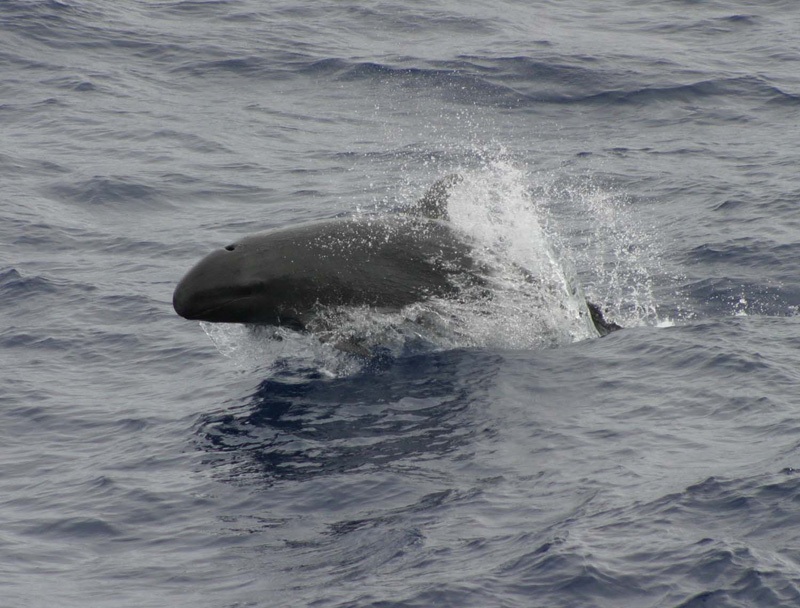 False Killer WhalePseudorca crassidens
-
 Common Bottlenose DolphinTursiops truncatus
-
 Irrawaddy DolphinOrcaella brevirostris
-
 Risso's DolphinGrampus griseus
-
 Common DolphinDelphinus delphis
-
 Melon-headed WhalePeponocephala electra
Compare
Questions and answers
What is the scientific name of the Killer Whale?
The scientific name of the Killer Whale is Orcinus orca. Written with its author, the full name is Orcinus orca (Linnaeus, 1758).
Which family does the Killer Whale belong to?
Orcinus orca belongs to the family Delphinidae, in the order Cetacea and the class Mammalia.
Where is the Killer Whale found?
Checklists and occurrence records place Orcinus orca in 57 countries, including United States, Canada, Antarctica, Norway, French Southern Territories and United Kingdom.
What is the conservation status of the Killer Whale?
The IUCN Red List category recorded for Orcinus orca is Data Deficient (DD).
What other names does the Killer Whale have?
Orcinus orca is also known in English as Blackfish, Orca (Killer Whale), Orca Whale, Grampus, Killer-trasher and Orca.
Why are orcas called killer whales if they're not whales?
The common name killer whale is thought to have originated from sailors' observations of orcas hunting larger whales. Killer Whales belong to the oceanic dolphin family Delphinidae.[41][42]
Are orcas still called killer whales?
Yes. Killer Whale remains an English name on record, and it is the name used here.[41]
Sources
Passages the profile rests on
- Newborn orcas have yellowish or orange-colored white markings. Source passage: “In newborns, the white areas are yellow or orange coloured.” — English Wikipedia
- Orcas have large, rounded pectoral fins that resemble paddles. Source passage: “Orca pectoral fins are large and rounded, resembling paddles” — English Wikipedia
- The orca has a blunt snout without the beak characteristic of other dolphin species. Source passage: “The snout is blunt and lacks the beak of other species.” — English Wikipedia
- Male orcas have dorsal fins approximately 1.8 metres high, more than twice the height of female dorsal fins. Source passage: “those of males about 1.8 m (5 ft 11 in) high, more than twice the size of the female's” — English Wikipedia
- Individual orcas can be identified by distinctive markings and damage patterns on their dorsal fins and saddle patches. Source passage: “Variations such as nicks, scratches, and tears on the dorsal fin and the pattern of white or grey in the saddle patch are unique.” — English Wikipedia
- Adult male orcas typically measure 6–8 metres in length and weigh more than 6 tonnes. Source passage: “Males typically range from 6 to 8 m (20 to 26 ft) long and weigh in excess of 6 t” — English Wikipedia
- Adult female orcas generally measure 5–7 metres long and weigh approximately 3–4 tonnes. Source passage: “Females are smaller, generally ranging from 5 to 7 m (16 to 23 ft) and weighing about 3 to 4 t” — English Wikipedia
- Newborn orcas measure approximately 2.4 metres and weigh around 180 kilograms. Source passage: “Calves at birth weigh about 180 kg (400 lb) and are about 2.4 m (7 ft 10 in) long.” — English Wikipedia
- Adult male orcas in the North Pacific can reach approximately 8.2 metres in length. Source passage: “Adult male killer whales in the North Pacific may grow to a length of approximately 27 feet (8.2 m)” — adfg.alaska.gov
- Male orcas can weigh up to approximately 6,000 kilograms. Source passage: “Adult males may weigh almost twice as much as females, up to 13,300 pounds (6,000 kilograms).” — adfg.alaska.gov
- Orcas inhabit marine environments ranging from Arctic and Antarctic waters to tropical seas. Source passage: “it inhabits a wide range of marine environments, from Arctic to Antarctic regions to tropical seas” — English Wikipedia
- Orcas generally favor higher-latitude coastal waters over open-ocean environments. Source passage: “they clearly prefer higher latitudes and coastal areas over pelagic environments.” — English Wikipedia
- Orcas occur in all oceans and most seas worldwide. Source passage: “Orcas are found in all oceans and most seas.” — English Wikipedia
- Important study areas for orcas include Iceland, Norway, Argentina's Valdés Peninsula, the Crozet Islands, New Zealand, and the western coast of North America. Source passage: “Areas which serve as major study sites for the species include the coasts of Iceland, Norway, the Valdés Peninsula of Argentina, the Crozet Islands, New Zealand and parts of the west coast of North America, from California to Alaska.” — English Wikipedia
- Orcas occur in freshwater rivers on occasion, including the Columbia River, where individuals have been recorded 160 kilometres upstream. Source passage: “They have been documented 100 mi (160 km) up the Columbia River in the United States.” — English Wikipedia
- Orcas prey on fish, cephalopods, marine mammals, seabirds, and sea turtles. Source passage: “Orcas hunt varied prey including fish, cephalopods, mammals, seabirds, and sea turtles.” — English Wikipedia
- The average daily food consumption of an orca is approximately 227 kilograms. Source passage: “On average, an orca eats 227 kilograms (500 lb) each day.” — English Wikipedia
- Some North Pacific resident orca populations obtain approximately 96 percent of their diet from salmon. Source passage: “Salmon account for 96% of northeast Pacific residents' diet” — English Wikipedia
- Chinook salmon constitutes approximately 65 percent of the salmon consumed by northeast Pacific resident orcas. Source passage: “particularly Chinook salmon which make up 65% of the salmon eaten by orcas.” — English Wikipedia
- Chinook salmon contributed approximately half of the Southern Resident orcas' diet during autumn in the studied period. Source passage: “Chinook salmon were identified as an important prey item year-round, averaging ~50% of their diet in the fall” — pmc.ncbi.nlm.nih.gov
- Chinook salmon contributed approximately 70–80 percent of the Southern Resident orcas' diet during mid-winter and early spring. Source passage: “increasing to 70–80% in the mid-winter/early spring” — pmc.ncbi.nlm.nih.gov
- Chinook salmon contributed nearly all of the Southern Resident orcas' diet during spring. Source passage: “and increasing to nearly 100% in the spring.” — pmc.ncbi.nlm.nih.gov
- Orcas are highly social animals, with some populations forming stable family groups organized along maternal lines. Source passage: “They are highly social, with some populations forming stable matrilineal family groups (pods).” — English Wikipedia
- Alaskan orca pods generally contain fewer than 40 individuals. Source passage: “Most pods in Alaska number fewer than 40 animals.” — adfg.alaska.gov
- Orcas use sophisticated hunting techniques and vocalizations that can be specific to individual social groups. Source passage: “Their sophisticated hunting techniques and vocal behaviours, often unique to specific groups” — English Wikipedia
- Orcas can use echolocation to detect prey and other objects by emitting clicks and interpreting returning echoes. Source passage: “detecting the location and characteristics of prey and other objects in the water by emitting clicks and listening for echoes” — English Wikipedia
- Orcas sometimes hunt cooperatively by forcing schooling herring into tight groups using bubbles or flashes of their white undersides. Source passage: “the orcas force the herring into a tight ball by releasing bursts of bubbles or flashing their white undersides.” — English Wikipedia
- Orcas may briefly beach themselves to capture seals and sea lions near shorelines. Source passage: “Killer whales may briefly beach themselves to grab seals and sea lions from the shore.” — adfg.alaska.gov
- Resident orca populations generally have smaller home ranges and return annually to predictable locations. Source passage: “residents have the smallest home range and typically return each year to predictable locations” — adfg.alaska.gov
- Transient orca populations have larger home ranges and move through local areas less predictably than resident populations. Source passage: “transients have larger home ranges and have less predictable movements as they transit through local areas quickly” — adfg.alaska.gov
- Female orcas are believed to become sexually active at an average age of approximately 15 years. Source passage: “Females are believed to become sexually active at 15 years of age, on average” — adfg.alaska.gov
- Female orcas generally give birth at intervals of three to eight years. Source passage: “Young are born at intervals of three to eight years” — adfg.alaska.gov
- The gestation period of orcas is estimated to last between 16 and 18 months. Source passage: “The gestation period has been estimated at 16 to 18 months.” — adfg.alaska.gov
- Most orca births in the North Pacific appear to occur between autumn and spring. Source passage: “In the north Pacific, most births appear to occur between fall and spring.” — adfg.alaska.gov
- Male orcas may live for at least 50 years, while females may reach at least 80 years. Source passage: “may be at least 50 years for males and 80 years for females.” — adfg.alaska.gov
- The IUCN classifies the orca's conservation status as data deficient because its different population types may represent separate species. Source passage: “The International Union for Conservation of Nature (IUCN) lists the orca's conservation status as data deficient as multiple orca types may represent distinct species.” — English Wikipedia
- Some local orca populations face threats from prey depletion, habitat destruction, pollution, capture for marine parks, and conflicts with fisheries. Source passage: “Some local populations are threatened or endangered due to prey depletion, habitat loss, pollution (by PCBs), captures for marine parks, and conflicts with fisheries.” — English Wikipedia
- Southern Resident orcas were added to the United States Endangered Species list in late 2005. Source passage: “In late 2005, the southern resident orcas were added to the US Endangered Species list.” — English Wikipedia
- Insufficient prey availability has been identified as a significant risk factor limiting the recovery of Southern Resident orcas. Source passage: “Lack of sufficient prey availability is a significant risk factor for the SRKW population” — pmc.ncbi.nlm.nih.gov
- Low Chinook salmon abundance has been associated with reduced fecundity and survival in Southern Resident orcas. Source passage: “Specifically, low Chinook salmon abundance has been associated with low killer whale fecundity and survival” — pmc.ncbi.nlm.nih.gov
- The common name killer whale is thought to have originated from sailors' observations of orcas hunting larger whales. Source passage: “Orcas are often referred to as "killer whales" because ancient sailors saw them hunt larger whales.” — English Wikipedia
- Orcas are the largest living members of the oceanic dolphin family. Source passage: “Orcas are the largest extant members of the dolphin family.” — English Wikipedia
- Resident orcas in Alaska primarily consume fish, including salmon, herring, halibut, and cod. Source passage: “Resident pods appear to feed primarily on a wide variety of fish such as salmon, herring, halibut, and cod.” — adfg.alaska.gov
- Transient orcas primarily prey on marine mammals, including harbor seals and Dall's porpoises in the AT1 population. Source passage: “Based on more than 20 years of field observations these whales are thought to feed primarily on harbor seals and Dall’s porpoise.” — adfg.alaska.gov
Data
- Catalogue of Life, 2026-10-16 XR cc by
- Global Biodiversity Information Facility CC BY 4.0
- Wikidata CC0
- GeoNames CC BY 4.0
- Wikimedia Commons per image; credit shown with each image
- Within the Catalogue of Life, this name comes from The Integrated Taxonomic Information System cc0
References
- Syst. Nat., 10th ed. vol.1 p.77 where the name was published
- Banks, R. C., R. W. McDiarmid, and A. L. Gardner. (1987). Checklist of Vertebrates of the United States, the U.S. Territories, and Canada. Resource Publication, No. 166.
- Heyning, John E., and Marilyn E. Dahlheim. (1988). Orcinus orca. Mammalian Species, No. 304.
- Wilson, Don E., and DeeAnn M. Reeder, eds. (1993). Mammal Species of the World: A Taxonomic and Geographic Reference, 2nd Ed., 3rd Printing.
- Rice, Dale W. (1998). Marine Mammals of the World: Systematics and Distribution. Special Publications of the Society for Marine Mammals, No. 4.
- Wilson, Don E., and Sue Ruff, eds. (1999). The Smithsonian Book of North American Mammals.
- Wilson, Don E., and F. Russell Cole. (2000). Common Names of Mammals of the World.
- Mead, James G., and Robert L. Brownell, Jr. / Wilson, Don E., and DeeAnn M. Reeder, eds. (2005). Order Cetacea. Mammal Species of the World: A Taxonomic and Geographic Reference, 3rd Ed., Vol. 1.
- Würsig, Bernd, J. G. M. Thewissen, and Kit M. Kovacs, eds. (2018). Encyclopedia of Marine Mammals, 3rd Edition.
- Morin, Phillip A., Morgan L. McCarthy, Charissa W. Fung, John W. Durban, Kim M. Parsons, et al. (2024). Revised taxonomy of eastern North Pacific killer whales (Orcinus orca): Bigg’s and resident ecotypes deserve species status. Royal Society Open Science, Vol. 11, No. 231368.
This species in other databases
- Catalogue of Life 74SZC
- Wikidata Q26843
- iNaturalist 41521
- WoRMS urn:lsid:marinespecies.org:taxname:137102
Page built on 24 November 2026. See how the catalog is made and all sources and licences.
Cite this page
ScientificNames.org. (2026). Orcinus orca (Killer Whale). Retrieved November 24, 2026, from https://scientificnames.org/species/orcinus-orca
“Orcinus orca (Killer Whale).” ScientificNames.org, 2026, scientificnames.org/species/orcinus-orca. Accessed 24 Nov. 2026.
ScientificNames.org. “Orcinus orca (Killer Whale).” Accessed November 24, 2026. https://scientificnames.org/species/orcinus-orca.
@misc{scientificnames_orcinus_orca_killer_whale,
  author = {{ScientificNames.org}},
  title = {Orcinus orca (Killer Whale)},
  year = {2026},
  url = {https://scientificnames.org/species/orcinus-orca},
  note = {Accessed 2026-11-24}
}