Species · Birds
White-eared Night Heron Oroanassa magnifica
The scientific name of the White-eared Night Heron is Oroanassa magnifica. It is a species of bird in the family Ardeidae (heron), order Pelecaniformes. The name dates from 1899.
- Scientific name
- Oroanassa magnifica (Ogilvie-Grant, 1899)
- Common name
- White-eared Night Heron
- Genus
- Oroanassa
- Family
- Ardeidae (Heron)
- Order
- Pelecaniformes
- Class
- Aves
- Red List category
- NT Near Threatened
- Recorded in
- 5 countries
- Name status
- accepted in the Catalogue of Life

Overview
White-eared Night Heron is a monotypic bird species in the family Ardeidae, order Pelecaniformes, and class Aves. It occurs in southern China, India, and northern Vietnam. Males have predominantly blackish-brown plumage, white postocular stripes, a white throat, and chestnut sides to the neck.
Written 26 November 2026 from the sources listed below. Each statement was checked against the passage it cites; statements that could not be supported were removed.
Appearance
The male has predominantly blackish-brown plumage, chestnut sides to the neck, yellow lores, a black beak, and yellow-orange eyes. It has white postocular stripes and a white throat, while its brown underparts are marked with white streaks.[1][2][3]
Females resemble males but have less distinctly patterned heads and necks. They have whitish streaks on their backs and wings.[4][5]
Juveniles resemble females but have browner plumage and buff spots.[6]
The species measures 54–56 cm in length.[7]
Habitat
Its natural habitats include subtropical and tropical forests and rivers. It has also been recorded in habitats modified by humans.[8][9]
The species occurs in southern China, India, and northern Vietnam. Its estimated geographic range covers approximately 2,180,000 km².[10][11]
It was recorded in more than 30 localities during surveys conducted between 2001 and 2011. Subsequent records include Cambodia's Cardamom Mountains in 2017, India's Valmiki National Park in 2018, Bangladesh's Sundarbans in 2022, and India's Namdapha National Park in 2025.[12][13][14][15][16]
Diet
Its diet includes fish, shrimps, and invertebrates.[17]
Behaviour
The species is mostly nocturnal.[18]
Its territorial call is a deep, raspy sound described as whoaa, lasting approximately 0.3 seconds. The call is repeated at intervals of 5–15 seconds.[19][20]
Reproduction and life cycle
Breeding has been recorded in China and northern Vietnam. The species lays clutches containing 3–5 eggs, and its nest is constructed in the shape of a circular tray.[21][22][23][24]
Hatching has been observed in China during May, where the incubation period is approximately 25 days. Fledging has been observed in Vietnam in late April.[25][26][27]
Breeding appears to occur earlier in Vietnam than in China. Fledging occurs more than two months after hatching.[28][29]
Conservation
The IUCN Red List most recently assessed the species in 2025. Its estimated population is 1,500–15,000 mature individuals.[30][31]
Habitat loss and habitat fragmentation threaten the species. Other identified threats include deforestation, hunting, overfishing, and water pollution.[32][33]
The species is listed as a Class II protected species in China. It occurs in China's Chebaling National Nature Reserve and Vietnam's Ba Be National Park.[34][35][36]
Classification of the White-eared Night Heron
| Kingdom | Animalia |
|---|---|
| Phylum | Chordata |
| Subphylum | Vertebrata |
| Infraphylum | Gnathostomata |
| Parvphylum | Osteichthyes |
| Megaclass | Tetrapoda |
| Class | Aves (Bird) |
| Order | Pelecaniformes (Herons) |
| Family | Ardeidae (Heron) |
| Genus | Oroanassa (White-eared Night Heron) |
| Species | Oroanassa magnifica (Ogilvie-Grant, 1899) |
Where the White-eared Night Heron is found
Checklists and occurrence records place Oroanassa magnifica in 5 countries across Asia. GBIF holds 256 georeferenced records of it.
Countries
Regions and cities with the most records
- Guangdong, China 41
- Khulna Division, Bangladesh 40
- Zhejiang, China 40
- Fujian, China 32
- Guangxi, China 29
- Liuzhou, China 17
- Jiangxi, China 14
- Anhui, China 8
- Ban Khlong Bang Bon, Thailand 6
- Ban Lak Song, Thailand 6
- Bang Bon, Thailand 6
- Bang Khae, Thailand 6
- Khwaeng Bang Khae, Thailand 6
- Krathum Baen, Thailand 6
- Nong Khaem, Thailand 6
- Thawi Watthana, Thailand 6
- Ban Samae Dam, Thailand 5
- Bang Khun Thian, Thailand 5
- Sam Phran, Thailand 5
- Samut Sakhon, Thailand 5
- Ban Khlong Bang Ramat, Thailand 4
- Ban Tha Kham, Thailand 4
- Koh Kong, Cambodia 4
- Phasi Charoen, Thailand 4
- Bang Khlo, Thailand 3
- Bang Kho Laem, Thailand 3
- Bang Rak, Thailand 3
- Bangkok, Thailand 3
- Bangkok Noi, Thailand 3
- Bangkok Yai, Thailand 3
- Chom Thong, Thailand 3
- Khlong San, Thailand 3
- Lianzhou, China 3
- Rat Burana, Thailand 3
- Samphanthawong, Thailand 3
- Sathon, Thailand 3
Range as the checklists state it
Southern Asia
A number beside a place is its count of GBIF occurrence records. A place without a number comes from a checklist alone. Records show where a species has been observed or collected, which can include escapes and vagrants.
Common names
English
- White-eared Night Heron
- White-eared Night-Heron
Names in 32 other languages
- Arabic
- بلشون الليل أبيض الأذنين
- Breton
- Kerc'heiz-noz Hainan
- Bulgarian
- Белобуза нощна чапла
- Catalan
- martinet de nit magnífic
- Chinese
- 海南虎斑鳽, 海南鳽
- Croatian
- hainanski gak
- Czech
- kvakoš pestrý
- Danish
- Hvidøret Nathejre
- Dutch
- Hainankwak
- Esperanto
- Blankorela noktardeo, blankorela ardeo
- Estonian
- bambuse-ööhaigur
- Finnish
- kiinanhämyhaikara
- French
- Bihoreau superbe, Vachoa superbe
- German
- Hainanreiher
- Hungarian
- hainani bakcsó
- Italian
- Nitticora guancebianche, Nitticora magnifica
- Japanese
- ハイナンミゾゴイ, ミミジロゴイ
- Lithuanian
- karališkasis baublys
- Norwegian
- praktdverghegre
- Polish
- czaplowron wspaniały, ślepowron wspaniały
- Portuguese
- garça-nocturna-magnífica, goraz-de-orelha-branca, savacu-magnífico
- Russian
- Белоухая кваква, Хайнаньская кваква
- Serbian
- Belouhi gak
- Slovak
- chavkoš vznešený, volavka vznešená
- Spanish
- Martinete magnífico
- Swedish
- prakthäger, praktnatthäger
- Thai
- นกยางตาโปน
- Turkish
- Sürmeli Gece Balıkçılı
- Ukrainian
- квак білошиїй
- Vietnamese
- Vạc hoa
- Welsh
- crëyr nos gwych
- pnb
- گورساچیس میگنیفیکس
Synonyms
3 other scientific names have been used for this species and are now treated as synonyms of Oroanassa magnifica.
- Gorsachius magnificus (Ogilvie-Grant, 1899)
- Nycticorax magnifica Ogilvie-Grant, 1899
- Nycticorax magnificus Ogilvie-Grant, 1899
Related species
-
 Great Blue HeronArdea herodias
-
 Great EgretArdea alba
-
 Grey HeronArdea cinerea
-
 Little EgretEgretta garzetta
-
 Black-crowned Night HeronNycticorax nycticorax
-
 Green HeronButorides virescens
-
 Western Cattle EgretArdea ibis
-
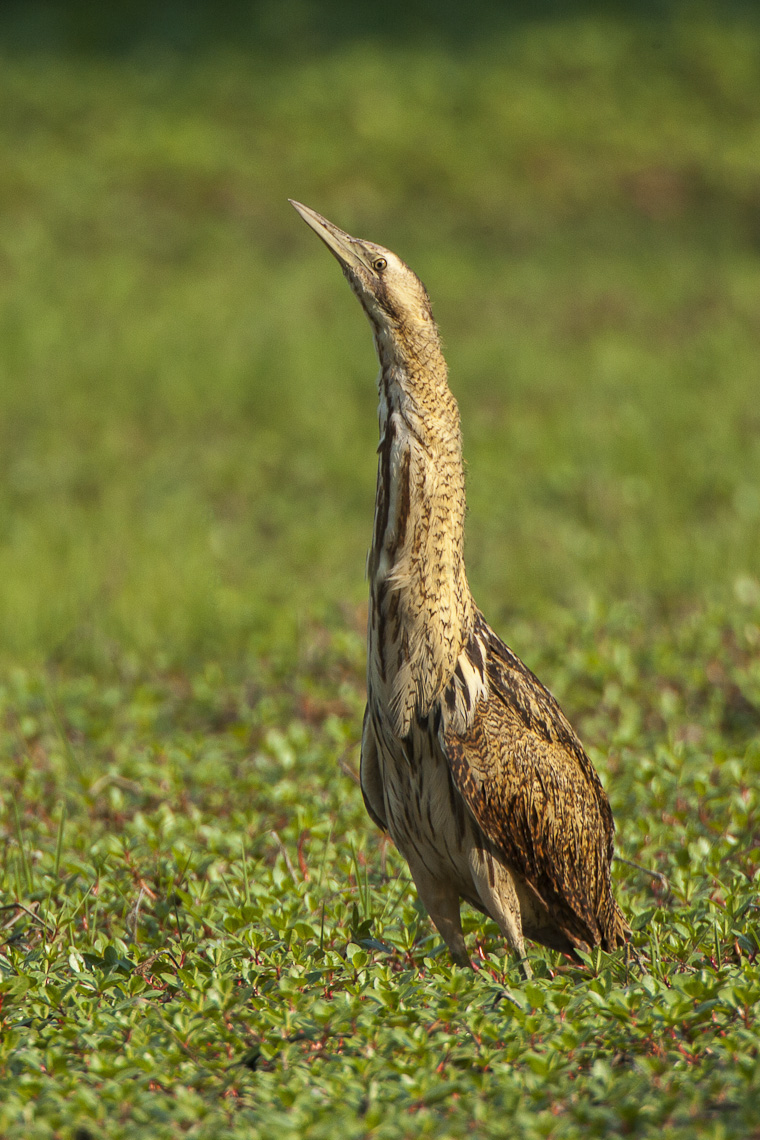 Eurasian BitternBotaurus stellaris
Compare
Questions and answers
What is the scientific name of the White-eared Night Heron?
The scientific name of the White-eared Night Heron is Oroanassa magnifica. Written with its author, the full name is Oroanassa magnifica (Ogilvie-Grant, 1899).
Which family does the White-eared Night Heron belong to?
Oroanassa magnifica belongs to the family Ardeidae, in the order Pelecaniformes and the class Aves.
Where is the White-eared Night Heron found?
Checklists and occurrence records place Oroanassa magnifica in 5 countries: China, Bangladesh, Vietnam, Thailand and Cambodia.
What is the conservation status of the White-eared Night Heron?
The IUCN Red List category recorded for Oroanassa magnifica is Near Threatened (NT).
What other names does the White-eared Night Heron have?
Oroanassa magnifica is also known in English as White-eared Night-Heron.
How rare is a night heron?
The White-eared Night Heron has an estimated population of 1,500–15,000 mature individuals.[31]
Why is it called a night heron?
The White-eared Night Heron is mostly nocturnal.[18]
What do Night Herons like to eat?
The White-eared Night Heron's diet includes fish, shrimps, and invertebrates.[17]
Sources
Passages the profile rests on
- The male has predominantly blackish-brown plumage, chestnut sides to the neck, yellow lores, a black beak, and yellow-orange eyes. Source passage: “The male is mostly blackish-brown. The neck-sides are chestnut. The lores are yellow, and the beak is black. The eyes are yellow-orange.” — English Wikipedia
- The male has white postocular stripes and a white throat. Source passage: “The postocular stripes and throat are white.” — English Wikipedia
- The male has brown underparts marked with white streaks. Source passage: “The underparts are brown, with white streaks.” — English Wikipedia
- Females resemble males but have less distinctly patterned heads and necks. Source passage: “The female is similar to the male, but its head and neck are less distinctly patterned.” — English Wikipedia
- Female birds have whitish streaks on their backs and wings. Source passage: “The female also has whitish streaks on its back and wings.” — English Wikipedia
- Juveniles resemble females but have browner plumage and buff spots. Source passage: “The juvenile is similar to the female, but has a browner plumage and buff spots.” — English Wikipedia
- The species measures 54–56 cm in length. Source passage: “The length is 54–56 cm (21–22 in).” — English Wikipedia
- Its natural habitats include subtropical and tropical forests and rivers. Source passage: “Its natural habitat is subtropical or tropical forests and rivers.” — English Wikipedia
- The species has also been recorded in habitats modified by humans. Source passage: “It has also been found in human-modified habitats.” — English Wikipedia
- The species occurs in southern China, India, and northern Vietnam. Source passage: “This heron is found in southern China, India and northern Vietnam.” — English Wikipedia
- Its estimated geographic range covers approximately 2,180,000 km². Source passage: “Its range size is estimated at 2,180,000 km2 (840,000 sq mi).” — English Wikipedia
- The species was recorded in more than 30 localities during surveys conducted between 2001 and 2011. Source passage: “in the ten years from 2001 to 2011, surveys discovered it in more than 30 localities” — English Wikipedia
- The species was camera-trapped in Cambodia's Cardamom Mountains in 2017. Source passage: “In 2017, it was camera-trapped in the Cardamom Mountains.” — English Wikipedia
- The species was reported in India's Valmiki National Park in 2018. Source passage: “In 2018, it was also reported in Valmiki National Park, India” — English Wikipedia
- The species was discovered in Bangladesh's Sundarbans in 2022. Source passage: “It was discovered in the Sundarbans in Bangladesh in 2022.” — English Wikipedia
- The species was camera-trapped in India's Namdapha National Park in 2025. Source passage: “in 2025, it was once again camera-trapped in Namdapha National Park, India.” — English Wikipedia
- Its diet includes fish, shrimps, and invertebrates. Source passage: “It feeds on fish, shrimps and invertebrates.” — English Wikipedia
- The species is mostly nocturnal. Source passage: “Like other night herons, this species is mostly nocturnal.” — English Wikipedia
- Its territorial call is a deep, raspy sound described as whoaa, lasting approximately 0.3 seconds. Source passage: “Its territorial call is a deep, raspy whoaa, lasting about 0.3 seconds” — English Wikipedia
- The territorial call is repeated at intervals of 5–15 seconds. Source passage: “repeated every 5–15 seconds.” — English Wikipedia
- Breeding has been recorded in China and northern Vietnam. Source passage: “Breeding has been recorded in both Vietnam and China.” — English Wikipedia
- The species lays clutches containing 3–5 eggs. Source passage: “The clutch size is 3–5 eggs.” — English Wikipedia
- The nest is constructed in the shape of a circular tray. Source passage: “The nest is in the shape of a circular tray.” — English Wikipedia
- Breeding has been recorded in China and northern Vietnam. Source passage: “Breeding has been recorded in China and north Viet Nam” — datazone.birdlife.org
- Hatching has been observed in China during May. Source passage: “In China, hatching has been observed in May” — English Wikipedia
- The incubation period in China is approximately 25 days. Source passage: “with an incubation period of about 25 days.” — English Wikipedia
- Fledging has been observed in Vietnam in late April. Source passage: “In Vietnam, fledging has been observed in late April.” — English Wikipedia
- Breeding appears to occur earlier in Vietnam than in China. Source passage: “Breeding seems to occur earlier in Vietnam than in China.” — English Wikipedia
- Fledging occurs more than two months after hatching. Source passage: “fledging occurred more than two months after hatching” — English Wikipedia
- The IUCN Red List most recently assessed the species in 2025. Source passage: “White-eared Night Heron Oroanassa magnifica has most recently been assessed for The IUCN Red List of Threatened Species in 2025.” — iucnredlist.org
- The species has an estimated population of 1,500–15,000 mature individuals. Source passage: “its population (1,500 – 15,000 mature individuals)” — English Wikipedia
- Habitat loss and habitat fragmentation threaten the species. Source passage: “It is threatened by habitat loss and habitat fragmentation.” — English Wikipedia
- Deforestation, hunting, overfishing, and water pollution are identified as threats to the species. Source passage: “It is threatened by deforestation, hunting, overfishing and water pollution.” — English Wikipedia
- The species is listed as a Class II protected species in China. Source passage: “The species is listed as a Class II protected species in China.” — English Wikipedia
- The species occurs in China's Chebaling National Nature Reserve. Source passage: “such as the Chebaling National Nature Reserve” — English Wikipedia
- The species occurs in Vietnam's Ba Be National Park. Source passage: “and Ba Be National Park.” — English Wikipedia
Data
- Catalogue of Life, 2026-10-16 XR cc by
- Global Biodiversity Information Facility CC BY 4.0
- Wikidata CC0
- GeoNames CC BY 4.0
- Wikimedia Commons per image; credit shown with each image
- Within the Catalogue of Life, this name comes from The Integrated Taxonomic Information System cc0
This species in other databases
Page built on 26 November 2026. See how the catalog is made and all sources and licences.
Cite this page
ScientificNames.org. (2026). Oroanassa magnifica (White-eared Night Heron). Retrieved November 26, 2026, from https://scientificnames.org/species/oroanassa-magnifica
“Oroanassa magnifica (White-eared Night Heron).” ScientificNames.org, 2026, scientificnames.org/species/oroanassa-magnifica. Accessed 26 Nov. 2026.
ScientificNames.org. “Oroanassa magnifica (White-eared Night Heron).” Accessed November 26, 2026. https://scientificnames.org/species/oroanassa-magnifica.
@misc{scientificnames_oroanassa_magnifica_white_eared_night_heron,
  author = {{ScientificNames.org}},
  title = {Oroanassa magnifica (White-eared Night Heron)},
  year = {2026},
  url = {https://scientificnames.org/species/oroanassa-magnifica},
  note = {Accessed 2026-11-26}
}