Species · Insects
Parectopa thermopsella
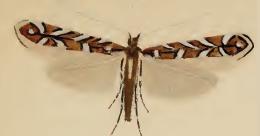
Parectopa thermopsella has no English name on record in the checklists used here. It is a species of insect in the family Gracillariidae (gracillariid), order Lepidoptera. The name dates from 1875.
- Scientific name
- Parectopa thermopsella (Chambers, 1875)
- Genus
- Parectopa
- Family
- Gracillariidae (Gracillariid)
- Order
- Lepidoptera
- Class
- Insecta
- Recorded in
- 1 country
- Name status
- accepted in the Catalogue of Life
Overview
The species is recorded from Colorado in the United States. Its larvae create flat, irregular mines on the upper surface of host plant leaves.
Written 28 November 2026 from the sources listed below. Each statement was checked against the passage it cites; statements that could not be supported were removed.
Diet
The larvae feed on Thermopsis fabacea var. montana, Thermopsis montana, and Thermopsis rhombifolia.[1]
Behaviour
The larvae create mines in the leaves of their host plants. The mines are flat, irregular, and located on the upper surface of the leaf.[2][3]
Classification of Parectopa thermopsella
| Kingdom | Animalia |
|---|---|
| Phylum | Arthropoda |
| Subphylum | Hexapoda |
| Class | Insecta (Insect) |
| Order | Lepidoptera |
| Superfamily | Gracillarioidea |
| Family | Gracillariidae (Gracillariid) |
| Subfamily | Ornixolinae |
| Genus | Parectopa |
| Species | Parectopa thermopsella (Chambers, 1875) |
Where Parectopa thermopsella is found
Checklists and occurrence records place Parectopa thermopsella in 1 country across North America.
Countries
Regions and cities with the most records
Range as the checklists state it
US, Colorado
A number beside a place is its count of GBIF occurrence records. A place without a number comes from a checklist alone. Records show where a species has been observed or collected, which can include escapes and vagrants.
Related species
-
 Locust Digitate LeafminerParectopa robiniella
-
 Parectopa plantaginisella
-
 Parectopa bumeliella
-
 Clover SlenderParectopa ononidis
- Parectopa refulgens
- Parectopa clethrata
- Parectopa lithomacha
- Parectopa dactylota
Compare
Questions and answers
Where is Parectopa thermopsella recorded?
It is recorded from Colorado in the United States.[4]
Which plants do the larvae feed on?
The larvae feed on Thermopsis fabacea var. montana, Thermopsis montana, and Thermopsis rhombifolia.[1]
What do the leaf mines look like?
The leaf mines are flat, irregular, and located on the upper surface of the leaf.[3]
Sources
Passages the profile rests on
- The larvae feed on Thermopsis fabacea var. montana, Thermopsis montana, and Thermopsis rhombifolia. Source passage: “The larvae feed on Thermopsis fabacea var. montana, Thermopsis montana and Thermopsis rhombifolia.” — English Wikipedia
- The larvae create mines in the leaves of their host plants. Source passage: “They mine the leaves of their host plant.” — English Wikipedia
- The leaf mine is flat, irregular, and located on the upper surface of the leaf. Source passage: “The mine has the form of a flat, irregular mine on the upperside of the leaf.” — English Wikipedia
- Parectopa thermopsella is recorded from Colorado in the United States. Source passage: “It is known from the Colorado, United States.” — English Wikipedia
Data
- Catalogue of Life, 2026-10-16 XR cc by
- Wikidata CC0
- GeoNames CC BY 4.0
- Within the Catalogue of Life, this name comes from Global Taxonomic Database of Gracillariidae cc by
References
- Chambers, V. T. (1875). Teneina [sic] of Colorado. https://www.biodiversitylibrary.org/page/5252000 Link where the name was published
This species in other databases
Page built on 28 November 2026. See how the catalog is made and all sources and licences.
Cite this page
ScientificNames.org. (2026). Parectopa thermopsella. Retrieved November 28, 2026, from https://scientificnames.org/species/parectopa-thermopsella
“Parectopa thermopsella.” ScientificNames.org, 2026, scientificnames.org/species/parectopa-thermopsella. Accessed 28 Nov. 2026.
ScientificNames.org. “Parectopa thermopsella.” Accessed November 28, 2026. https://scientificnames.org/species/parectopa-thermopsella.
@misc{scientificnames_parectopa_thermopsella,
  author = {{ScientificNames.org}},
  title = {Parectopa thermopsella},
  year = {2026},
  url = {https://scientificnames.org/species/parectopa-thermopsella},
  note = {Accessed 2026-11-28}
}