Species · Molluscs
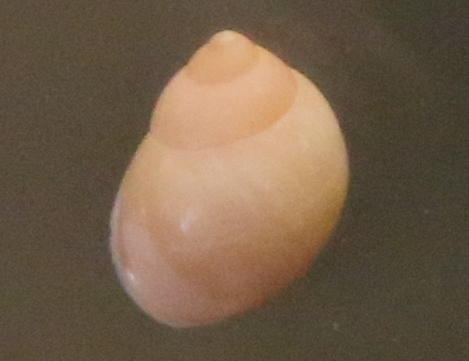
Moorean Viviparous Tree Snail Partula tohiveana
The scientific name of the Moorean Viviparous Tree Snail is Partula tohiveana. It is a species of mollusc in the family Partulidae (partulids). The name dates from 1924.
- Scientific name
- Partula tohiveana H. E. Crampton, 1924
- Common name
- Moorean Viviparous Tree Snail
- Genus
- Partula
- Family
- Partulidae (Partulids)
- Class
- Gastropoda
- Red List category
- CR Critically Endangered
- Environment
- terrestrial
- Recorded in
- 1 country
- Name status
- accepted in the Catalogue of Life

Overview
The Moorean Viviparous Tree Snail is an air-breathing tropical land snail. It inhabits the highlands of Moorea. It is recognized as the first invertebrate species successfully re-established after receiving an Extinct in the Wild IUCN status.
Written 27 November 2026 from the sources listed below. Each statement was checked against the passage it cites; statements that could not be supported were removed.
Appearance
The Moorean Viviparous Tree Snail is an air-breathing tropical land snail.[1]
Habitat
The Moorean Viviparous Tree Snail inhabits the highlands of Moorea. It is endemic to Moorea in French Polynesia.[2][3]
Conservation
The species was considered extinct in the wild from the 1980s until its re-establishment through reintroduction. Captive populations maintained through conservation breeding helped prevent it from becoming extinct.[4][5]
Conservation breeding and reintroduction efforts for Partula tree snails have been underway since 2015. The species was re-established through coordinated captive-breeding and wild-conservation efforts.[6][7]
A wild population was located on Moorea in 2024 following reintroductions conducted over the preceding decade. The species was officially considered re-established after wild-born snails were observed in September 2024.[8][9]
The species is currently classified as critically endangered.[10]
The introduction of invasive predators contributed to the extinction of most wild Partula tree snail populations in French Polynesia.[11]
Classification of the Moorean Viviparous Tree Snail
| Kingdom | Animalia |
|---|---|
| Phylum | Mollusca |
| Class | Gastropoda (Gastropod) |
| Subclass | Heterobranchia |
| Infraclass | Euthyneura |
| Subterclass | Tectipleura |
| Superorder | Eupulmonata |
| Infraorder | Pupilloidei |
| Family | Partulidae (Partulids) |
| Genus | Partula (Polynesian Tree Snails) |
| Species | Partula tohiveana H. E. Crampton, 1924 |
Where the Moorean Viviparous Tree Snail is found
Checklists and occurrence records place Partula tohiveana in 1 country. GBIF holds 34 georeferenced records of it.
Countries
Regions and cities with the most records
A number beside a place is its count of GBIF occurrence records. A place without a number comes from a checklist alone. Records show where a species has been observed or collected, which can include escapes and vagrants.
Common names
English
- Moorean Viviparous Tree Snail
- Mount Tohiea Partula
- Polynesian Tree Snail
Names in 1 other language
- tah
- Areho, areho Tohi'ea
Synonyms
One other scientific name has been used for this species and is now treated as a synonym of Partula tohiveana.
- Partula olympia H. E. Crampton, 1924
Subspecies and varieties
- Partula tohiveana olympia subspecies
- Partula tohiveana tohiveana subspecies
Related species
-
 Moorean Viviparous Tree SnailPartula suturalis
-
 Clarke's Tree SnailPartula clarkei
-
 Captain Cook's Bean SnailPartula faba
- Polynesian Tree SnailPartula nodosa
-
 Partula SnailPartula rosea
-
 Rose-tipped PartulaPartula hebe
- Moorean Viviparous Tree SnailPartula mirabilis
- Garrett's Tree SnailPartula garrettii
Compare
Questions and answers
What is the scientific name of the Moorean Viviparous Tree Snail?
The scientific name of the Moorean Viviparous Tree Snail is Partula tohiveana. Written with its author, the full name is Partula tohiveana H. E. Crampton, 1924.
Which family does the Moorean Viviparous Tree Snail belong to?
Partula tohiveana belongs to the family Partulidae and the class Gastropoda.
Where is the Moorean Viviparous Tree Snail found?
Checklists and occurrence records place Partula tohiveana in 1 country: French Polynesia.
What is the conservation status of the Moorean Viviparous Tree Snail?
The IUCN Red List category recorded for Partula tohiveana is Critically Endangered (CR).
What other names does the Moorean Viviparous Tree Snail have?
Partula tohiveana is also known in English as Mount Tohiea Partula and Polynesian Tree Snail.
Why are Partula snails important?
Partula tohiveana is recognized as the first invertebrate species successfully re-established after receiving an Extinct in the Wild IUCN status.[12]
Sources
Passages the profile rests on
- Partula tohiveana is an air-breathing tropical land snail. Source passage: “This species is a species of air-breathing tropical land snail” — English Wikipedia
- Partula tohiveana inhabits the highlands of Moorea. Source passage: “It is endemic to highlands on Moorea, French Polynesia.” — English Wikipedia
- Partula tohiveana is endemic to Moorea in French Polynesia. Source passage: “Partula tohiveana, the Tohiea tree snail, is a partulid endemic to Moorea” — English Wikipedia
- The species was considered extinct in the wild from the 1980s until its re-establishment through reintroduction. Source passage: “where it had previously been extinct in the wild since the 1980s.” — English Wikipedia
- Captive populations maintained through conservation breeding helped prevent Partula tohiveana from becoming extinct. Source passage: “their captive populations, especially under the care of Vivien Frame, saved P. tohiveana from extinction.” — repository.cam.ac.uk
- The species was re-established through coordinated captive-breeding and wild-conservation efforts. Source passage: “This is the first Extinct in the Wild invertebrate species to have been re-established through coordinated, interdisciplinary ex situ and in situ conservation actions.” — repository.cam.ac.uk
- Conservation breeding and reintroduction efforts for Partula tree snails have been underway since 2015. Source passage: “Ten species survive only in ex situ conservation breeding centres and reintroduction attempts have been underway since 2015.” — repository.cam.ac.uk
- Partula tohiveana was officially considered re-established after wild-born snails were observed in September 2024. Source passage: “In September 2024, following a reintroduction campaign by Cambridge University and several zoos across the world, "born in the wild" snails have been observed for the first time in 40 years, thus, the species is officially considered re-established.” — English Wikipedia
- A wild population was located on Moorea in 2024 following reintroductions conducted over the preceding decade. Source passage: “In 2024, a wild population of Partula tohiveana was located, formed as a result of reintroductions to Moorea Island over the previous decade.” — repository.cam.ac.uk
- The species is currently classified as critically endangered. Source passage: “It is now critically endangered” — English Wikipedia
- The introduction of invasive predators contributed to the extinction of most wild Partula tree snail populations in French Polynesia. Source passage: “Most Partula tree snails of French Polynesia are categorized as Extinct on the IUCN Red List as a result of the introduction of invasive predators.” — repository.cam.ac.uk
- Partula tohiveana is recognized as the first invertebrate species successfully re-established after receiving an Extinct in the Wild IUCN status. Source passage: “Partula tohiveana is the first invertebrate species to successfully be re-established following an Extinct in the Wild IUCN status.” — English Wikipedia
Data
- Catalogue of Life, 2026-10-16 XR cc by
- Global Biodiversity Information Facility CC BY 4.0
- Wikidata CC0
- GeoNames CC BY 4.0
- Wikimedia Commons per image; credit shown with each image
- Within the Catalogue of Life, this name comes from World Register of Marine Species cc by
References
- Crampton, H. E. (1924). New and significant species of Partula from Moorea, Society Islands. The Nautilus, 37. where the name was published
This species in other databases
Page built on 28 November 2026. See how the catalog is made and all sources and licences.
Cite this page
ScientificNames.org. (2026). Partula tohiveana (Moorean Viviparous Tree Snail). Retrieved November 28, 2026, from https://scientificnames.org/species/partula-tohiveana
“Partula tohiveana (Moorean Viviparous Tree Snail).” ScientificNames.org, 2026, scientificnames.org/species/partula-tohiveana. Accessed 28 Nov. 2026.
ScientificNames.org. “Partula tohiveana (Moorean Viviparous Tree Snail).” Accessed November 28, 2026. https://scientificnames.org/species/partula-tohiveana.
@misc{scientificnames_partula_tohiveana_moorean_viviparous_tree_snail,
  author = {{ScientificNames.org}},
  title = {Partula tohiveana (Moorean Viviparous Tree Snail)},
  year = {2026},
  url = {https://scientificnames.org/species/partula-tohiveana},
  note = {Accessed 2026-11-28}
}