Species · Birds
Capped Heron Pilherodius pileatus
The scientific name of the Capped Heron is Pilherodius pileatus. It is a species of bird in the family Ardeidae (heron), order Pelecaniformes. The name dates from 1783.
- Scientific name
- Pilherodius pileatus (Boddaert, 1783)
- Common name
- Capped Heron
- Genus
- Pilherodius
- Family
- Ardeidae (Heron)
- Order
- Pelecaniformes
- Class
- Aves
- Red List category
- LC Least Concern
- Recorded in
- 13 countries
- Name status
- accepted in the Catalogue of Life

Overview
The Capped Heron (Pilherodius pileatus) is a bird in the family Ardeidae, order Pelecaniformes, and class Aves, and is the only species classified in the genus Pilherodius. The Capped Heron is endemic to the Neotropics and inhabits rainforest from central Panama to southern Brazil.
Written 26 November 2026 from the sources listed below. Each statement was checked against the passage it cites; statements that could not be supported were removed.
Appearance
Adult males and females have no noted differences in color or brightness. Juveniles resemble adults but have slightly grey rather than white feathers.[1][2]
Adult Capped Herons measure 510–590 mm in body length. Their wing chord measures 263 to 280 mm, tail length 95 to 103 mm, tarsus length 92 to 99 mm, and body weight 444 to 632 g.[3][4][5][6][7]
Habitat
The Capped Heron inhabits lowland areas up to 900 m above sea level. In Venezuela, it occurs only below 500 m elevation, and in Ecuador, only below 400 m elevation.[8][9][10]
The species normally inhabits swamps and ditches in wet grasslands or rainforests. It sometimes enters deeper ponds and rivers and has also been observed in coffee plantation trenches and flooded rice fields.[11][12][13]
The Capped Heron is endemic to the Neotropics and occurs in Bolivia, Brazil, Colombia, Ecuador, French Guiana, Panama, Paraguay, Peru, Suriname, and Venezuela. It inhabits rainforest from central Panama to southern Brazil.[14][15][16]
Diet
Fish are the principal prey of the Capped Heron. Fish captured by the species generally measure between 1 and 5 cm long.[17][18]
The species also eats aquatic insects, insect larvae, tadpoles, and frogs.[19]
Behaviour
The Capped Heron is active during daytime or twilight and usually hunts alone. It generally avoids large mixed-species feeding flocks.[20][21][22]
The species usually walks slowly through shallow water, repeatedly covering the same area and pausing for several seconds. It frequently moves between feeding sites and may fly distances of up to 100 m.[23][24]
The Capped Heron is strongly territorial, with individuals sometimes remaining at the same feeding site for weeks. It appears submissive to Great Egrets but dominant over Snowy Egrets and Striated Herons.[25][26]
The species is believed to be sedentary, although seasonal movements may occur in Darien, Panama.[27]
Reproduction and life cycle
Captive breeding observations indicate that a female may lay between two and four dull white eggs. The reported incubation period for captive Capped Herons is 26–27 days, and the chicks have white down.[28][29][30]
Captive breeding individuals in Miami failed to produce surviving young. The species may have two breeding cycles, with northern and southern populations breeding at different times of year.[31][32]
Conservation
The species may face long-term threats from riverine forest loss caused by logging and conversion of forest to pasture.[33]
Similar species
The Capped Heron is superficially similar in appearance to night herons. Its closest identified phylogenetic relative is the Whistling Heron.[34][35]
Classification of the Capped Heron
| Kingdom | Animalia |
|---|---|
| Phylum | Chordata |
| Subphylum | Vertebrata |
| Infraphylum | Gnathostomata |
| Parvphylum | Osteichthyes |
| Megaclass | Tetrapoda |
| Class | Aves (Bird) |
| Order | Pelecaniformes (Herons) |
| Family | Ardeidae (Heron) |
| Genus | Pilherodius (Capped Heron) |
| Species | Pilherodius pileatus (Boddaert, 1783) |
Where the Capped Heron is found
Checklists and occurrence records place Pilherodius pileatus in 13 countries across North America and South America. GBIF holds 41,391 georeferenced records of it.
Countries
- Argentina 34
- Bolivia 1,222
- Brazil 14,168
- Colombia 7,833
- Ecuador 4,059
- French Guiana 103
- Guyana 708
- Panama 1,499
- Paraguay 108
- Peru 9,670
- Suriname 358
- United States 5
- Venezuela 1,624
Regions and cities with the most records
- Mato Grosso, Brazil 7,217
- Madre de Dios, Peru 5,701
- Loreto, Peru 2,728
- Sucumbíos, Ecuador 2,475
- Meta Department, Colombia 2,106
- Amazonas, Brazil 1,440
- Orellana Province, Ecuador 1,362
- Rio de Janeiro, Brazil 1,195
- Mato Grosso do Sul, Brazil 1,018
- Puerto Maldonado, Peru 949
- Cachoeiras de Macacu, Brazil 917
- Villavicencio, Colombia 908
- Cuzco Department, Peru 821
- Poconé, Brazil 717
- Restrepo, Colombia 649
- Pará, Brazil 618
- Antioquia, Colombia 603
- Tambopata, Peru 566
- Alcalde Díaz, Panama 562
- Darién, Panama 554
- Chilibre, Panama 525
- Panamá, Panama 512
- Santa Cruz Department, Bolivia 512
- Casanare Department, Colombia 469
- Córdoba, Colombia 415
- Beni Department, Bolivia 395
- Panama City, Panama 391
- Minas Gerais, Brazil 387
- Tolima Department, Colombia 385
- San Miguelito, Panama 375
- Bolívar, Venezuela 373
- São Paulo, Brazil 366
- Upper Takutu-Upper Essequibo, Guyana 363
- Curundú, Panama 358
- Guaviare Department, Colombia 358
- Santander Department, Colombia 358
Range as the checklists state it
Middle America
South America
A number beside a place is its count of GBIF occurrence records. A place without a number comes from a checklist alone. Records show where a species has been observed or collected, which can include escapes and vagrants.
Common names
English
- Capped Heron
Names in 28 other languages
- Arabic
- بلشون ذو القبعة
- Bulgarian
- Чернотеменна чапла
- Catalan
- martinet becblau
- Chinese
- 嘯鷺, 蓝嘴黑顶鹭
- Croatian
- bijeli gak
- Czech
- volavka černohlavá
- Danish
- Kalothejre
- Dutch
- Kapreiger
- Esperanto
- nigraĉapa ardeo
- Estonian
- tanuhaigur
- Finnish
- kalottihaikara
- French
- Aigrette coiffée, Héron coiffé
- German
- Kappenreiher
- Hungarian
- kucsmás gém
- Italian
- Airone dal cappuccio, Airone pileato
- Japanese
- シロゴイサギ
- Lithuanian
- Pietų Amerikos naktikovis
- Norwegian
- kalotthegre
- Polish
- czapla modrolica
- Portuguese
- Garça-real, garça-de-barrete, garça-real-neotropical
- Russian
- Капюшоновая цапля, Южноамериканская кваква
- Serbian
- Kapasta čaplja
- Slovak
- volavka čiapočkatá
- Spanish
- Garcita Real, Garza capirotada, Garza real, garcilla peinada, garza pileada
- Swedish
- svartkronad häger
- Turkish
- Başlıklı Ak Balıkçıl
- Ukrainian
- чапля неотропічна
- grn
- Hoko sa'yju
Synonyms
5 other scientific names have been used for this species and are now treated as synonyms of Pilherodius pileatus.
- Ardea pileata Boddaert, 1783
- Ardea pileata Latham, J, 1790
- Nycticorax pileatus Boddaert, P, 1783
- Nycticorax pileatus pileatus Stotz et al. (1996)
- Nyctocorax pileatus Boddaert, P, 1783
Related species
-
 Great Blue HeronArdea herodias
-
 Great EgretArdea alba
-
 Grey HeronArdea cinerea
-
 Little EgretEgretta garzetta
-
 Black-crowned Night HeronNycticorax nycticorax
-
 Green HeronButorides virescens
-
 Western Cattle EgretArdea ibis
-
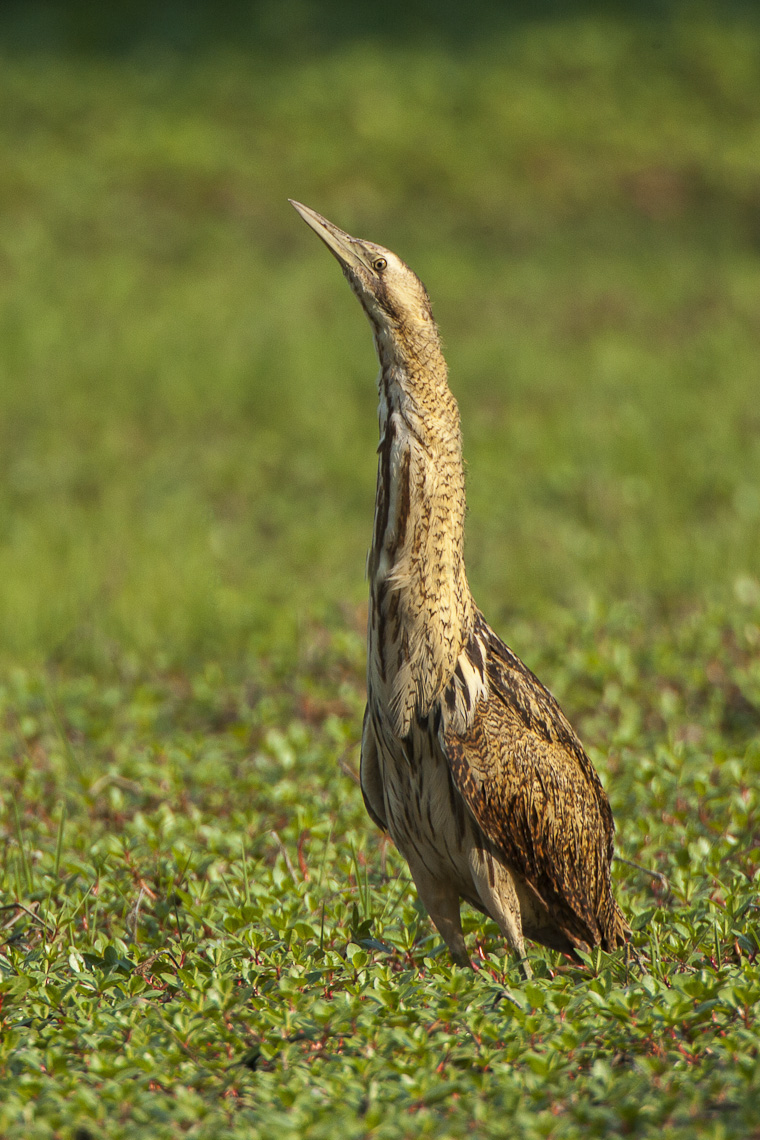 Eurasian BitternBotaurus stellaris
Compare
Questions and answers
What is the scientific name of the Capped Heron?
The scientific name of the Capped Heron is Pilherodius pileatus. Written with its author, the full name is Pilherodius pileatus (Boddaert, 1783).
Which family does the Capped Heron belong to?
Pilherodius pileatus belongs to the family Ardeidae, in the order Pelecaniformes and the class Aves.
Where is the Capped Heron found?
Checklists and occurrence records place Pilherodius pileatus in 13 countries, including Brazil, Peru, Colombia, Ecuador, Venezuela and Panama.
What is the conservation status of the Capped Heron?
The IUCN Red List category recorded for Pilherodius pileatus is Least Concern (LC).
Sources
Passages the profile rests on
- Adult males and females have no noted differences in color or brightness. Source passage: “No sexual dimorphism in color or brightness has been noted.” — English Wikipedia
- Juveniles resemble adults but have slightly grey rather than white feathers. Source passage: “The juveniles are very similar to the adults. They only differ in body length and that the white feathers are slightly grey.” — English Wikipedia
- Adult Capped Herons measure 510–590 mm in body length. Source passage: “The body length of an adult varies between 510 and 590 mm” — English Wikipedia
- Adult wing chord measurements range from 263 to 280 mm. Source passage: “the wing chords between 263 and 280 mm” — English Wikipedia
- Adult tail length ranges from 95 to 103 mm. Source passage: “the tail between 95 and 103 mm” — English Wikipedia
- Adult tarsus length ranges from 92 to 99 mm. Source passage: “the tarsus between 92 and 99 mm.” — English Wikipedia
- Adult body weight ranges from 444 to 632 g. Source passage: “The weight of an adult varies between 444 and 632 g.” — English Wikipedia
- The species inhabits lowland areas up to 900 m above sea level. Source passage: “It inhabits low lands up to 900 m above sea level” — English Wikipedia
- In Venezuela, the species occurs only below 500 m elevation. Source passage: “in Venezuela it is only found below 500 m” — English Wikipedia
- In Ecuador, the species occurs only below 400 m elevation. Source passage: “and in Ecuador below 400 m.” — English Wikipedia
- The species normally inhabits swamps and ditches in wet grasslands or rainforests. Source passage: “It normally inhabits swamps and ditches in wet grasslands or rainforests.” — English Wikipedia
- The species sometimes enters deeper ponds and rivers. Source passage: “Sometimes it can venture into deeper ponds and rivers.” — English Wikipedia
- The species has also been observed in coffee plantation trenches and flooded rice fields. Source passage: “but has also been observed in trenches of coffee plantations and flooded rice fields.” — English Wikipedia
- The Capped Heron is endemic to the Neotropics. Source passage: “The capped heron is endemic to the neotropics” — English Wikipedia
- The species occurs in Bolivia, Brazil, Colombia, Ecuador, French Guiana, Panama, Paraguay, Peru, Suriname, and Venezuela. Source passage: “It is present in Bolivia, Brazil, Colombia, Ecuador, French Guiana, Panama, Paraguay, Peru, Suriname, and Venezuela.” — English Wikipedia
- The species inhabits rainforest from central Panama to southern Brazil. Source passage: “inhabiting rainforest from the center of Panama to the south of Brazil.” — English Wikipedia
- Fish are the principal prey of the Capped Heron. Source passage: “Capped herons hunt mainly for fish” — English Wikipedia
- Fish captured by the species generally measure between 1 and 5 cm long. Source passage: “Fish taken as prey tend to be between 1 and 5 cm long.” — English Wikipedia
- The species also eats aquatic insects, insect larvae, tadpoles, and frogs. Source passage: “but also aquatic insects and larvae, tadpoles, and frogs.” — English Wikipedia
- The Capped Heron is active during daytime or twilight. Source passage: “but is active during daytime or at twilight.” — English Wikipedia
- The species usually hunts alone. Source passage: “They usually hunt solitarily.” — English Wikipedia
- The species generally avoids large mixed-species feeding flocks. Source passage: “other studies have found that they avoid large mixed-species flocks” — English Wikipedia
- The species usually walks slowly through shallow water, repeatedly covering the same area and pausing for several seconds. Source passage: “They usually walk slowly, covering the same area repeatedly pausing for a few seconds” — English Wikipedia
- The species frequently moves between feeding sites and may fly distances of up to 100 m. Source passage: “Capped herons move frequently between feeding sites, sometimes flying up to 100m.” — English Wikipedia
- The species is strongly territorial, with individuals sometimes remaining at the same feeding site for weeks. Source passage: “Capped herons are strongly territorial; the same bird may be seen at a foraging site for weeks at a time.” — English Wikipedia
- The Capped Heron appears submissive to Great Egrets but dominant over Snowy Egrets and Striated Herons. Source passage: “Capped herons appear to be submissive to great egrets (Ardea alba), but dominant to snowy egrets (Egretta thula) and striated herons (Butorides striatus).” — English Wikipedia
- The species is believed to be sedentary, although seasonal movements may occur in Darien, Panama. Source passage: “Although there are no migrations registered to this species and it is believed that is sedentary, there may be seasonal movements in Darien, Panama.” — English Wikipedia
- Captive breeding observations indicate that a female may lay between two and four dull white eggs. Source passage: “a female may lay 2-4 dull white eggs” — English Wikipedia
- The reported incubation period for captive Capped Herons is 26–27 days. Source passage: “incubation lasts 26–27 days” — English Wikipedia
- Capped Heron chicks have white down. Source passage: “and that the chick has white down.” — English Wikipedia
- Captive breeding individuals in Miami failed to produce surviving young. Source passage: “However, these captive individuals failed to have any young survive” — English Wikipedia
- The species may have two breeding cycles, with northern and southern populations breeding at different times of year. Source passage: “There may be a two-cycle breeding pattern, with northern and southern populations breeding at different times of the year.” — English Wikipedia
- The species may face long-term threats from riverine forest loss caused by logging and conversion of forest to pasture. Source passage: “the loss of this habitat due to logging and conversion of forest to pasture might pose long-term threats.” — English Wikipedia
- The Capped Heron is superficially similar in appearance to night herons. Source passage: “It is superficially similar to the group of the night herons” — English Wikipedia
- The Capped Heron's closest identified phylogenetic relative is the Whistling Heron. Source passage: “A molecular phylogenetic study published in 2023 found that the capped heron is sister to the whistling heron (Syrigma sibilatrix).” — English Wikipedia
Data
- Catalogue of Life, 2026-10-16 XR cc by
- Global Biodiversity Information Facility CC BY 4.0
- Wikidata CC0
- GeoNames CC BY 4.0
- Wikimedia Commons per image; credit shown with each image
- Within the Catalogue of Life, this name comes from The Integrated Taxonomic Information System cc0
References
- Gill, Frank, & and Minturn Wright. (2006). Birds of the World: Recommended English Names.
This species in other databases
Page built on 28 November 2026. See how the catalog is made and all sources and licences.
Cite this page
ScientificNames.org. (2026). Pilherodius pileatus (Capped Heron). Retrieved November 28, 2026, from https://scientificnames.org/species/pilherodius-pileatus
“Pilherodius pileatus (Capped Heron).” ScientificNames.org, 2026, scientificnames.org/species/pilherodius-pileatus. Accessed 28 Nov. 2026.
ScientificNames.org. “Pilherodius pileatus (Capped Heron).” Accessed November 28, 2026. https://scientificnames.org/species/pilherodius-pileatus.
@misc{scientificnames_pilherodius_pileatus_capped_heron,
  author = {{ScientificNames.org}},
  title = {Pilherodius pileatus (Capped Heron)},
  year = {2026},
  url = {https://scientificnames.org/species/pilherodius-pileatus},
  note = {Accessed 2026-11-28}
}