Species · Birds
Blue-winged Macaw Primolius maracana
The scientific name of the Blue-winged Macaw is Primolius maracana. It is a species of bird in the family Psittacidae (macaws), order Psittaciformes. The name dates from 1816.
- Scientific name
- Primolius maracana (Vieillot, 1816)
- Common name
- Blue-winged Macaw
- Genus
- Primolius
- Family
- Psittacidae (Macaws)
- Order
- Psittaciformes
- Class
- Aves
- Red List category
- LC Least Concern
- Recorded in
- 3 countries
- Name status
- accepted in the Catalogue of Life

Overview
Primolius maracana occurs in eastern and southern Brazil, with a remnant population in the northeast. It has predominantly green plumage, blue flight feathers, a long tail and red patches on its tail base and belly.
Written 26 November 2026 from the sources listed below. Each statement was checked against the passage it cites; statements that could not be supported were removed.
Appearance
The Blue-winged Macaw has predominantly green plumage, blue upper surfaces of its flight feathers and primary coverts, and yellowish undersides of its wings. Its tail tip, crown and cheeks are bluish, while its tail base and small belly patch are red.[1][2][3][4][5]
It has a moderately sized black bill and a long tail. Its bare facial skin is yellowish, although this coloration often fades to white in captivity.[6][7]
Unlike the red-bellied macaw, it has a red lower abdomen and red lower back. Its total body length is approximately 36–43 cm.[8][9]
Habitat
The Blue-winged Macaw inhabits evergreen and deciduous forests and prefers gallery forests.[10][11]
Diet
Its diet includes seeds of Cnidoscolus phyllacanthus and the non-native Melia azedarach. It also consumes fruits and nuts.[12][13][14]
Behaviour
The species is intensely social. Its flight pattern in the wild has been described as a distinctive jerky, rearing motion.[15][16]
In captivity, it is an avid chewer that may damage its keeper's property.[17]
Reproduction and life cycle
The Blue-winged Macaw reaches sexual maturity between two and four years of age. Adult females usually lay two eggs, which take approximately 29 days to hatch.[18][19][20]
Young birds learn to fly approximately 11 weeks after hatching and remain with their parents for approximately one year after learning to fly.[21][22]
The breeding season in northeastern Brazil apparently occurs from December to February.[23]
A female of this species was recorded with a male Spix's macaw at one site in 1990.[24]
Conservation
Deforestation is a major threat to the Blue-winged Macaw. The species has also been captured for the cagebird trade.[25][26]
Between 1977 and 1979, 183 individuals were imported into the United States from Paraguay. The species has declined in the southern part of its geographic range.[27][28]
There are no recent records of the species from Misiones Province in Argentina. Many individuals were killed by farmers in Misiones Province because they were considered pests.[29][30]
Information from Brazil indicates that the species remains widespread. It has recolonized areas within its historical range in southern Rio de Janeiro.[31][32]
Its conservation status was downlisted to near threatened.[33]
Uses
The Blue-winged Macaw is sometimes kept as an aviary bird or companion parrot. Captive breeding is encouraged because of conservation concerns.[34][35]
Classification of the Blue-winged Macaw
| Kingdom | Animalia |
|---|---|
| Phylum | Chordata |
| Subphylum | Vertebrata |
| Infraphylum | Gnathostomata |
| Parvphylum | Osteichthyes |
| Megaclass | Tetrapoda |
| Class | Aves (Bird) |
| Order | Psittaciformes (Parrot) |
| Family | Psittacidae (Macaws) |
| Genus | Primolius (Primolius Macaws) |
| Species | Primolius maracana (Vieillot, 1816) |
Where the Blue-winged Macaw is found
Checklists and occurrence records place Primolius maracana in 3 countries across South America. GBIF holds 16,847 georeferenced records of it.
Countries
Regions and cities with the most records
- Rio de Janeiro, Brazil 5,355
- Minas Gerais, Brazil 4,453
- Mato Grosso, Brazil 2,131
- Itatiaia, Brazil 1,548
- Resende, Brazil 1,472
- Espírito Santo, Brazil 1,370
- Bahia, Brazil 1,313
- Piranga, Brazil 861
- Chapada dos Guimarães, Brazil 813
- Catete, Brazil 799
- Rio de Janeiro, Brazil 791
- Estácio, Brazil 789
- Santa Teresa, Brazil 788
- Niterói, Brazil 786
- Botafogo, Brazil 778
- Ipanema, Brazil 757
- Teresópolis, Brazil 736
- Leblon, Brazil 735
- São Pedro, Brazil 731
- Guapimirim, Brazil 649
- São Gonçalo, Brazil 620
- Rocinha, Brazil 591
- Vidigal, Brazil 591
- Espera Feliz, Brazil 558
- Carangola, Brazil 526
- Freguesia, Brazil 481
- Sooretama, Brazil 439
- Pará, Brazil 430
- Petrópolis, Brazil 402
- Lima Duarte, Brazil 380
- Magé, Brazil 370
- Santa Catarina, Brazil 321
- São Paulo, Brazil 318
- Itanhandu, Brazil 317
- Mato Grosso do Sul, Brazil 308
- Porto Real, Brazil 305
2 more countries have a few records outside this range
These countries hold a few records of Primolius maracana but lie outside the range the checklists give for it. Such records are often zoo or garden specimens, museum material or vagrants, so the species is not counted as occurring there.
Range as the checklists state it
South America
A number beside a place is its count of GBIF occurrence records. A place without a number comes from a checklist alone. Records show where a species has been observed or collected, which can include escapes and vagrants.
Common names
English
- Blue-winged Macaw
- Illiger's Macaw
Names in 32 other languages
- Arabic
- مكاو أزرق الجناح
- Bulgarian
- Син ара, Синьокрил ара
- Catalan
- guacamai alablau
- Chinese
- 蓝翅金刚鹦鹉, 藍翅金剛鸚鵡, 藍翅麥鷍
- Croatian
- modrokrila ara
- Czech
- Ara marakána
- Danish
- Rødrygget Dværgara
- Dutch
- Illigers Ara
- Esperanto
- bluflugila arao
- Estonian
- roheaara
- Finnish
- brasilianara
- French
- Ara d'Illiger, Ara d’Illiger
- German
- Blauflügelara, Maracana, Marakana, Rotrückenara
- Hungarian
- maracana-ara, marakánaara
- Italian
- Ara aliblu
- Japanese
- アカビタイヒメコンゴウインコ
- Lithuanian
- mėlynsparnė arara
- Norwegian
- rødbukara
- Persian
- مکائو بالآبی
- Polish
- (ara) marakana
- Portuguese
- Maracanã-verdadeiro, arara-d'asa-azul, maracanã, maracanã-verdadeira
- Russian
- Красноспинный ара, Синекрылый ара
- Serbian
- Plavokrila ara
- Slovak
- ara marakana
- Spanish
- Guacamayo maracaná, Maracaná lomo rojo
- Swedish
- blåvingad ara
- Turkish
- Mavi Kanatlı Ara
- Ukrainian
- маракана червоночеревий
- Urdu
- نیل پر مکاؤ
- Welsh
- Macaw Illiger
- mrj
- Симсӹ шылдыран ара
- pnb
- نیل پرا میکاع
Synonyms
10 other scientific names have been used for this species and are now treated as synonyms of Primolius maracana.
- Ara maracana (Vieillot, 1816)
- Ara maracana maracana Collar & Andrew, 1988
- Ara maracana maracana Sibley & Monroe, 1990 [1993]
- Ara maracana maracana Stotz et al., 1996
- Ara maracana serrana Sztolcman, JS, 1926
- Macrocercus maracana Vieillot, 1816
- Propyrrhura maracana (Vieillot, 1816)
- Propyrrhura maracana SACC (2005)
- Propyrrhura maracana maracana BirdLife International, 2000
- Psittacus illigeri Kuhl, H, 1820
Related species
-
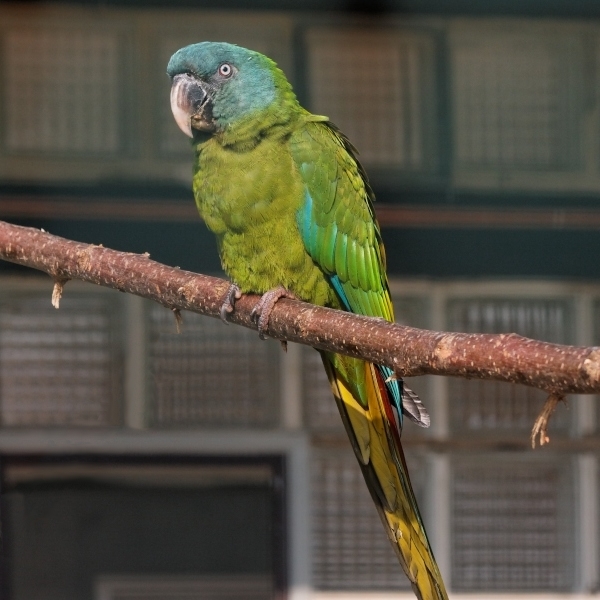 Blue-headed MacawPrimolius couloni
-
 Golden-collared MacawPrimolius auricollis
-
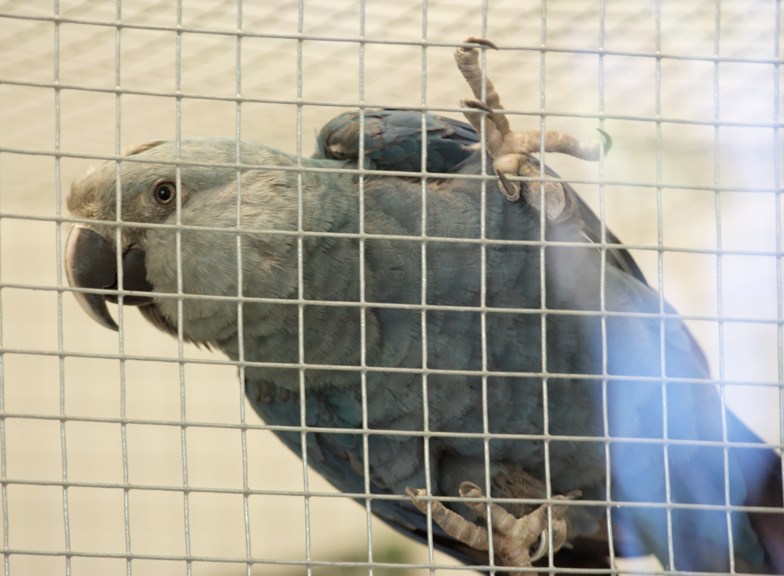 Spix's MacawCyanopsitta spixii
-
 Grey ParrotPsittacus erithacus
-
 Scarlet MacawAra macao
-
 Hyacinth MacawAnodorhynchus hyacinthinus
-
 Blue-and-yellow MacawAra ararauna
-
 Sun ConureAratinga solstitialis
Compare
Questions and answers
What is the scientific name of the Blue-winged Macaw?
The scientific name of the Blue-winged Macaw is Primolius maracana. Written with its author, the full name is Primolius maracana (Vieillot, 1816).
Which family does the Blue-winged Macaw belong to?
Primolius maracana belongs to the family Psittacidae, in the order Psittaciformes and the class Aves.
Where is the Blue-winged Macaw found?
Checklists and occurrence records place Primolius maracana in 3 countries: Brazil, Paraguay and Argentina.
What is the conservation status of the Blue-winged Macaw?
The IUCN Red List category recorded for Primolius maracana is Least Concern (LC).
What other names does the Blue-winged Macaw have?
Primolius maracana is also known in English as Illiger's Macaw.
What is a blue macaw diet?
The Blue-winged Macaw consumes seeds of Cnidoscolus phyllacanthus and the non-native Melia azedarach, as well as fruits and nuts.[12][13][14]
What kind of habitat do macaws live in?
The Blue-winged Macaw inhabits evergreen and deciduous forests and prefers gallery forests.[10][11]
Sources
Passages the profile rests on
- The species has predominantly green plumage. Source passage: “a mainly green plumage.” — English Wikipedia
- The species has blue upper surfaces of its flight feathers and primary coverts. Source passage: “The upperside of the remiges and primary coverts are blue” — English Wikipedia
- The underside of its wings is yellowish. Source passage: “The underside of the wings is yellowish” — English Wikipedia
- Its tail tip, crown and cheeks are bluish. Source passage: “the tail-tip, crown and cheeks are bluish” — English Wikipedia
- Its tail base and small belly patch are red. Source passage: “the tail-base and small belly-patch are red.” — English Wikipedia
- The species has a moderately sized black bill and a long tail. Source passage: “a moderately sized black bill, a long tail” — English Wikipedia
- Its bare facial skin is yellowish, although this coloration often fades to white in captivity. Source passage: “the bare facial-skin is yellowish, but this often fades to white in captivity.” — English Wikipedia
- Unlike the red-bellied macaw, it has a red lower abdomen and red lower back. Source passage: “the blue-winged has a red lower abdomen and a red lower back.” — English Wikipedia
- Its total body length is approximately 36–43 cm. Source passage: “It has a total length of approximately 36–43 cm (14–17 in).” — English Wikipedia
- The species inhabits evergreen and deciduous forests. Source passage: “It occurs in evergreen and deciduous forests” — English Wikipedia
- The species prefers gallery forests. Source passage: “with a preference for gallery forest.” — English Wikipedia
- Its diet includes seeds of Cnidoscolus phyllacanthus. Source passage: “They mainly feed on seeds of Cnidoscolus phyllacanthus” — English Wikipedia
- Its diet includes seeds of the non-native Melia azedarach. Source passage: “and the non-native Melia azedarach.” — English Wikipedia
- The species also consumes fruits and nuts. Source passage: “the birds also feed on fruits and nuts.” — English Wikipedia
- Its flight pattern in the wild has been described as a distinctive jerky, rearing motion. Source passage: “a distinctive "jerky, rearing motion".” — English Wikipedia
- The species is intensely social. Source passage: “An intensely social bird” — English Wikipedia
- In captivity, it is an avid chewer that may damage its keeper's property. Source passage: “It is also an avid chewer and may damage its keeper's property” — English Wikipedia
- The species reaches sexual maturity between two and four years of age. Source passage: “attain sexual maturity between 2 and 4 years after they are born.” — English Wikipedia
- Adult females usually lay two eggs. Source passage: “Adult females usually produce two eggs” — English Wikipedia
- Its eggs take approximately 29 days to hatch. Source passage: “which take approximately 29 days to hatch.” — English Wikipedia
- Young birds learn to fly approximately 11 weeks after hatching. Source passage: “Young blue-winged macaws learn to fly about 11 weeks after they have hatched.” — English Wikipedia
- Young birds remain with their parents for approximately one year after learning to fly. Source passage: “They stay with their parents for about a year after learning to fly.” — English Wikipedia
- The breeding season in northeastern Brazil apparently occurs from December to February. Source passage: “the breeding season in north-eastern Brazil is apparently from December to February.” — English Wikipedia
- A female of this species was recorded with a male Spix's macaw at one site in 1990. Source passage: “in 1990, a female blue-winged macaw was discovered with a male Spix's macaw in a site.” — English Wikipedia
- Deforestation is a major threat to the species. Source passage: “These birds are affected mostly by deforestation.” — English Wikipedia
- The species has been captured for the cagebird trade. Source passage: “They were also captured for the cagebird trade” — English Wikipedia
- Between 1977 and 1979, 183 individuals were imported into the United States from Paraguay. Source passage: “from 1977 to 1979, 183 birds arrived at the United States from Paraguay.” — English Wikipedia
- The species has declined in the southern part of its geographic range. Source passage: “It has declined in the southern part of its range” — English Wikipedia
- There are no recent records of the species from Misiones Province in Argentina. Source passage: “there are no recent records from Misiones Province in Argentina” — English Wikipedia
- Many individuals were killed by farmers in Misiones Province because they were considered pests. Source passage: “where many were killed by farmers who considered them pests.” — English Wikipedia
- Information from Brazil indicates that the species remains widespread. Source passage: “Information from Brazil suggests it remains widespread” — English Wikipedia
- The species has recolonized areas within its historical range in southern Rio de Janeiro. Source passage: “and has even re-colonised areas in its historical range in southern Rio de Janeiro.” — English Wikipedia
- Its conservation status was downlisted to near threatened. Source passage: “This has led to it being downlisted to near threatened.” — English Wikipedia
- The species is sometimes kept as an aviary bird or companion parrot. Source passage: “The blue-winged macaw is sometimes kept by humans as an aviary bird or companion parrot.” — English Wikipedia
- Captive breeding of the species is encouraged because of conservation concerns. Source passage: “Captive breeding of this species is encouraged, due to conservation concerns.” — English Wikipedia
Data
- Catalogue of Life, 2026-10-16 XR cc by
- Global Biodiversity Information Facility CC BY 4.0
- Wikidata CC0
- GeoNames CC BY 4.0
- Wikimedia Commons per image; credit shown with each image
- Within the Catalogue of Life, this name comes from The Integrated Taxonomic Information System cc0
References
- Dickinson, Edward C., ed. (2003). The Howard and Moore Complete Checklist of the Birds of the World, 3rd Edition.
- Gill, Frank, & and Minturn Wright. (2006). Birds of the World: Recommended English Names.
- Dickinson, E. C., and L. Christidis, eds. (2014). The Howard and Moore Complete Checklist of the Birds of the World, 4th Edition, Vol. 2 Passerines.
This species in other databases
Page built on 29 November 2026. See how the catalog is made and all sources and licences.
Cite this page
ScientificNames.org. (2026). Primolius maracana (Blue-winged Macaw). Retrieved November 29, 2026, from https://scientificnames.org/species/primolius-maracana
“Primolius maracana (Blue-winged Macaw).” ScientificNames.org, 2026, scientificnames.org/species/primolius-maracana. Accessed 29 Nov. 2026.
ScientificNames.org. “Primolius maracana (Blue-winged Macaw).” Accessed November 29, 2026. https://scientificnames.org/species/primolius-maracana.
@misc{scientificnames_primolius_maracana_blue_winged_macaw,
  author = {{ScientificNames.org}},
  title = {Primolius maracana (Blue-winged Macaw)},
  year = {2026},
  url = {https://scientificnames.org/species/primolius-maracana},
  note = {Accessed 2026-11-29}
}