Species · Flowering plants
Pyrus × Bretschneideri Pyrus bretschneideri
The scientific name of the Pyrus × Bretschneideri is Pyrus bretschneideri. It is a species of flowering plant in the family Rosaceae (rose family), order Rosales.
- Scientific name
- Pyrus bretschneideri Rehder
- Common name
- Pyrus × Bretschneideri
- Genus
- Pyrus
- Family
- Rosaceae (Rose Family)
- Order
- Rosales
- Class
- Magnoliopsida
- Recorded in
- 3 countries
- Name status
- accepted in the Catalogue of Life

Overview
The species is native to North China and grows primarily in temperate biomes. Its fruit has white to light yellow flesh, a juicy consistency, and a crisp texture in Ya pears.
Written 26 November 2026 from the sources listed below. Each statement was checked against the passage it cites; statements that could not be supported were removed.
Appearance
The fruit is narrow toward the stem end and resembles the shape of a European pear. Its flesh is white to light yellow and very juicy.[1][2]
Ya pears have a crisp texture.[3]
Habitat
The species grows primarily in temperate biomes.[4]
Uses
The species is cultivated for its edible fruit and is widely cultivated in China. Ya pear cultivars are exported around the world.[5][6][7]
Diet
The fruit has a mild Bosc-like taste, higher water content, and lower sugar content than the comparison described.[8][9]
Reproduction and life cycle
Pear species exhibit a gametophytic self-incompatibility breeding system. Reproduction under this system requires cross-pollination with polliniser cultivars of different genotypes.[10][11]
Similar species
Molecular genetic evidence indicates a relationship between Pyrus × Bretschneideri and the Siberian pear (Pyrus ussuriensis). The species can also be classified as a subspecies of the Chinese pear Pyrus pyrifolia.[12][13]
The species is classified among Asian pears alongside Pyrus pyrifolia and Pyrus sinkiangensis.[14]
Classification of the Pyrus × Bretschneideri
| Kingdom | Plantae |
|---|---|
| Subkingdom | Pteridobiotina |
| Phylum | Tracheophyta |
| Class | Magnoliopsida |
| Order | Rosales |
| Family | Rosaceae (Rose Family) |
| Subfamily | Amygdaloideae |
| Tribe | Maleae |
| Subtribe | Malinae |
| Genus | Pyrus (Pear) |
| Species | Pyrus bretschneideri Rehder |
Where the Pyrus × Bretschneideri is found
Checklists and occurrence records place Pyrus bretschneideri in 3 countries across Asia. GBIF holds 829 georeferenced records of it.
Countries
Regions and cities with the most records
- Hebei, China 170
- Shanxi, China 140
- Shaanxi, China 135
- Shandong, China 128
- Yuanping, China 113
- Hetoudian, China 84
- Laiyang, China 84
- Changli, China 60
- Gansu, China 58
- Qinhuangdao, China 41
- Longgang, China 38
- Liaoning, China 34
- Dingzhou, China 25
- Shiquan, China 21
- Henan, China 14
- Sichuan, China 11
- Beijing, China 9
- Anhua, China 8
- Chengjiao, China 8
- Dongjiang, China 8
- Hanwang, China 8
- Langao Chengguanzhen, China 8
- Liangshui, China 8
- Longnan, China 8
- Majie, China 8
- Pingli, China 8
- Puchi, China 8
- Yunnan, China 7
- Beidao, China 5
- Guochuan, China 5
- Huocheng, China 5
- Tianshui, China 5
- Kashgar, China 4
- Luancheng, China 4
- Pingyi, China 4
- Wenxian Chengguanzhen, China 4
1 more country has a few records outside this range
These countries hold a few records of Pyrus bretschneideri but lie outside the range the checklists give for it. Such records are often zoo or garden specimens, museum material or vagrants, so the species is not counted as occurring there.
Range as the checklists state it
China (Gansu, Hebei, Henan, Shaanxi, Shandong, Shanxi, Xinjiang)
A number beside a place is its count of GBIF occurrence records. A place without a number comes from a checklist alone. Records show where a species has been observed or collected, which can include escapes and vagrants.
Common names
English
- Pyrus × Bretschneideri
- Chinese White Pear
- Ya Pear
- White Pear
Names in 5 other languages
- Chinese
- bai li, 白梨
- Dutch
- China-peer
- German
- weiße Birne
- Japanese
- チュウゴクナシ, 中国なし, 中国ナシ, 中国梨
- Slovak
- hruška Bretschneiderova
Related species
-
 Bradford PearPyrus calleryana
-
 Asian PearPyrus pyrifolia
-
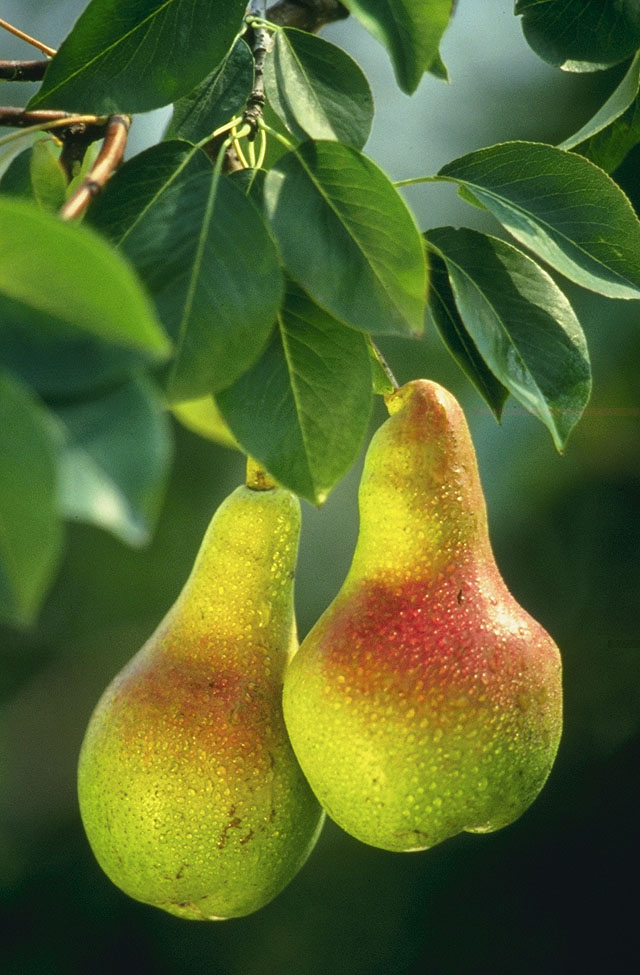 PearPyrus communis
-
 Wild PearPyrus pyraster
-
 Snow PearPyrus nivalis
-
 Ussurian PearPyrus ussuriensis
-
 Willow-Leaved PearPyrus salicifolia
-
 Plymouth PearPyrus cordata
Compare
Questions and answers
What is the scientific name of the Pyrus × Bretschneideri?
The scientific name of the Pyrus × Bretschneideri is Pyrus bretschneideri. Written with its author, the full name is Pyrus bretschneideri Rehder.
Which family does the Pyrus × Bretschneideri belong to?
Pyrus bretschneideri belongs to the family Rosaceae, in the order Rosales and the class Magnoliopsida.
Where is the Pyrus × Bretschneideri found?
Checklists and occurrence records place Pyrus bretschneideri in 3 countries: China, Afghanistan and Kazakhstan.
What other names does the Pyrus × Bretschneideri have?
Pyrus bretschneideri is also known in English as Chinese White Pear, Ya Pear and White Pear.
Which country is the pear fruit originally from?
Pyrus × Bretschneideri is native to North China.[15]
Sources
Passages the profile rests on
- The fruit is narrow toward the stem end and resembles the shape of a European pear. Source passage: “shaped more like the European pear (Pyrus communis), narrow towards the stem end.” — English Wikipedia
- The fruit has white to light yellow flesh and is very juicy. Source passage: “These very juicy, white to light yellow pears” — English Wikipedia
- Ya pears have a crisp texture. Source passage: “Ya pears taste similar to a mild Bosc pear, but are crisp” — English Wikipedia
- The species grows primarily in temperate biomes. Source passage: “grows primarily in the temperate biome.” — powo.science.kew.org
- The species is widely cultivated in China. Source passage: “where it is widely grown for its edible fruit.” — English Wikipedia
- The species is cultivated for its edible fruit. Source passage: “widely grown for its edible fruit.” — English Wikipedia
- Ya pear cultivars are exported around the world. Source passage: “is one cultivar widely grown in China and exported around the world.” — English Wikipedia
- The fruit has a mild Bosc-like taste. Source passage: “Ya pears taste similar to a mild Bosc pear” — English Wikipedia
- The fruit has a higher water content and lower sugar content than the comparison described in the source. Source passage: “with a higher water content and lower sugar content.” — English Wikipedia
- Pear species exhibit a gametophytic self-incompatibility breeding system. Source passage: “Pears exhibit a gametophytic self-incompatibility (SI) breeding system” — pmc.ncbi.nlm.nih.gov
- Pear reproduction under this breeding system requires cross-pollination with polliniser cultivars of different genotypes. Source passage: “which requires cross-pollination with polliniser cultivars of different genotypes.” — pmc.ncbi.nlm.nih.gov
- Molecular genetic evidence indicates a relationship between the species and the Siberian pear (Pyrus ussuriensis). Source passage: “Recent molecular genetic evidence confirms some relationship to the Siberian pear (Pyrus ussuriensis)” — English Wikipedia
- The species can also be classified as a subspecies of the Chinese pear Pyrus pyrifolia. Source passage: “but it can also be classified as a subspecies of the Chinese pear Pyrus pyrifolia.” — English Wikipedia
- The species is classified among Asian pears alongside Pyrus pyrifolia and Pyrus sinkiangensis. Source passage: “Asian pears encompass various species, including P. bretschneideri Rehd., P. pyrifolia Nakai, P. sinkiangensis Yü, and so on.” — pmc.ncbi.nlm.nih.gov
- The species is native to North China. Source passage: “native to North China” — English Wikipedia
Data
- Catalogue of Life, 2026-10-16 XR cc by
- Global Biodiversity Information Facility CC BY 4.0
- Wikidata CC0
- GeoNames CC BY 4.0
- Wikimedia Commons per image; credit shown with each image
- Within the Catalogue of Life, this name comes from Synonymic Checklists of the Vascular Plants of the World cc by
References
- Rehder. (1915). Proc. Amer. Acad. Arts 50: 231 (1915). where the name was published
This species in other databases
- Catalogue of Life 4QWKH
- Wikidata Q2114345
- iNaturalist 425849
- World Flora Online wfo-0001016379
- GRIN 30462
Page built on 27 November 2026. See how the catalog is made and all sources and licences.
Cite this page
ScientificNames.org. (2026). Pyrus bretschneideri (Pyrus × Bretschneideri). Retrieved November 27, 2026, from https://scientificnames.org/species/pyrus-bretschneideri
“Pyrus bretschneideri (Pyrus × Bretschneideri).” ScientificNames.org, 2026, scientificnames.org/species/pyrus-bretschneideri. Accessed 27 Nov. 2026.
ScientificNames.org. “Pyrus bretschneideri (Pyrus × Bretschneideri).” Accessed November 27, 2026. https://scientificnames.org/species/pyrus-bretschneideri.
@misc{scientificnames_pyrus_bretschneideri_pyrus_x_bretschneideri,
  author = {{ScientificNames.org}},
  title = {Pyrus bretschneideri (Pyrus × Bretschneideri)},
  year = {2026},
  url = {https://scientificnames.org/species/pyrus-bretschneideri},
  note = {Accessed 2026-11-27}
}