Species · Flowering plants
Ranunculus gracilis
Ranunculus gracilis has no English name on record in the checklists used here. It is a species of flowering plant in the family Ranunculaceae (crowfoot family), order Ranunculales.
- Scientific name
- Ranunculus gracilis E.D.Clarke
- Genus
- Ranunculus
- Family
- Ranunculaceae (Crowfoot Family)
- Order
- Ranunculales
- Class
- Magnoliopsida
- Recorded in
- 10 countries
- Name status
- accepted in the Catalogue of Life
Overview
Wikidata describes Ranunculus gracilis as “species of plant”.
Classification of Ranunculus gracilis
| Kingdom | Plantae |
|---|---|
| Subkingdom | Pteridobiotina |
| Phylum | Tracheophyta |
| Class | Magnoliopsida |
| Order | Ranunculales |
| Family | Ranunculaceae (Crowfoot Family) |
| Subfamily | Ranunculoideae |
| Tribe | Ranunculeae |
| Genus | Ranunculus (Crowfoot) |
| Species | Ranunculus gracilis E.D.Clarke |
Where Ranunculus gracilis is found
Checklists and occurrence records place Ranunculus gracilis in 10 countries across Asia and Europe. GBIF holds 361 georeferenced records of it.
Countries
- Austria 8
- Bulgaria 12
- Croatia 4
- France 105
- Greece 151
- Italy 16
- Portugal 3
- Spain 16
- Switzerland 23
- Turkey 23
Regions and cities with the most records
- Crete, Greece 18
- Corfu, Greece 11
- Attica, Greece 7
- Livadeiá, Greece 7
- Sarandë, Albania 6
- Thívai, Greece 6
- Bologna, Italy 5
- Casalecchio di Reno, Italy 5
- Castel Maggiore, Italy 5
- Emilia-Romagna, Italy 5
- San Lazzaro, Italy 5
- Yambol, Bulgaria 5
- Zola Predosa, Italy 5
- Haskovo, Bulgaria 4
- Rethymno, Greece 4
- Sparta, Greece 3
- Sicily, Italy 2
1 more country has a few records outside this range
These countries hold a few records of Ranunculus gracilis but lie outside the range the checklists give for it. Such records are often zoo or garden specimens, museum material or vagrants, so the species is not counted as occurring there.
Range as the checklists state it
Italy; Sicily; Croatia; Bulgaria; European Turkey; Greece (NW-, C-Greece, Peloponnisos, Kerkyra, Ionian Isl., rare Sporades, NE-Greece, Evvoia); Crete; East Aegaean Isl. (Chios, Samos, Kalimnos, Kos, Karpathos, Rhodos); Turkey (Inner Anatolia, N-Anatolia, NW-Anatolia: Bithynia, WN-Anatolia)
A number beside a place is its count of GBIF occurrence records. A place without a number comes from a checklist alone. Records show where a species has been observed or collected, which can include escapes and vagrants.
Common names
Synonyms
9 other scientific names have been used for this species and are now treated as synonyms of Ranunculus gracilis.
- Ranunculus acinacilobus Rouy & Foucaud
- Ranunculus agerii Bertol.
- Ranunculus insularis Viv.
- Ranunculus peloponnesiacus Boiss.
- Ranunculus cinerascens Rouy & Foucaud ambiguous synonym
- Ranunculus granulatus Griseb. ambiguous synonym
- Ranunculus ovalifolius Rouy & Foucaud ambiguous synonym
- Ranunculus subpinnatus Rouy & Foucaud ambiguous synonym
- Ranunculus uncinatus Rouy & Foucaud ambiguous synonym
Related species
-
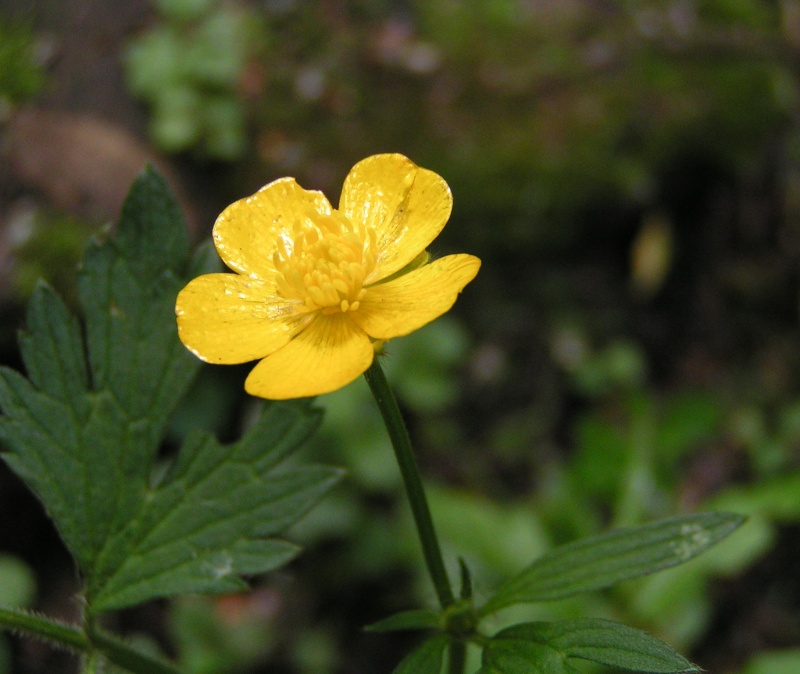 Creeping ButtercupRanunculus repens
-
 Persian ButtercupRanunculus asiaticus
-
 Meadow ButtercupRanunculus acris
-
 Bulbous ButtercupRanunculus bulbosus
-
 Common Water-CrowfootRanunculus aquatilis
-
 Celery-Leaved ButtercupRanunculus sceleratus
-
 Goldilocks ButtercupRanunculus auricomus
-
 Mount Cook ButtercupRanunculus lyallii
Compare
Sources
Data
- Catalogue of Life, 2026-10-16 XR cc by
- Global Biodiversity Information Facility CC BY 4.0
- Wikidata CC0
- GeoNames CC BY 4.0
- Within the Catalogue of Life, this name comes from Synonymic Checklists of the Vascular Plants of the World cc by
References
- Clarke, E. D. (1814). Travels Eur. Asia & Africa 2(2): 336 (1814). where the name was published
This species in other databases
Page built on 27 November 2026. See how the catalog is made and all sources and licences.
Cite this page
ScientificNames.org. (2026). Ranunculus gracilis. Retrieved November 27, 2026, from https://scientificnames.org/species/ranunculus-gracilis
“Ranunculus gracilis.” ScientificNames.org, 2026, scientificnames.org/species/ranunculus-gracilis. Accessed 27 Nov. 2026.
ScientificNames.org. “Ranunculus gracilis.” Accessed November 27, 2026. https://scientificnames.org/species/ranunculus-gracilis.
@misc{scientificnames_ranunculus_gracilis,
  author = {{ScientificNames.org}},
  title = {Ranunculus gracilis},
  year = {2026},
  url = {https://scientificnames.org/species/ranunculus-gracilis},
  note = {Accessed 2026-11-27}
}