Species · Birds
Pale Martin Riparia diluta
The scientific name of the Pale Martin is Riparia diluta. It is a species of bird in the family Hirundinidae (swallow), order Passeriformes. The name dates from 1893.
- Scientific name
- Riparia diluta (Sharpe & Wyatt, 1893)
- Common name
- Pale Martin
- Genus
- Riparia
- Family
- Hirundinidae (Swallow)
- Order
- Passeriformes
- Class
- Aves
- Red List category
- LC Least Concern
- Recorded in
- 20 countries
- Name status
- accepted in the Catalogue of Life

Overview
The Pale Martin is a small passerine bird in the family Hirundinidae. It occurs across a range extending from Central Asia to southeastern China. It has brown upperparts, white underparts and a distinct brown band across its chest.
Written 26 November 2026 from the sources listed below. Each statement was checked against the passage it cites; statements that could not be supported were removed.
Appearance
The Pale Martin has brown upperparts and white underparts, with a distinct brown band across its chest.[1]
Habitat
The Pale Martin inhabits open environments including farmland, grassland and savannah, generally near water.[2]
Similar species
The Pale Martin is nearly identical in appearance to the Bank Swallow. It breeds sympatrically with the Bank Swallow.[3][4]
Classification of the Pale Martin
| Kingdom | Animalia |
|---|---|
| Phylum | Chordata |
| Subphylum | Vertebrata |
| Infraphylum | Gnathostomata |
| Parvphylum | Osteichthyes |
| Megaclass | Tetrapoda |
| Class | Aves (Bird) |
| Order | Passeriformes (Passerine) |
| Family | Hirundinidae (Swallow) |
| Genus | Riparia (Bank Swallows) |
| Species | Riparia diluta (Sharpe & Wyatt, 1893) |
Where the Pale Martin is found
Checklists and occurrence records place Riparia diluta in 20 countries across Asia. GBIF holds 6,127 georeferenced records of it.
Countries
- Afghanistan 22
- Bangladesh 8
- Bhutan 15
- China 2,555
- Hong Kong 6
- India 1,194
- Kazakhstan 290
- Kuwait 16
- Kyrgyzstan 183
- Malaysia 9
- Mongolia 670
- Nepal 91
- Oman 5
- Pakistan 219
- Russia 527
- Saudi Arabia 11
- Tajikistan 23
- Ukraine 7
- United Arab Emirates 197
- Uzbekistan 79
Regions and cities with the most records
- Qinghai, China 981
- Sichuan, China 501
- Uttarakhand, India 487
- Hovd, Mongolia 259
- Zhejiang, China 223
- Almaty Region, Kazakhstan 219
- Chengdu, China 159
- Rāmnagar, India 158
- Abu Dhabi, United Arab Emirates 140
- Issyk-Kul, Kyrgyzstan 131
- Punjab, India 114
- Sindh, Pakistan 114
- Haryana, India 105
- Assam, India 91
- Haridwar, India 82
- Qingshizui, China 77
- Uttar Pradesh, India 76
- Najafgarh, India 71
- Roshanpura, India 71
- Tibet, China 71
- Al Shamkhah City, United Arab Emirates 67
- Bani Yas City, United Arab Emirates 67
- Mohammed Bin Zayed City, United Arab Emirates 67
- Rajasthan, India 64
- Shihezi, China 64
- Shaanxi, China 63
- Pāonta Sāhib, India 62
- Gurugram, India 58
- Mānesar, India 57
- Bulgan, Mongolia 56
- Yunnan, China 56
- Madhya Pradesh, India 55
- Clement Town, India 54
- Jharoda Kalān, India 54
- Buryatiya Republic, Russia 53
- Chongqing, China 53
Range as the checklists state it
Europe & Northern Asia (excluding China)
Southern Asia
A number beside a place is its count of GBIF occurrence records. A place without a number comes from a checklist alone. Records show where a species has been observed or collected, which can include escapes and vagrants.
Common names
English
- Pale Martin
- PSMA
- Pale Sand Martin
- Pale Sand-Martin
Names in 34 other languages
- Arabic
- خطاف الرمال الشاحب
- Bulgarian
- Бледа лястовица
- Catalan
- oreneta de ribera pàl·lida
- Chinese
- 淡色崖沙燕, 淡色沙燕, 淡色沙燕〔灰沙燕〕
- Croatian
- azijska bregunica
- Czech
- břehule bledá
- Danish
- Østlig Digesvale
- Dutch
- Bleke Oeverzwaluw
- Esperanto
- pala hirundo
- Estonian
- leet-kaldapääsuke
- Finnish
- aasiantörmäpääsky
- French
- Hirondelle pâle
- German
- Bleiche Uferschwalbe, Fahluferschwalbe
- Hebrew
- כוכית גדות חיוורת, כוכית דלה
- Irish
- Gabhlán meathbhán
- Italian
- Topino pallido
- Japanese
- ウスショウドウツバメ
- Kazakh
- Сұр қарлығаш, Қылаң қарлығаш
- Korean
- 옅은갈색제비
- Latvian
- blāvā čurkste
- Lithuanian
- blyškioji urvinė kregždė
- Nepali
- सेतोकण्ठे भित्तेगौंथली
- Norwegian
- bleksandsvale
- Persian
- چلچله رودخانه ای کمرنگ
- Polish
- brzegówka azjatycka
- Portuguese
- andorinha-das-barreiras-pálida, andorinha-pálida
- Russian
- Бледная береговушка
- Serbian
- Bleda bregunica
- Slovak
- Brehuľa hnedá, brehuľa bledá
- Spanish
- Avión pálido
- Swedish
- blek backsvala
- Thai
- นกนางแอ่นทรายสีจาง
- Turkish
- Solgun Kum Kırlangıcı
- Ukrainian
- ластівка бліда
Synonyms
2 other scientific names have been used for this species and are now treated as synonyms of Riparia diluta.
- Cotile diluta Sharpe & Wyatt, 1893
- Riparia riparia diluta Sharpe, RB; Wyatt, CW, 1893
Subspecies and varieties
- Riparia diluta diluta subspecies
- Riparia diluta fohkienensis subspecies
- Riparia diluta indica subspecies
- Riparia diluta tibetana subspecies
Related species
-
 Sand MartinRiparia riparia
-
 Brown-throated MartinRiparia paludicola
-
 Grey-throated MartinRiparia chinensis
-
 Congo MartinRiparia congica
- Madagascar MartinRiparia cowani
-
 Barn SwallowHirundo rustica
-
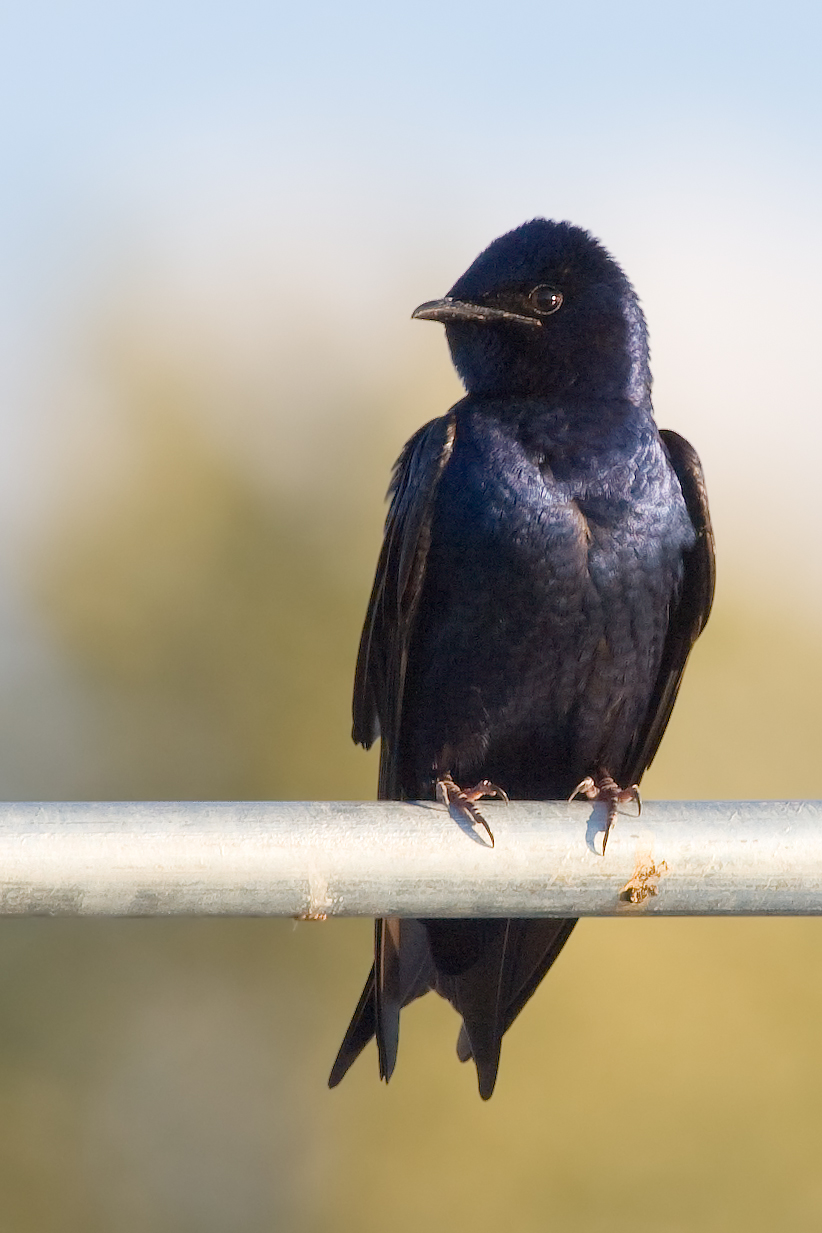 Purple MartinProgne subis
-
 Welcome SwallowHirundo neoxena
Compare
Questions and answers
What is the scientific name of the Pale Martin?
The scientific name of the Pale Martin is Riparia diluta. Written with its author, the full name is Riparia diluta (Sharpe & Wyatt, 1893).
Which family does the Pale Martin belong to?
Riparia diluta belongs to the family Hirundinidae, in the order Passeriformes and the class Aves.
Where is the Pale Martin found?
Checklists and occurrence records place Riparia diluta in 20 countries, including China, India, Mongolia, Russia, Kazakhstan and Pakistan.
What is the conservation status of the Pale Martin?
The IUCN Red List category recorded for Riparia diluta is Least Concern (LC).
What other names does the Pale Martin have?
Riparia diluta is also known in English as PSMA, Pale Sand Martin and Pale Sand-Martin.
Sources
Passages the profile rests on
- The pale martin has brown upperparts and white underparts, with a distinct brown band across its chest. Source passage: “Small dull swallow, brown above and white below, with a sharp brown chest band.” — ebird.org
- The pale martin inhabits open environments including farmland, grassland and savannah, generally near water. Source passage: “It is found in open habitats such as farmland, grassland and savannah, usually near water.” — English Wikipedia
- The pale martin is nearly identical in appearance to the Bank Swallow. Source passage: “Nearly identical to Bank Swallow” — ebird.org
- The pale martin breeds sympatrically with the Bank Swallow. Source passage: “with which it breeds sympatrically” — ebird.org
Data
- Catalogue of Life, 2026-10-16 XR cc by
- Global Biodiversity Information Facility CC BY 4.0
- Wikidata CC0
- GeoNames CC BY 4.0
- Wikimedia Commons per image; credit shown with each image
- Within the Catalogue of Life, this name comes from The Integrated Taxonomic Information System cc0
This species in other databases
Page built on 27 November 2026. See how the catalog is made and all sources and licences.
Cite this page
ScientificNames.org. (2026). Riparia diluta (Pale Martin). Retrieved November 27, 2026, from https://scientificnames.org/species/riparia-diluta
“Riparia diluta (Pale Martin).” ScientificNames.org, 2026, scientificnames.org/species/riparia-diluta. Accessed 27 Nov. 2026.
ScientificNames.org. “Riparia diluta (Pale Martin).” Accessed November 27, 2026. https://scientificnames.org/species/riparia-diluta.
@misc{scientificnames_riparia_diluta_pale_martin,
  author = {{ScientificNames.org}},
  title = {Riparia diluta (Pale Martin)},
  year = {2026},
  url = {https://scientificnames.org/species/riparia-diluta},
  note = {Accessed 2026-11-27}
}