Species · Flowering plants
Scilla Schizocarphus nervosus
The scientific name of the Scilla is Schizocarphus nervosus. It is a species of flowering plant in the family Asparagaceae (asparagus family), order Asparagales.
- Scientific name
- Schizocarphus nervosus (Burch.) van der Merwe
- Common name
- Scilla
- Genus
- Schizocarphus
- Family
- Asparagaceae (Asparagus Family)
- Order
- Asparagales
- Class
- Liliopsida
- Recorded in
- 13 countries
- Name status
- accepted in the Catalogue of Life

Overview
Wikidata describes Schizocarphus nervosus as “species of plant”.
Classification of the Scilla
| Kingdom | Plantae |
|---|---|
| Subkingdom | Pteridobiotina |
| Phylum | Tracheophyta |
| Class | Liliopsida |
| Order | Asparagales |
| Family | Asparagaceae (Asparagus Family) |
| Genus | Schizocarphus |
| Species | Schizocarphus nervosus (Burch.) van der Merwe |
Where the Scilla is found
Checklists and occurrence records place Schizocarphus nervosus in 13 countries across Africa. GBIF holds 1,694 georeferenced records of it.
Countries
- Angola 27
- Botswana 26
- Burundi 7
- Eswatini 35
- Lesotho 12
- Malawi 17
- Mozambique 15
- Namibia 6
- Rwanda 2
- South Africa 1,402
- Tanzania 80
- Zambia 30
- Zimbabwe 35
Regions and cities with the most records
- KwaZulu-Natal, South Africa 531
- Mpumalanga, South Africa 181
- Eastern Cape, South Africa 142
- Gauteng, South Africa 119
- Limpopo, South Africa 103
- Free State, South Africa 87
- Pinetown, South Africa 67
- Mpumalanga, South Africa 52
- Ntuzuma, South Africa 51
- North West, South Africa 43
- Pretoria, South Africa 41
- Krugersdorp, South Africa 35
- Phuthaditjhaba, South Africa 35
- Centurion, South Africa 29
- Hhohho Region, Eswatini 22
- Howick, South Africa 22
- Mpophomeni, South Africa 22
- Randburg, South Africa 22
- Hartbeespoort, South Africa 21
- Roodepoort, South Africa 20
- Ga-Rankuwa, South Africa 19
- Barberton, South Africa 18
- Eshowe, South Africa 18
- Randfontein, South Africa 17
- Port Shepstone, South Africa 15
- Bagale, South Africa 14
- Marikana, South Africa 14
- Sabie, South Africa 14
- Durban, South Africa 13
- Mabopane, South Africa 13
- Mbabane, Eswatini 13
- Midstream, South Africa 13
- Newcastle, South Africa 13
- Ga-Malakhe, South Africa 12
- Johannesburg, South Africa 12
- Kokstad, South Africa 12
1 more country has a few records outside this range
These countries hold a few records of Schizocarphus nervosus but lie outside the range the checklists give for it. Such records are often zoo or garden specimens, museum material or vagrants, so the species is not counted as occurring there.
A number beside a place is its count of GBIF occurrence records. A place without a number comes from a checklist alone. Records show where a species has been observed or collected, which can include escapes and vagrants.
Common names
English
- Scilla
- Sand Lily
Names in 4 other languages
- Tswana
- Jejane, ditsonya
- Xhosa
- magaqana, magaquana
- Zulu
- imBizankulu, imbizankulu ingema, inGcolo, inNgcino, ingcino, umgcinywana
- ssw
- imbita-yebantwana, limbita-yebantfwana, ndvwendvweni, ndvwendvwni
Synonyms
26 other scientific names have been used for this species and are now treated as synonyms of Schizocarphus nervosus.
- Chlorophytum nervatum (C.H.Wright) Poelln.
- Dasystachys nervata C.H.Wright
- Drimia dregeana Kunth
- Ornithogalum nervosum Burch.
- Schizocarphus acerosus (van der Merwe) van der Merwe
- Schizocarphus gerrardii (Baker) van der Merwe
- Schizocarphus hispidulus (Baker) Speta
- Schizocarphus rigidifolius (Kunth) van der Merwe
- Schizocarphus setifer (Baker) Speta
- Scilla bakeriana Poelln.
- Scilla eriospermoides Engl. & Gilg
- Scilla gerrardii Baker
- Scilla hispidula Baker
- Scilla nervosa (Burch.) J.P.Jessop
- Scilla pubescens Baker
- Scilla rigidifolia Kunth
- Scilla rigidifolia Baker
- Scilla rigidifolia var. acerosa van der Merwe
- Scilla rigidifolia var. acerosa Hedw.
- Scilla rigidifolia var. gerrardii (Baker) Baker
- Scilla rigidifolia var. nervosa van der Merwe
- Scilla rigidifolia var. nervosa (Burch.) Baker
- Scilla setifera Baker
- Urginea bragae Engl.
- Scilla pallidiflora Baker ambiguous synonym
- Scilla versicolor Baker ambiguous synonym
Related species
-
 Lily of the ValleyConvallaria majalis
-
 AsparagusAsparagus officinalis
-
 Dragon Blood TreeDracaena cinnabari
-
 Spider-plantChlorophytum comosum
-
 Joshua TreeYucca brevifolia
-
 Corn PlantDracaena fragrans
-
 Blue AgaveAgave tequilana
-
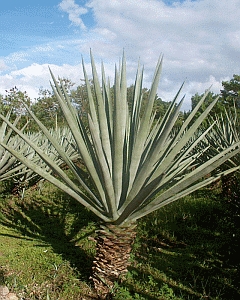 SisalAgave sisalana
Compare
Questions and answers
What is the scientific name of the Scilla?
The scientific name of the Scilla is Schizocarphus nervosus. Written with its author, the full name is Schizocarphus nervosus (Burch.) van der Merwe.
Which family does the Scilla belong to?
Schizocarphus nervosus belongs to the family Asparagaceae, in the order Asparagales and the class Liliopsida.
Where is the Scilla found?
Checklists and occurrence records place Schizocarphus nervosus in 13 countries, including South Africa, Tanzania, Eswatini, Zimbabwe, Zambia and Angola.
What other names does the Scilla have?
Schizocarphus nervosus is also known in English as Sand Lily.
Sources
Data
- Catalogue of Life, 2026-10-16 XR cc by
- Global Biodiversity Information Facility CC BY 4.0
- Wikidata CC0
- GeoNames CC BY 4.0
- Wikimedia Commons per image; credit shown with each image
- Within the Catalogue of Life, this name comes from The World Checklist of Vascular Plants (WCVP) cc by
References
- Fl. Pl. South Africa 23: t. 904 (1943) where the name was published
This species in other databases
- Catalogue of Life 79VJ2
- Wikidata Q6122408
- iNaturalist 556790
- World Flora Online wfo-0000734854
- GRIN 447327
Page built on 28 November 2026. See how the catalog is made and all sources and licences.
Cite this page
ScientificNames.org. (2026). Schizocarphus nervosus (Scilla). Retrieved November 28, 2026, from https://scientificnames.org/species/schizocarphus-nervosus
“Schizocarphus nervosus (Scilla).” ScientificNames.org, 2026, scientificnames.org/species/schizocarphus-nervosus. Accessed 28 Nov. 2026.
ScientificNames.org. “Schizocarphus nervosus (Scilla).” Accessed November 28, 2026. https://scientificnames.org/species/schizocarphus-nervosus.
@misc{scientificnames_schizocarphus_nervosus_scilla,
  author = {{ScientificNames.org}},
  title = {Schizocarphus nervosus (Scilla)},
  year = {2026},
  url = {https://scientificnames.org/species/schizocarphus-nervosus},
  note = {Accessed 2026-11-28}
}