Species · Flowering plants
Common Hook-thorn Acacia Senegalia afra
The scientific name of the Common Hook-thorn Acacia is Senegalia afra. It is a species of flowering plant in the family Fabaceae (bean), order Fabales.
- Scientific name
- Senegalia afra (Thunb.) P.J.H.Hurter & Mabb.
- Common name
- Common Hook-thorn Acacia
- Genus
- Senegalia
- Family
- Fabaceae (Bean)
- Order
- Fabales
- Class
- Magnoliopsida
- Red List category
- LC Least Concern
- Recorded in
- 3 countries
- Name status
- accepted in the Catalogue of Life

Overview
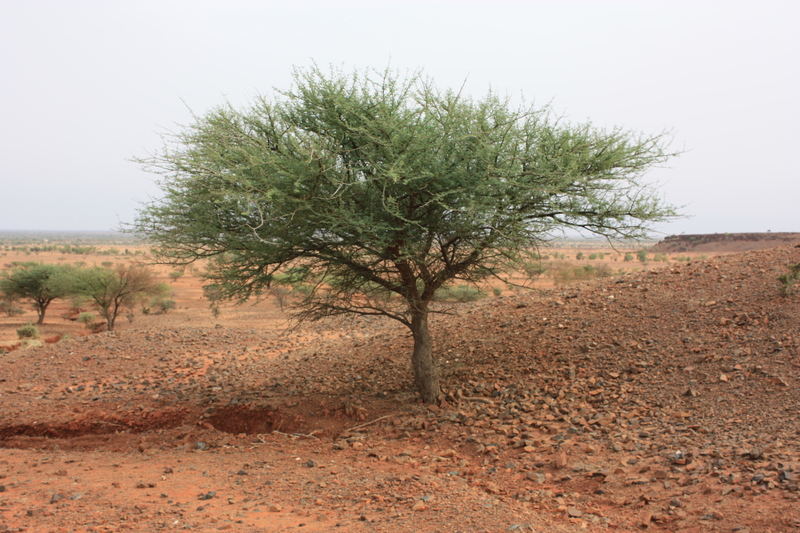
Senegalia afra has rough, dark-grey flaking bark, a strongly twisted trunk and paired hooked thorns when young, and can grow up to 10 metres tall.
Written 26 November 2026 from the sources listed below. Each statement was checked against the passage it cites; statements that could not be supported were removed.
Appearance
The species has rough, dark-grey bark that flakes and a strongly twisted trunk. Young plants have strong, paired hooked thorns.[1][2][3]
The hairiness of its twigs ranges from densely puberulous to pubescent or tomentose. The species can grow up to 10 metres tall.[4][5]
Its timber is extremely hard, dense and attractive, but is not well suited to producing long planks.[6][7]
Habitat
The species occurs in open woodland, grassland, on rocky hillsides and along watercourses. It also occurs naturally in suburban gardens in Gauteng.[8][9][10][11][12]
Its distribution includes the Transvaal and the southern regions of Botswana, Zimbabwe and Mozambique. It was observed in the Central African Republic in 1957.[13][14][15][16][17]
Behaviour
The species is deciduous. Older plants are resistant to frost, fire and drought.[18][19]
Reproduction and life cycle
The species is among the earliest plants to flower in spring. It produces strongly scented flower spikes.[20][21]
Uses
Parts of the tree are used in traditional Bantu herbal medicine. A decoction made from the leaves is drunk to treat colds and fever, while a leaf decoction combined with milk is used as an enema for abdominal complaints in children. The leaves are sometimes chewed to address abdominal complaints.[22][23][24][25]
An infusion made from the bark is administered as a blood purifier. The bark and leaves are rich in tannins.[26][27]
The wood is used in South African magical practices intended to stimulate psychic powers when burned. A sprig is placed over a bed as protection against evil, and the species is used in money and love spells.[28][29][30]
Leaves of the species are boiled in approximately two litres of water as part of documented Setswana-speaking indigenous food knowledge.[31]
Similar species
The appearance of Common Hook-thorn Acacia may be confused with Senegalia ataxacantha and Senegalia hereroensis. Senegalia ataxacantha differs by having scattered prickles, while Senegalia hereroensis has more robust prickles.[32][33][34][35]
Classification of the Common Hook-thorn Acacia
| Kingdom | Plantae |
|---|---|
| Subkingdom | Pteridobiotina |
| Phylum | Tracheophyta |
| Class | Magnoliopsida |
| Order | Fabales |
| Family | Fabaceae (Bean) |
| Genus | Senegalia (Catclaws) |
| Species | Senegalia afra (Thunb.) P.J.H.Hurter & Mabb. |
This name was added to the Catalogue of Life from a contributing dataset by automated merging and has not yet been reviewed by its editors.
Where the Common Hook-thorn Acacia is found
Checklists and occurrence records place Senegalia afra in 3 countries. GBIF holds 1,014 georeferenced records of it.
Countries
Regions and cities with the most records
- Gauteng, South Africa 433
- Centurion, South Africa 186
- Pretoria, South Africa 183
- North West, South Africa 150
- Midstream, South Africa 95
- Limpopo, South Africa 92
- Johannesburg, South Africa 83
- Soweto, South Africa 77
- Alberton, South Africa 66
- KwaZulu-Natal, South Africa 66
- Germiston, South Africa 65
- Tokoza, South Africa 58
- Roodepoort, South Africa 57
- Mpumalanga, South Africa 50
- Eastern Cape, South Africa 49
- Krugersdorp, South Africa 48
- Randburg, South Africa 46
- Rustenburg, South Africa 39
- Hartbeespoort, South Africa 38
- Randfontein, South Africa 35
- Midrand, South Africa 33
- Bagale, South Africa 32
- Thembisa, South Africa 30
- Cullinan, South Africa 29
- Marikana, South Africa 27
- Brits, South Africa 20
- Ntuzuma, South Africa 17
- Edenvale, South Africa 16
- Ga-Rankuwa, South Africa 15
- Parys, South Africa 15
- Potchefstroom, South Africa 14
- Frischgewaagd, South Africa 12
- Pinetown, South Africa 11
- Ekangala, South Africa 9
- Carletonville, South Africa 8
- Mpumalanga, South Africa 8
A number beside a place is its count of GBIF occurrence records. A place without a number comes from a checklist alone. Records show where a species has been observed or collected, which can include escapes and vagrants.
Common names
English
- Common Hook-thorn Acacia
- Cat Thorn
- Cat-Thorn
- Common Hook-Thorn
- Common Hookthorn Acacia
- Hook Thorn
- Hook-thorn
- Kaffir-Thorn
- Tynwald Hook Thorn
- White Thorn
- Common Hookthorn
Names in 11 other languages
- Afrikaans
- Gewone Haakdoring, amaquasdoornboom, hakiesdoring, kaffer-wag-'n-bietjie, kaffir-wag-'n-bietjie, kaffirdoring, wag-'n-bietjie-doring, wag-'n-bietjiedoring
- Chinese
- 鉤刺兒茶
- Finnish
- bantunakaasia
- German
- Gemeiner Hakendorn
- Tswana
- Morutlhatsane, moRutlhare, moruthare, morutlhatshana, morutlhatshane
- Xhosa
- umNyamanzi, umThole, umngamanzi
- Zulu
- umtholo
- nso
- moroba diepe, moroba-diėpe, mothole, motholo, radiepane
- ssw
- umtfolo
- tso
- Mbvhinya-xihloka, nkhayani
- ven
- Muvunda-mbado, muvundambado, muvundėa-mbadėo
Synonyms
4 other scientific names have been used for this species and are now treated as synonyms of Senegalia afra.
- Acacia afra (Thunb.) Willd.
- Acacia afra var. loga Glover
- Acacia caffra var. loga
- Mimosa afra Thunb.
Related species
-
 Black CutchSenegalia catechu
- Gum ArabicSenegalia senegal
- CatclawSenegalia greggii
- Soap-pod TreeSenegalia rugata
- Black ThornSenegalia mellifera
- Berlandier AcaciaSenegalia berlandieri
-
 White ThornSenegalia polyacantha
-
 Senegalia laeta
Compare
Questions and answers
What is the scientific name of the Common Hook-thorn Acacia?
The scientific name of the Common Hook-thorn Acacia is Senegalia afra. Written with its author, the full name is Senegalia afra (Thunb.) P.J.H.Hurter & Mabb..
Which family does the Common Hook-thorn Acacia belong to?
Senegalia afra belongs to the family Fabaceae, in the order Fabales and the class Magnoliopsida.
Where is the Common Hook-thorn Acacia found?
Checklists and occurrence records place Senegalia afra in 3 countries: South Africa, Eswatini and Botswana.
What is the conservation status of the Common Hook-thorn Acacia?
The IUCN Red List category recorded for Senegalia afra is Least Concern (LC).
What other names does the Common Hook-thorn Acacia have?
Senegalia afra is also known in English as Cat Thorn, Cat-Thorn, Common Hook-Thorn, Common Hookthorn Acacia, Hook Thorn and Hook-thorn.
Sources
Passages the profile rests on
- The species has rough, dark-grey bark that flakes. Source passage: “The bark is rough, dark grey and flaking” — English Wikipedia
- Young plants have strong, paired hooked thorns. Source passage: “the strong, paired hooked thorns are a formidable deterrent on young plants.” — English Wikipedia
- The species has a strongly twisted trunk. Source passage: “because of its strongly twisted trunk” — English Wikipedia
- The hairiness of its twigs ranges from densely puberulous to pubescent or tomentose. Source passage: “Twigs which may vary in hairiness from densely puberulous to pubescent or tomentose.” — English Wikipedia
- The species can grow up to 10 metres tall. Source passage: “It is up to 10 m (33 ft) tall” — English Wikipedia
- The species has extremely hard, dense and attractive timber. Source passage: “It has extremely hard, dense and attractive timber” — English Wikipedia
- The species has timber that is not well suited to producing long planks. Source passage: “does not lend itself to long planks” — English Wikipedia
- The species occurs in open woodland. Source passage: “open woodland, grassland, rocky hillsides or watercourses.” — English Wikipedia
- The species occurs in grassland. Source passage: “open woodland, grassland, rocky hillsides or watercourses.” — English Wikipedia
- The species occurs on rocky hillsides. Source passage: “open woodland, grassland, rocky hillsides or watercourses.” — English Wikipedia
- The species occurs along watercourses. Source passage: “open woodland, grassland, rocky hillsides or watercourses.” — English Wikipedia
- The species also occurs naturally in suburban gardens in Gauteng. Source passage: “it often occurs naturally in Gauteng suburban gardens” — English Wikipedia
- The species occurs in the Transvaal. Source passage: “It occurs in the Transvaal” — English Wikipedia
- The species occurs in the southern regions of Botswana. Source passage: “the southern regions of Botswana, Zimbabwe and Mozambique.” — English Wikipedia
- The species occurs in the southern regions of Zimbabwe. Source passage: “the southern regions of Botswana, Zimbabwe and Mozambique.” — English Wikipedia
- The species occurs in the southern regions of Mozambique. Source passage: “the southern regions of Botswana, Zimbabwe and Mozambique.” — English Wikipedia
- The species was observed in the Central African Republic in 1957. Source passage: “Senegalia afra was also observed, in 1957, by French researchers in the current Central African Republic.” — English Wikipedia
- The species is deciduous. Source passage: “Senegalia afra is deciduous” — English Wikipedia
- Older plants are resistant to frost, fire and drought. Source passage: “older plants are resistant to frost, fire and drought.” — English Wikipedia
- The species is among the earliest plants to flower in spring. Source passage: “this species is one of the earliest to flower in spring” — English Wikipedia
- The species produces strongly scented flower spikes. Source passage: “producing strongly scented flower spikes.” — English Wikipedia
- Parts of the tree are used in traditional Bantu herbal medicine. Source passage: “Parts of the tree are used by the Bantu in traditional herbal medicine” — English Wikipedia
- A decoction made from the leaves is drunk to treat colds and fever. Source passage: “A decoction of the leaves is drunk to treat colds and fever” — English Wikipedia
- A leaf decoction combined with milk is used as an enema for abdominal complaints in children. Source passage: “A leaf decoction, combined with milk, is used as an enema to treat abdominal complaints in children.” — English Wikipedia
- The leaves are sometimes chewed to address abdominal complaints. Source passage: “The leaves are sometimes chewed for the same purpose” — English Wikipedia
- An infusion made from the bark is administered as a blood purifier. Source passage: “A bark infusion is administered as a blood purifier” — English Wikipedia
- The species' bark and leaves are rich in tannins. Source passage: “the bark and leaves are rich in tannins” — English Wikipedia
- The wood is used in South African magical practices intended to stimulate psychic powers when burned. Source passage: “the burned wood stimulates psychic powers” — English Wikipedia
- A sprig of the species is placed over a bed as protection against evil. Source passage: “A sprig is placed over a bed to war off evil.” — English Wikipedia
- The species is used in money and love spells. Source passage: “It is used in money and love spells” — English Wikipedia
- Leaves of the species are boiled in approximately two litres of water as part of documented Setswana-speaking indigenous food knowledge. Source passage: “Leaves are boiled in about 2 L of water” — pmc.ncbi.nlm.nih.gov
- The appearance of the species may be confused with Senegalia ataxacantha. Source passage: “Its appearance may be confused with that of Senegalia ataxacantha” — English Wikipedia
- The appearance of the species may be confused with Senegalia hereroensis. Source passage: “or with Senegalia hereroensis” — English Wikipedia
- Senegalia ataxacantha differs by having scattered prickles. Source passage: “the former has scattered prickles” — English Wikipedia
- Senegalia hereroensis differs by having more robust prickles. Source passage: “the latter has more robust prickles.” — English Wikipedia
Data
- Catalogue of Life, 2026-10-16 XR cc by
- Global Biodiversity Information Facility CC BY 4.0
- Wikidata CC0
- GeoNames CC BY 4.0
- Wikimedia Commons per image; credit shown with each image
- Within the Catalogue of Life, this name comes from Pinopsida from WFO cc0
References
- Mabberley's Pl.-Book 1021 2008 where the name was published
- Legume Data Portal record: 2608727 Link
This species in other databases
- Catalogue of Life SPB7R
- Wikidata Q15535848
- iNaturalist 1588323
- World Flora Online wfo-0001284768
- GRIN 510297
Page built on 28 November 2026. See how the catalog is made and all sources and licences.
Cite this page
ScientificNames.org. (2026). Senegalia afra (Common Hook-thorn Acacia). Retrieved November 28, 2026, from https://scientificnames.org/species/senegalia-afra
“Senegalia afra (Common Hook-thorn Acacia).” ScientificNames.org, 2026, scientificnames.org/species/senegalia-afra. Accessed 28 Nov. 2026.
ScientificNames.org. “Senegalia afra (Common Hook-thorn Acacia).” Accessed November 28, 2026. https://scientificnames.org/species/senegalia-afra.
@misc{scientificnames_senegalia_afra_common_hook_thorn_acacia,
  author = {{ScientificNames.org}},
  title = {Senegalia afra (Common Hook-thorn Acacia)},
  year = {2026},
  url = {https://scientificnames.org/species/senegalia-afra},
  note = {Accessed 2026-11-28}
}