Species · Flowering plants
Sesame Sesamum indicum
The scientific name of the Sesame is Sesamum indicum. It is a species of flowering plant in the family Pedaliaceae (pedalium family or sesame family), order Lamiales.
- Scientific name
- Sesamum indicum L.
- Common name
- Sesame
- Genus
- Sesamum
- Family
- Pedaliaceae (Pedalium Family Or Sesame Family)
- Order
- Lamiales
- Class
- Magnoliopsida
- Recorded in
- 138 countries
- Name status
- accepted in the Catalogue of Life
Overview
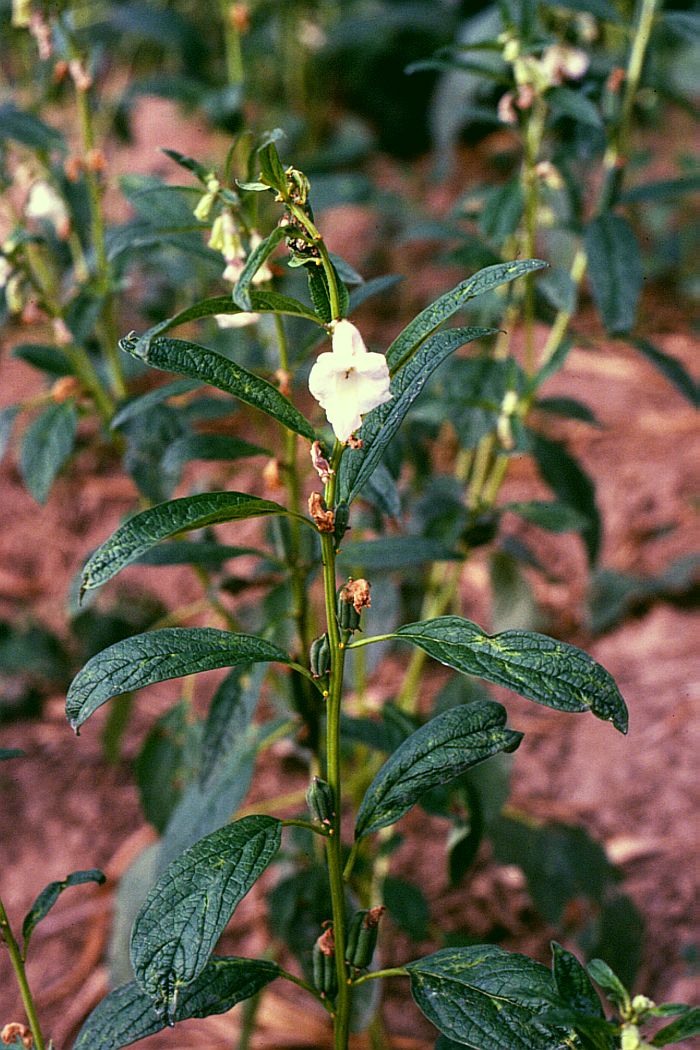
Sesame (Sesamum indicum L.) is an annual flowering herb in the family Pedaliaceae, order Lamiales, and class Magnoliopsida. The cultivated species originated in India and is distributed in countries including India, China, and Malaysia, as well as naturalized in tropical regions around the world. Sesame is distinguished by its tubular flowers and rectangular capsules containing black or white seeds.
Written 26 November 2026 from the sources listed below. Each statement was checked against the passage it cites; statements that could not be supported were removed.
Appearance
Sesame is an erect annual herb with a hollow stem or white pith. It grows approximately 60–150 cm tall.[1][2]
The leaves are rectangular or ovate, slightly hairy, and grow singly or in groups of two to three in the leaf axils. They measure approximately 3–10 cm long and 2.5–4 cm wide.[3][4][5]
The flowers have tubular corollas that are white, often with purplish-red or yellow markings. Each flower contains four stamens concealed inside the corolla.[6][7]
The ovary is superior, divided into four locules, and hairy externally. The calyx lobes measure approximately 5–8 mm long and 1.6–3.5 mm wide, while the corolla measures approximately 2.5–3 cm long and 1–1.5 cm in diameter.[8][9][10]
The fruit is a rectangular capsule with longitudinal surface ribs and microscopic epidermal hairs. It measures approximately 2–3 cm long and 6–12 mm in diameter.[11][12]
The seeds occur in black or white forms. They are ovate, slightly flattened, narrower at the hilum, and typically measure approximately 3–4 mm.[13][14][15]
Habitat
Sesame is cultivated in subtropical regions as a short-day crop. It is associated with fertile, well-drained soils having neutral pH.[16][17]
The plant is adapted to drought conditions and can grow where other crops fail. Most commercial sesame cultivars are intolerant of waterlogged soil conditions.[18][19]
The cultivated species originated in India and is distributed in India, China, and Malaysia. It is widely naturalized in tropical regions around the world.[20][21][22]
In China, sesame cultivation extends as far north as 45° N, particularly in the Yellow River and middle and lower Yangtze River regions.[23]
Reproduction and life cycle
Sesame produces capsules containing seeds. The capsules normally contain four locules.[24][25]
Mature capsules split open to disperse their seeds. Rainfall late in the growing season can increase seed loss through capsule opening.[26][27]
Behaviour
Sesame flowering occurs in late summer and early autumn. Flowering depends on photoperiod and cultivar.[28][29]
Warm temperatures above 23 °C favor sesame growth and yield. Capsule opening releases the mature seeds.[30][31]
Uses
Sesame seeds are processed into sesame oil and sesame paste. They are also used as ingredients in a variety of foods.[32][33]
Sesame is used in food, animal feed, and cosmetic applications. Leaves from mature plants can be used as a laxative.[34][35]
Sesame seed oil content varies between approximately 37% and 63%, depending on cultivar and growing conditions.[36]
Classification of the Sesame
| Kingdom | Plantae |
|---|---|
| Subkingdom | Pteridobiotina |
| Phylum | Tracheophyta |
| Class | Magnoliopsida |
| Order | Lamiales |
| Family | Pedaliaceae (Pedalium Family Or Sesame Family) |
| Tribe | Sesameae |
| Genus | Sesamum (Sesame) |
| Species | Sesamum indicum L. |
Where the Sesame is found
Checklists and occurrence records place Sesamum indicum in 138 countries across Africa, Asia, Europe, North America, Oceania and South America. GBIF holds 11,264 georeferenced records of it.
Countries
- Afghanistan 629
- Algeria 10
- Angola 13
- Argentina 16
- Armenia 54
- Australia 612
- Azerbaijan 69
- Bahamas 7
- Bangladesh 9
- Belgium 5
- Belize 2
- Benin 214
- Bolivia 15
- Brazil 333
- Brunei 4
- Bulgaria 421
- Burkina Faso 75
- Burundi 10
- Cambodia 13
- Cameroon 134
- Central African Republic 8
- Chad 5
- China 750
- Colombia 70
- Croatia
- Cuba 18
- Curacao 5
- Cyprus 8
- Democratic Republic of the Congo 106
- Dominican Republic 6
- Ecuador 21
- Egypt 69
- El Salvador 20
- Eritrea 2
- Eswatini 1
- Ethiopia 188
- Fiji 1
- France 12
- French Guiana 27
- French Polynesia 5
- Gabon 19
- Gambia 3
- Germany 10
- Ghana 8
- Greece 97
- Grenada 2
- Guadeloupe 5
- Guam
- Guatemala 12
- Guinea 11
- Guinea-Bissau 8
- Guyana 11
- Haiti 4
- Honduras 8
- Hong Kong 5
- India 1,657
- Indonesia 64
- Iran 161
- Iraq 42
- Israel 81
- Italy 18
- Ivory Coast 23
- Jamaica 2
- Japan 214
- Jordan 6
- Kazakhstan 8
- Kenya 21
- Laos 8
- Lebanon 1
- Liberia 30
- Libya 11
- Madagascar 52
- Malawi 4
- Malaysia 30
- Mali 5
- Martinique 3
- Mauritania 1
- Mauritius 5
- Mayotte 5
- Mexico 543
- Mongolia 4
- Morocco 33
- Mozambique 25
- Myanmar 20
- Namibia 1
- Nepal 69
- Nicaragua 14
- Niger 7
- Nigeria 164
- North Korea 29
- North Macedonia 20
- Oman 6
- Pakistan 117
- Palestinian Territory 5
- Panama 6
- Paraguay 4
- Peru 61
- Philippines 85
- Portugal 4
- Puerto Rico 5
- Russia 98
- Rwanda 4
- Saudi Arabia 13
- Senegal 20
- Sierra Leone 20
- Singapore 7
- Somalia 8
- South Africa 39
- South Korea 97
- South Sudan
- Spain 33
- Sri Lanka 33
- Sudan 380
- Suriname 21
- Sweden 53
- Syria 19
- Taiwan 25
- Tajikistan 141
- Tanzania 62
- Thailand 46
- The Netherlands 38
- Timor Leste 5
- Togo 13
- Trinidad and Tobago 11
- Tunisia 7
- Turkey 449
- Turkmenistan 138
- Uganda 25
- Ukraine 19
- United Arab Emirates 3
- United Kingdom 5
- United States 429
- Uzbekistan 455
- Venezuela 346
- Vietnam 288
- Yemen 39
- Zambia 16
- Zimbabwe 15
Regions and cities with the most records
- Northern Territory, Australia 466
- Maharashtra, India 317
- Airoli, India 102
- Thāne, India 102
- Powai, India 96
- Kalher, India 93
- Dombivali, India 86
- Borivli, India 84
- Michoacán, Mexico 83
- Mumbai, India 81
- Bhiwandi, India 79
- Bhayandar, India 76
- Kharghar, India 73
- Khoni, India 73
- Ulhasnagar, India 71
- Gujarat, India 66
- Kalyān, India 66
- Atakora, Benin 63
- Palmerston, Australia 63
- Tamil Nadu, India 62
- Telangana, India 62
- Kerala, India 61
- Bahia, Brazil 59
- Darwin, Australia 59
- Jalgaon, India 50
- Rajasthan, India 50
- Karnataka, India 49
- Veracruz, Mexico 49
- Donga, Benin 44
- Quthbullapur, India 44
- Goa, India 42
- Hyderabad, India 42
- Kukatpally, India 42
- Jiangxi, China 39
- Texas, United States 38
- Guangxi, China 34
A number beside a place is its count of GBIF occurrence records. A place without a number comes from a checklist alone. Records show where a species has been observed or collected, which can include escapes and vagrants.
Common names
English
- Sesame
- Benne
- Benue Oil
- Cultivated Sesame
- Gingelly-Oil Plant
- Gingilli
- Indian Sesame
- Sem-Sem
- Sem-Semoil
- Sesame Oil
- Teel Oil
- Tilseed
- Beniseed
- Benneseed
- Benniseed
Names in 39 other languages
- Afrikaans
- oliebossie
- Bengali
- তিল
- Bulgarian
- Сусам
- Burmese
- နှမ်း
- Chinese
- hu ma, zhi ma, 胡麻 (芝麻), 胡麻,芝麻, 芝麻
- Esperanto
- Sezamo
- Estonian
- Harilik seesam
- Finnish
- seesami, öljyseesami
- French
- sésame
- Hebrew
- שומשום
- Hindi
- gingelly, til
- Indonesian
- Wijen
- Italian
- sesamo
- Japanese
- goma, ゴマ
- Kannada
- ಎಳ್ಳು
- Korean
- chamkkae, 참깨
- Latvian
- Austrumu jeb Indijas sezams
- Marathi
- तीळ
- Polish
- Sezam indyjski, Sezam wschodni
- Portuguese
- gergelim, gimgelim
- Punjabi
- ਤਿਲ
- Russian
- Кунжут, Кунжут индийский
- Slovak
- sezam indický
- Spanish
- ajonjolí, sésamo
- Swahili
- mfuta, simsim, ufuta, wangila
- Swedish
- sesam
- Tagalog
- Linga
- Tamil
- எள்
- Telugu
- నువ్వులు
- Thai
- งา, งา (พืช)
- Turkish
- susam
- Ukrainian
- Кунжут індійський
- bam
- Bɛnɛ
- bnn
- nadaz
- dje
- Lamti
- hus
- tzacan-thactén
- san
- Tila
- sna
- ruminga
- yua
- mehen-sihal
Synonyms
One other scientific name has been used for this species and is now treated as a synonym of Sesamum indicum.
- Strobilanthes gentiliana H.Lév.
Subspecies and varieties
- Sesamum indicum subsp. indicum (Sesame) subspecies
- Sesamum indicum subsp. malabaricum subspecies
Related species
-
 Wingseed SesameSesamum alatum
-
 Kunene SesameSesamum marlothii
-
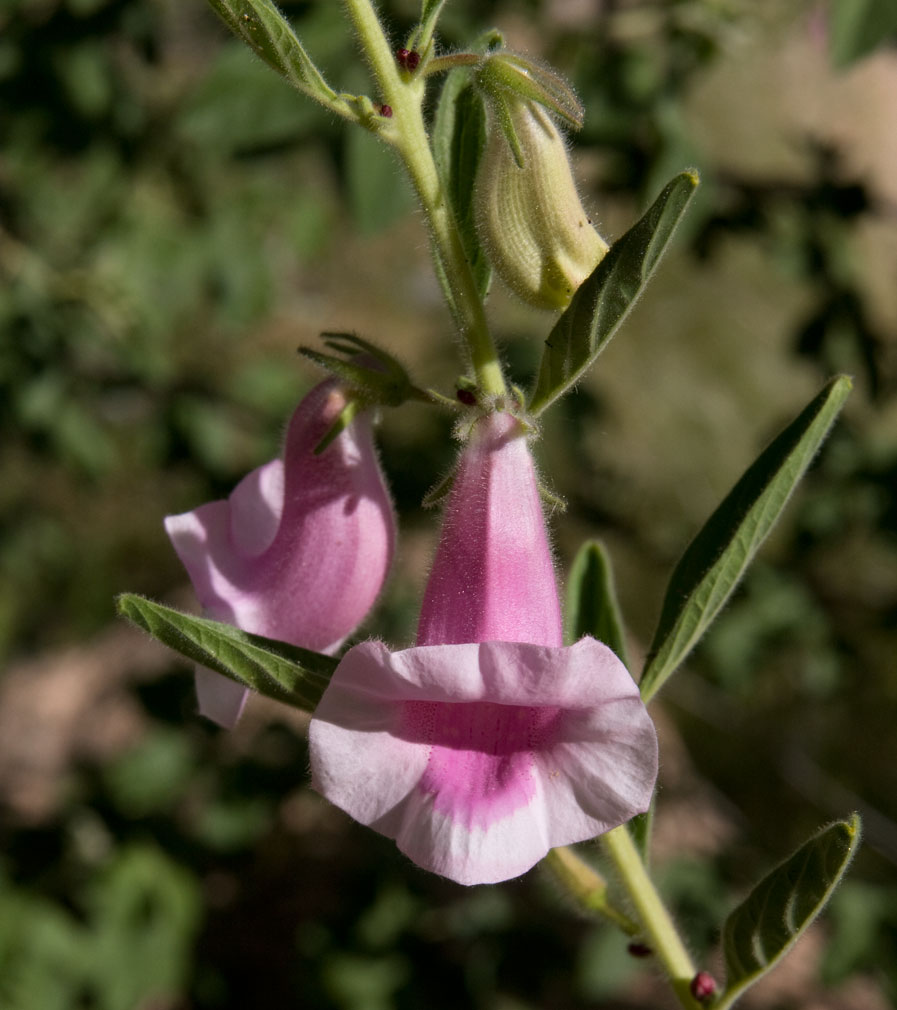 Stiff SesameSesamum rigidum
-
 Wild SesamSesamum triphyllum
-
 Blackeye SesameSesamum capense
- Angolan SesameSesamum angolense
- Indian Sesame Oil PlantSesamum prostratum
- Fine SesameSesamum calycinum
Compare
Questions and answers
What is the scientific name of the Sesame?
The scientific name of the Sesame is Sesamum indicum. Written with its author, the full name is Sesamum indicum L..
Which family does the Sesame belong to?
Sesamum indicum belongs to the family Pedaliaceae, in the order Lamiales and the class Magnoliopsida.
Where is the Sesame found?
Checklists and occurrence records place Sesamum indicum in 138 countries, including India, China, Afghanistan, Australia, Mexico and Uzbekistan.
What other names does the Sesame have?
Sesamum indicum is also known in English as Benne, Benue Oil, Cultivated Sesame, Gingelly-Oil Plant, Gingilli and Indian Sesame.
What is another name for sesame?
Other recorded English names include Benne, Benue Oil, Cultivated Sesame, Gingelly-Oil Plant, Gingilli, Indian Sesame, Sem-Sem, Sem-Semoil, Teel Oil, Tilseed, beniseed, benneseed, and benniseed.[37]
Where is the sesame plant native to?
The cultivated species originated in India.[20]
Sources
Passages the profile rests on
- Sesamum indicum is an erect annual herb with a hollow stem or white pith. Source passage: “Sesame is an erect annual herb that grows 60–150 cm tall. The stem is hollow or has a white pith.” — pmc.ncbi.nlm.nih.gov
- The plant grows approximately 60–150 cm tall. Source passage: “Sesame is an erect annual herb that grows 60–150 cm tall.” — pmc.ncbi.nlm.nih.gov
- The leaves are rectangular or ovate and have a slightly hairy surface. Source passage: “The sesame leaves are 3–10 cm long, 2.5–4 cm wide, and rectangular or ovate in shape with a slightly hairy surface.” — pmc.ncbi.nlm.nih.gov
- The leaves grow singly or in groups of two to three in the leaf axils. Source passage: “They are borne singly or 2–3 together in the leaf axils.” — pmc.ncbi.nlm.nih.gov
- The leaves measure approximately 3–10 cm long and 2.5–4 cm wide. Source passage: “The sesame leaves are 3–10 cm long, 2.5–4 cm wide” — pmc.ncbi.nlm.nih.gov
- The flowers have tubular corollas that are white, often with purplish-red or yellow markings. Source passage: “The corolla of sesame is 2.5–3 cm long in a tube shape about 1–1.5 cm in diameter. It is white, often with a purplish-red or yellow halo.” — pmc.ncbi.nlm.nih.gov
- The flowers contain four stamens concealed inside the corolla. Source passage: “The four stamens are hidden inside the flower” — pmc.ncbi.nlm.nih.gov
- The ovary is superior, divided into four locules, and hairy externally. Source passage: “the ovary is superior, 4-loculed and pilose outside” — pmc.ncbi.nlm.nih.gov
- The calyx lobes measure approximately 5–8 mm long and 1.6–3.5 mm wide. Source passage: “The calyx lobes of sesame are 5–8 mm long and 1.6–3.5 mm wide” — pmc.ncbi.nlm.nih.gov
- The corolla measures approximately 2.5–3 cm long and 1–1.5 cm in diameter. Source passage: “The corolla of sesame is 2.5–3 cm long in a tube shape about 1–1.5 cm in diameter.” — pmc.ncbi.nlm.nih.gov
- The fruit is a rectangular capsule with longitudinal surface ribs and microscopic epidermal hairs. Source passage: “The sesame capsule is rectangular in shape, 2–3 cm in length, and 6–12 mm in diameter, with longitudinal ribs on the surface and microscopic hairs on the epidermis.” — pmc.ncbi.nlm.nih.gov
- The capsule measures approximately 2–3 cm long and 6–12 mm in diameter. Source passage: “The sesame capsule is rectangular in shape, 2–3 cm in length, and 6–12 mm in diameter” — pmc.ncbi.nlm.nih.gov
- The seeds occur in black or white forms. Source passage: “Sesame seeds are black or white, the black ones are called black sesame and the white ones are called white sesame” — pmc.ncbi.nlm.nih.gov
- Sesame seeds are ovate, slightly flattened, and narrower at the hilum. Source passage: “The seeds are ovate, slightly flattened, and somewhat thinner at the eye of the seed (hilum) than at the opposite end.” — English Wikipedia
- Individual seeds typically measure approximately 3–4 mm. Source passage: “Typically, the seeds are 3 to 4 mm (0.12 to 0.16 in).” — English Wikipedia
- Sesame is cultivated in subtropical regions as a short-day crop. Source passage: “Sesame is a short-day crop in the subtropics” — pmc.ncbi.nlm.nih.gov
- Sesame cultivation is associated with fertile, well-drained soils having neutral pH. Source passage: “The high-yielding crops do best on fertile, well-drained, soils with a neutral pH.” — English Wikipedia
- The plant is adapted to drought conditions and can grow where other crops fail. Source passage: “It tolerates drought conditions well, growing where other crops fail.” — English Wikipedia
- Most commercial sesame cultivars are intolerant of waterlogged soil conditions. Source passage: “Most commercial cultivars of sesame are intolerant of waterlogging.” — English Wikipedia
- The cultivated species originated in India. Source passage: “S. indicum, the cultivated type, originated in India.” — English Wikipedia
- Sesame is distributed in countries including India, China, and Malaysia. Source passage: “It is distributed in countries such as India, China, and Malaysia.” — pmc.ncbi.nlm.nih.gov
- Sesame is widely naturalized in tropical regions around the world. Source passage: “It is widely naturalized in tropical regions around the world” — English Wikipedia
- China's sesame cultivation extends as far north as 45° N, particularly in the Yellow River and middle and lower Yangtze River regions. Source passage: “The sesame cultivation area in China can be up to 45° N, mainly in the Yellow River and the middle and lower reaches of the Yangtze River.” — pmc.ncbi.nlm.nih.gov
- Sesame produces capsules containing seeds. Source passage: “Sesamum indicum, commonly known as sesame, is a tropical crop grown for its small edible seeds found inside pods” — inaturalist.org
- Sesame capsules normally contain four locules. Source passage: “there are four locules.” — English Wikipedia
- The mature capsules split open to disperse their seeds. Source passage: “Upon ripening, sesame pods split, releasing a pop” — English Wikipedia
- Rainfall late in the growing season can increase seed loss through capsule opening. Source passage: “Rainfall late in the season prolongs growth and increases loss to dehiscence, when the seedpod shatters, scattering the seed.” — English Wikipedia
- Sesame flowering occurs in late summer and early autumn. Source passage: “flowering occurs in late summer and early autumn.” — pmc.ncbi.nlm.nih.gov
- The crop's flowering depends on photoperiod and cultivar. Source passage: “Flowering depends on photoperiod and cultivar.” — English Wikipedia
- Sesame growth and yield are favored by warm temperatures above 23 °C. Source passage: “Warm conditions above 23 °C (73 °F) favor growth and yields.” — English Wikipedia
- Sesame capsule opening releases the mature seeds. Source passage: “Sesame seeds are protected by a capsule that bursts when the seeds are ripe.” — English Wikipedia
- Sesame seeds are processed into sesame oil and sesame paste. Source passage: “sesame seeds are often used to make a variety of foods, such as sesame oil, sesame paste” — pmc.ncbi.nlm.nih.gov
- Sesame seeds are used as ingredients in a variety of foods. Source passage: “sesame seeds are often used to make a variety of foods” — pmc.ncbi.nlm.nih.gov
- Sesame is used in food, animal feed, and cosmetic applications. Source passage: “sesame is used in various aspects of daily life such as food, feed, and cosmetics.” — pmc.ncbi.nlm.nih.gov
- Sesame leaves from mature plants can be used as a laxative. Source passage: “The leaves on mature plants, which are rich in mucilage, can be used as a laxative” — English Wikipedia
- Sesame seed oil content varies between approximately 37% and 63% depending on cultivar and growing conditions. Source passage: “The oil content of sesame seeds ranges from 37% to 63%, depending on the cultivar and the growing s” — pmc.ncbi.nlm.nih.gov
- The English name benne derives from the Gullah word benne, which originated from Malinke bĕne. Source passage: “it comes from the African American creole Gullah benne, which in turn derives from Malinke bĕne.” — English Wikipedia
Data
- Catalogue of Life, 2026-10-16 XR cc by
- Global Biodiversity Information Facility CC BY 4.0
- Wikidata CC0
- GeoNames CC BY 4.0
- Wikimedia Commons per image; credit shown with each image
- Within the Catalogue of Life, this name comes from Synonymic Checklists of the Vascular Plants of the World cc by
References
- L. where the name was published
This species in other databases
- Catalogue of Life 4WYTB
- Wikidata Q2763698
- iNaturalist 285850
- World Flora Online wfo-0000497088
- GRIN 33749
Page built on 27 November 2026. See how the catalog is made and all sources and licences.
Cite this page
ScientificNames.org. (2026). Sesamum indicum (Sesame). Retrieved November 27, 2026, from https://scientificnames.org/species/sesamum-indicum
“Sesamum indicum (Sesame).” ScientificNames.org, 2026, scientificnames.org/species/sesamum-indicum. Accessed 27 Nov. 2026.
ScientificNames.org. “Sesamum indicum (Sesame).” Accessed November 27, 2026. https://scientificnames.org/species/sesamum-indicum.
@misc{scientificnames_sesamum_indicum_sesame,
  author = {{ScientificNames.org}},
  title = {Sesamum indicum (Sesame)},
  year = {2026},
  url = {https://scientificnames.org/species/sesamum-indicum},
  note = {Accessed 2026-11-27}
}