Species · Mammals
European Free-tailed Bat Tadarida teniotis
The scientific name of the European Free-tailed Bat is Tadarida teniotis. It is a species of mammal in the family Molossidae (free-tailed bat), order Chiroptera. The name dates from 1814.
- Scientific name
- Tadarida teniotis (Rafinesque, 1814)
- Common name
- European Free-tailed Bat
- Genus
- Tadarida
- Family
- Molossidae (Free-tailed Bat)
- Order
- Chiroptera
- Class
- Mammalia
- Red List category
- LC Least Concern
- Recorded in
- 29 countries
- Name status
- accepted in the Catalogue of Life
Overview
Tadarida teniotis roosts in rocky crevices and buildings and forages above lakes, scrublands, woodlands and urban areas. It is distinguished by its dog-like facial appearance, long narrow wings and fleshy tail with an unconnected rear third.
Written 26 November 2026 from the sources listed below. Each statement was checked against the passage it cites; statements that could not be supported were removed.
Appearance
The European Free-tailed Bat has wrinkled lips that give its face a dog-like appearance. Its upper lips have five creases, and its long, broad ears are rounded at the top and meet at their front bases.[1][2][3]
Its fur is short and silky, with greyish-black dorsal colouring and a brownish shine, while the ventral fur is paler. Its ears, wings and tail membranes are black.[4][5][6]
Its wings are long and narrow. Its tail is fleshy and robust, with a rear third that is not connected to any membranes and stiff hairs at the tips that function as tactile organs.[7][8][9]
Habitat
The European Free-tailed Bat roosts in crevices in cliffs, rocky gorges and spaces beneath overhangs. It also uses holes in tall buildings, spaces beneath roof tiles and locations under stone bridges.[10][11]
It forages above lakes and in scrublands, woodlands and urban areas. Its reported habitat elevations range from sea level to 3,100 m.[12][13]
It uses warmer regions of the Dodecanese Islands and temperate areas of the Alps. It selects winter roosts with temperatures around 10°C.[14][15]
Diet
The European Free-tailed Bat feeds on insects caught in flight. Moths are its most frequently recorded prey and occur in nearly all examined dietary samples.[16][17]
Moths accounted for 96 of the 115 prey taxa recorded in a dietary study. Females tend to consume larger moths and more migratory moths than males.[18][19]
The migratory moth Autographa gamma is an example of prey consumed by this species.[20]
Behaviour
The European Free-tailed Bat flies rapidly and directly at great heights. It generally drinks infrequently, collecting water from ponds or rivers while flying close to the surface.[21][22][23]
It makes a rattling sound before leaving its roost and often emits a characteristic tsick-tsick sound while flying. It communicates using echolocation calls, with approximately 47 unique calls recorded.[24][25][26]
It generally lives in colonies but rarely interacts with other species. Females form mating groups containing up to nine individuals.[27][28]
Reproduction and life cycle
The European Free-tailed Bat has breeding groups protected by a single male. Its breeding season extends from May through October, with mating in spring and births in fall.[29][30][31]
Females give birth to one pup per pregnancy after a gestation period of approximately 80 days. Newborn young are born in dark, concealed locations.[32][33][34]
Juveniles can fly by approximately four weeks of age and become independent at approximately seven weeks. Females reach sexual maturity at one year of age, while males reach sexual maturity at two years.[35][36][37][38]
Conservation
The European Free-tailed Bat is classified as Least Concern on the IUCN Red List. Its population trend is unknown.[39][40]
Reported threats include pesticide use, deforestation, loss of building roosts and possible wind turbine injuries.[41]
Uses
The species benefits from dam construction because dams provide drinking and foraging areas.[42]
Similar species
Populations in Japan, Taiwan and Korea are considered a separate species, Tadarida insignis.[43]
Classification of the European Free-tailed Bat
| Kingdom | Animalia |
|---|---|
| Phylum | Chordata |
| Subphylum | Vertebrata |
| Infraphylum | Gnathostomata |
| Parvphylum | Osteichthyes |
| Megaclass | Tetrapoda |
| Class | Mammalia (Mammal) |
| Subclass | Theria |
| Infraclass | Eutheria |
| Order | Chiroptera (Bat) |
| Suborder | Yangochiroptera |
| Superfamily | Vespertilionoidea |
| Family | Molossidae (Free-tailed Bat) |
| Subfamily | Molossinae (True Free-tailed Bats) |
| Genus | Tadarida (Guano Bats) |
| Species | Tadarida teniotis (Rafinesque, 1814) |
Where the European Free-tailed Bat is found
Checklists and occurrence records place Tadarida teniotis in 29 countries across Africa and Asia. GBIF holds 23,193 georeferenced records of it.
Countries
- Algeria 5
- Andorra 5
- Bosnia and Herzegovina 6
- Bulgaria 30
- China 12
- Croatia 13
- Egypt 118
- France 15,210
- Georgia 14
- Greece 913
- India 4
- Iran 4
- Israel 370
- Italy 414
- Jordan 8
- Kyrgyzstan 6
- Laos 8
- Lebanon 7
- Libya 13
- Montenegro 14
- Morocco 20
- North Macedonia 59
- Palestinian Territory 30
- Portugal 1,925
- Spain 2,938
- Switzerland 1,020
- Syria 9
- Tunisia 5
- Turkey 13
Regions and cities with the most records
- Provence-Alpes-Côte d'Azur, France 5,513
- Occitanie, France 5,053
- Aubagne, France 1,894
- Allauch, France 1,870
- Marseille 11, France 1,859
- Marseille 12, France 1,859
- Marseille 13, France 1,854
- Marseille 09, France 1,848
- Marseille 10, France 1,847
- Marseille 04, France 1,846
- Marseille 14, France 1,841
- Marseille 05, France 1,840
- Marseille, France 1,839
- Marseille 01, France 1,839
- Marseille 03, France 1,837
- Marseille 06, France 1,837
- Marseille 08, France 1,835
- Marseille 07, France 1,831
- Marseille 02, France 1,830
- La Ciotat, France 1,819
- Auvergne-Rhône-Alpes, France 1,750
- Corsica, France 1,349
- Bragança, Portugal 1,151
- Biarritz, France 1,070
- Marseille 15, France 1,011
- Gardanne, France 1,010
- Marseille 16, France 1,006
- Les Pennes-Mirabeau, France 995
- Anglet, France 880
- Crete, Greece 866
- Bayonne, France 763
- Hondarribia, Spain 680
- Irun, Spain 677
- Ticino, Switzerland 671
- Catalonia, Spain 596
- Manosque, France 508
Range as the checklists state it
Europe & Northern Asia (excluding China)
Southern Asia
Africa
A number beside a place is its count of GBIF occurrence records. A place without a number comes from a checklist alone. Records show where a species has been observed or collected, which can include escapes and vagrants.
Common names
English
- European Free-tailed Bat
Names in 5 other languages
- French
- Molosse de Cestoni
- German
- Bulldoggfledermaus
- Greek
- Νυχτονόμος
- Italian
- Molosso di Cestoni
- Spanish
- Muricécelago Rabudo
Synonyms
10 other scientific names have been used for this species and are now treated as synonyms of Tadarida teniotis.
- Cephalotes teniotis Rafinesque, 1814
- Dysopes rüpelii Temminck, 1826
- Tadarida cestoni
- Tadarida midas Schulze
- Tadarida nigrogriseus
- Tadarida rüppellii
- Tadarida savii
- Tadarida teniotis rueppelli (Temminck, 1826)
- Tadarida teniotis rueppellii (Temminck, 1826)
- Tadarida teniotis teniotis (Rafinesque, 1814)
Related species
-
 Mexican Free-tailed BatTadarida brasiliensis
-
 Egyptian Free-tailed BatTadarida aegyptiaca
-
 La Touche's Free-tailed BatTadarida latouchei
-
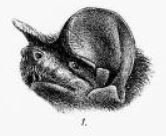 African Giant Free-tailed BatTadarida ventralis
- East Asian Free-tailed BatTadarida insignis
- Madagascan Large Free-tailed BatTadarida fulminans
- Kenyan Big-eared Free-tailed BatTadarida lobata
-
 Western Mastiff BatEumops perotis
Compare
Questions and answers
What is the scientific name of the European Free-tailed Bat?
The scientific name of the European Free-tailed Bat is Tadarida teniotis. Written with its author, the full name is Tadarida teniotis (Rafinesque, 1814).
Which family does the European Free-tailed Bat belong to?
Tadarida teniotis belongs to the family Molossidae, in the order Chiroptera and the class Mammalia.
Where is the European Free-tailed Bat found?
Checklists and occurrence records place Tadarida teniotis in 29 countries, including France, Spain, Portugal, Switzerland, Greece and Italy.
What is the conservation status of the European Free-tailed Bat?
The IUCN Red List category recorded for Tadarida teniotis is Least Concern (LC).
Sources
Passages the profile rests on
- The species has wrinkled lips that give its face a dog-like appearance. Source passage: “Its muzzle has wrinkled lips, which gives its face a similarity to a dog's face” — English Wikipedia
- Its long, broad ears are rounded at the top and meet at their front bases. Source passage: “Their ears are rounded at the top and touch at the base in the front.” — animaldiversity.org
- Its upper lips have five creases. Source passage: “European free-tailed bats have a long muzzle and five creases in their upper lips.” — animaldiversity.org
- Its dorsal fur is greyish-black with a brownish shine, while its ventral fur is paler. Source passage: “the dorsal (upper) surface is greyish-black, with a brownish shine, while the ventral (under) surface is paler.” — English Wikipedia
- Its ears, wings and tail membranes are black. Source passage: “Its ears, wing and tail membranes are black” — English Wikipedia
- Its fur is short and silky. Source passage: “Their fur is short and silky” — animaldiversity.org
- The species has a fleshy, robust tail whose rear third is not connected to any membranes. Source passage: “Its tail is fleshy and robust, and the rear third is not connected to any membranes.” — English Wikipedia
- Its wings are long and narrow. Source passage: “Their wings are long and narrow.” — animaldiversity.org
- The tips of its tail have stiff hairs that function as tactile organs. Source passage: “The ends of their tails have stiff hairs that are used as tactile organs.” — animaldiversity.org
- It roosts in crevices in cliffs, rocky gorges and spaces beneath overhangs. Source passage: “in crevices in cliffs, in rocky gorges, under overhangs” — English Wikipedia
- It also roosts in holes in tall buildings, beneath roof tiles and under stone bridges. Source passage: “in holes in tall buildings, under roof tiles or under stone bridges.” — English Wikipedia
- It forages above lakes and in scrublands, woodlands and urban areas. Source passage: “European free-tailed bats forage above lakes and in scrublands, woodlands, and urban areas.” — animaldiversity.org
- Its reported habitat elevations range from sea level to 3,100 m. Source passage: “at altitudes from sea level to 3100 m.” — English Wikipedia
- It uses warmer regions of the Dodecanese Islands and temperate areas of the Alps. Source passage: “They inhabit warmer regions of the Dodecanese islands off of Greece, as well as more temperate areas high in the Alps.” — animaldiversity.org
- It selects winter roosts with temperatures around 10°C. Source passage: “In winter, European free-tailed bats select roosts that oscillate around 10°C.” — animaldiversity.org
- It feeds on insects caught in flight. Source passage: “It feeds on insects caught in flight” — English Wikipedia
- Moths are its most frequently recorded prey and occur in nearly all examined dietary samples. Source passage: “Moths (Lepidoptera; mainly Noctuidae and Geometridae) were by far the most frequently recorded prey, occurring in nearly all samples” — pmc.ncbi.nlm.nih.gov
- Moths accounted for 96 of the 115 prey taxa recorded in the dietary study. Source passage: “accounting for 96 out of 115 prey taxa.” — pmc.ncbi.nlm.nih.gov
- Females tend to consume larger moths and more migratory moths than males. Source passage: “Compared to males, females tended to consume larger moths and more moths of migratory behaviour” — pmc.ncbi.nlm.nih.gov
- The migratory moth Autographa gamma is an example of prey consumed by this species. Source passage: “more moths of migratory behaviour (e.g. Autographa gamma).” — pmc.ncbi.nlm.nih.gov
- It flies rapidly and directly at great heights. Source passage: “flies at a great height with a swift direct flight” — English Wikipedia
- It generally drinks infrequently. Source passage: “and seldom needs to drink.” — English Wikipedia
- When drinking, it collects water from ponds or rivers while flying close to the surface. Source passage: “it scoops up water from a pond or river while flying low over the surface.” — English Wikipedia
- It makes a rattling sound before leaving its roost. Source passage: “Before leaving the roost it makes a rattling sound” — English Wikipedia
- It often emits a characteristic tsick-tsick sound while flying. Source passage: “it often emits a characteristic "tsick-tsick" in flight” — English Wikipedia
- It communicates using echolocation calls, with approximately 47 unique calls recorded. Source passage: “Around 47 unique calls have been recorded.” — animaldiversity.org
- It generally lives in colonies but rarely interacts with other species. Source passage: “European free-tailed bats live in colonies, but do not interact with other species very often.” — animaldiversity.org
- Females form mating groups containing up to nine individuals. Source passage: “females will form groups of up to nine females.” — animaldiversity.org
- Its breeding groups are protected by a single male. Source passage: “These harems are then actively protected by a single male” — animaldiversity.org
- Its breeding season extends from May through October. Source passage: “The breeding season for European free-tailed bats lasts from May to October.” — animaldiversity.org
- Mating occurs in spring and births occur in fall. Source passage: “Mating occurs in spring, and birth occurs in fall.” — animaldiversity.org
- Females give birth to one pup per pregnancy. Source passage: “They only give birth to one pup per pregnancy.” — animaldiversity.org
- The gestation period is approximately 80 days. Source passage: “The gestation period is about eighty days” — English Wikipedia
- Newborn young are born in dark, concealed locations. Source passage: “a single youngster is born in some dark, concealed location.” — English Wikipedia
- Juveniles can fly by approximately four weeks of age. Source passage: “can fly by four weeks” — English Wikipedia
- Juveniles become independent at approximately seven weeks of age. Source passage: “is independent by seven weeks.” — English Wikipedia
- Females reach sexual maturity at one year of age. Source passage: “Females reach sexual maturity at a year old” — animaldiversity.org
- Males reach sexual maturity at two years of age. Source passage: “males reach sexual maturity at two years of age.” — animaldiversity.org
- The species is classified as Least Concern on the IUCN Red List. Source passage: “The European free-tailed bat is included by the IUCN in its Red List of Threatened Species as being of "Least Concern".” — English Wikipedia
- Its population trend is unknown. Source passage: “The population trend is not known” — English Wikipedia
- Reported threats include pesticide use, deforestation, loss of building roosts and possible wind turbine injuries. Source passage: “The threats it faces include the use of pesticides, deforestation, the loss of roosts in some buildings and possible injury from wind turbines” — English Wikipedia
- The species benefits from dam construction because dams provide drinking and foraging areas. Source passage: “Dams act as drinking and foraging areas and increase overall activity of European free-tailed bats in the area.” — animaldiversity.org
- Populations in Japan, Taiwan and Korea are considered a separate species, Tadarida insignis. Source passage: “Populations in Japan, Taiwan and Korea are now considered to be a separate species Tadarida insignis.” — English Wikipedia
Data
- Catalogue of Life, 2026-10-16 XR cc by
- Global Biodiversity Information Facility CC BY 4.0
- Wikidata CC0
- GeoNames CC BY 4.0
- Within the Catalogue of Life, this name comes from The Integrated Taxonomic Information System cc0
References
- Prícis Som. p.12 where the name was published
- Wilson, Don E., and DeeAnn M. Reeder, eds. (1993). Mammal Species of the World: A Taxonomic and Geographic Reference, 2nd Ed., 3rd Printing.
- Wilson, Don E., and F. Russell Cole. (2000). Common Names of Mammals of the World.
- Simmons, Nancy B. / Wilson, Don E., and DeeAnn M. Reeder, eds. (2005). Order Chiroptera. Mammal Species of the World: A Taxonomic and Geographic Reference, 3rd Ed., Vols. 1 & 2.
- Wilson, D. E., and R. A. Mittermeier, eds. (2019). Handbook of the Mammals of the World. Vol. 9: Bats.
This species in other databases
Page built on 27 November 2026. See how the catalog is made and all sources and licences.
Cite this page
ScientificNames.org. (2026). Tadarida teniotis (European Free-tailed Bat). Retrieved November 27, 2026, from https://scientificnames.org/species/tadarida-teniotis
“Tadarida teniotis (European Free-tailed Bat).” ScientificNames.org, 2026, scientificnames.org/species/tadarida-teniotis. Accessed 27 Nov. 2026.
ScientificNames.org. “Tadarida teniotis (European Free-tailed Bat).” Accessed November 27, 2026. https://scientificnames.org/species/tadarida-teniotis.
@misc{scientificnames_tadarida_teniotis_european_free_tailed_bat,
  author = {{ScientificNames.org}},
  title = {Tadarida teniotis (European Free-tailed Bat)},
  year = {2026},
  url = {https://scientificnames.org/species/tadarida-teniotis},
  note = {Accessed 2026-11-27}
}