Species · Flowering plants
Tamarind Tamarindus indica
The scientific name of the Tamarind is Tamarindus indica. It is a species of flowering plant in the family Fabaceae (bean), order Fabales.
- Scientific name
- Tamarindus indica L.
- Common name
- Tamarind
- Genus
- Tamarindus
- Family
- Fabaceae (Bean)
- Order
- Fabales
- Class
- Magnoliopsida
- Red List category
- LC Least Concern
- Recorded in
- 97 countries
- Name status
- accepted in the Catalogue of Life

Overview
Tamarind is a long-living tree with dense foliage and an irregular, vase-shaped crown. It grows primarily in seasonally dry tropical biomes and is widely distributed across tropical regions from Africa to South Asia and Australia.
Written 24 November 2026 from the sources listed below. Each statement was checked against the passage it cites; statements that could not be supported were removed.
Appearance
Tamarind has a single central trunk with branches that droop as the tree matures. Its evergreen leaves are alternately arranged and paripinnately compound, with bright green, elliptic-ovular leaflets and pinnate venation.[1][2][3]
Its flowers are yellow with orange or red streaks and have five petals. They are approximately 2.5 centimetres wide.[4][5]
Its seeds are somewhat flattened and glossy. The timber has hard, dark red heartwood and softer, yellowish sapwood.[6][7]
The tree reaches a maximum crown height of 25–30 metres, and its crown can reach 12 metres in width. Its trunk can reach a circumference of 7.5 metres.[8][9][10]
Its leaflets are less than 15 centimetres long, and its flowers are approximately 2.5 centimetres wide. Its fruit pods are 12–15 centimetres long.[11][5][12]
Habitat
Tamarind grows primarily in seasonally dry tropical biomes. It is highly resistant to drought and wind-borne salt but is sensitive to frost.[13][14][15]
In Uganda, the tree grows wild across agro-ecological zones, including high-altitude areas above 2,000 metres above sea level. It occurs on farms, roadsides, abandoned homesteads and market places.[16][17]
The tree grows well in full sunlight and in clay, loam, sandy and acidic soils.[18][19]
Tamarind is native to tropical Africa, with its native range identified as the Comoros and Madagascar. It is indigenous to Uganda and Africa.[20][21][22]
The tree is widely distributed across tropical regions from Africa to South Asia and Australia. It was introduced to Mexico and Central America during the 16th century.[23][24]
Tamarind is widely cultivated in India, particularly in Maharashtra, Chhattisgarh, Karnataka, Telangana, Andhra Pradesh and Tamil Nadu.[25]
Diet
The fruit pulp contains approximately 30–40% sugar. The fruit contains approximately 30% pulp, 40% seeds and 30% hull.[26][27]
The pods contain relatively high levels of vitamin C compared with many commonly consumed fruits and vegetables.[28]
Reproduction and life cycle
Tamarind flowers are borne in small racemes. Its fruit develops as an indehiscent pod.[29][30]
The seeds can retain their germination capability for several months when stored dry. Scarifying or briefly boiling the seeds can enhance germination.[31][32]
Uses
Tamarind pulp is used in chutneys, curries and sauces. It is also used to produce industrial concentrates, pickles, confections and powders.[33][34]
The fruit pulp is used in traditional medicine and as a dye. In Uganda, tamarind pulp is used to treat meningitis and other ailments.[35][36]
Tamarind wood is used for woodworking and furniture production. Tamarind seed oil can be extracted from the seeds.[37][38]
The tree is planted for shade and ornamental purposes. Tamarind kernel powder is used in textile and jute processing.[39][40]
Classification of the Tamarind
| Kingdom | Plantae |
|---|---|
| Subkingdom | Pteridobiotina |
| Phylum | Tracheophyta |
| Class | Magnoliopsida |
| Order | Fabales |
| Family | Fabaceae (Bean) |
| Genus | Tamarindus (Tamarind) |
| Species | Tamarindus indica L. |
Where the Tamarind is found
Checklists and occurrence records place Tamarindus indica in 97 countries across Africa, Asia, North America, Oceania and South America. GBIF holds 52,140 georeferenced records of it.
Countries where it is native or its origin is not stated
- Brazil 837
- Comoros 10
- Equatorial Guinea 15
- Gabon 4
- Madagascar 416
- Mayotte 78
- Republic of the Congo 4
- Sao Tome and Principe 36
- South Sudan 6
Countries where it has been introduced
- Angola 32
- Aruba 5
- Australia 448
- Bahamas 52
- Bangladesh 7
- Belize 24
- Benin 1,727
- Bolivia 77
- British Indian Ocean Territory
- Burkina Faso 442
- Burundi 37
- Cabo Verde 46
- Cambodia 20
- Cameroon 272
- Cayman Islands 16
- Central African Republic 80
- Chad 204
- China 347
- Christmas Island 4
- Colombia 334
- Costa Rica 136
- Cuba 67
- Democratic Republic of the Congo 51
- Djibouti 2
- Dominican Republic 55
- Ecuador 76
- Egypt 15
- Eritrea 14
- Ethiopia 236
- Fiji 10
- French Polynesia 99
- Gambia 13
- Ghana 38
- Guatemala 29
- Guinea 28
- Guinea-Bissau 5
- Haiti 28
- India 40,508
- Indonesia 206
- Iraq
- Ivory Coast 90
- Jamaica 44
- Kenya 110
- Kiribati 1
- Laos 15
- Liberia 2
- Libya 5
- Malawi 85
- Maldives 1
- Mali 84
- Mauritania 23
- Mauritius 13
- Mexico 1,023
- Mozambique 150
- Myanmar 17
- Nepal 22
- New Caledonia 32
- Niger 116
- Nigeria 113
- Oman 23
- Pakistan 5
- Panama 97
- Papua New Guinea 9
- Peru 20
- Philippines 169
- Puerto Rico 175
- Reunion 740
- Saudi Arabia 17
- Senegal 134
- Seychelles 65
- Sierra Leone 12
- Somalia 12
- South Africa 18
- Sri Lanka 108
- Sudan 39
- Tanzania 251
- Thailand 334
- Togo 84
- Trinidad and Tobago 28
- Turks and Caicos Islands 4
- Uganda 28
- United States 347
- Vanuatu 5
- Venezuela 42
- Vietnam 83
- Yemen 40
- Zambia 46
- Zimbabwe 63
Regions and cities with the most records
- Kerala, India 36,473
- Thiruvananthapuram, India 10,593
- Pallichal, India 9,813
- Neyyāttinkara, India 9,546
- Kodungallūr, India 3,518
- Kizhake Chālakudi, India 3,397
- Palakkad, India 3,152
- Vattiyūrkāvu, India 2,473
- Shertallai, India 2,232
- Cherthala, India 2,231
- Nedumangād, India 1,851
- Kayamkulam, India 1,836
- Thrissur, India 1,663
- Alangad, India 1,557
- Ottapalam, India 1,497
- Alengād, India 1,492
- Pallikal, India 1,397
- Edattala, India 1,273
- Vazhakkala, India 1,245
- Moonniyur, India 1,142
- Mannārakkāt, India 1,139
- Changanācheri, India 1,129
- Tiruvalla, India 1,096
- Kunnamkulam, India 1,051
- Perintalmanna, India 1,049
- Kollam, India 1,035
- Kodur, India 995
- Tamil Nadu, India 990
- Tellicherry, India 987
- Malappuram, India 931
- Tennala, India 930
- Tirūrangādi, India 923
- Vengara, India 923
- Cheruvannur, India 776
- Kunnamangalam, India 755
- Thodupuzha, India 719
45 more countries have a few records outside this range
These countries hold a few records of Tamarindus indica but lie outside the range the checklists give for it. Such records are often zoo or garden specimens, museum material or vagrants, so the species is not counted as occurring there.
- Anguilla 3
- Antigua and Barbuda 18
- Argentina 6
- Barbados 39
- Bhutan 3
- Bonaire, Saint Eustatius and Saba 49
- British Virgin Islands 17
- Canada 4
- Cook Islands 12
- Curacao 63
- Dominica 19
- El Salvador 28
- France 4
- French Guiana 38
- Grenada 11
- Guadeloupe 91
- Guam 6
- Guyana 16
- Honduras 36
- Hong Kong 5
- Japan 4
- Malaysia 89
- Martinique 80
- Micronesia 3
- Montserrat 11
- Nicaragua 73
- Northern Mariana Islands 4
- Paraguay 9
- Saint Barthelemy 23
- Saint Kitts and Nevis 49
- Saint Lucia 12
- Saint Martin 19
- Saint Vincent and the Grenadines 10
- Samoa 5
- Singapore 18
- Sint Maarten 11
- Spain 4
- Suriname 25
- Taiwan 31
- The Netherlands 3
- Timor Leste 5
- Tonga 10
- U.S. Virgin Islands 66
- United Arab Emirates 3
- United States Minor Outlying Islands 5
A number beside a place is its count of GBIF occurrence records. A place without a number comes from a checklist alone. Records show where a species has been observed or collected, which can include escapes and vagrants.
Common names
English
- Tamarind
- Indian Tamarind
- Tamarind Tree
- Tormon
- Kilytree
Names in 32 other languages
- Arabic
- تمر هندي
- Bengali
- তেঁতুল
- Chinese
- 亞森果, 罗望子, 羅望子, 羅望子/酸酸果, 老虎须, 酸子, 酸荚, 酸角
- Czech
- tamarind indický
- Danish
- Tamarindetræ
- Finnish
- tamarindipuu
- French
- tamarin, tamarindier, tamarinier
- German
- Tamarinde, Tamarindenbaum
- Indonesian
- Asam Jawa
- Japanese
- タマリンド
- Lithuanian
- Indinis tamarindas
- Marathi
- चिंच
- Papiamento
- Tamarein, Tamaren, Tamarijn
- Polish
- tamaryndowiec indyjski
- Portuguese
- tamarinda, tamarindeiro, tamarindo, tamarindo-do-Egito, tamarino, tâmara-da-Índia
- Russian
- Тамаринд индийский
- Sinhala
- සියඹලා
- Slovak
- tamarind indooceánsky
- Spanish
- Tamarindo africano
- Tagalog
- Sampalok
- Telugu
- చింతచెట్టు
- Thai
- มะขาม
- Turkish
- demirhindi
- ban
- asem
- hts
- Muhi
- ilo
- Salamagi
- jav
- Asêm
- min
- Asam Jao
- seh
- M'bhwemba
- sna
- musika, sika
- srn
- tamalen
- teo
- epeduru
Synonyms
7 other scientific names have been used for this species and are now treated as synonyms of Tamarindus indica.
- Cavaraea elegans Speg.
- Tamarindus erythraeus Mattei
- Tamarindus indica var. emarginata Chiov.
- Tamarindus occidentalis Gaertn.
- Tamarindus officinalis Hook.
- Tamarindus somalensis Mattei
- Tamarindus umbrosa Salisb.
Related species
-
 PeanutArachis hypogaea
-
 LiquoriceGlycyrrhiza glabra
-
 ChickpeaCicer arietinum
-
 SoybeanGlycine max
-
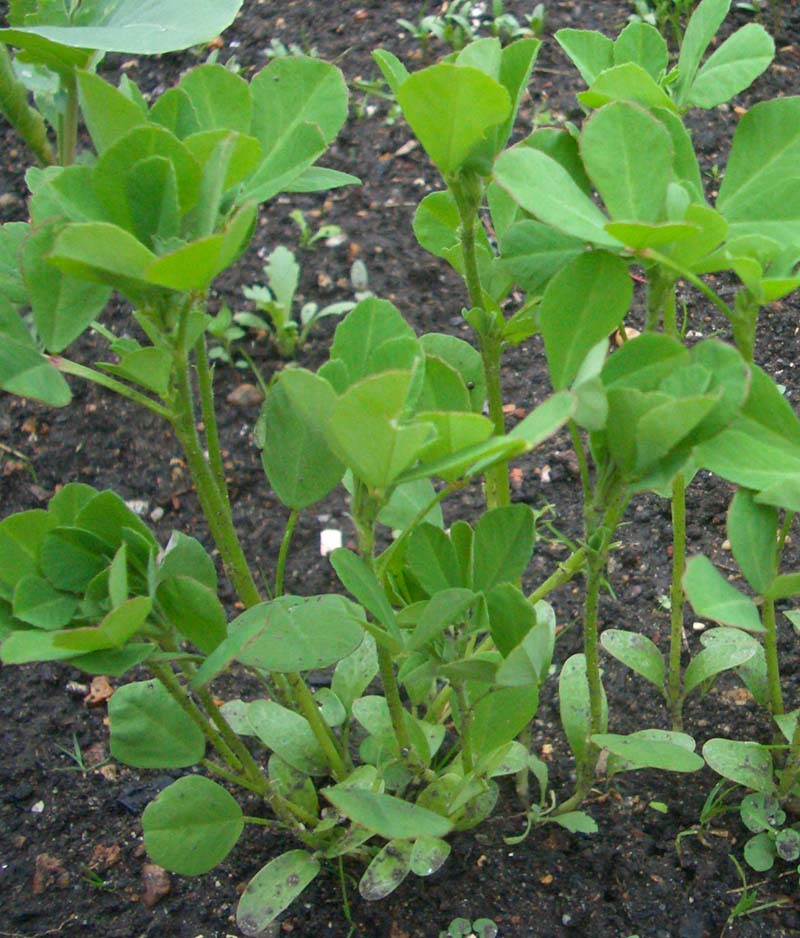 FenugreekTrigonella foenum-graecum
-
 RooibosAspalathus linearis
-
 Fava BeanVicia faba
-
 CarobCeratonia siliqua
Compare
Questions and answers
What is the scientific name of the Tamarind?
The scientific name of the Tamarind is Tamarindus indica. Written with its author, the full name is Tamarindus indica L..
Which family does the Tamarind belong to?
Tamarindus indica belongs to the family Fabaceae, in the order Fabales and the class Magnoliopsida.
Where is the Tamarind found?
Checklists and occurrence records place Tamarindus indica in 97 countries, including Brazil, Madagascar, Mayotte, Sao Tome and Principe, Equatorial Guinea and Comoros.
What is the conservation status of the Tamarind?
The IUCN Red List category recorded for Tamarindus indica is Least Concern (LC).
What other names does the Tamarind have?
Tamarindus indica is also known in English as Indian Tamarind, Tamarind Tree, Tormon and Kilytree.
Sources
Passages the profile rests on
- The tree has a single central trunk with branches that droop as it matures. Source passage: “The branches droop from a single, central trunk as the tree matures” — English Wikipedia
- Its evergreen leaves are alternately arranged and paripinnately compound. Source passage: “The evergreen leaves are alternately arranged and paripinnately compound.” — English Wikipedia
- Its leaflets are bright green, elliptic-ovular and pinnately veined. Source passage: “The leaflets are bright green, elliptic-ovular, pinnately veined” — English Wikipedia
- Its flowers are yellow with orange or red streaks and have five petals. Source passage: “Flowers are 2.5 cm (1 in) wide, five-petalled, borne in small racemes, and yellow with orange or red streaks.” — English Wikipedia
- Its flowers are approximately 2.5 centimetres wide. Source passage: “Flowers are 2.5 cm (1 in) wide” — English Wikipedia
- Its seeds are somewhat flattened and glossy. Source passage: “The brown seeds left behind are somewhat flattened, and glossy.” — English Wikipedia
- Its timber has hard, dark red heartwood and softer, yellowish sapwood. Source passage: “Tamarind timber consists of hard, dark red heartwood and softer, yellowish sapwood.” — English Wikipedia
- The tree reaches a maximum crown height of 25–30 metres. Source passage: “which attains a maximum crown height of 25–30 metres (82–98 feet).” — English Wikipedia
- Its crown can reach 12 metres in width. Source passage: “dense foliage up to 12 m (39 ft) wide.” — English Wikipedia
- Its trunk can reach a circumference of 7.5 metres. Source passage: “A tamarind trunk may grow to a circumference of 7.5 m (25 ft).” — English Wikipedia
- Its leaflets are less than 15 centimetres long. Source passage: “less than 15 centimetres (6 inches) in length.” — English Wikipedia
- Its fruit pods are 12–15 centimetres long. Source passage: “The fruit is an indehiscent pod, 12 to 15 cm (4+1⁄2 to 6 in) in length” — English Wikipedia
- The species grows primarily in seasonally dry tropical biomes. Source passage: “grows primarily in the seasonally dry tropical biome.” — powo.science.kew.org
- The species has high resistance to drought and wind-borne salt. Source passage: “with a high resistance to drought and wind-borne salt as found in coastal areas.” — English Wikipedia
- The species is sensitive to frost. Source passage: “As a tropical species, it is frost-sensitive.” — English Wikipedia
- The tree grows wild across Uganda's agro-ecological zones, including high-altitude areas above 2,000 metres above sea level. Source passage: “also grows wild across all the agro‐ecological zones of Uganda (Okello et al., 2017) as well as high‐altitude areas above 2,000 masl such as mountain ranges.” — pmc.ncbi.nlm.nih.gov
- In Uganda, the species occurs on farms, roadsides, abandoned homesteads and market places. Source passage: “indiscriminately grows without much attention at anywhere like on‐farm, wild, roadsides, abandoned homesteads, market places” — pmc.ncbi.nlm.nih.gov
- The tree grows well in full sunlight. Source passage: “The tree grows well in full sun.” — English Wikipedia
- It grows in clay, loam, sandy and acidic soils. Source passage: “It prefers clay, loam, sandy, and acidic soil types” — English Wikipedia
- The species is native to tropical Africa. Source passage: “Tamarind (Tamarindus indica) is a leguminous tree bearing edible fruit that is indigenous to tropical Africa” — English Wikipedia
- Its native range is identified as the Comoros and Madagascar. Source passage: “The native range of this species is Comoros, Madagascar.” — powo.science.kew.org
- The species is indigenous to Uganda and Africa. Source passage: “It is an important multipurpose indigenous fruit tree that is indigenous to Uganda and Africa.” — pmc.ncbi.nlm.nih.gov
- The tree is widely distributed across tropical regions from Africa to South Asia and Australia. Source passage: “It is widely distributed throughout the tropics, from Africa to South Asia and Australia.” — English Wikipedia
- The species was introduced to Mexico and Central America during the 16th century. Source passage: “In the 16th century, it was introduced to Mexico and Central America” — English Wikipedia
- The tree is widely cultivated in India, particularly in Maharashtra, Chhattisgarh, Karnataka, Telangana, Andhra Pradesh and Tamil Nadu. Source passage: “The tree is widely cultivated across India, especially in Maharashtra, Chhattisgarh, Karnataka, Telangana, Andhra Pradesh, and Tamil Nadu.” — English Wikipedia
- The pulp contains approximately 30–40% sugar. Source passage: “The pulp is rich in sugar (30%–40%) compared to many other conventional and indigenous fruits.” — pmc.ncbi.nlm.nih.gov
- The fruit contains approximately 30% pulp, 40% seeds and 30% hull. Source passage: “The fruits contain about 30% pulp, 40% seeds, and 30% hull” — pmc.ncbi.nlm.nih.gov
- The pods contain relatively high levels of vitamin C compared with many commonly consumed fruits and vegetables. Source passage: “T. indica pods provide a valuable, rich, and exceptional source of vitamin C, compared to many widely consumed indigenous and conventional fruits and vegetables.” — pmc.ncbi.nlm.nih.gov
- The flowers are borne in small racemes. Source passage: “borne in small racemes” — English Wikipedia
- The fruit is an indehiscent pod. Source passage: “The fruit is an indehiscent pod” — English Wikipedia
- The seeds can retain their germination capability for several months when stored dry. Source passage: “They retain their germination capability for several months if kept dry.” — English Wikipedia
- Scarifying or briefly boiling the seeds can enhance germination. Source passage: “Seeds can be scarified or briefly boiled to enhance germination.” — English Wikipedia
- The fruit pulp is used in chutneys, curries and sauces. Source passage: “Tamarind pulp is the most common part of the tamarind plant used in chutneys, curries, and sauces” — English Wikipedia
- The pulp is used to produce industrial concentrates, pickles, confections and powders. Source passage: “the pulp can be used industrially as concentrates, pickles, confections, and powders” — pmc.ncbi.nlm.nih.gov
- The fruit pulp is used in traditional medicine and as a dye. Source passage: “The pulp is also used in traditional medicine and as a dye.” — English Wikipedia
- Tamarind pulp is used in Uganda to treat meningitis and other ailments. Source passage: “It is used to treat meningitis and other ailments in the West Nile and other parts of Uganda.” — pmc.ncbi.nlm.nih.gov
- The wood is used for woodworking and furniture production. Source passage: “The wood can be used for woodworking” — English Wikipedia
- Tamarind seed oil can be extracted from the seeds. Source passage: “tamarind seed oil can be extracted from the seeds.” — English Wikipedia
- The tree is planted for shade and ornamental purposes. Source passage: “Tamarind trees are used as shade trees and ornamental trees” — English Wikipedia
- Tamarind kernel powder is used in textile and jute processing. Source passage: “Tamarind kernel powder is used as sizing material for textile and jute processing” — English Wikipedia
Data
- Catalogue of Life, 2026-10-16 XR cc by
- Global Biodiversity Information Facility CC BY 4.0
- Wikidata CC0
- GeoNames CC BY 4.0
- Wikimedia Commons per image; credit shown with each image
- iNaturalist per image; credit shown with each image
- Within the Catalogue of Life, this name comes from The World Checklist of Vascular Plants (WCVP): Fabaceae cc by
References
- Sp. Pl. 1: 34. 1753 [1 May 1753] Link where the name was published
This species in other databases
Page built on 24 November 2026. See how the catalog is made and all sources and licences.
Cite this page
ScientificNames.org. (2026). Tamarindus indica (Tamarind). Retrieved November 24, 2026, from https://scientificnames.org/species/tamarindus-indica
“Tamarindus indica (Tamarind).” ScientificNames.org, 2026, scientificnames.org/species/tamarindus-indica. Accessed 24 Nov. 2026.
ScientificNames.org. “Tamarindus indica (Tamarind).” Accessed November 24, 2026. https://scientificnames.org/species/tamarindus-indica.
@misc{scientificnames_tamarindus_indica_tamarind,
  author = {{ScientificNames.org}},
  title = {Tamarindus indica (Tamarind)},
  year = {2026},
  url = {https://scientificnames.org/species/tamarindus-indica},
  note = {Accessed 2026-11-24}
}