Overview
Taurella viridis inhabits grassy and riparian woodlands containing shrub thickets across much of northern Australia. Adult males produce high-pitched buzzing and pulsing calls.
Written 28 November 2026 from the sources listed below. Each statement was checked against the passage it cites; statements that could not be supported were removed.
Habitat
The Emerald Fairy inhabits grassy and riparian woodlands containing shrub thickets. It is particularly associated with the shrub Grewia retusifolia.[1][2]
Appearance
The forewing measures 15–20 mm in length.[3]
Behaviour
Adult males produce high-pitched buzzing and pulsing calls. They cling to the stems of small shrubs and grasses while calling.[4][5]
Adult males may be heard calling between November and February.[6]
Similar species
The species was described in 1912 by Australian entomologist Julian Howard Ashton.[7]
Classification of the Emerald Fairy
| Kingdom | Animalia |
|---|---|
| Phylum | Arthropoda |
| Subphylum | Hexapoda |
| Class | Insecta (Insect) |
| Order | Hemiptera |
| Suborder | Auchenorrhyncha (True Hoppers) |
| Infraorder | Cicadomorpha |
| Parvorder | Clypeata |
| Superfamily | Cicadoidea |
| Family | Cicadidae (Cicada) |
| Subfamily | Cicadettinae |
| Tribe | Cicadettini |
| Genus | Taurella (Hibiscus Cicada and Relatives) |
| Species | Taurella viridis (Ashton, 1912) |
Where the Emerald Fairy is found
Checklists and occurrence records place Taurella viridis in 1 country across Oceania. GBIF holds 89 georeferenced records of it.
Countries
Regions and cities with the most records
- Northern Territory, Australia 27
- Queensland, Australia 27
- Western Australia, Australia 25
- Townsville, Australia 7
- Mount Isa, Australia 3
Range as the checklists state it
Queensland
A number beside a place is its count of GBIF occurrence records. A place without a number comes from a checklist alone. Records show where a species has been observed or collected, which can include escapes and vagrants.
Common names
English
- Emerald Fairy
- Emerald Fairy Cicada
Synonyms
2 other scientific names have been used for this species and are now treated as synonyms of Taurella viridis.
- Cicadetta viridis (Ashton, 1912)
- Melampsalta viridis Ashton, 1912
Related species
- Hibiscus CicadaTaurella forresti
- Red FairyTaurella froggatti
-
 Evening CicadaTanna japonensis
-
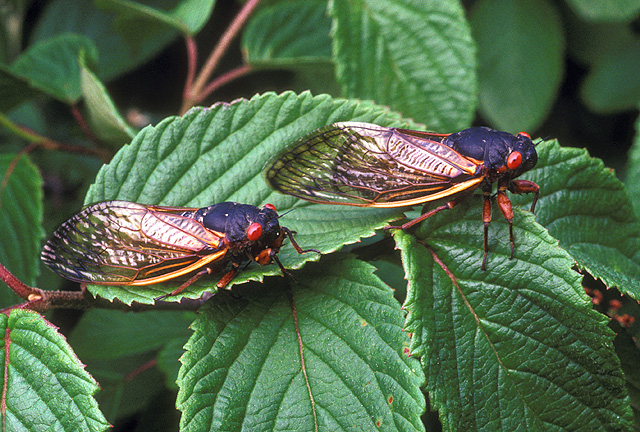 17-year Decim CicadaMagicicada septendecim
-
 Green GrocerCyclochila australasiae
-
 Double DrummerThopha saccata
-
 Giant CicadaQuesada gigas
-
 New Forest CicadaCicadetta montana
Compare
Questions and answers
What is the scientific name of the Emerald Fairy?
The scientific name of the Emerald Fairy is Taurella viridis. Written with its author, the full name is Taurella viridis (Ashton, 1912).
Which family does the Emerald Fairy belong to?
Taurella viridis belongs to the family Cicadidae, in the order Hemiptera and the class Insecta.
Where is the Emerald Fairy found?
Checklists and occurrence records place Taurella viridis in 1 country: Australia.
What other names does the Emerald Fairy have?
Taurella viridis is also known in English as Emerald Fairy Cicada.
Sources
Passages the profile rests on
- The species inhabits grassy and riparian woodlands containing shrub thickets. Source passage: “Associated habitats include grassy and riparian woodlands with thickets of shrubs” — English Wikipedia
- The species is particularly associated with the shrub Grewia retusifolia. Source passage: “especially Grewia retusifolia.” — English Wikipedia
- The forewing measures 15–20 mm in length. Source passage: “The length of the forewing is 15–20 mm.” — English Wikipedia
- Adult males produce high-pitched buzzing and pulsing calls. Source passage: “emitting high-pitched buzzing and pulsing calls.” — English Wikipedia
- Adult males cling to the stems of small shrubs and grasses while calling. Source passage: “clinging to the stems of small shrubs and grasses, emitting high-pitched buzzing and pulsing calls.” — English Wikipedia
- Adult males may be heard calling between November and February. Source passage: “Adult males may be heard from November to February” — English Wikipedia
- The species was described in 1912 by Australian entomologist Julian Howard Ashton. Source passage: “It was described in 1912 by Australian entomologist Julian Howard Ashton.” — English Wikipedia
Data
- Catalogue of Life, 2026-10-16 XR cc by
- Global Biodiversity Information Facility CC BY 4.0
- Wikidata CC0
- GeoNames CC BY 4.0
- Within the Catalogue of Life, this name comes from 3i World Auchenorrhyncha Database cc0
References
- Ashton, H. (1912) Some new Australian Cicadidae. Proceedings of the Royal Society of Victoria, (New Series), 24, 221–229. where the name was published
This species in other databases
Page built on 28 November 2026. See how the catalog is made and all sources and licences.
Cite this page
ScientificNames.org. (2026). Taurella viridis (Emerald Fairy). Retrieved November 28, 2026, from https://scientificnames.org/species/taurella-viridis
“Taurella viridis (Emerald Fairy).” ScientificNames.org, 2026, scientificnames.org/species/taurella-viridis. Accessed 28 Nov. 2026.
ScientificNames.org. “Taurella viridis (Emerald Fairy).” Accessed November 28, 2026. https://scientificnames.org/species/taurella-viridis.
@misc{scientificnames_taurella_viridis_emerald_fairy,
  author = {{ScientificNames.org}},
  title = {Taurella viridis (Emerald Fairy)},
  year = {2026},
  url = {https://scientificnames.org/species/taurella-viridis},
  note = {Accessed 2026-11-28}
}