Species · Amphibians
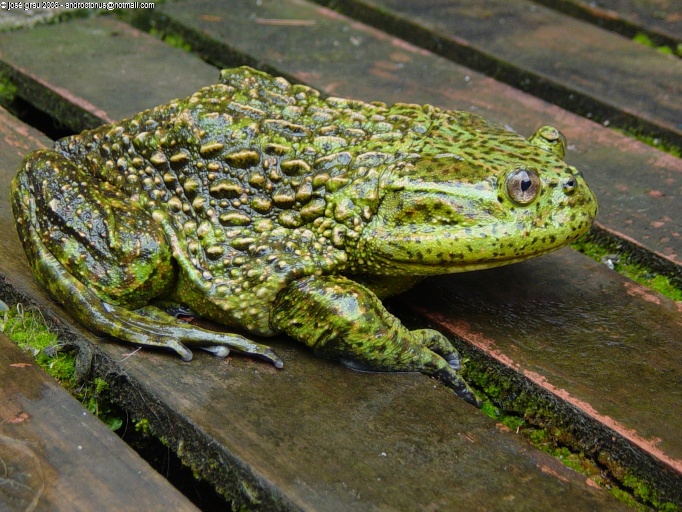
Chile Mountains False Toad Telmatobufo venustus
The scientific name of the Chile Mountains False Toad is Telmatobufo venustus. It is a species of amphibian in the family Calyptocephalellidae (chilean toads), order Anura. The name dates from 1899.
- Scientific name
- Telmatobufo venustus (Philippi, 1899)
- Common name
- Chile Mountains False Toad
- Genus
- Telmatobufo
- Family
- Calyptocephalellidae (Chilean Toads)
- Order
- Anura
- Class
- Amphibia
- Red List category
- EN Endangered
- Recorded in
- 1 country
- Name status
- accepted in the Catalogue of Life

Overview
The species inhabits streams in temperate Nothofagus forests on the western slopes of the Andes in the Maule and Bío Bío Regions of Chile.
Written 26 November 2026 from the sources listed below. Each statement was checked against the passage it cites; statements that could not be supported were removed.
Habitat
The species inhabits streams in temperate Nothofagus forests. Individuals have been found beneath rocks alongside streams.[1][2]
Behaviour
Individuals encountered during an expedition did not attempt to flee from observers. The species moves slowly, which the expedition leader attributed to its old, slow, cold metabolism.[3][4]
Reproduction and life cycle
The species produces tadpoles with sucker-shaped mouths. These mouths help the tadpoles attach to rocks and resist river currents.[5][6]
Conservation
The species is described as endangered in the National Geographic document. The only stable population reported is in Altos de Lircay National Reserve in the Maule Region.[7][8]
Habitat loss resulting from fires threatens the species. Conversion of native habitat into pine and eucalyptus plantations is another threat.[9][10]
Hydropower dams are identified as a threat to the population at Ralco. Trout in Altos de Lircay are also identified as a threat and are predators of the species' tadpoles.[11][12][13]
The species faces additional threats from climate change, deforestation, contaminated rivers, and invasive species.[14]
Researchers are collecting DNA samples to sequence the species' genome as part of conservation planning. They have also collected environmental DNA from water samples to investigate whether additional populations exist.[15][16]
Researchers hope to breed the species in a laboratory and subsequently reintroduce individuals into the wild.[17]
Uses
Early twentieth-century accounts described Mapuche female shamans using a river frog in healing rituals and spiritual practices. A researcher suspected that the frog involved could have been a Telmatobufos.[18]
A researcher suggested that the glands of Telmatobufos might produce a toxin.[19]
Similar species
The species belongs to an ancient amphibian lineage associated with the time when the continents formed Gondwanaland. It is described as more closely related to frogs in Oceania than to frogs in South America.[20][21]
It is described as the sole surviving representative of its prehistoric amphibian lineage on the South American continent.[22]
Classification of the Chile Mountains False Toad
| Kingdom | Animalia |
|---|---|
| Phylum | Chordata |
| Subphylum | Vertebrata |
| Infraphylum | Gnathostomata |
| Parvphylum | Osteichthyes |
| Megaclass | Tetrapoda |
| Class | Amphibia (Amphibians) |
| Order | Anura (Frogs) |
| Family | Calyptocephalellidae (Chilean Toads) |
| Genus | Telmatobufo (False Toads) |
| Species | Telmatobufo venustus (Philippi, 1899) |
Where the Chile Mountains False Toad is found
Checklists and occurrence records place Telmatobufo venustus in 1 country. GBIF holds 18 georeferenced records of it.
Countries
Regions and cities with the most records
A number beside a place is its count of GBIF occurrence records. A place without a number comes from a checklist alone. Records show where a species has been observed or collected, which can include escapes and vagrants.
Common names
English
- Chile Mountains False Toad
- Chile Mountain False Toad
Names in 3 other languages
- Czech
- zavalitka chilská
- Japanese
- チリニセヒキガエル
- Spanish
- Sapo hermoso
Synonyms
One other scientific name has been used for this species and is now treated as a synonym of Telmatobufo venustus.
- Bufo venustus Philippi, 1899
Related species
-
 Bullocks Mountains False ToadTelmatobufo bullocki
- Pelado Mountains False ToadTelmatobufo australis
- Telmatobufo ignotus
-
 Helmeted Water ToadCalyptocephalella gayi
- Calyptocephalella sauzalensis
Compare
Questions and answers
What is the scientific name of the Chile Mountains False Toad?
The scientific name of the Chile Mountains False Toad is Telmatobufo venustus. Written with its author, the full name is Telmatobufo venustus (Philippi, 1899).
Which family does the Chile Mountains False Toad belong to?
Telmatobufo venustus belongs to the family Calyptocephalellidae, in the order Anura and the class Amphibia.
Where is the Chile Mountains False Toad found?
Checklists and occurrence records place Telmatobufo venustus in 1 country: Chile.
What is the conservation status of the Chile Mountains False Toad?
The IUCN Red List category recorded for Telmatobufo venustus is Endangered (EN).
What other names does the Chile Mountains False Toad have?
Telmatobufo venustus is also known in English as Chile Mountain False Toad.
Sources
Passages the profile rests on
- The species inhabits streams in temperate Nothofagus forests. Source passage: “Its natural habitats are streams in temperate Nothofagus forests” — English Wikipedia
- Individuals have been found beneath rocks alongside streams. Source passage: “where it is found under rocks along the streams.” — English Wikipedia
- Individuals encountered during an expedition did not attempt to flee from observers. Source passage: “They don’t try to run away.” — nationalgeographic.com
- The species moves slowly, which the expedition leader attributed to its old, slow, cold metabolism. Source passage: “They have an old, slow, cold metabolism and move as fast as a turtle.” — nationalgeographic.com
- The species produces tadpoles with sucker-shaped mouths. Source passage: “The team also found two tadpoles with sucker mouths” — nationalgeographic.com
- The tadpoles' sucker mouths help them attach to rocks and resist river currents. Source passage: “they needed to attach to rocks to avoid river currents.” — nationalgeographic.com
- The only stable population reported in the document is in Altos de Lircay National Reserve in the Maule Region. Source passage: “The only stable population is in the Altos de Lircay National Reserve in Maule.” — English Wikipedia
- The species is described as endangered in the National Geographic document. Source passage: “Today, they are endangered” — nationalgeographic.com
- The species is threatened by habitat loss resulting from fires. Source passage: “It is threatened by habitat loss caused by fires” — English Wikipedia
- Conversion of native habitat into pine and eucalyptus plantations threatens the species. Source passage: “conversion of native habitat to pine and eucalyptus plantations” — English Wikipedia
- Hydropower dams are identified as a threat to the population at Ralco. Source passage: “and in Ralco, hydropower dams.” — English Wikipedia
- Trout in Altos de Lircay are identified as a threat to the species. Source passage: “Trout in Altos de Lircay are also a threat.” — English Wikipedia
- Trout are identified as predators of the species' tadpoles. Source passage: “trout, known predators of tadpoles.” — nationalgeographic.com
- The species faces threats from climate change, deforestation, contaminated rivers, and invasive species. Source passage: “The remaining populations face threats like climate change, deforestation, contaminated rivers, and invasive species like trout and mink.” — nationalgeographic.com
- Researchers are collecting DNA samples to sequence the species' genome as part of conservation planning. Source passage: “The team is collecting DNA samples to sequence the T. venustus genome, aiming to develop conservation strategies” — nationalgeographic.com
- Researchers collected environmental DNA from water samples to investigate whether additional populations exist. Source passage: “They also collected environmental DNA (eDNA) from water samples to detect unknown populations.” — nationalgeographic.com
- Researchers hope to breed the species in a laboratory and subsequently reintroduce individuals into the wild. Source passage: “He hopes to breed T. venustus in a lab and reintroduce them to the wild.” — nationalgeographic.com
- Early twentieth-century accounts described Mapuche female shamans using a river frog in healing rituals and spiritual practices, which a researcher suspected could have involved Telmatobufos. Source passage: “He references early 1900s stories of Mapuche female shamans using a river frog for healing rituals and spiritual connections, suspecting these frogs were Telmatobufos” — nationalgeographic.com
- A researcher suggested that the glands of Telmatobufos might produce a toxin. Source passage: “possibly producing a toxin from their glands.” — nationalgeographic.com
- The species belongs to an ancient amphibian lineage associated with the time when the continents formed Gondwanaland. Source passage: “This species belongs to an ancient clade of amphibians from when the continents were joined as Gondwanaland nearly 200 million years ago.” — nationalgeographic.com
- The species is described as more closely related to frogs in Oceania than to frogs in South America. Source passage: “But they are more closely related to frogs in Oceania than those in South America” — nationalgeographic.com
- The species is described as the sole surviving representative of its prehistoric amphibian lineage on the South American continent. Source passage: “making them the sole survivors of this prehistoric lineage on the continent.” — nationalgeographic.com
Data
- Catalogue of Life, 2026-10-16 XR cc by
- Global Biodiversity Information Facility CC BY 4.0
- Wikidata CC0
- GeoNames CC BY 4.0
- Wikimedia Commons per image; credit shown with each image
- Within the Catalogue of Life, this name comes from The Integrated Taxonomic Information System cc0
This species in other databases
Page built on 29 November 2026. See how the catalog is made and all sources and licences.
Cite this page
ScientificNames.org. (2026). Telmatobufo venustus (Chile Mountains False Toad). Retrieved November 29, 2026, from https://scientificnames.org/species/telmatobufo-venustus
“Telmatobufo venustus (Chile Mountains False Toad).” ScientificNames.org, 2026, scientificnames.org/species/telmatobufo-venustus. Accessed 29 Nov. 2026.
ScientificNames.org. “Telmatobufo venustus (Chile Mountains False Toad).” Accessed November 29, 2026. https://scientificnames.org/species/telmatobufo-venustus.
@misc{scientificnames_telmatobufo_venustus_chile_mountains_false_toad,
  author = {{ScientificNames.org}},
  title = {Telmatobufo venustus (Chile Mountains False Toad)},
  year = {2026},
  url = {https://scientificnames.org/species/telmatobufo-venustus},
  note = {Accessed 2026-11-29}
}