Species · Flowering plants
Globe-flowered Orchid Traunsteinera globosa
The scientific name of the Globe-flowered Orchid is Traunsteinera globosa. It is a species of flowering plant in the family Orchidaceae (orchid), order Asparagales.
- Scientific name
- Traunsteinera globosa (L.) Rchb.
- Common name
- Globe-flowered Orchid
- Genus
- Traunsteinera
- Family
- Orchidaceae (Orchid)
- Order
- Asparagales
- Class
- Liliopsida
- Recorded in
- 23 countries
- Name status
- accepted in the Catalogue of Life

Overview
The Globe-flowered Orchid is a flowering plant belonging to the genus Traunsteinera and the family Orchidaceae. It grows in mountain meadows in the mountains of Central and Southern Europe, from southern France to Romania, as well as in Crimea and the Caucasus. It is distinguished by a dense, pyramidal or globular inflorescence and flowers that use food-deceptive mimicry to attract pollinating insects.
Written 27 November 2026 from the sources listed below. Each statement was checked against the passage it cites; statements that could not be supported were removed.
Appearance
The Globe-flowered Orchid has a slender, tall growth form and reaches heights of 20 to 70 cm. It has multiple lanceolate leaves and a flowering spike bearing a single dense, pyramidal or globular inflorescence.[1][2][3][4]
Its flowers are pink or, very rarely, white, with purple spots. The sepals and petals are approximately 6 mm long and have elongated, spatula-shaped tips.[5][6]
The labellum has three lobes, with the middle lobe sometimes toothed. The floral spur is shorter than the ovary, and the bracts are approximately as long as the ovary.[7][8][9]
Habitat
The Globe-flowered Orchid grows in full sunlight in mountain meadows. It occurs on calcareous to neutral soils.[10][11]
Its recorded habitat elevations range from 500 to 3,000 metres above sea level. It is usually found at elevations exceeding 1,500 metres.[12][13]
Behaviour
The Globe-flowered Orchid uses food-deceptive mimicry to attract pollinating insects. Its flowers resemble those of Trifolium pratense and Knautia species.[14][15]
The species attracts pollinators despite offering them no food reward. It benefits from larger populations of other flowering species growing alongside it.[16][17]
Reproduction and life cycle
The Globe-flowered Orchid is pollinated by insects, including flies, bees and beetles.[18]
Classification of the Globe-flowered Orchid
| Kingdom | Plantae |
|---|---|
| Subkingdom | Pteridobiotina |
| Phylum | Tracheophyta |
| Class | Liliopsida |
| Order | Asparagales |
| Family | Orchidaceae (Orchid) |
| Genus | Traunsteinera |
| Species | Traunsteinera globosa (L.) Rchb. |
Where the Globe-flowered Orchid is found
Checklists and occurrence records place Traunsteinera globosa in 23 countries across Asia and Europe. GBIF holds 39,538 georeferenced records of it.
Countries
- Albania
- Austria 2,627
- Bosnia and Herzegovina 19
- Bulgaria 3
- Croatia 41
- Czechia 247
- France 16,992
- Georgia 4
- Germany 2,592
- Hungary 15
- Italy 1,220
- Liechtenstein 127
- Montenegro 13
- Poland 335
- Romania 90
- Russia 9
- Serbia 27
- Slovakia 928
- Slovenia 141
- Spain 4
- Switzerland 13,838
- Turkey 2
- Ukraine 264
Regions and cities with the most records
- Auvergne-Rhône-Alpes, France 13,412
- Bern, Switzerland 3,792
- Bavaria, Germany 2,164
- Vaud, Switzerland 1,972
- Monthey, Switzerland 1,952
- Cluses, France 1,883
- Provence-Alpes-Côte d'Azur, France 1,872
- Montreux, Switzerland 1,427
- Sallanches, France 1,368
- Saint-Martin-d'Hères, France 1,321
- La Chaux-de-Fonds, Switzerland 1,286
- Saint-Égrève, France 1,274
- Meylan, France 1,260
- Fontaine, France 1,224
- Grenoble, France 1,212
- Valais, Switzerland 1,196
- Vevey, Switzerland 1,179
- Biel/Bienne, Switzerland 1,172
- Neuchâtel, Switzerland 1,047
- Échirolles, France 996
- Neuchâtel, Switzerland 922
- Albertville, France 910
- Schwyz, Switzerland 867
- Bulle, Switzerland 757
- Sonthofen, Germany 748
- Nyon, Switzerland 743
- Tyrol, Austria 704
- Bourgogne-Franche-Comté, France 693
- Voiron, France 665
- Vaduz, Liechtenstein 662
- Thonon-les-Bains, France 646
- Meyrin, Switzerland 622
- Ticino, Switzerland 617
- Sitten, Switzerland 613
- Vernier, Switzerland 611
- Thun, Switzerland 598
A number beside a place is its count of GBIF occurrence records. A place without a number comes from a checklist alone. Records show where a species has been observed or collected, which can include escapes and vagrants.
Common names
English
- Globe-flowered Orchid
Names in 13 other languages
- Bulgarian
- Кълбест салеп
- Czech
- hlavinka horská
- Dutch
- Knotsorchis, Kogelorchis
- French
- Orchis globuleux, Traunsteinère globuleuse
- German
- Kugel-Knabenkraut, Kugelknabenkraut, Kugelorchis
- Hungarian
- Gömböskosbor, karcsú gömböskosbor
- Italian
- Orchide dei pascoli
- Polish
- storczyca kulista
- Russian
- Траунштейнера шаровидная
- Slovak
- pavstavač hlavatý
- Slovenian
- navadna oblasta kukavica
- Swedish
- Bollyxne
- Ukrainian
- Траунштейнера куляста
Synonyms
21 other scientific names have been used for this species and are now treated as synonyms of Traunsteinera globosa.
- Gymnadenia conopsea var. albiflora Schur
- Nigritella globosa (L.) Rchb.
- Orchis globosa f. dentifera Zapał.
- Orchis globosa f. major (Schur) Zapał.
- Orchis globosa lusus albiflora (Schur) R.Uechtr.
- Orchis globosa var. albiflora Schur
- Orchis globosa var. angustifolia Zapał.
- Orchis globosa var. dentifera Zapał.
- Orchis globosa var. gracilis Schur
- Orchis globosa var. major Schur
- Orchis globosa var. prutica Zapał.
- Orchis halleri Crantz
- Orchites globosus (L.) Schur
- Traunsteinera globosa f. dentifera (Zapał.) Soó
- Traunsteinera globosa f. gracilis (Schur) E.G.Camus
- Traunsteinera globosa f. major (Schur) Beldie
- Traunsteinera globosa f. major (Schur) E.G.Camus
- Traunsteinera globosa f. prutica (Zapał.) Soó
- Traunsteinera globosa lusus albiflora (Schur) E.G.Camus
- Traunsteinera globosa var. humilis Goiran
- Orchis globosa L. ambiguous synonym
Related species
- Traunsteinera sphaerica
-
 VanillaVanilla planifolia
-
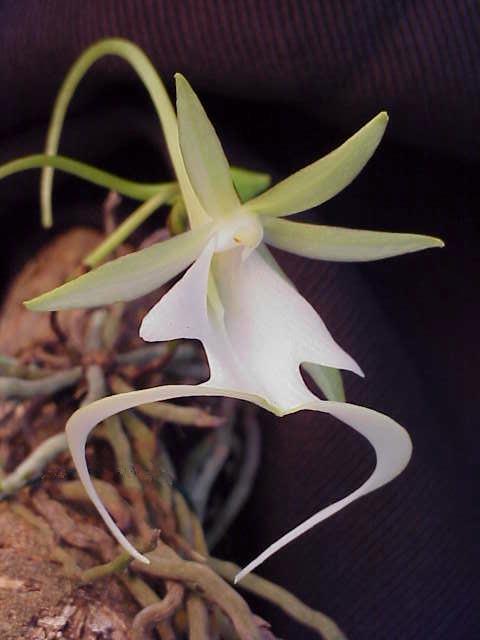 Ghost OrchidDendrophylax lindenii
-
 Noble DendrobiumDendrobium nobile
-
 Bee OrchidOphrys apifera
-
 Monkey-Face OrchidDracula simia
-
 Christmas OrchidCattleya trianae
-
 Chinese Crown OrchidEulophia graminea
Compare
Questions and answers
What is the scientific name of the Globe-flowered Orchid?
The scientific name of the Globe-flowered Orchid is Traunsteinera globosa. Written with its author, the full name is Traunsteinera globosa (L.) Rchb..
Which family does the Globe-flowered Orchid belong to?
Traunsteinera globosa belongs to the family Orchidaceae, in the order Asparagales and the class Liliopsida.
Where is the Globe-flowered Orchid found?
Checklists and occurrence records place Traunsteinera globosa in 23 countries, including France, Switzerland, Austria, Germany, Italy and Slovakia.
Sources
Passages the profile rests on
- The plant has a slender, tall growth form. Source passage: “Traunsteinera globosa is a slender, tall orchid” — English Wikipedia
- The plant grows to heights of 20 to 70 cm. Source passage: “growing to heights of 20 to 70 cm.” — English Wikipedia
- Its flowering spikes carry a single dense inflorescence that is pyramidal or globular in shape. Source passage: “Spikes bear a single, pyramidal or globular, very dense inflorescence” — English Wikipedia
- The plant has multiple lanceolate leaves. Source passage: “multiple lanceolate leaves.” — English Wikipedia
- Its flowers are pink or, very rarely, white, and have purple spots. Source passage: “The flowers are pink, or very rarely white, with purple spots.” — English Wikipedia
- The sepals and petals are approximately 6 mm long and have elongated, spatula-shaped tips. Source passage: “The sepals and petals are around 6mm long and elongated, swelling toward the tip to form a spatula shape.” — English Wikipedia
- The labellum has three lobes, and its middle lobe is sometimes toothed. Source passage: “The labellum is three-lobed, the middle lobe of which is sometimes toothed” — English Wikipedia
- Its floral spur is shorter than the ovary. Source passage: “the spur is shorter than the ovary” — English Wikipedia
- Its bracts are approximately as long as the ovary. Source passage: “and the bracts around as long.” — English Wikipedia
- The species grows in full sunlight in mountain meadows. Source passage: “found in full sun in mountain meadows” — English Wikipedia
- It grows on calcareous to neutral soils. Source passage: “on calcareous to neutral soils” — English Wikipedia
- Its recorded habitat elevations range from 500 to 3,000 metres above sea level. Source passage: “at heights of 500 to 3000 m above sea level” — English Wikipedia
- The species is usually found at elevations exceeding 1,500 metres. Source passage: “though usually in excess of 1500 m.” — English Wikipedia
- The species uses food-deceptive mimicry to attract pollinating insects. Source passage: “It employs a tactic of food-deceptive mimicry” — English Wikipedia
- Its flowers resemble those of Trifolium pratense and Knautia species. Source passage: “resembling the flowers of Trifolium pratense and Knautia species” — English Wikipedia
- The species attracts pollinators despite offering them no food reward. Source passage: “in order to attract their pollinators despite offering no reward.” — English Wikipedia
- The species benefits from larger populations of other flowering species growing alongside it. Source passage: “T. globosa actively benefits from greater populations of co-flowering species” — English Wikipedia
- The species is pollinated by insects, including flies, bees and beetles. Source passage: “Taunsteinera globosa is pollinated by insects such as flies, bees, and beetles.” — English Wikipedia
Data
- Catalogue of Life, 2026-10-16 XR cc by
- Global Biodiversity Information Facility CC BY 4.0
- Wikidata CC0
- GeoNames CC BY 4.0
- Wikimedia Commons per image; credit shown with each image
- Within the Catalogue of Life, this name comes from The World Checklist of Vascular Plants (WCVP) cc by
References
- Fl. Saxon.: 87 (1842) where the name was published
This species in other databases
Page built on 28 November 2026. See how the catalog is made and all sources and licences.
Cite this page
ScientificNames.org. (2026). Traunsteinera globosa (Globe-flowered Orchid). Retrieved November 28, 2026, from https://scientificnames.org/species/traunsteinera-globosa
“Traunsteinera globosa (Globe-flowered Orchid).” ScientificNames.org, 2026, scientificnames.org/species/traunsteinera-globosa. Accessed 28 Nov. 2026.
ScientificNames.org. “Traunsteinera globosa (Globe-flowered Orchid).” Accessed November 28, 2026. https://scientificnames.org/species/traunsteinera-globosa.
@misc{scientificnames_traunsteinera_globosa_globe_flowered_orchid,
  author = {{ScientificNames.org}},
  title = {Traunsteinera globosa (Globe-flowered Orchid)},
  year = {2026},
  url = {https://scientificnames.org/species/traunsteinera-globosa},
  note = {Accessed 2026-11-28}
}