Species · Insects
Xeropsalta rattrayi
Xeropsalta rattrayi has no English name on record in the checklists used here. It is a species of insect in the family Cicadidae (cicada), order Hemiptera. The name dates from 2018.
- Scientific name
- Xeropsalta rattrayi Ewart, 2018
- Genus
- Xeropsalta
- Family
- Cicadidae (Cicada)
- Order
- Hemiptera
- Class
- Insecta
- Recorded in
- 1 country
- Name status
- accepted in the Catalogue of Life
Overview
Xeropsalta rattrayi is a species of cicada, also known as the green grass-shaker, in the true cicada family, Cicadettinae subfamily and Cicadettini tribe. The species is endemic to Australia. It was described in 2018 by Australian entomologist Anthony Ewart.
Classification of Xeropsalta rattrayi
| Kingdom | Animalia |
|---|---|
| Phylum | Arthropoda |
| Subphylum | Hexapoda |
| Class | Insecta (Insect) |
| Order | Hemiptera |
| Suborder | Auchenorrhyncha (True Hoppers) |
| Infraorder | Cicadomorpha |
| Parvorder | Clypeata |
| Superfamily | Cicadoidea |
| Family | Cicadidae (Cicada) |
| Subfamily | Cicadettinae |
| Tribe | Cicadettini |
| Genus | Xeropsalta |
| Species | Xeropsalta rattrayi Ewart, 2018 |
Origin of the name. Etymology: Named after Ian Rattray who was instrumental in discovering this species. Distinguishing the Xeropsalta species (Figs. 2 to 8). Xeropsalta rattrayi n. sp. males are readily distinguished from males of the other species by their green colouration (or yellow-green in aged specimens). The X. aridula n. sp. and X. rattrayi n. sp. females, however, are superficially similar, but X. rattrayi have narrower tapering abdomens and X. aridula n. sp. narrower fore wings. The females of X. thomsoni are readily distinguished by pale yellow-brown colour and the dark narrow fascia along the dorsal length of abdomen. The morphological and colour separation of the males of X. aridula n. sp. and X. thomsoni n. sp. can sometimes be problematic, although not so for the X. thomsoni n. sp. specimens from the more southerly locations. The abdominal dorsal darker patterns are, however, typically more sharply defined in X. thomsoni n. sp.; the coloration of X. aridula n. sp. is commonly paler than seen on X. thomsoni n. sp.. Figs. 3 C - E indicate that opercula shapes do differ slightly, those of X. thomsoni n. sp. slightly less elongated and less domed medially, while Figs. 6 C - E and 7 C - E indicate small, but possibly significant differences in the profiles of the median lobes of the uncus and in the sizes and shapes of the pygofer basal lobes, as seen in lateral and ventral views. The X. ratttrayi n. sp. males are readily distinguished by the green to yellowish green colour and dark dorsal fascia along tergites. The abdominal colouration of X. festiva n. comb. (Pl. 8) is readily distinguished from the other species of Xeropsalta n. gen. Popple (2014 - 2017) provides significant additional data on X. festiva n. comb. (previously named Mugadina festiva). As shown below, the calling song differences of all four species are clearly diagnostic.
Where Xeropsalta rattrayi is found
Checklists and occurrence records place Xeropsalta rattrayi in 1 country across Oceania. GBIF holds 64 georeferenced records of it.
Countries
Regions and cities with the most records
Range as the checklists state it
Queensland
A number beside a place is its count of GBIF occurrence records. A place without a number comes from a checklist alone. Records show where a species has been observed or collected, which can include escapes and vagrants.
Related species
- Xeropsalta eremica
- Thomson River Grass-shakerXeropsalta thomsoni
- Xeropsalta aridula
- Bee GleeperXeropsalta festiva
-
 Evening CicadaTanna japonensis
-
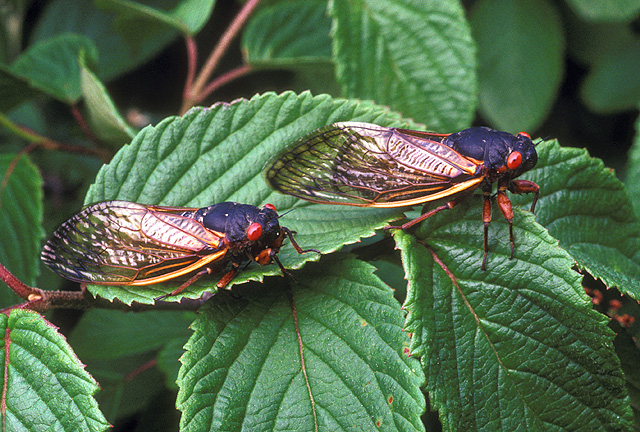 17-year Decim CicadaMagicicada septendecim
-
 Green GrocerCyclochila australasiae
-
 Double DrummerThopha saccata
Compare
Sources
Data
- Catalogue of Life, 2026-10-16 XR cc by
- Global Biodiversity Information Facility CC BY 4.0
- Wikidata CC0
- English Wikipedia CC BY-SA 4.0
- GeoNames CC BY 4.0
- Within the Catalogue of Life, this name comes from 3i World Auchenorrhyncha Database cc0
References
- Ewart, A. (2018a) Two new genera and five new species of Mugadina-like small grass cicadas (Hemiptera: Cicadidae: Cicadettini) from Central and Eastern Australia: comparative morphology, songs, behaviour and distributions. Zootaxa, 4413(1), 1–56. Link where the name was published
This species in other databases
Page built on 28 November 2026. See how the catalog is made and all sources and licences.
Cite this page
ScientificNames.org. (2026). Xeropsalta rattrayi. Retrieved November 28, 2026, from https://scientificnames.org/species/xeropsalta-rattrayi
“Xeropsalta rattrayi.” ScientificNames.org, 2026, scientificnames.org/species/xeropsalta-rattrayi. Accessed 28 Nov. 2026.
ScientificNames.org. “Xeropsalta rattrayi.” Accessed November 28, 2026. https://scientificnames.org/species/xeropsalta-rattrayi.
@misc{scientificnames_xeropsalta_rattrayi,
  author = {{ScientificNames.org}},
  title = {Xeropsalta rattrayi},
  year = {2026},
  url = {https://scientificnames.org/species/xeropsalta-rattrayi},
  note = {Accessed 2026-11-28}
}