Comparison

Red Horse-chestnut vs Ohio Buckeye

Red Horse-chestnut (Aesculus × carnea) and Ohio Buckeye (Aesculus glabra) both belong to the genus Aesculus (buckeye) and part ways below it. Both are recorded in 3 countries.

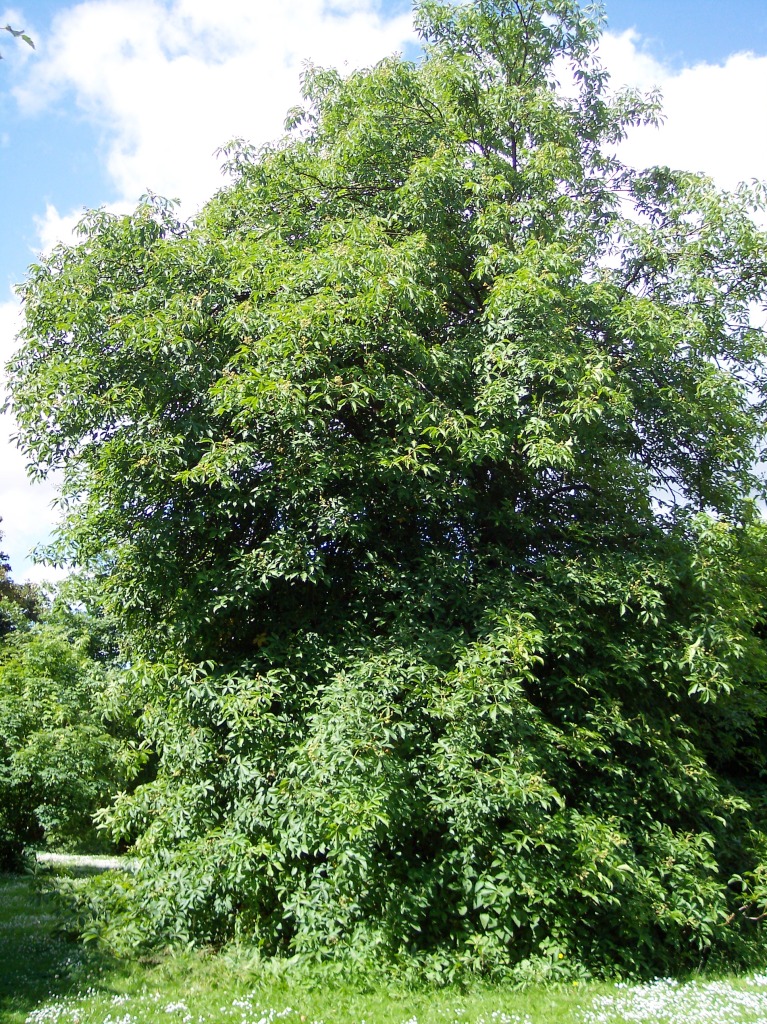
Red Horse-chestnut

Red Horse-chestnut

Aesculus × carnea

Rüdiger Wölk This photo was taken by Rüdiger Wölk. Please credit this photo Rüdiger Wölk, Münster. View all photos (large page) of Rüdiger Wölk I would also appreciate an email to , CC BY-SA 2.5, via Wikimedia Commons
Ohio Buckeye

Ohio Buckeye

Aesculus glabra

Unknown author, CC BY-SA 3.0, via Wikimedia Commons

Side by side

Red Horse-chestnutOhio Buckeye
Scientific nameAesculus × carnea HayneAesculus glabra Willd.
English nameRed Horse-chestnutOhio Buckeye
GroupFlowering plantsFlowering plants
ClassMagnoliopsidaMagnoliopsida
OrderSapindalesSapindales
FamilySapindaceae Soapberry FamilySapindaceae Soapberry Family
GenusAesculus BuckeyeAesculus Buckeye
Red List categoryNot recordedLeast Concern
Countries on record8 countries3 countries
GBIF occurrence records5,682 records10,515 records

Rows where the two agree are shown in grey.

Where each is found

Both recorded in 3 countries

Only Red Horse-chestnut (5)

From Catalogue of Life checklists and GBIF occurrence records. A country missing from a list means no record is held, which is not proof of absence.

Checked facts

Red Horse-chestnutOhio Buckeye
Appearance
  • Its flowers are dull red and grow in panicles at the ends of branches. English Wikipedia
  • Its leaves are deciduous, dark green, coarse and often rough, wrinkled or irregular. English Wikipedia
  • Its leaves are palmately compound, with five large toothed leaflets. English Wikipedia
  • Its fruit consists of pale brown, leathery capsules containing one to three seeds. English Wikipedia
  • Its ripe fruit has a leathery, thornless outer covering that splits into three pieces. pmc.ncbi.nlm.nih.gov
Size
  • Each leaflet measures 8–16 cm in length and width. English Wikipedia
  • Fifty trees measured in Jefferson County, Indiana, averaged 20.7 m in height and 84 cm in diameter at breast height. research.fs.usda.gov
  • On dry habitats in eastern Oklahoma, the species grows as a shrub measuring 1.2–1.5 m tall. research.fs.usda.gov
Habitat
  • The species occurs along streambanks, in upland mesic forests, and beside old fields. English Wikipedia
  • The species is typically associated with calcareous areas. English Wikipedia
  • The species is most frequently found along river bottoms and in streambank soils. research.fs.usda.gov
  • The species most commonly grows on Alfisol soils. research.fs.usda.gov
  • The species also occurs in hardwood stands on moist sites in Kentucky's limestone-sink-and-cave section of the Bluegrass region. research.fs.usda.gov
  • The species can occur on drier and clayey sites, although it usually grows slowly there and rarely becomes dominant. research.fs.usda.gov
  • The species develops best as an isolated individual in openings along streambanks and other moist sites. research.fs.usda.gov
DietNo checked fact yet
  • The seeds contain tannic acid and are poisonous to humans and cattle. English Wikipedia
  • The young foliage, shoots, and bark are also poisonous to some degree. English Wikipedia
  • The bark and seeds contain a narcotic glucoside considered poisonous to livestock. research.fs.usda.gov
BehaviourNo checked fact yet
Reproduction
  • The species is tetraploid as a result of chromosome doubling in its diploid parent species. English Wikipedia
  • The species produces viable seeds that breed true, resulting in offspring identical or nearly identical to the parent tree. English Wikipedia
  • The species flowers in May and produces fruit in autumn. English Wikipedia
Lifespan
  • The species often has a short lifespan because of a canker disease affecting its trunk and branches. English Wikipedia
No checked fact yet
Distribution
  • The species is widely planted throughout Europe. English Wikipedia
  • The species is locally naturalised in England and occurs more rarely as a naturalised plant in Ireland, Scotland and Wales. English Wikipedia
  • The hybrid originated in Germany around 1818, although its exact origin is uncertain. English Wikipedia
  • The species is native to North America. English Wikipedia
  • Its natural range is concentrated in the Midwestern and lower Great Plains regions of the United States. English Wikipedia
  • Its natural range extends southeast into the Black Belt of Alabama and Mississippi. English Wikipedia
  • The species occurs locally in extreme southwestern Ontario, including Walpole Island in Lake St. Clair. English Wikipedia
  • Its range extends from western Pennsylvania, Ohio, and southern Michigan westward to Illinois and central Iowa. research.fs.usda.gov
  • Its southern distribution reaches eastern Kansas, southwestern Oklahoma, and central Texas. research.fs.usda.gov
  • Its eastern distribution reaches western Arkansas, Tennessee, central Alabama, and one location in eastern Mississippi. research.fs.usda.gov
Conservation
  • The species is very vulnerable to a canker disease affecting its trunk and branches. English Wikipedia
  • The causal agent of the canker disease affecting the species is unknown. English Wikipedia
No checked fact yet
Uses
  • The species is used as an ornamental tree because of its red flowers and resilience to environmental degradation. pmc.ncbi.nlm.nih.gov
  • Native Americans reportedly consumed the fruit after boiling it to remove tannin. English Wikipedia
  • The Lenape carried the nuts in their pockets as a traditional remedy for rheumatism. English Wikipedia
  • An infusion of ground nuts was traditionally mixed with sweet oil or mutton tallow for treating earaches. English Wikipedia
  • Native Americans ground the nuts and used them to poison fish in streams. English Wikipedia
  • The nuts were blanched to extract tannic acid for leather production. English Wikipedia
  • Dried nuts were used to make necklaces. English Wikipedia
  • The species has limited commercial value as sawtimber because its wood is soft and light. research.fs.usda.gov
  • The species is cultivated as an ornamental tree. research.fs.usda.gov
  • Extracts from the species have demonstrated anti-cancer properties. English Wikipedia
Similar species
  • The species is an artificial hybrid between Aesculus hippocastanum and Aesculus pavia. English Wikipedia
  • Its morphological features are typically intermediate between those of its two parent species. English Wikipedia
  • The species inherits its red flowers from Aesculus pavia. English Wikipedia
No checked fact yet

In brief

Red Horse-chestnut

Aesculus × carnea is widely planted throughout Europe and is locally naturalised in England, with rarer naturalised occurrences in Ireland, Scotland and Wales. It is an artificial hybrid with dull red flowers, palmately compound leaves and leathery fruit capsules. Full profile

Ohio Buckeye

Aesculus glabra is native to North America, with its natural range concentrated in the Midwestern and lower Great Plains regions of the United States. It has palmately compound leaves with five leaflets and produces brown, eye-marked seeds inside round fruit capsules. Full profile

Compare something else

Page built on 27 November 2026 from the data on the two species pages, where every source is listed.

Cite this page

ScientificNames.org. (2026). Red Horse-chestnut vs Ohio Buckeye. Retrieved November 27, 2026, from https://scientificnames.org/compare/red-horse-chestnut-vs-ohio-buckeye