Comparison

African Threadfish vs African Pompano

African Threadfish (Alectis alexandrina) and African Pompano (Alectis ciliaris) both belong to the genus Alectis (cockfishes) and part ways below it. Both are recorded in 18 countries.

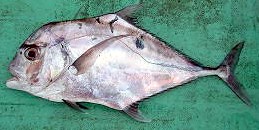
African Threadfish

African Threadfish

Alectis alexandrina

Theo Modder, CC BY 3.0, via Wikimedia Commons

African Pompano

African Pompano

Alectis ciliaris

Kare Kare, CC BY-SA 3.0, via Wikimedia Commons

Side by side

African ThreadfishAfrican Pompano
Scientific nameAlectis alexandrina (Geoffroy Saint-Hilaire, 1817)Alectis ciliaris (Bloch, 1787)
English nameAfrican ThreadfishAfrican Pompano
GroupFishesFishes
ClassTeleostei TeleostTeleostei Teleost
OrderCarangiformesCarangiformes
FamilyCarangidae JacksCarangidae Jacks
GenusAlectis CockfishesAlectis Cockfishes
Named in18171787
Red List categoryLeast ConcernLeast Concern
Environmentmarinemarine
Countries on record24 countries70 countries
GBIF occurrence records825 records2,732 records

Rows where the two agree are shown in grey.

Where each is found

Both recorded in 18 countries

Only African Threadfish (6)

Only African Pompano (52)

From Catalogue of Life checklists and GBIF occurrence records. A country missing from a list means no record is held, which is not proof of absence.

Checked facts

African ThreadfishAfrican Pompano
Appearance
  • The species has a strongly compressed body with a distinctly angular profile. English Wikipedia
  • The head profile has a slight concavity near the eyes, distinguishing the species from the African pompano. English Wikipedia
  • The dorsal profile is more curved than the ventral profile. English Wikipedia
  • The first dorsal fin section has between five and seven visible spines. English Wikipedia
  • The second dorsal fin section contains one spine and between 20 and 22 soft rays. English Wikipedia
  • The anal fin has two spines followed by another spine and 18 or 19 soft rays. English Wikipedia
  • The pectoral fin is long and curved, extending beyond the junction of the two lateral-line sections. English Wikipedia
  • Two flattened keels occur on each side of the line of scutes anterior to the caudal fin. English Wikipedia
  • The body appears scaleless but has minute scales embedded deeply in its surface. English Wikipedia
  • The lateral line curves strongly toward the front and has between six and eleven scutes near the tail. English Wikipedia
  • Juveniles and often adults possess long, trailing filamentous spines on their first dorsal and anal fins. English Wikipedia
  • The species is silver-coloured, sometimes displaying blue and greenish tints and reflections. English Wikipedia
  • Its fins are pale silvery green to blue or translucent. English Wikipedia
  • Juveniles may display two dark bands on their lower bodies. English Wikipedia
  • The African pompano has a deep, laterally compressed body with the head and tail tapering toward their respective ends. English Wikipedia
  • The first dorsal fin has four to seven visible spines, followed by one spine and 18 to 20 soft rays in the second dorsal fin. English Wikipedia
  • The anal fin has two spines followed by 15 or 16 soft rays. English Wikipedia
  • The pectoral fins are long and curved. English Wikipedia
  • The body appears scaleless because its minute scales are embedded in the skin. English Wikipedia
  • The lateral line has a pronounced dorsal arch and 12 to 30 scutes in its posterior section. English Wikipedia
  • Juveniles have trailing dorsal and anal fin filaments that shorten as they mature. English Wikipedia
  • The body is silvery-metallic blue to blue-green above and silvery underneath. English Wikipedia
  • Juveniles have five chevron-shaped dark body bars and a black blotch near the base of the third to sixth soft dorsal-fin rays. English Wikipedia
  • Juvenile fin filaments have dark blue to black bases, while the other fins are pale or translucent. English Wikipedia
  • The body elongates as the fish matures. biogeodb.stri.si.edu
  • The tail is strongly forked and its base is slender. biogeodb.stri.si.edu
  • The species has a small, diffuse dark spot at the upper end of the gill opening. biogeodb.stri.si.edu
Size
  • The species is documented to reach at least 130 cm in length. English Wikipedia
  • The maximum published weight is 22.9 kg. English Wikipedia
  • A maximum length of 150 cm has been reported, although those larger reports are considered unreliable in document 1. English Wikipedia
Habitat
  • Adults predominantly inhabit coastal waters at depths shallower than 70 metres. English Wikipedia
  • Adults occupy the lower portions of the water column at depths reaching at least 70 metres. English Wikipedia
  • Juveniles are usually pelagic and may enter estuarine environments. English Wikipedia
  • Adults commonly inhabit coastal waters at depths below 100 m. English Wikipedia
  • Adults inhabit reefs and wrecks throughout the water column. English Wikipedia
  • Juveniles are pelagic and occur in coastal areas and the open ocean. English Wikipedia
  • Adults are described as solitary in coastal seas, while young fish are generally pelagic and drifting. biogeodb.stri.si.edu
  • The species occurs in tropical waters with temperatures ranging from 18 to 27 °C. English Wikipedia
Diet
  • The species feeds predominantly on crustaceans, cephalopods and small fishes. English Wikipedia
  • Its recorded prey categories include bony fishes, octopuses, squids, cuttlefishes and mobile benthic crustaceans. biogeodb.stri.si.edu
Behaviour
  • The African pompano is a schooling predatory fish. English Wikipedia
  • Juvenile fin filaments resemble jellyfish medusae and may provide protection against predators. English Wikipedia
  • Larger fish, including mackerel, tunas and sharks, prey on the species. English Wikipedia
Reproduction
  • The reproductive biology of the species remains largely unknown. English Wikipedia
  • Observations of Alectis ciliaris suggest that individual fish in the genus may pair before spawning. English Wikipedia
  • The reproductive habits and maturation lengths of the species are poorly known. English Wikipedia
  • A study in India recorded peak abundance of Alectis ciliaris larvae in April. English Wikipedia
  • The eggs are spherical and pelagic, with a yolk and oil globule. English Wikipedia
  • Spawning is thought to occur over sandy substrates in Mexico during spring. English Wikipedia
Distribution
  • The species occurs in the tropical eastern Atlantic Ocean along the West African coast from Morocco to Angola. English Wikipedia
  • The species has also been recorded in the Mediterranean Sea. English Wikipedia
  • The species is primarily distributed throughout the tropical eastern Atlantic Ocean. English Wikipedia
  • The species occurs throughout tropical oceans and seas worldwide. English Wikipedia
  • Its recorded distribution includes the eastern and western coasts of the United States, South America, Africa, the Indian Ocean, Asia, Australia and Pacific islands. English Wikipedia
Conservation
  • The species is considered relatively rare among fish targeted by anglers. English Wikipedia
  • FishBase assigns the species a high to very high vulnerability score of 69 out of 100. fishbase.se
  • FishBase reports a minimum population doubling time of 4.5 to 14 years. fishbase.se
Uses
  • The species has minor commercial importance in fisheries throughout its distribution range. English Wikipedia
  • The species is regarded as a game fish, particularly when individuals are large. English Wikipedia
  • The species can command high prices at markets compared with many other members of Carangidae. English Wikipedia
  • The recorded IGFA world-record specimen weighed 8.10 kilograms and was caught off Daklha, Morocco, in 1993. English Wikipedia
  • The species is commercially and recreationally fished because of its large size and food quality. English Wikipedia
  • The species is marketed fresh, dried or salted. English Wikipedia
  • Adults are commonly caught using hook-and-line methods, including trolling. English Wikipedia
  • Juveniles are occasionally caught using beach seines. English Wikipedia
  • Juveniles are considered potential aquarium fish because of their attractive appearance, although they do not survive well in captivity. English Wikipedia
  • The species is highly regarded as a game fish and is considered one of the strongest jacks at larger sizes. English Wikipedia
  • The species has been implicated in multiple ciguatera cases. English Wikipedia
Similar species
  • The African threadfish resembles the African pompano, which occurs in the same geographical range. English Wikipedia
No checked fact yet
OtherNo checked fact yet
  • The species belongs to the family Carangidae and order Carangiformes. English Wikipedia

In brief

African Threadfish

Alectis alexandrina occurs primarily in the tropical eastern Atlantic Ocean along the West African coast from Morocco to Angola and has also been recorded in the Mediterranean Sea. It has a strongly compressed body, an angular profile and long, trailing filamentous spines on its first dorsal and anal fins. Full profile

African Pompano

African Pompano (Alectis ciliaris) is a fish in the family Carangidae, order Carangiformes and class Teleostei. The species occurs throughout tropical oceans and seas worldwide. It has a deep, laterally compressed body, long curved pectoral fins and a strongly forked tail. Full profile

Compare something else

Page built on 28 November 2026 from the data on the two species pages, where every source is listed.

Cite this page

ScientificNames.org. (2026). African Threadfish vs African Pompano. Retrieved November 28, 2026, from https://scientificnames.org/compare/african-threadfish-vs-african-pompano