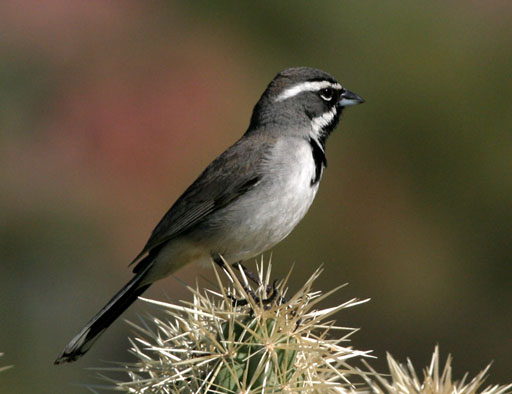
| Appearance | - Adults of the nominate subspecies have a black forehead, gray crown and nape, and white supercilium and malar stripe bordered by thin black lines. English Wikipedia
- The nominate subspecies has black chin, throat, and central upper breast, with predominantly white remaining underparts. English Wikipedia
- The species has dark grayish-brown irises, dark upper mandibles, bluish-gray lower mandibles, and black or brownish plumbeous legs and feet. English Wikipedia
- The species has gray-brown overall plumage, a distinctive black-and-white facial pattern, and a dark tail. ebird.org
| - Adult dark-eyed juncos generally have gray heads, necks, and breasts, gray or brown backs and wings, and white bellies. English Wikipedia
- The species has distinctive white outer tail feathers that are visible during flight and ground-hopping. English Wikipedia
- Its bill is usually pale pinkish. English Wikipedia
- Males generally have darker and more conspicuous markings than females. English Wikipedia
- Juveniles often have pale streaks on their underparts. English Wikipedia
|
|---|
| Size | No checked fact yet | |
|---|
| Habitat | - The species primarily inhabits dry to arid semi-open landscapes containing widely spaced shrubs and small trees, including mesquite and juniper. English Wikipedia
- Its habitats include scrublands, thorn bush, alluvial fans, canyons, and badlands. English Wikipedia
- The species occasionally occurs in grassy and weedy fields during migration and winter. English Wikipedia
- The species breeds, feeds, and winters in sparsely vegetated chaparral or upland habitats. nrm.dfg.ca.gov
- The species inhabits open, shrubby desert environments. ebird.org
| - Its breeding habitat consists of coniferous or mixed forests throughout North America. English Wikipedia
- During winter, the species commonly occurs in and around towns. English Wikipedia
- The species may use habitats other than its preferred forest habitat when conditions are suitable. English Wikipedia
|
|---|
| Diet | - During the breeding season in the United States, the species feeds mainly on insects, supplemented by seeds and other plant material. English Wikipedia
- During winter, the species feeds almost entirely on seeds. English Wikipedia
- The species obtains food primarily by hopping on the ground and also gleans prey from low vegetation. English Wikipedia
| |
|---|
| Behaviour | - During the breeding season, the species forages singly, in pairs, and in family groups. English Wikipedia
- During winter, the species forms larger flocks that may contain other sparrow species. English Wikipedia
- The species is classified as a ground forager. allaboutbirds.org
| - Dark-eyed juncos forage on the ground. English Wikipedia
- During winter, they often forage in flocks containing multiple subspecies. English Wikipedia
- Northern populations migrate south for winter, arriving between mid-September and November. English Wikipedia
- Northern migratory populations generally depart their winter quarters from mid-March onward. English Wikipedia
- Some populations remain in the same area year-round, while others migrate between elevations. English Wikipedia
- In cold years, some populations remain in their wintering areas and breed there. English Wikipedia
- Some urban populations on the University of California, San Diego campus remain there throughout the year. English Wikipedia
- Urban resident birds on the University of California, San Diego campus more frequently flock in pairs than overwintering birds. English Wikipedia
|
|---|
| Reproduction | - The breeding season for most populations occurs between March and July. English Wikipedia
- Some populations in southern Arizona and New Mexico raise a second brood between July and early September. English Wikipedia
- Populations on islands in the Sea of Cortez breed between late September and October. English Wikipedia
- The female constructs an open-cup nest using plant fibers and lines it with fine fibers, sometimes including animal hair. English Wikipedia
- Nests are usually built near the ground in branch forks within dense shrubs. English Wikipedia
- Clutches contain two to five eggs, typically three or four. English Wikipedia
- The eggs are glossy bluish-white to white and lack markings. English Wikipedia
- Females incubate the eggs alone for 12–13 days in Arizona and New Mexico. English Wikipedia
- Nestlings leave the nest approximately 10 days after hatching. English Wikipedia
- Both parents provide food to the nestlings, while the female also broods them. English Wikipedia
- Some nests are parasitized by brown-headed cowbirds. English Wikipedia
- The species builds cup-shaped nests in shrubs or cacti, generally close to the ground. animaldiversity.org
- In Idaho, documented nests have been located 25–45 cm above the ground. animaldiversity.org
| - Dark-eyed juncos usually build cup-shaped nests in ground depressions concealed by vegetation or other material. English Wikipedia
- Their nests are approximately 10 cm in outer diameter. English Wikipedia
- Their nests are lined with fine grasses and hair. English Wikipedia
- The female incubates the eggs for 12–13 days. English Wikipedia
- Young leave the nest 11–14 days after hatching. English Wikipedia
- Urban populations on the University of California, San Diego campus can produce as many as four broods per year. English Wikipedia
|
|---|
| Distribution | | - The species occurs across much of temperate North America. English Wikipedia
- During summer, its range extends far into the Arctic. English Wikipedia
- The species breeds in boreal forests extending from Alaska to Newfoundland and south to the Appalachian Mountains. English Wikipedia
- The species winters throughout most of the United States. English Wikipedia
- The slate-colored subspecies is a rare vagrant in Western Europe and may winter in Great Britain. English Wikipedia
|
|---|
| Conservation | - The IUCN classifies the black-throated sparrow as Least Concern. English Wikipedia
- The species has an estimated population of 62 million mature individuals, which is believed to be decreasing. English Wikipedia
- Habitat loss may threaten some populations along the lower Colorado River where mesquite woodlands have been cleared for agriculture and residential development. English Wikipedia
| No checked fact yet |
|---|
| Name origin | No checked fact yet | - The genus name Junco derives from the Spanish word for rush, which comes from the Latin word juncus. English Wikipedia
- The scientific name hyemalis means winter-related or 'of the winter' in Latin. English Wikipedia
|
|---|
| Other | No checked fact yet | |
|---|