Comparison
Dill vs Poison Hemlock
Dill (Anethum graveolens) and Poison Hemlock (Conium maculatum) both belong to the subfamily Apioideae and part ways below it. Both are recorded in 82 countries.
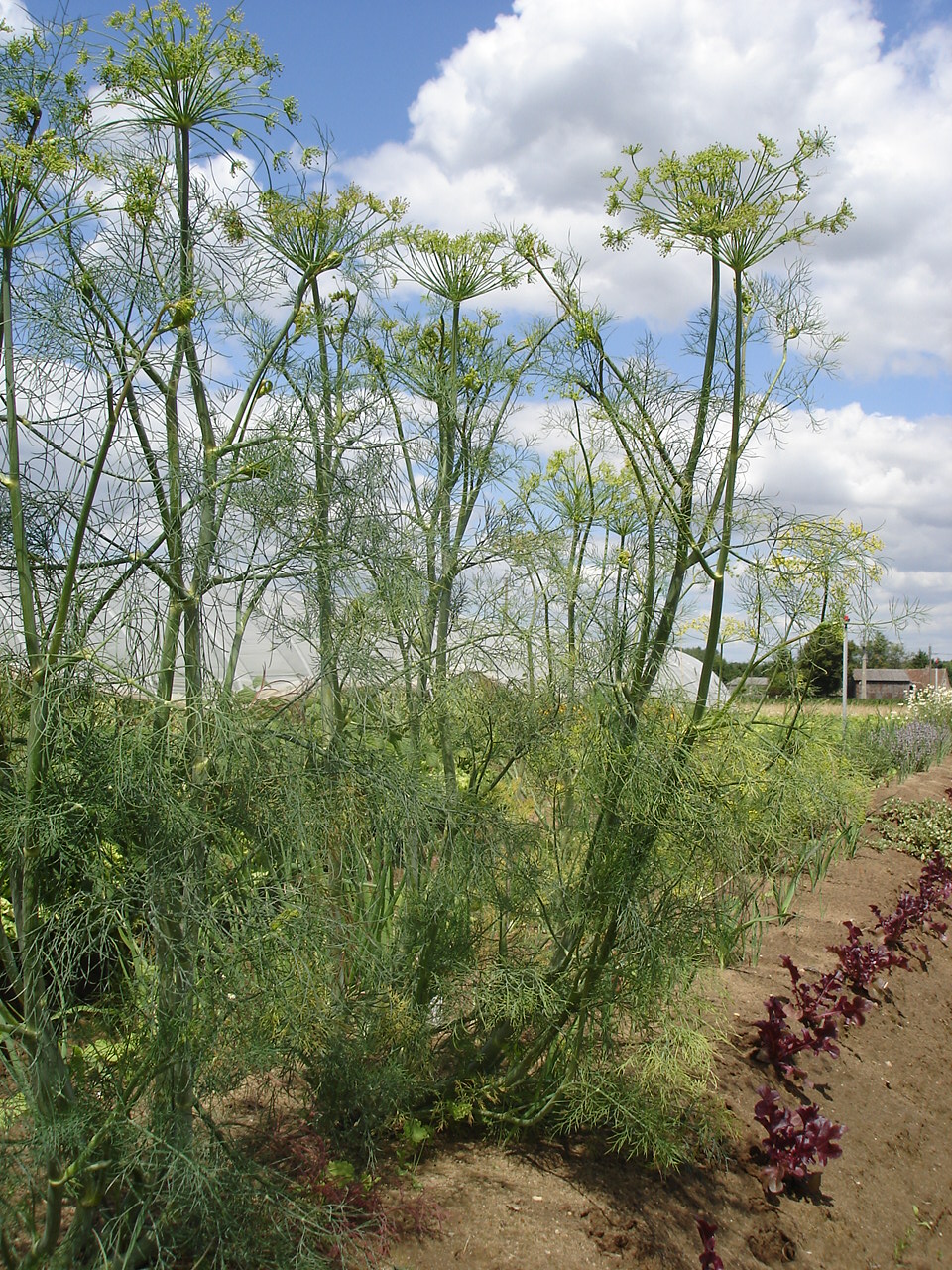


Side by side
| Dill | Poison Hemlock | |
|---|---|---|
| Scientific name | Anethum graveolens L. | Conium maculatum L. |
| English name | Dill | Poison Hemlock |
| Group | Flowering plants | Flowering plants |
| Class | Magnoliopsida | Magnoliopsida |
| Order | Apiales | Apiales |
| Family | Apiaceae Umbellifer | Apiaceae Umbellifer |
| Genus | Anethum Dill | Conium Hemlock |
| Countries on record | 132 countries | 97 countries |
| GBIF occurrence records | 13,516 records | 201,741 records |
Rows where the two agree are shown in grey.
Where each is found
Both recorded in 82 countries
- Afghanistan
- Aland Islands
- Albania
- Algeria
- Argentina
- Armenia
- Australia
- Austria
- Azerbaijan
- Belarus
- Belgium
- Bolivia
- Bosnia and Herzegovina
- Brazil
- Bulgaria
- Canada
- China
- Colombia
- Costa Rica
- Croatia
- Cyprus
- Czechia
- Denmark
- Dominican Republic
- Ecuador
- Estonia
- Ethiopia
- Finland
- France
- Georgia
- Germany
- Greece
- Guatemala
- Honduras
- Hungary
- India
- Iran
- Iraq
- Ireland
- Isle of Man
- Israel
- Italy
- Japan
- Kazakhstan
- Kyrgyzstan
- Latvia
- Lebanon
- Libya
- Lithuania
- Luxembourg
- Mexico
- Moldova
- Morocco
- Mozambique
- New Zealand
- North Macedonia
- Norway
- Pakistan
- Peru
- Poland
- Portugal
- Romania
- Russia
- Saudi Arabia
- Serbia
- Slovakia
- Slovenia
- South Africa
- Spain
- Sweden
- Switzerland
- Syria
- Tajikistan
- The Netherlands
- Tunisia
- Turkey
- Turkmenistan
- Ukraine
- United Kingdom
- United States
- Uzbekistan
- Vietnam
Only Dill (50)
- Angola
- Anguilla
- Bahamas
- Bahrain
- Bangladesh
- Barbados
- Belize
- Bhutan
- Cabo Verde
- Cameroon
- Chad
- Cuba
- Djibouti
- Dominica
- Egypt
- Ghana
- Guadeloupe
- Haiti
- Hong Kong
- Indonesia
- Jamaica
- Kenya
- Kuwait
- Laos
- Madagascar
- Mali
- Martinique
- Mauritius
- Mayotte
- Mongolia
- Montserrat
- Myanmar
- Nepal
- Nicaragua
- Niger
- Nigeria
- Oman
- Panama
- Paraguay
- Philippines
- Puerto Rico
- Qatar
- Reunion
- Sri Lanka
- Sudan
- Taiwan
- Tanzania
- Thailand
- Trinidad and Tobago
- Venezuela
Only Poison Hemlock (15)
- Andorra
- Chile
- Eritrea
- Guernsey
- Jersey
- Jordan
- Kosovo
- Malta
- Mauritania
- Montenegro
- Palestinian Territory
- San Marino
- South Korea
- Uruguay
- Yemen
From Catalogue of Life checklists and GBIF occurrence records. A country missing from a list means no record is held, which is not proof of absence.
Checked facts
| Dill | Poison Hemlock | |
|---|---|---|
| Appearance |
|
|
| Size |
|
|
| Habitat |
|
|
| Diet | No checked fact yet |
|
| Behaviour |
|
|
| Reproduction |
|
|
| Distribution |
|
|
| Conservation | No checked fact yet |
|
| Uses |
|
|
| Similar species | No checked fact yet |
|
| Name origin |
| No checked fact yet |
| Other | No checked fact yet |
|
In brief
Dill
The species is native to North Africa, Iran, and the Arabian Peninsula and is cultivated widely across Eurasia. Dill has finely divided, threadlike leaves, small yellow flowers arranged in umbels, and aromatic, ridged fruits. Full profile
Poison Hemlock
Poison hemlock is a herbaceous flowering plant in the family Apiaceae, order Apiales and class Magnoliopsida. The species is native to Europe, Central Asia and the Mediterranean region and has become naturalised in Asia, North America, Australia and New Zealand. The plant is distinguished by hollow stems generally marked with purple spots or streaks, and all its parts are poisonous. Full profile
Compare something else
Page built on 28 November 2026 from the data on the two species pages, where every source is listed.
Cite this page
ScientificNames.org. (2026). Dill vs Poison Hemlock. Retrieved November 28, 2026, from https://scientificnames.org/compare/dill-vs-poison-hemlock
“Dill vs Poison Hemlock.” ScientificNames.org, 2026, scientificnames.org/compare/dill-vs-poison-hemlock. Accessed 28 Nov. 2026.
ScientificNames.org. “Dill vs Poison Hemlock.” Accessed November 28, 2026. https://scientificnames.org/compare/dill-vs-poison-hemlock.
@misc{scientificnames_dill_vs_poison_hemlock,
  author = {{ScientificNames.org}},
  title = {Dill vs Poison Hemlock},
  year = {2026},
  url = {https://scientificnames.org/compare/dill-vs-poison-hemlock},
  note = {Accessed 2026-11-28}
}