Comparison

Incense Cedar vs Big Leaf Mahogany

Incense Cedar (Anthocarapa nitidula) and Big Leaf Mahogany (Swietenia macrophylla) both belong to the family Meliaceae (mahogany family) and part ways below it. Both are recorded in 6 countries.

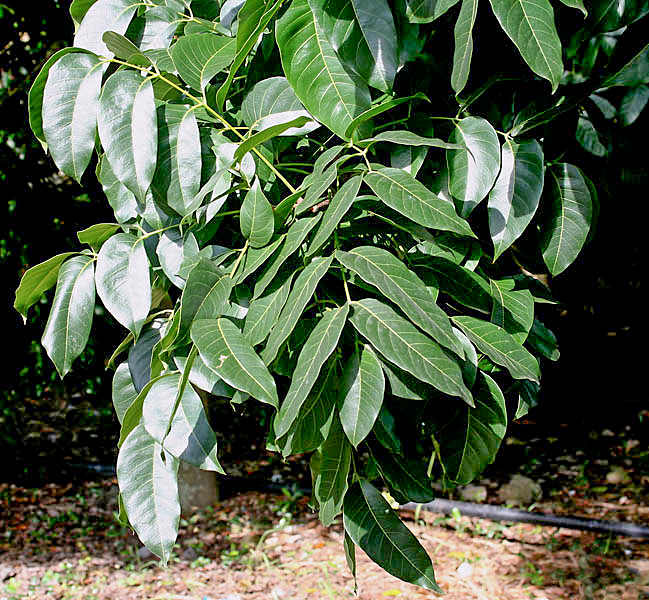
Incense Cedar

Incense Cedar

Anthocarapa nitidula

Centre for National Biodiversity Research, CC BY 4.0, via Wikimedia Commons
Big Leaf Mahogany

Big Leaf Mahogany

Swietenia macrophylla

J.M.Garg, CC BY-SA 3.0, via Wikimedia Commons

Side by side

Incense CedarBig Leaf Mahogany
Scientific nameAnthocarapa nitidula (Benth.) T.D.Penn. ex Mabb.Swietenia macrophylla G.King
English nameIncense CedarBig Leaf Mahogany
GroupFlowering plantsFlowering plants
ClassMagnoliopsidaMagnoliopsida
OrderSapindalesSapindales
FamilyMeliaceae Mahogany FamilyMeliaceae Mahogany Family
GenusAnthocarapaSwietenia Mahogany
Red List categoryLeast ConcernEndangered
Countries on record8 countries49 countries
GBIF occurrence records1,065 records5,239 records

Rows where the two agree are shown in grey.

Where each is found

Both recorded in 6 countries

Only Incense Cedar (2)

Only Big Leaf Mahogany (43)

From Catalogue of Life checklists and GBIF occurrence records. A country missing from a list means no record is held, which is not proof of absence.

Checked facts

Incense CedarBig Leaf Mahogany
Appearance
  • The trunk can develop buttresses reaching one metre in height. English Wikipedia
  • The compound leaves contain four to six leaflets arranged in opposite pairs. English Wikipedia
  • The leaflet blades taper into the petiole, making their boundary indistinct. English Wikipedia
  • The species produces inflorescences in the form of thyrses or panicles. English Wikipedia
  • The flowers have a green calyx divided into five lobes and measuring approximately three millimetres in diameter. English Wikipedia
  • The flowers have five pale green to cream petals measuring approximately five millimetres in length. English Wikipedia
  • The flowers have ten stamens attached to a cup-shaped staminal tube. English Wikipedia
  • The ovary contains two or three locules, each with one ovule. English Wikipedia
  • The fruit is a pyramid-shaped or bell-shaped capsule with two or three valves. English Wikipedia
  • The fruit capsules are brown and somewhat woody. English Wikipedia
  • The seeds are enclosed in a red aril. English Wikipedia
  • The leaflets of Swietenia macrophylla occur in even numbers and attach to a central midrib. English Wikipedia
  • The fruit of Swietenia macrophylla develops as a light grey to brown capsule. English Wikipedia
Size
  • Swietenia macrophylla commonly reaches heights of 30–40 metres. pmc.ncbi.nlm.nih.gov
  • The leaves of Swietenia macrophylla can reach 45 centimetres in length. English Wikipedia
  • The fruit capsules of Swietenia macrophylla can reach 40 centimetres in length. English Wikipedia
  • The seeds of Swietenia macrophylla can measure 7–12 centimetres in length. English Wikipedia
Habitat
  • The species grows in tropical and subtropical rainforest. English Wikipedia
  • The species also occurs in monsoon forest and beach forest. English Wikipedia
  • In northern Queensland, the species occurs from sea level to approximately 1,000 metres elevation. English Wikipedia
  • Natural populations of Swietenia macrophylla occur in seasonal transitional evergreen forests in southeastern Pará, Brazil. science.gov
  • Adult Swietenia macrophylla populations in southeastern Pará, Brazil, occur in aggregations along seasonal streams. science.gov
Diet
  • The fruits are eaten by parrots, fruit doves, bowerbirds and honeyeaters. English Wikipedia
No checked fact yet
Behaviour
  • Male flowers fall quickly, which can make the species appear dioecious. English Wikipedia
Reproduction
  • Each fruit capsule of Swietenia macrophylla may contain 71 winged seeds. English Wikipedia
Distribution
  • The species is native to the Lesser Sunda Islands, the Philippines and Sulawesi. English Wikipedia
  • The species is native to New Guinea and the Solomon Islands. English Wikipedia
  • The species occurs in the Australian states of New South Wales and Queensland. English Wikipedia
  • The species is native to New Caledonia and Vanuatu. English Wikipedia
  • In Australia, the species occurs along the northeast coast in two widely separated populations. English Wikipedia
  • The northern Australian population extends for more than 900 kilometres along coastal Queensland, from Cape York Peninsula to approximately Cardwell. English Wikipedia
  • The southern Australian population extends from near Gin Gin in southeast Queensland to the vicinity of Lismore in northeast New South Wales. English Wikipedia
  • The two Australian populations are approximately 950 kilometres apart. English Wikipedia
  • Swietenia macrophylla is native to South America, Mexico and Central America. English Wikipedia
  • India and Fiji are major global suppliers of plantation-grown Swietenia macrophylla timber. English Wikipedia
Conservation
  • The species was assessed as being of least concern by the IUCN in 2020. English Wikipedia
  • The Queensland Government also rates the species as least concern under its Nature Conservation Act. English Wikipedia
  • The IUCN assessment cites the species' wide distribution, large population and lack of perceived threats as reasons for its least-concern status. English Wikipedia
  • Swietenia macrophylla was listed in Appendix II of CITES in 2002. pmc.ncbi.nlm.nih.gov
  • The Appendix II listing identifies Swietenia macrophylla as a species that may face extinction if its trade is not controlled. pmc.ncbi.nlm.nih.gov
  • Large areas of former Swietenia macrophylla forests have been converted to other land uses. pmc.ncbi.nlm.nih.gov
  • The remaining forests of Swietenia macrophylla are few. pmc.ncbi.nlm.nih.gov
  • Swietenia macrophylla has been severely overexploited throughout its natural range. science.gov
Uses
  • Swietenia macrophylla wood is used to manufacture furniture, musical instruments, ships, doors and coffins. English Wikipedia
  • Swietenia macrophylla is commercially important for its high-quality timber in neotropical countries. pmc.ncbi.nlm.nih.gov
  • The bark extract of Swietenia macrophylla has been used as an astringent for wounds. pmc.ncbi.nlm.nih.gov
  • The bark of Swietenia macrophylla has occasionally been used for tanning. pmc.ncbi.nlm.nih.gov
  • The seeds of Swietenia macrophylla are traditionally used in Malaysia to treat hypertension, diabetes and pain. pmc.ncbi.nlm.nih.gov
  • The seeds of Swietenia macrophylla have been used as folk medicine for diabetes, hypertension and malaria in Indonesia. pmc.ncbi.nlm.nih.gov
  • An ethnic group in the Bolivian Amazon has used Swietenia macrophylla seeds to treat leishmaniasis and as an abortion medicine. pmc.ncbi.nlm.nih.gov
  • The fruit of Swietenia macrophylla has been commercially incorporated into healthcare products intended to improve blood circulation and skin condition. pmc.ncbi.nlm.nih.gov
  • Limonoids and their derivatives are the major phytochemical constituents of Swietenia macrophylla. pmc.ncbi.nlm.nih.gov
  • Plantations in Asia provide a major source of internationally traded genuine mahogany timber. English Wikipedia
OtherNo checked fact yet
  • The wood of Swietenia macrophylla has an average chatoyance value above 20 PZC. English Wikipedia

In brief

Incense Cedar

Anthocarapa nitidula is native to the Lesser Sunda Islands, the Philippines, Sulawesi, New Guinea, the Solomon Islands, New Caledonia and Vanuatu, and occurs in New South Wales and Queensland. It produces brown, somewhat woody capsules containing seeds enclosed in a red aril. Full profile

Big Leaf Mahogany

Swietenia macrophylla is native to South America, Mexico and Central America. It commonly reaches 30–40 metres in height, and its fruit develops as a light grey to brown capsule. Full profile

Compare something else

Page built on 28 November 2026 from the data on the two species pages, where every source is listed.

Cite this page

ScientificNames.org. (2026). Incense Cedar vs Big Leaf Mahogany. Retrieved November 28, 2026, from https://scientificnames.org/compare/anthocarapa-nitidula-vs-big-leaf-mahogany