Comparison
Bristly-sarsaparilla vs Devil's Walkingstick
Bristly-sarsaparilla (Aralia hispida) and Devil's Walkingstick (Aralia spinosa) both belong to the genus Aralia (spikenard) and part ways below it. Both are recorded in 2 countries.

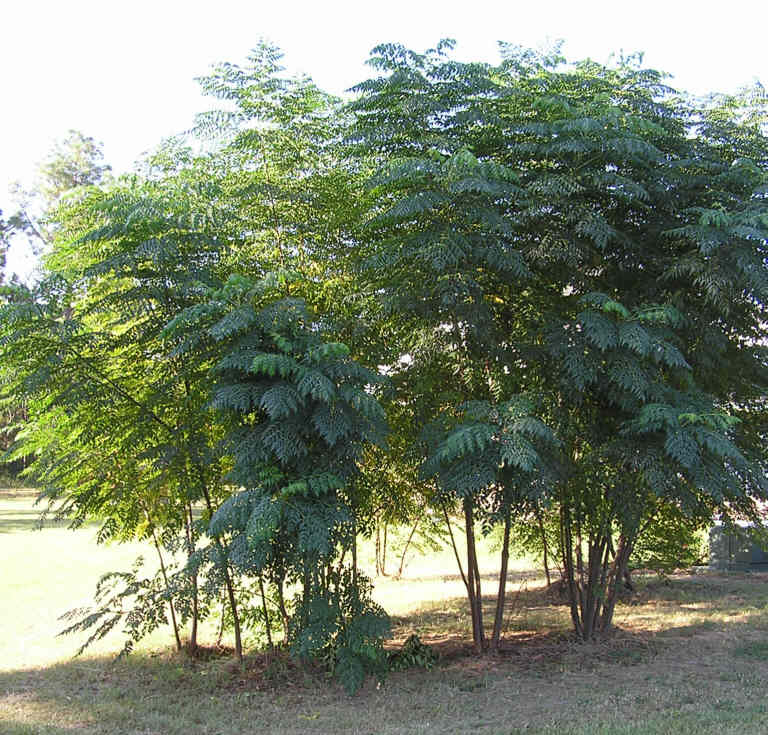


Side by side
| Bristly-sarsaparilla | Devil's Walkingstick | |
|---|---|---|
| Scientific name | Aralia hispida Vent. | Aralia spinosa L. |
| English name | Bristly-sarsaparilla | Devil's Walkingstick |
| Group | Flowering plants | Flowering plants |
| Class | Magnoliopsida | Magnoliopsida |
| Order | Apiales | Apiales |
| Family | Araliaceae Ginseng Family | Araliaceae Ginseng Family |
| Genus | Aralia Spikenard | Aralia Spikenard |
| Red List category | Not recorded | Least Concern |
| Countries on record | 2 countries | 2 countries |
| GBIF occurrence records | 9,155 records | 12,601 records |
Rows where the two agree are shown in grey.
Where each is found
Both recorded in 2 countries
From Catalogue of Life checklists and GBIF occurrence records. A country missing from a list means no record is held, which is not proof of absence.
Checked facts
| Bristly-sarsaparilla | Devil's Walkingstick | |
|---|---|---|
| Appearance |
|
|
| Size | No checked fact yet |
|
| Habitat |
|
|
| Diet | No checked fact yet |
|
| Behaviour | No checked fact yet |
|
| Reproduction |
|
|
| Distribution |
|
|
| Uses | No checked fact yet |
|
| Other |
| No checked fact yet |
In brief
Bristly-sarsaparilla
Aralia hispida occurs in eastern North America, extending from Hudson Bay south to Indiana and from Minnesota east to Newfoundland. It has serrated leaflets, dark globose fruits and a rhizome capable of overwintering up to 50 centimetres above ground. Full profile
Devil's Walkingstick
The species is native to eastern North America, with its United States range extending from New York to Florida along the Atlantic coast and westward to Ohio, Illinois, and Texas. It is an aromatic, spiny, deciduous shrub or small tree with large compound leaves, creamy-white flowers, and purplish-black berries. Full profile
Compare something else
Page built on 27 November 2026 from the data on the two species pages, where every source is listed.
Cite this page
ScientificNames.org. (2026). Bristly-sarsaparilla vs Devil's Walkingstick. Retrieved November 27, 2026, from https://scientificnames.org/compare/bristly-sarsaparilla-vs-devils-walkingstick
“Bristly-sarsaparilla vs Devil's Walkingstick.” ScientificNames.org, 2026, scientificnames.org/compare/bristly-sarsaparilla-vs-devils-walkingstick. Accessed 27 Nov. 2026.
ScientificNames.org. “Bristly-sarsaparilla vs Devil's Walkingstick.” Accessed November 27, 2026. https://scientificnames.org/compare/bristly-sarsaparilla-vs-devils-walkingstick.
@misc{scientificnames_bristly_sarsaparilla_vs_devils_walkingstick,
  author = {{ScientificNames.org}},
  title = {Bristly-sarsaparilla vs Devil's Walkingstick},
  year = {2026},
  url = {https://scientificnames.org/compare/bristly-sarsaparilla-vs-devils-walkingstick},
  note = {Accessed 2026-11-27}
}