Comparison

Bicolored Hawk vs Eurasian Goshawk

Bicolored Hawk (Astur bicolor) and Eurasian Goshawk (Astur gentilis) both belong to the genus Astur (true goshawks and allies) and part ways below it. Both are recorded in 1 country.

Bicolored Hawk

Astur bicolor
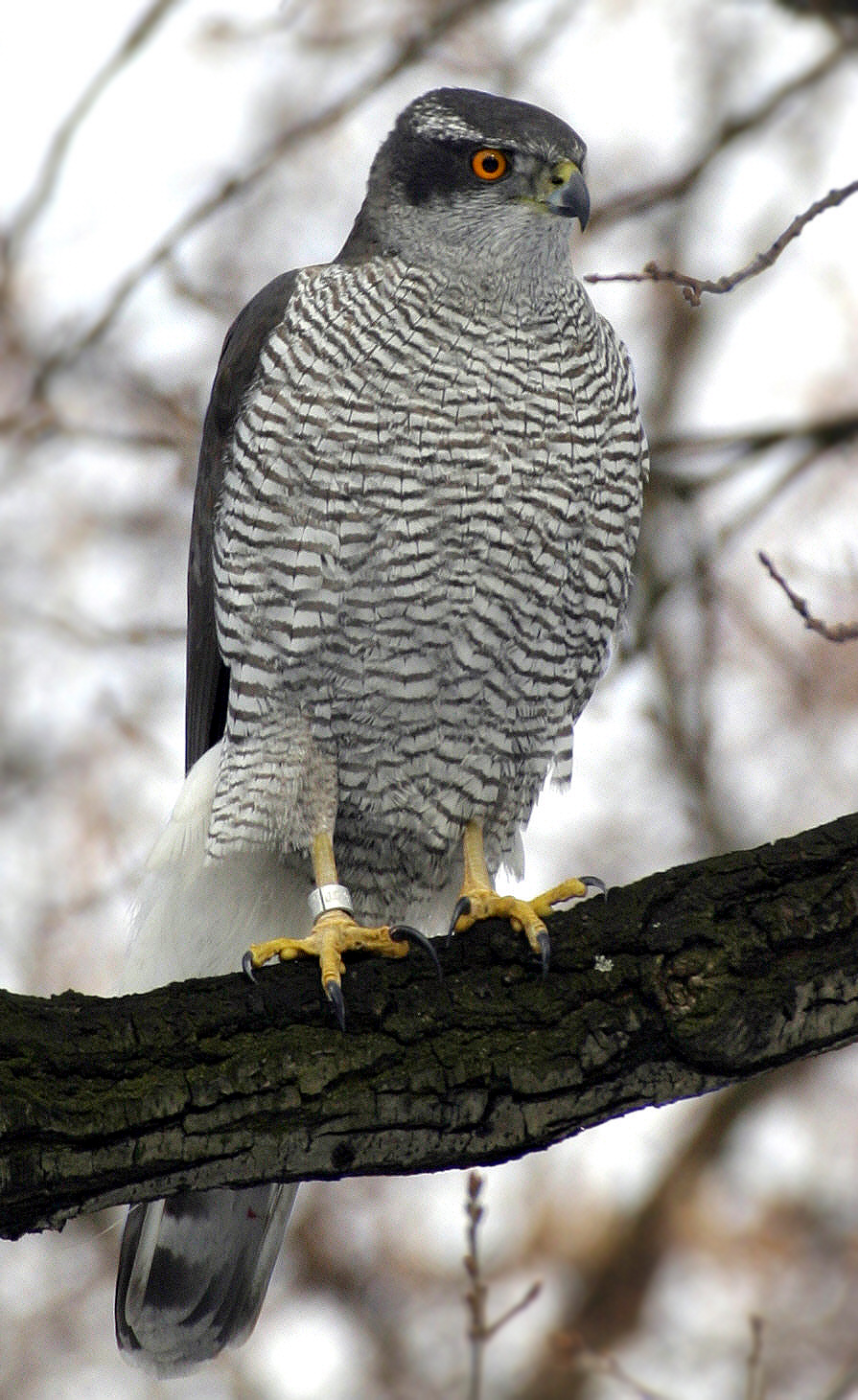
Eurasian Goshawk

Eurasian Goshawk

Astur gentilis

Norbert Kenntner, Berlin, CC BY-SA 3.0, via Wikimedia Commons

Side by side

Bicolored HawkEurasian Goshawk
Scientific nameAstur bicolor (Vieillot, 1817)Astur gentilis (Linnaeus, 1758)
English nameBicolored HawkEurasian Goshawk
GroupBirdsBirds
ClassAves BirdAves Bird
OrderAccipitriformes HawksAccipitriformes Hawks
FamilyAccipitridae HawksAccipitridae Hawks
GenusAstur True Goshawks and AlliesAstur True Goshawks and Allies
Named in18171758
Countries on record21 countries79 countries
GBIF occurrence records15,929 records956,251 records

Rows where the two agree are shown in grey.

Where each is found

Both recorded in 1 country

Only Bicolored Hawk (20)

Only Eurasian Goshawk (78)

From Catalogue of Life checklists and GBIF occurrence records. A country missing from a list means no record is held, which is not proof of absence.

Checked facts

Bicolored HawkEurasian Goshawk
Appearance
  • Adult Bicolored Hawks have grey upperparts, darker wings and crowns, and banded tails. English Wikipedia
  • Adult Bicolored Hawks typically have underparts ranging from dark grey to very pale grey. English Wikipedia
  • Bicolored Hawks have pure rufous thighs. English Wikipedia
  • Northern subspecies have white underwing coverts, whereas southern subspecies have rufous underwing coverts. English Wikipedia
  • Juvenile Bicolored Hawks have variable underparts that may be white, buff or rufous, sometimes with dark streaks. English Wikipedia
  • Juveniles have browner upperparts than adults and sometimes paler thighs. English Wikipedia
  • The Eurasian goshawk has relatively short, broad wings and a long tail adapted to maneuverability in forest habitats. English Wikipedia
  • The species has a relatively sizeable bill, robust short legs, and particularly thick toes. English Wikipedia
  • Across most of its range, the Eurasian goshawk is blue-grey or brownish-grey above, with dark markings and a grey or white underside. English Wikipedia
SizeNo checked fact yet
Habitat
  • Bicolored Hawks inhabit forests, woodlands, secondary growth, plantations and wooded savannas. English Wikipedia
  • Bicolored Hawks primarily inhabit forests, forest edges and clearings in tropical and locally subtropical regions. English Wikipedia
  • Bicolored Hawks also occupy rainforests, drier thinned forests and palm savannas with gallery forests. English Wikipedia
  • Bicolored Hawks are most abundant in primary undisturbed or riparian forests. English Wikipedia
  • Bicolored Hawks are rarely found in forests with less than 66% forest cover. English Wikipedia
  • The Eurasian goshawk inhabits both deciduous and coniferous forests. English Wikipedia
  • The species can occupy urban environments containing small woods, shelter-belts, and copses. English Wikipedia
  • Eurasian goshawks can occur at elevations up to approximately 3,000 metres. English Wikipedia
  • The species can inhabit dwarf tree communities along drainage areas of the lower tundra. English Wikipedia
  • A breeding population inhabits the Imperial Palace gardens in Tokyo. English Wikipedia
Diet
  • Bicolored Hawks most commonly prey on smaller birds, including thrushes, mockingbirds and small doves. English Wikipedia
  • Bicolored Hawks also consume small mammals, including bats, as well as reptiles and large insects. English Wikipedia
  • Southern-race individuals and females are known to prey on Chilean pigeons. English Wikipedia
  • Bicolored Hawks have been observed attacking groups of squirrel monkeys and tamarins. English Wikipedia
  • Bicolored Hawks sometimes follow monkey groups to capture insects exposed by the monkeys. English Wikipedia
No checked fact yet
Behaviour
  • Bicolored Hawks capture prey by flying stealthily through dense vegetation and ambushing unsuspecting animals. English Wikipedia
  • Bicolored Hawks sometimes pursue prey aerially after watching it from a concealed perch. English Wikipedia
  • Bicolored Hawks are difficult to detect because they are shy and inconspicuous. English Wikipedia
  • Male Bicolored Hawks produce soft, clear whistles. English Wikipedia
  • Female Bicolored Hawks can produce a loud cac-cac-cac call near their nests and young. English Wikipedia
  • Both sexes can produce a barking kra-kra-kra call. English Wikipedia
  • Most Eurasian goshawks remain in the same general area throughout the year. English Wikipedia
  • Individuals from colder regions migrate south during winter. English Wikipedia
  • Northernmost and high-mountain populations move to warmer forests at lower elevations during winter. English Wikipedia
Reproduction
  • Bicolored Hawks breed in forested areas and usually construct nests on tree branches, occasionally using hanging vines. English Wikipedia
  • Both male and female Bicolored Hawks cooperate in building nests from dried sticks and leaves. English Wikipedia
  • Breeding pairs normally construct a new nest at the beginning of each breeding year. English Wikipedia
  • Egg laying occurs approximately five weeks after copulation. English Wikipedia
  • Bicolored Hawk eggs are dull white and average 47.1 by 36.5 millimetres. English Wikipedia
  • Bicolored Hawk clutches typically contain one to three eggs. English Wikipedia
  • Female Bicolored Hawks incubate the eggs for approximately three weeks while males forage for food. English Wikipedia
  • Bicolored Hawk chicks have open eyes at hatching but are initially unable to move independently and require parental feeding. English Wikipedia
  • Young Bicolored Hawks fledge approximately 30–36 days after hatching. English Wikipedia
  • The fledgling period lasts nearly seven weeks, during which young birds frequently return to the nest for food. English Wikipedia
  • Eurasian goshawks have bred in the Imperial Palace gardens in Tokyo since at least 2001. English Wikipedia
  • A nest was discovered in an evergreen oak tree at the Tokyo breeding location in 2001. English Wikipedia
Distribution
  • Bicolored Hawks occur from southeastern Mexico through Central America and northern and central South America, reaching northern Argentina. English Wikipedia
  • The Eurasian goshawk occurs across most of Europe, excluding Ireland and Iceland. English Wikipedia
  • Its Eurasian range extends across much of Russia to Anadyr and Kamchatka. English Wikipedia
  • The species occurs in northwestern Morocco, Corsica, Sardinia, southern Greece, Turkey, and the Caucasus. English Wikipedia
  • The species occurs in parts of the Himalayas, including India and Nepal. English Wikipedia
  • The Eurasian goshawk occurs in western China and Japan. English Wikipedia
Conservation
  • Forest disturbance and fragmentation negatively affect Bicolored Hawk habitat and population abundance. English Wikipedia
No checked fact yet
Similar species
  • The Cooper's Hawk and Gundlach's Hawk are closely related to the Bicolored Hawk and form a superspecies with it. English Wikipedia
No checked fact yet
Name originNo checked fact yet
  • The English name goshawk derives from the Old English word gōsheafoc, meaning goose-hawk. English Wikipedia

In brief

Bicolored Hawk

Astur bicolor occurs from southeastern Mexico through Central America and northern and central South America, reaching northern Argentina. Adults have grey upperparts, darker wings and crowns, banded tails and pure rufous thighs. Full profile

Eurasian Goshawk

Astur gentilis inhabits deciduous and coniferous forests, urban environments containing small woods, shelter-belts, and copses, and other habitats up to approximately 3,000 metres. It has relatively short, broad wings, a long tail, a sizeable bill, robust short legs, and particularly thick toes. Full profile

Compare something else

Page built on 29 November 2026 from the data on the two species pages, where every source is listed.

Cite this page

ScientificNames.org. (2026). Bicolored Hawk vs Eurasian Goshawk. Retrieved November 29, 2026, from https://scientificnames.org/compare/bicolored-hawk-vs-eurasian-goshawk